Get your Freebie


Self-Care Essentials and Ideas for Women: Top Practices for Mental and Physical Wellbeing
Taking time for yourself isn’t selfish—it’s necessary. In today’s fast-paced world, women often put others’ needs before their own.
But self-care isn’t selfish—it’s essential for your physical and mental well-being. Whether you’ve got five minutes or a whole day, there are simple ways to recharge.
The most effective self-care routine includes a mix of practices that nurture your body, mind, and spirit—like getting enough Sleep, eating nutritious foods, finding moments of calm, and moving your body regularly. These simple steps don’t require expensive products or complicated routines.
You deserve to feel your best. From bubble baths and reading books to mindfulness practices and spa services, the right self-care activities help you show up as your best self.
Let’s explore practical self-care ideas that you can easily fit into your busy life.
Self-care is a vital practice that helps women maintain physical, mental, emotional, and spiritual well-being. It involves deliberate actions that promote Health and reduce Stress in your daily life.
Self-care isn’t selfish—it’s necessary. Taking time for yourself is essential for maintaining overall wellbeing and preventing Burnout.
When you prioritize self-care, you’re better equipped to handle life’s challenges.
Research shows that consistent self-care practices can:
Self-care affects both your physical and Mental Health. Getting adequate sleep is fundamental to your body’s ability to function optimally.
Similarly, nutritious food fuels your body and mind.
Regular check-ups with healthcare providers are also crucial elements of self-care. Preventative care helps identify potential health issues before they become serious problems.
Your self-care needs are unique to you. What works for someone else might not work for you.
Take time to reflect on what truly helps you recharge.

Consider these five types of self-care:
| Type | Examples | Benefits |
|---|---|---|
| Physical | Exercise, Healthy Eating, sleep | Energy, strength, immunity |
| Mental | Reading, puzzles, new skills | Sharper thinking, creativity |
| Emotional | Journaling, Therapy, setting boundaries | Better stress management |
| Social | Time with friends, support groups | Connection, belonging |
| Spiritual | Meditation, nature walks, prayer | Purpose, inner peace |
Pay attention to warning signs that you need more self-care. These might include feeling constantly tired, irritable, or disconnected from activities you usually enjoy.
Burnout doesn’t happen overnight—it’s a gradual process from chronic stress and neglecting your needs. Signs include persistent fatigue, cynicism, and reduced performance.
To combat exhaustion:
Find time for peace every day. Even five minutes of calm can reset your nervous system and lower stress hormones.
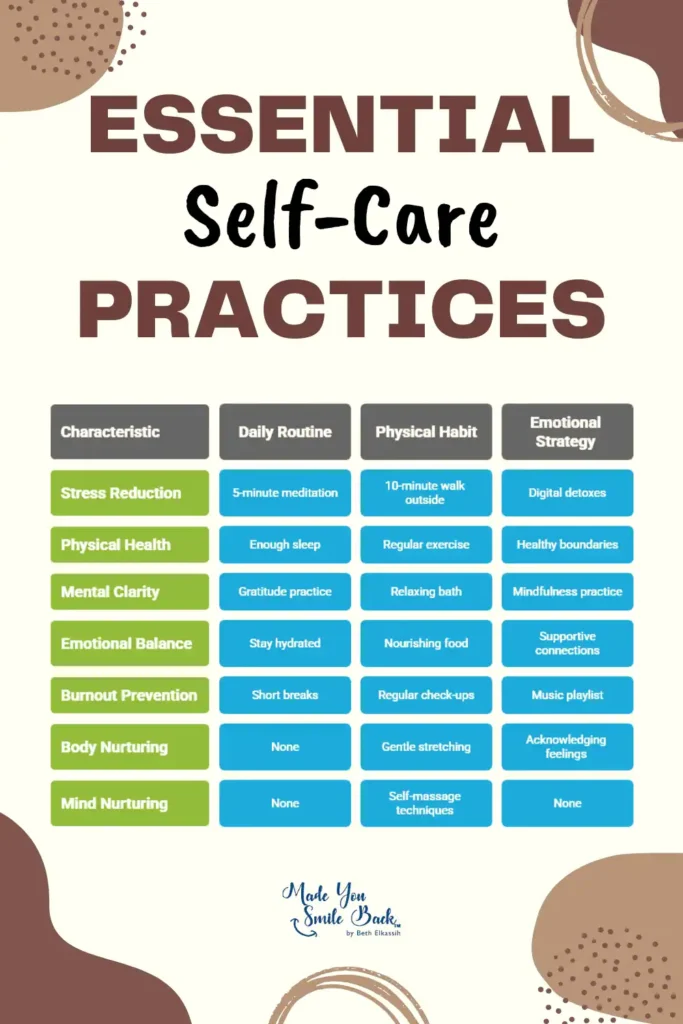
Self-care isn’t selfish—it’s necessary for your physical health, mental wellbeing, and overall happiness. Making yourself a priority means building habits that nurture your body and mind daily.
Start your day with a 5-minute meditation to center your thoughts and reduce stress. This simple habit can really improve your mental Clarity and emotional balance.
Getting enough sleep is non-negotiable. Aim for 7-9 hours each night by winding down before bed—turn off electronics and maybe read a book instead.
Stay hydrated by keeping a water bottle handy. Proper hydration affects everything from your skin to your focus.
Schedule short breaks during your workday to stretch, breathe, or just look away from screens. These micro-breaks help keep burnout at bay and let you refocus.
Practice gratitude by jotting down three things you’re thankful for each evening. It sounds simple, but it really helps you notice the good stuff.
Regular exercise doesn’t need to be complicated or fancy. Find movement you enjoy—walking, dancing, Yoga, swimming—and aim for about 30 minutes most days.
Your immune system and mood will thank you. Nourish your body with colorful, nutrient-dense foods.
Try to include fruits and veggies at every meal. It supports your energy and keeps your immune system strong.
Schedule regular health check-ups. Preventive care helps catch issues early and gives you peace of mind.
Take breaks from sitting. If you work at a desk, set a timer to stand up and stretch every hour.
Quick Physical Self-Care Ideas:
Set healthy boundaries in relationships and work. Saying “no” sometimes is necessary to protect your energy and avoid resentment.
Connect regularly with supportive friends or Family. Social bonds are crucial for your mental health and help you stay resilient during tough times.
Practice mindfulness through simple daily activities. Maybe it’s mindful eating—paying attention to each bite—or mindful walking, just noticing how your body feels as you move.
Give yourself permission to feel Emotions without judgment. Acknowledging feelings, even the hard ones, helps you process them in a healthy way.
Create a playlist of music that lifts your spirits. Music can totally shift your mood when you need it.
Take regular digital detoxes. Designate screen-free times each day to lower anxiety and clear your mind a bit.
Taking care of your body forms the foundation of effective self-care. Physical wellness supports mental health, boosts energy, and makes a huge difference in your quality of life—often through simple daily habits.
Finding ways to include regular exercise doesn’t require dramatic Lifestyle changes. Aim for 30 minutes of moderate activity most days to cover your bases.
Start with activities you genuinely enjoy—walking, dancing, swimming, or cycling. Joy in movement is what makes it stick.
If time is tight, break exercise into smaller chunks. Three 10-minute walks are just as effective as one 30-minute session.
Research shows that physical activity can reduce stress hormones and boost endorphins—your body’s natural mood elevators.
Morning workouts often work best for consistency, since life tends to get in the way later on.
Track your progress with a journal or app. It helps you stay motivated and see how far you’ve come.
Yoga uniquely combines physical movement, breathing, and mindfulness. It covers a lot of wellness bases at once.
Regular practice improves flexibility, balance, and core strength, yet it’s gentle on your joints. Almost anyone can try it, regardless of fitness level or age.
Yoga classes give you structure and a sense of community, which can help you stick with it. Many studios offer beginner-friendly options.
The breathing you learn in yoga is handy outside class, too—great for stressful moments.
Research suggests yoga may help reduce inflammation, improve heart health, and ease anxiety or depression symptoms.
Online yoga makes it accessible if you’re short on time or can’t get to a studio. There are plenty of good free or low-cost classes to try at home.
Quality sleep is non-negotiable for physical wellbeing. Establish a consistent sleep schedule and set up a restful environment so you can get 7-9 hours each night.
Your immune system does its repair work while you sleep. Consistently poor sleep can mess with your immunity and increase inflammation.
Create a calming bedtime routine: dim the lights, avoid screens before bed, and try reading or gentle stretching to wind down.
Keep your bedroom cool (65-68°F/18-20°C), dark, and quiet. Blackout curtains or a white noise machine can help if your space isn’t ideal.
Limit caffeine after noon and skip alcohol close to bedtime. Both can mess with your sleep, even if you fall asleep easily.
Track your sleep patterns to spot issues. Most phones and watches have basic sleep tracking now, which is pretty handy.
Physical wellbeing isn’t just about formal exercise—it’s about daily movement, too. Small active choices add up.
Take the stairs instead of the elevator. Park farther away. Walk during phone calls. All those little moves matter.
Adding joyful activities makes movement sustainable. Dance while you cook, garden, or play with your kids or pets. It all counts.
Set reminders to stand and stretch hourly if you’re sitting a lot. Even a couple minutes of movement helps your body reset.
Try active transportation—walk or bike for short errands if you can. It’s practical and gets you moving.
Household tasks like vacuuming, Gardening, and cleaning are sneaky ways to stay active while getting stuff done.
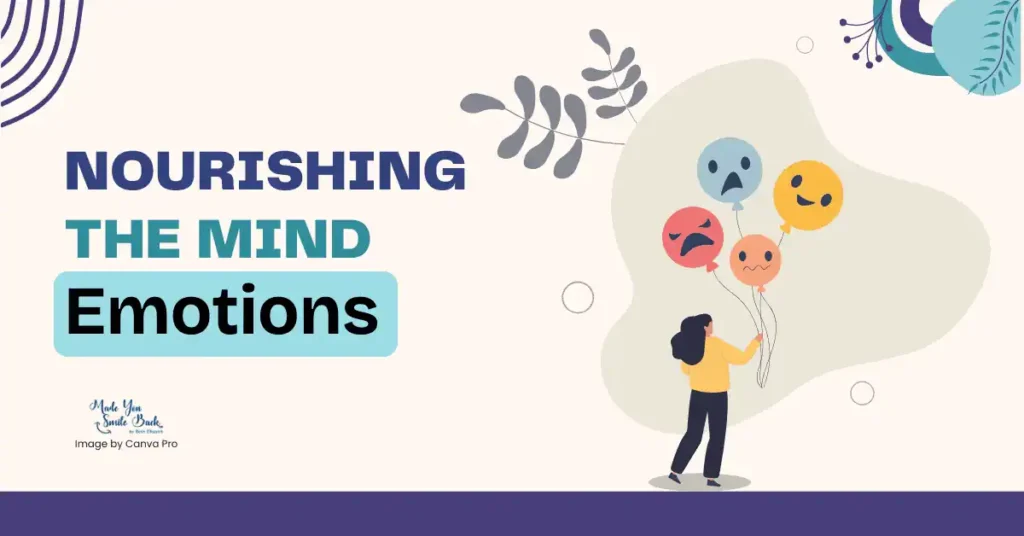
Taking care of your mental health means finding practices that calm your mind and build emotional resilience. Mental self-care can seriously lower stress and help you feel more optimistic about life.
Meditation can work wonders for your mental well-being. If you’re new, just start with 5 minutes a day of focused breathing—inhale for 4 counts, pause, then exhale for 6.
It might sound simple, but this technique taps into your parasympathetic nervous system and can take the edge off anxiety pretty quickly.
Body scan meditation is another favorite for reconnecting with your body. Start at your toes, slowly move your attention upward, and notice any tension you can let go of.
Apps like Calm and Headspace offer guided sessions for beginners. Even short sessions can help sharpen your focus and regulate your emotions.
Try weaving in these little mindfulness moments:
Emotional Freedom Technique (EFT), or “tapping,” pairs cognitive therapy with tapping on acupressure points. You gently tap specific spots on your face and body while acknowledging tough emotions—sounds odd, but it can be grounding.
EFT’s been shown to lower cortisol, which is your main stress hormone. The steps are straightforward: name your concern, rate how intense it feels, come up with a phrase about it, and tap through the points as you repeat your phrase.
Key tapping points include:
Plenty of women say they feel noticeably less stressed even after one session. Regular practice may build up your emotional resilience over time.
Music therapy is a go-to for shifting your mood fast. Make playlists for what you need—something upbeat for motivation, or calming instrumentals when you want to unwind.
Just 15 minutes of intentional music can totally change your headspace.
Reading fiction, even for half an hour, can drop your stress levels by up to 68%. That mental escape can be a real lifesaver when life gets heavy.
Some ideas to mix up your reading and music routine:
Both reading and music light up different parts of your brain than work does. It’s like a reset button for your mind.
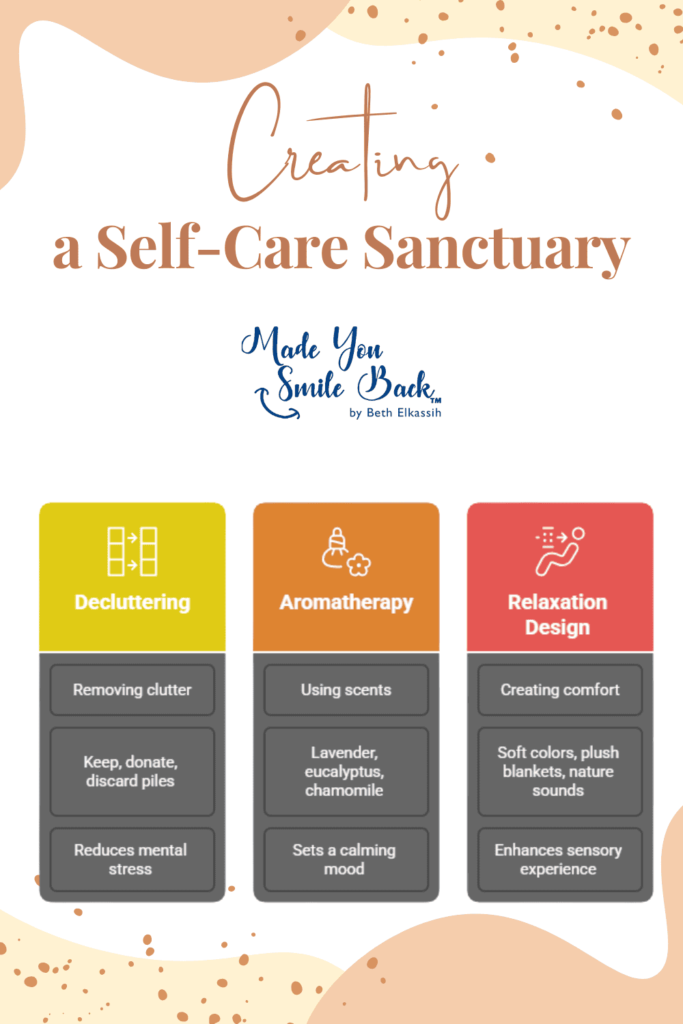
Having a dedicated self-care space at home can really change how you feel day to day. It’s your personal retreat—somewhere you can just breathe and be yourself for a while.
Start by clearing out the area you want to use. Physical clutter has a way of crowding your mind, too.
Sort your things into three piles:
Once you’ve decluttered, organize what’s left in a way that feels soothing. Use baskets or shelves to keep things handy but not messy.
If you want to keep it that way, try a “one in, one out” rule. Bring in something new? Let something old go. It sounds strict, but it’s surprisingly freeing.
And don’t forget digital clutter. Turning off some notifications and tidying up your files can make a bigger difference than you think.
Scent is a game changer for setting the mood. Essential oils can turn a regular room into a mini sanctuary.
Some favorites for relaxation:
Use oils in a diffuser, make a room spray, or add a few drops to your bath. Scented candles work, too—sometimes they’re just easier.
If you’re new to this, stick with one or two scents you actually like. Mixing too many at once can be overwhelming and kind of defeats the purpose.
Why not turn your home into a retreat? Try carving out a meditation nook or a cozy reading spot. Pick somewhere quiet, with comfy seating and gentle lighting.
Add things that make your senses happy:
Plants can boost air quality and just make the space feel alive. Even a tiny succulent helps.
Stash your favorite self-care tools nearby—books, journals, art stuff, yoga props. Layer in comfort with slippers, a robe, or that pillow you love. The little things add up.
Making self-care stick is all about weaving it into your daily life in a way that feels natural. It’s less about perfection and more about finding what really fits—for you.
Start small with your self-care habits. Don’t try to overhaul everything at once; pick one or two things that matter most to you right now.
Some ways to keep it going:
Doing something most days, even if it’s just 10 minutes, beats a big effort once in a while. Consistency is what matters.
Set reminders or leave visual cues around until it becomes second nature. It might feel silly at first, but it works.
Your needs change, so your self-care should too. Try different things and see what actually helps you feel better.
Think about these five areas as you build your toolkit:
| Dimension | Activities to Try |
|---|---|
| Physical | Walking, yoga, dancing, getting good sleep |
| Mental | Reading, puzzles, learning something new |
| Emotional | Journaling, therapy, setting boundaries |
| Social | Time with friends, joining a club |
| Spiritual | Meditation, being in nature, gratitude practice |
Notice how you feel after each activity. The best self-care leaves you with more energy, not less.
And trust yourself. If meditation makes you anxious, skip it—there are plenty of other ways to get the same benefits.
Keeping tabs on your self-care can help you spot what works and keep you going when motivation dips. A little tracking goes a long way.
Some easy ways to track:
Look for changes in your energy, mood, or how you relate to others. Noticing real shifts can be a huge motivator.
If you lose steam, revisit your simple self-care ideas and shake things up. Life changes, so your self-care should too.
And hey, missing a day here and there isn’t the end of the world. Just pick it back up when you can—no guilt needed.
Women ask all the time how to fit self-care into their packed schedules. Here are some answers to common questions about home routines, beauty, hygiene, daily habits, mental health, and thoughtful gifts.
Run a relaxing bath with oils, Epsom salts, and music you love. Prioritize sleep—it’s underrated, but it makes everything else easier.
Move your body in a way that feels good—maybe gentle yoga, stretching, or a home workout that leaves you energized, not wiped out.
Read, journal, or dive into a hobby. Even a quick 15-minute “me time” break can lift your mood and lower stress.
A solid skincare routine with a good moisturizer is a must for healthy skin. Many swear by body oils and quality body wash as the foundation of their rituals.
Hair care—like deep conditioning or using nourishing oils—can change how you feel about your hair. It’s not just about looks; it’s about enjoying the process.
Simple nail care, even just keeping your nails tidy at home, can make you feel put together and boost your confidence.
Stick to a morning and night routine with gentle cleansers that suit your skin. Pick scents you genuinely like—it makes daily hygiene a little more enjoyable.
Swap out things like loofahs, towels, and pillowcases regularly to keep skin healthy and avoid breakouts. It’s a small habit that pays off.
Consider natural deodorants and menstrual products that cut down on chemicals. Your skin absorbs what you put on it, so those choices matter.
Start your morning with intention—don’t just grab your phone right away. Maybe sit for a minute, breathe, or try a short meditation if that’s your thing.
Staying hydrated is honestly underrated. Focus on eating nourishing foods that keep your energy up, because your body needs more than just caffeine to get through the day.
Take little breaks, even if it’s just to stand up, stretch, or stare out the window for a bit. Giving yourself these micro-moments can make a real difference in how you feel by the end of the day.
Setting boundaries is a skill, and it’s worth practicing. Saying “no” when you need to isn’t selfish—it’s essential for protecting your own energy.
Try out mindfulness activities, whether that’s meditation, deep breathing, or just a slow walk where you actually notice your surroundings. These practical self-care tips can help you stay present instead of overwhelmed.
Connect with people who make you feel good. Whether it’s a coffee date or a quick message thread, those connections matter a lot more than we sometimes admit.
If you’re open to it, working with a therapist or counselor can be helpful even when things seem fine. Sometimes you just need a space to talk things through and get a little perspective.
Gifts that encourage relaxation are always a win—think fancy bath stuff, a cozy weighted blanket, or an aromatherapy diffuser. There’s something about sensory comfort that just feels extra thoughtful.
Subscription boxes can be a fun way to remind someone to take care of themselves, whether it’s books, teas, or little beauty surprises. They’re like a monthly nudge to slow down.
Experience gifts—like a spa day, a cooking class, or tickets to a show—often end up being the most memorable. It’s about giving her a break from the usual routine, which is honestly priceless.
And if you know what she’s passionate about, gifts that support her hobbies or interests show that you really get her. That’s always appreciated.
Self-care isn’t selfish—it’s essential for your well-being.
Taking care of yourself means carving out time for things like medical checkups, moving your body, and just taking a breather now and then.
The best self-care routines? They’re a mix of things that help both your body and mind.
Physical self-care could be as simple as a quick walk, eating something nourishing, or getting a decent night’s sleep.
Mental self-care can look like meditation, jotting down your thoughts, or just sitting in silence for a few minutes.
Honestly, even a 5-minute deep breathing break can take the edge off a stressful day.
And then there’s the little stuff—personal care products that just make you feel good.
Plenty of women swear by having a stash of moisturizers, body oils, and hair products to boost their self-care.
Try to prioritize activities that actually leave you feeling recharged.
What works for your friends might not do much for you, and that’s okay.
If you’re new to all this, start small—no pressure to overhaul your whole life.
Just adding one nourishing activity to your day can make a real difference.
Your needs might shift as life changes, so be ready to tweak your routine when you need to.
The post Self-Care Essentials and Ideas for Women appeared first on Made You Smile Back.
Originally Published on https://madeyousmileback.com/