Wait… is Community a show? Or are we talking about actual community?
In a conversation with Bruce Y. Lee, on We DO Mind, we couldn’t remember if Community was a show, and mixed it up with Parks and Recreation before remembering it was a sitcom with Ted Danson. We often recognize fictional communities more easily than we recognize our own real-life ones. This is because we don’t think much about community until we don’t have it. And by then, it’s not just a social gap. It’s a Health risk
Community members come together to play Pickleball each week. Organized by Mark Epstein, regulars are Hedy Ayeche, Deborah Heiser and Roya Shavolian..
What community is and why we “miss it”
Subscribe now
A community is a group of people with common interests living in a particular area. It isn’t just where you live, formal groups or memberships. Here are some everyday examples of community most of us take for granted:
Gym regulars
Pickleball partners
Dinner groups
Neighbors
Religious or volunteer groups
The pharmacist or mail carrier who notices you
The key is, community is consistent, familiar mutual human connection. Community does not have to be structured, you don’t have to get together frequently, and it doesn’t have to be deeply intimate. An example is a dinner group I was part of years ago. Several couples got together monthly at a restaurant that boasted the best meat dishes in the city. I am currently a member of a dinner club, where more than ten women gather monthly over dinner (each person takes a turn planning a dinner event). Many people didn’t know each other before the dinner club, but soon became close. Many people play sports in parks with regular participants, know their mail carrier or pharmacist by face and name, and this even extends to barber, hair, and nail salons. Our communities are made up of our routines, our hobbies, and those with whom we interact at a level that is meaningful.
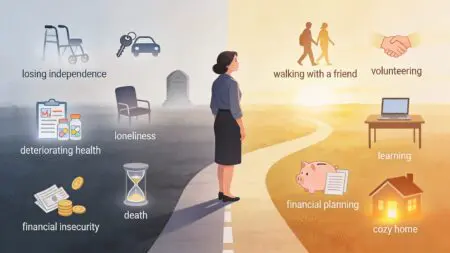
The problem is that many of us undervalue community until it disappears. Losing a community can lead to a feeling of loneliness or disconnection. It can be a concrete feeling of not having anyone to call or talk to. No one notices changes in your life. Here’s the thing. Community is invisible when we have it, but undeniable when it is gone.
The Science: Community as a Health Intervention
Loneliness has been rising (nearly doubled) for U.S. adults since the 1980s (Joint Economic Committee, 2018). The World Health Organization recognizes loneliness as a major health concern. “Social isolation and loneliness are widespread, with around 16% of people worldwide – one in six – experiencing loneliness. While the latest estimates suggest that loneliness is most common among adolescents and younger people, people of all ages experience loneliness – including older people, with around 11.8% experiencing loneliness. A large body of research shows that social isolation and loneliness have a serious impact on physical and Mental Health, quality of life, and Longevity.” (World Health Organization, 2026)
The loneliness epidemic is global. The U.K. created a “Minister of Loneliness” and there has been a rise in “social prescribing”, which started in the U.K., and has made it to the United States. Social prescribing is a healthcare model where medical professionals refer patients to non-clinical community programs rather than relying solely on medication. This means individuals being seen by a medical professional can be “prescribed” programs such as art, sports, community Gardening, Volunteering, mentoring, and support groups. The opportunities are vast.
Nature (2026) showed the well-being outcomes of social prescribing include improvements in happiness, life satisfaction, and reduced Anxiety. If compared to a monetary investment, the U.K. researchers found “The increase in life satisfaction is equivalent to a conservative monetary estimate of £4,252 over a mean period of 2.5 months (2019 prices), representing a return on investment of £9 (per £1 invested).” What this means is that if we invest in ourselves just by getting involved in our communities, that investment will pay off in health and well-being. It’s never too early to start getting involved in community. Being aware of the advantages is useful to help keep us engaged continuously, rather than drifting into disconnect.
Some concrete examples of benefit are:
Emotional:
Reduced Stress
Lower anxiety
Sense of safety
Feelings of support
Biological:
Lower cortisol
Increased oxytocin
Improved long-term health
Behavioral:
Earlier detection of issues (others notice changes in you)
Positive modeling
The Subtle Power of Community Ties
Community ties don’t have to be formal or an inner circle. Community is also the regular interactions we have with our neighbors. It is the neighbor who shovels their neighbor’s driveway when it snows. It is when we notice someone hasn’t been around for a while. It is the casual elevator, hallway, and driveway interactions we have with our neighbors. All of these make us feel safe and connected. They allow us to reach out (or track them down at the hospital) if we don’t see them for a while. An example of this is a senior center realizing someone hasn’t shown up in a few days. They track them down in the hospital and individuals visit and reach out. That person may not have realized they were part of a community, but they were. These looser connections are still extremely valuable and add to the power of community and to our long-term health and well-being.
The Impact of Modern Life on Community
As the digital age allows us to work from home, and cars allow us to drive to and from specific destinations, there are fewer opportunities for spontaneous interactions with others. Neighborhoods can also limit our interactions. Even with the implementation of WhatsApp chats for neighborhoods, most people don’t know who the members are and don’t get to know them beyond the chat. Digital connections at work and in our neighborhoods do not equal embodied connection.
That said, we should not ditch Technology as an aid for our connections. We can use technology strategically to help us find our communities. AI and other technologies can help us find our communities. We can learn what is available to us in our local communities and beyond. We can expand our networks with technology, which can lead to more interactions with others. Technology can also lower the barriers to community involvement as we find like-minded individuals in chats and online. In fact, that is how a pickleball chat group got started. Once-empty pickleball courts in a community became regularly used by people meeting for the first time, and a community developed.
Some Ways to Build Your Community
Start small:
Say hello to neighbors
Join one recurring activity
Accept invitations
Reduce friction:
Start or join a group chat
Attend loosely structured gatherings
Lower the stakes:
You don’t need instant deep connection
Lurking is okay before engaging
Don’t rely on just one community. Think of your community like a pie with multiple slices.
Geographic (neighbors)
Activity-based (sports, hobbies)
Work-related
Interest-based
Community requires effort and intention. The more energy we put into community the more we will get out of it. Later in life, it is critical to us, for our health and our well-being. Starting early is best, but it is never too late to start building a community. A man in his 90s, who had no children or Family other than a sister who lived thousands of miles away, and was isolated in his apartment, created a community. He invited the three neighbor children for ice cream every Wednesday. His immaculate home was covered in ice cream and he couldn’t have been happier. It was such an important weekly event that when he died a few years later, the children asked to attend his funeral and spoke about the impact he had on their lives. They transformed his life too.
Subscribe now
References:
All the lonely Americans? U.S. Congress Joint Economic Committee. (n.d.). https://www.jec.senate.gov/public/index.cfm/republicans/2018/8/all-the-lonely-americans
The impact of social prescribing on well-being outcomes in a nationwide analysis | Nature Health. (n.d.-b). https://www.nature.com/articles/s44360-026-00099-w
World Health Organization. (n.d.-b). Social isolation and loneliness. https://www.who.int/teams/social-determinants-of-health/demographic-change-and-healthy-ageing/social-isolation-and-loneliness
Leave a comment
Originally Published on https://deborahheiserphd.substack.com/