
A first-person reckoning between optimism and honesty.
The Right Side of 40 is a reader-supported publication. To receive new posts and support my work, consider becoming a free or paid subscriber.
He said it with authority.
“Just you wait.”
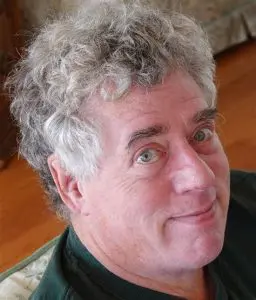
Michael Friedman is 82. I’m in my 50s. We’ve known each other roughly two decades. He was one of the pioneers of geriatric Mental Health advocacy in New York, and I was a researcher and President of the State Society on Aging of New York when we met. My work was all about everything we fear as we age: Depression, frailty, and dementia. We lost touch about ten years ago when he retired and moved. That’s when my work took a real pivot. I’ve spent the last several years focusing my work and writing on midlife (with unabashed optimism). We reconnected recently, and within minutes of talking, he smiled at my enthusiasm about aging and said those three words.
“Just you wait.”
I’ve been sitting with it ever since.
What I’ve Been Telling People
My work centers on midlife and the years beyond as a time of genuine possibility. I believe this. Not as a performance of positivity, but because the research supports it and because I’ve lived enough of it to know it’s real.
In your 50s and beyond, something shifts. You stop keeping up with the Joneses because you know who you are. You’re not searching for yourself anymore. The emotional regulation you’ve built over decades starts to pay off in ways that allow you to handle things that would have wrecked your younger self. You get more comfortable with uncertainty. You care less about what strangers think. Many people report feeling more liberated, more purposeful, and more themselves than at any earlier point in their lives.
This message matters. Ageism is real, and one of the ways it operates is by convincing people that getting older is simply a long decline into irrelevance. That framing is not only wrong, it’s downright harmful. It causes people to dread years that could be among the richest of their lives. Pushing back against that narrative is work worth doing.
And then Michael said, “Just you wait.”
What He Told Me
Michael didn’t tell me I was wrong. He told me I was incomplete.
His most recent writing draws a sharp distinction between 65 and 85 — between what he calls “old” and what he calls “very old.” At 65, he says, there were real gifts. Medicare. Retirement. Less Stress. More time. The freedom retirement offered him (to stop fundraising), which he’d done for decades in the nonprofit world and never loved. The discounts at movie theaters were great, but there was also something deeper: a loosening of the ambition that had driven his career.
But somewhere between 65 and now, something changed. His body betrayed him.
He had a tumor in his spinal column at 70, required surgery, and has Diabetes, gout, high blood pressure, and chronic kidney disease. He walks with a cane, not as a fashion choice, but because without it he will fall. He is about to give his car to his daughter.
And he is not the exception. He is closer to the rule.
This is what he wants people to understand: when we hold up the 95-year-old who still plays tennis and runs his own business and use that person as the face of aging, we are doing something misleading. Super-agers are real. They exist. But they are not representative of everyone. (Just like chronic pain and depression are not the norm.) Most people who reach their 80s will contend with accumulating physical limitations, and if we’ve spent the previous decades being told that aging is full of possibility and vitality, the gap between that promise and the reality can be a genuine shock.
“If you want to use super-agers as examples of what it is to age,” he told me, “that’s a huge mistake.”
The Grief No One Talks About
Michael’s wife died last summer. They were married for nearly 49 years.
He is doing all the things you are supposed to do. He stays busy. He goes out. He has people in his life. He plays jazz. He takes photographs.
But at 2am, when he woke up not feeling well and considered whether to go to the emergency room, he realized there was no one to call. His daughter was out of town. His wife was gone.
We talk about widowhood in statistics. More women than men are widowed. Widowed men are at higher risk for suicide. These facts are true and important. But they lack the emotional understanding of the loss, like what it is to Sleep in an empty bed, night after night, after nearly five decades of it not being empty. The emotional texture of that experience of grief and the specific weight of it is almost never discussed.
He is writing about it now, on substack, with the kind of unsparing honesty that only someone who has lived it can offer. One of his essays is called “I Was Not Ready for Death. Are You?” He’s right that most of us aren’t. And he’s right that our culture does almost nothing to prepare us.
Another emotional journey rarely talked about is the grief of caring for someone until they die. Michael calls this grief before death. Being the partner of someone who is Dying, watching it happen, carrying the loss, and then facing the loss is heavy, but often not shared with others.
And layered within all of this, is his own mortality. He is 82 with multiple Chronic Conditions. He thinks about his future and would rather talk plainly about it than dress it up in something more comfortable for others to hear.
Why We Are Both Right
When I said that I still see genuine emotional Growth in older adults, that the capacity for deep feeling seems to expand rather than contract with age, that I’ve watched people process and grieve and still find meaning, Michael didn’t disagree.
“Both,” he said. Not one or the other.
He cried watching his nine-year-old granddaughter play soccer, not from sadness but from something that doesn’t have a clean name. He saw the game and her playing as a fullness, a sense of the world continuing. These small girls would grow into women and have lives of their own. He plays jazz and sometimes hits something in the improvisation that he can only describe as transcendent in the way great art can be, a connection to something larger than oneself. He has a good life. He will tell you this himself. The point is not that old age is terrible.
The point is that it is complicated in ways that neither the relentless optimism of midlife wellness culture nor the doom of ageist stereotypes actually captures. It involves real loss of physical capacity, of people you Love, of the version of yourself you inhabited for decades. It involves a kind of grief that accumulates, that compounds, that doesn’t resolve the way younger losses sometimes do. And it involves genuine beauty, genuine connection, genuine meaning — coexisting with all of that.
What Michael is really asking is for the full picture. Not the sanitized version. Not the catastrophized version. The real one.
My Take
I’m still in my 50s. I still believe what I write. The emotional richness of this stage of life is real, and the work of naming it, normalizing it, and helping people approach it with less fear is worth doing.
But Michael gave me something I didn’t know I was missing: the permission to be honest about what comes next. Not to scare people. Not to replace hope with dread. But to say that alongside everything else, the later years will also ask something hard of you, and that knowing that in advance is preparation.
Michael Friedman is a licensed clinical social worker and geriatric mental Health advocate who founded the Geriatric Mental Health Alliance of New York. He writes on Substack: “One Very Old Man — Near the End of My Life.”
The Right Side of 40 is a reader-supported publication. To receive new posts and support my work, consider becoming a free or paid subscriber.
Originally Published on https://deborahheiserphd.substack.com/