
I’ve always been fascinated by the boats that have been witness to history. Christopher Columbus’ Santa Maria, and the Pilgrims’ Mayflower, had design-limited sailing abilities. I can’t even imagine the primitive living conditions on these and other vessels of their respective eras. But even with these downsides, these ships accomplished remarkable things, and I’m intrigued by that.
The 18th-century cargo schooner Sultana has her own memorable story. And as a fitting tribute to this vessel, in the late 1990s I learned that a replica of the 53-foot Sultana would soon be under construction. The build would take place in historic Chestertown on Maryland’s Upper Eastern Shore. This multi-year undertaking would be the catalyst for an environmental and historical Education program.
In 1767, a few years before the American Revolution, cargo schooner Sultana was completed at a Boston shipyard. In 1768, the British Royal Navy purchased the vessel. The 53-foot Sultana was tasked with intercepting smugglers along the New England coast, a mission that lasted until the American Revolution.
However, Sultana’s small size and minimum armaments led to resistance when her captain tried to stop bigger American ships. Given that, Sultana was repositioned at the mouth of the Chesapeake Bay, where she remained in British service for the next several years. In 1772, Sultana’s crew engaged in a smuggling-related firefight with the American brig Carolina. Having reached her warship limitations, Sultana was sent back to England, where the Royal Navy sold the vessel.
In 1997, master boatbuilder John Swain and several Chestertown community members elected to build a Schooner Sultana replica. U.S. Coast Guard Captain (and environmentalist) Drew McMullen soon joined them. The group desired to make Sultana a “floating classroom” with a Chestertown home port. Generations ago, the original Sultana had patrolled the same shores, ferreting out tax dodgers and other “scalawags” (in the British government’s view).
Building an authentic 18th-century replica vessel would normally be difficult, as the building plans and other documentation would have been lost. However, the London Public Records Office still had the original Sultana survey plans, ship’s logs, and other ship-related documents. Today, the modern Sultana features the same lines as the original ship. The vessel’s interior has also been created from original documents.
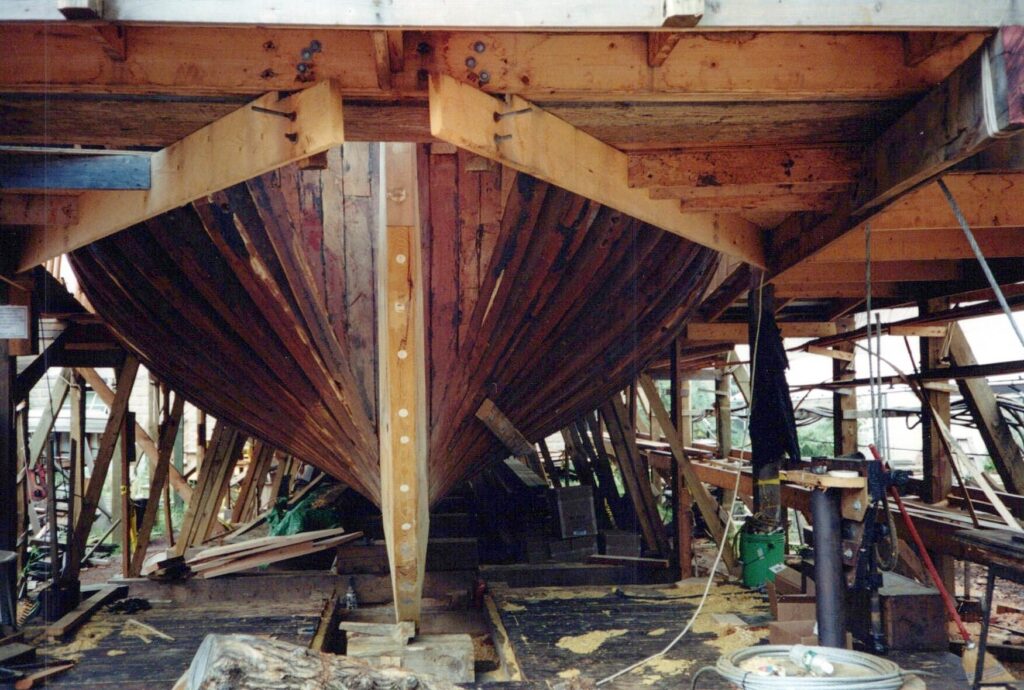
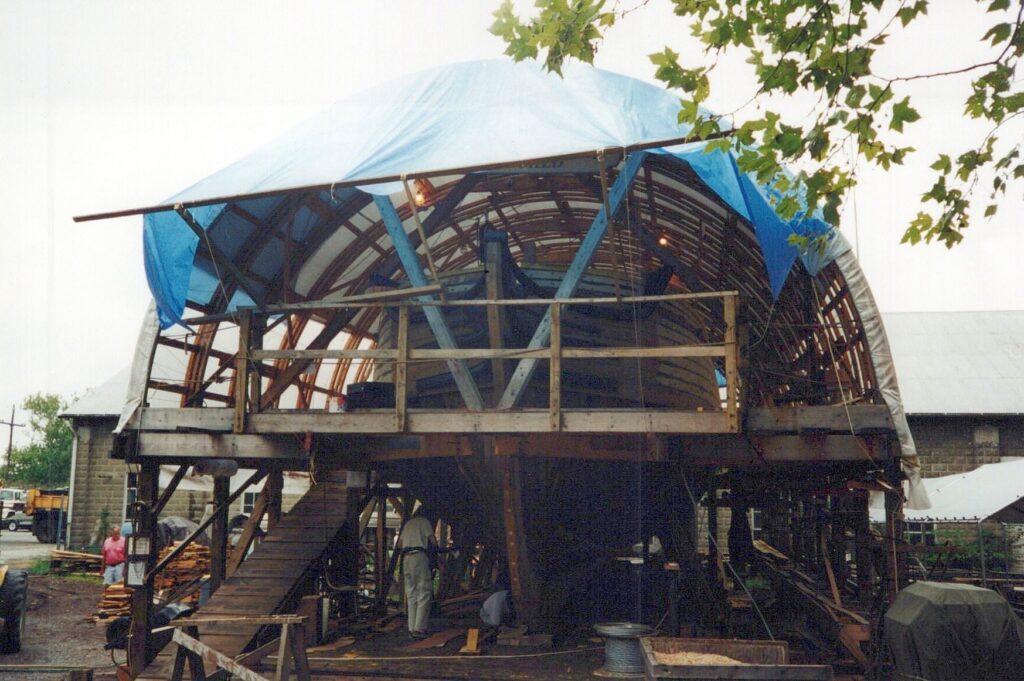
The Sultana boat shed construction began in 1998 on a downtown Chestertown dirt parking lot. After the boat shed was completed, the Sultana Project’s shipwrights drew the vessel’s lines and scoped out the major wood components. Sultana’s keel came from a 140-year-old white oak tree, and the vessel’s frames were crafted of native Osage Orange wood. White oak hull planks were fastened with wooden tree nails (or trunnels). Specialized woods were used for other key components such as masts and spars, bowsprit, windlass, and gun posts. A local artisan carved the lovely ornamental figurehead that graces Sultana’s prow.
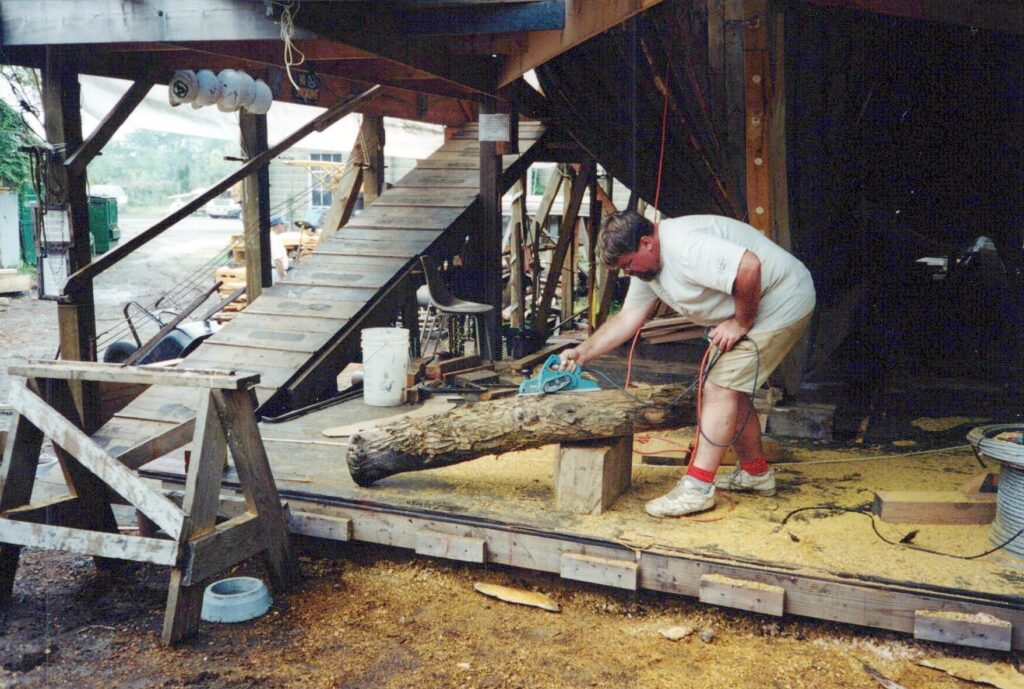
For two-and-a-half years, a steady stream of volunteers trekked to the Sultana construction site. Boatbuilder John Swain noted that the team established a slower pace to permit an educational component, saying the community support that comes from doing education gives you more value for the effort.
When I first heard about the Sultana Project, I immediately wanted to be involved. And when I learned that Sultana would be based on an 18th-century sailing ship, my imagination really came alive. However, I lived a fair distance away (south of Annapolis in Shady Side). The Sultana Project was gearing up in Chestertown, a four-hour round trip from my home. It would not have been cost-effective to be traipsing over to Chestertown every week. Given that, I decided to do the next best thing.
Every few months, I embarked on a day trip to Chestertown. Upon arriving at the boat shed, I meandered around snapping photos of volunteers engaged in different boatbuilding tasks. Most importantly, I documented Sultana’s steady forward progress.
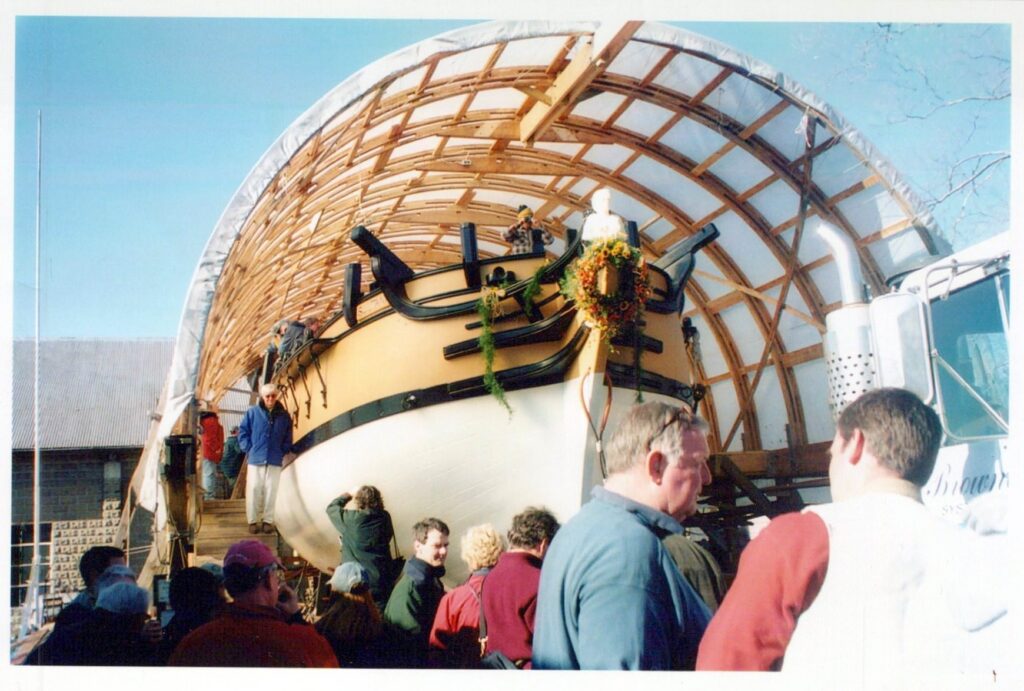
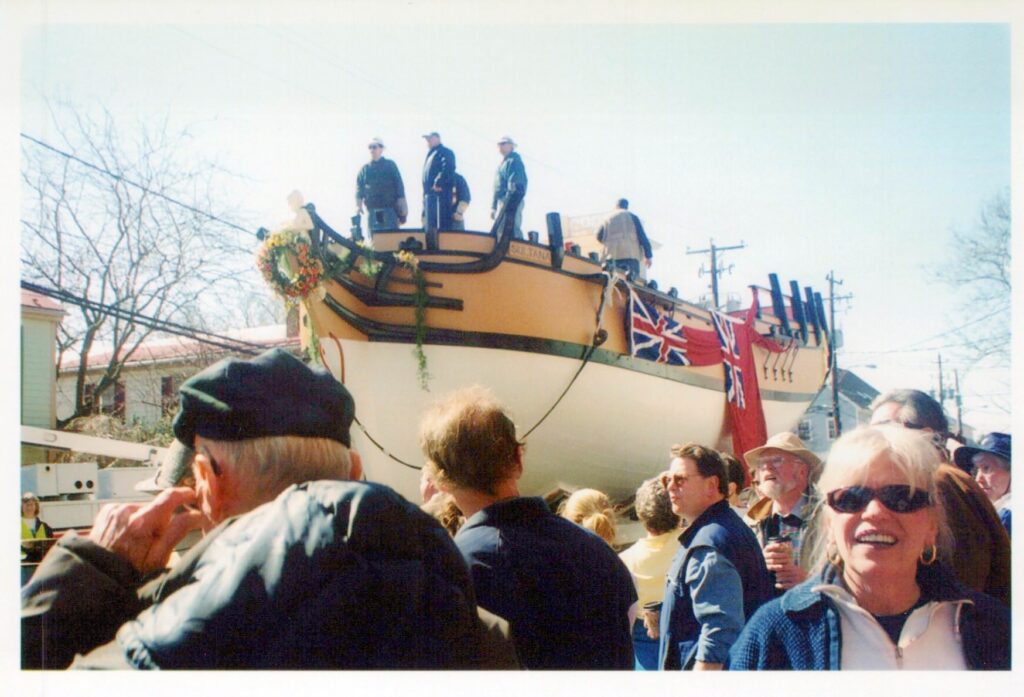
The last time I visited Chestertown was on Sultana’s March 24, 2001 Launch Day. The freshly cleaned, 97-foot ship sported a lovely flower wreath on her bow. Sultana looked ready for her grand adventure! To add to the excitement, hundreds of residents and visitors milled around outside the boat shed, waiting for the big event to begin.
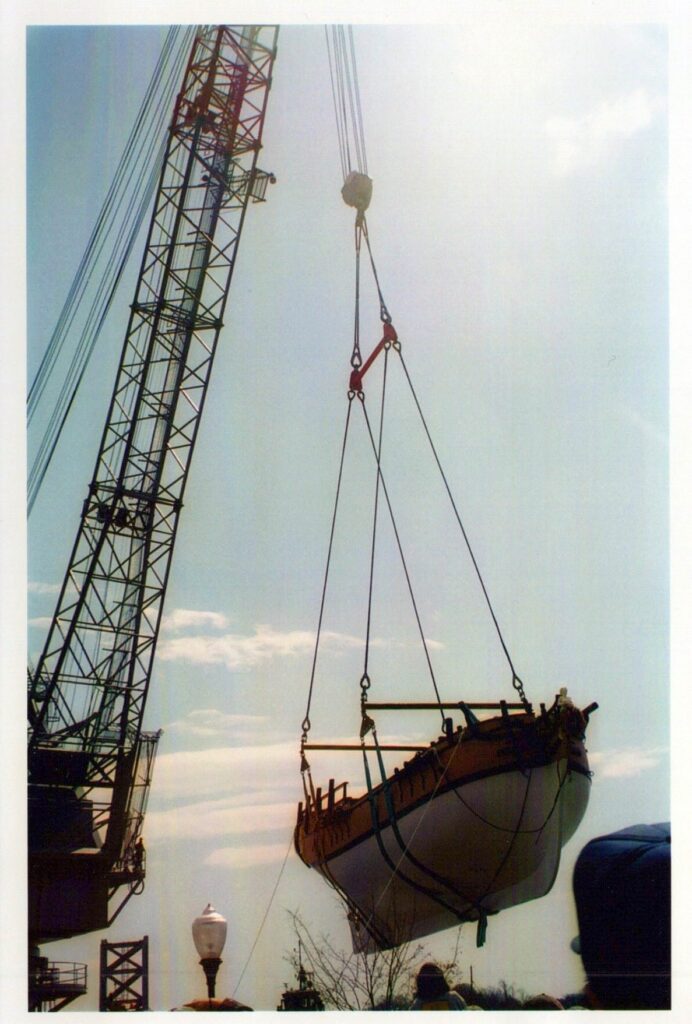
Finally, the big semi-truck and flatbed trailer rumbled into downtown Chestertown. About two hours later, the 130,000-pound Sultana was positioned on the trailer. Enthusiastic schoolchildren lined up along the vessel’s keel, each displaying their Chesapeake Bay-themed artwork.
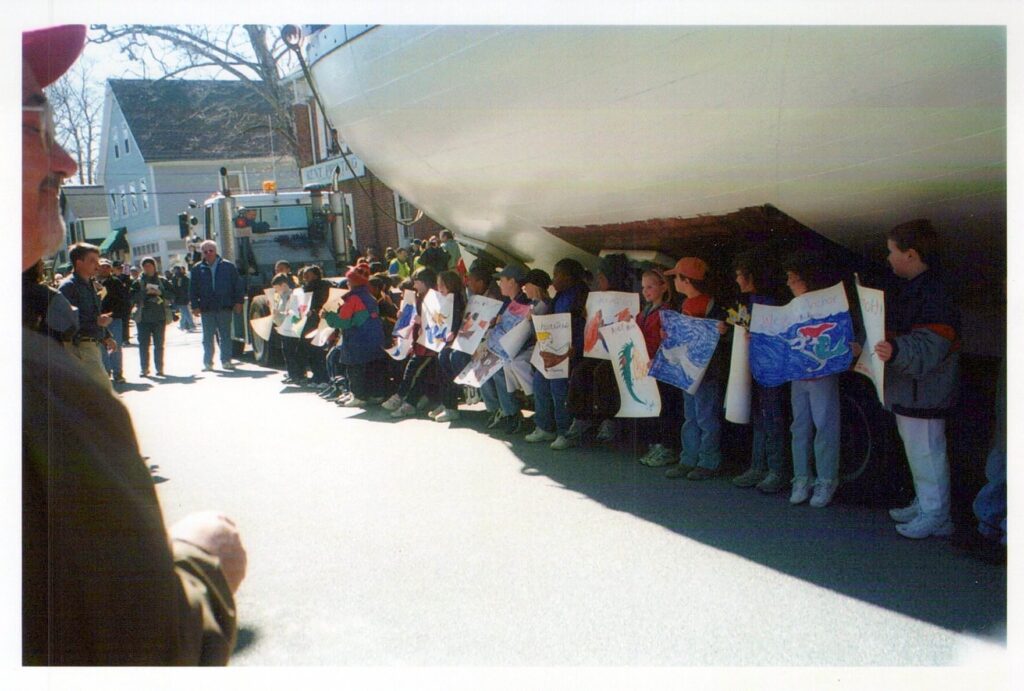
Stately Sultana then began the two-hour, five-block trip to the Chester River launch site. Much of Chestertown turned out to make the trek with her. At the dock, the Kent County Marching Band gave a lively concert and boatbuilder John Swain thanked everyone for their hard work and dedication. The U.S. Army Corps of Engineers lowered Sultana into the water with aid from a huge floating crane and barge. Once Sultana was afloat, the Corps raised (stepped) the vessel’s masts and bowsprit. Captain Gioia Blitz managed the crew’s rigging of the sails, turning Sultana into a proper sailing ship.
Now called the Sultana Education Foundation, the non-profit focuses on restoring and preserving the Chesapeake Bay. The Foundation’s public sails offer opportunities to experience the Chesapeake Bay’s magic firsthand. Students are especially lucky — they get to see the Chesapeake Bay from a moving boat rather than looking at videos in a classroom. While students are learning about fish, crabs, and ecosystems, the Sultana’s educational programs support educators’ curriculum goals.
During the summers, elementary and middle school students can enjoy Sultana Camp along with three-day and five-day Sultana trips. Kayak camp and canoe camp also offer opportunities to get kids up-close-and-personal with the Chesapeake Bay’s complex (and fragile) ecosystem. To fund the organization’s activities, the Sultana Foundation hosts an annual gala plus several popular community events. Although I may never visit the Schooner Sultana again, I’m happy to share her richly textured story.
Anyone who follows Tall Ships activities will also know that Schooner Sultana is now listed in the Tall Ships America roster of ships. Sultana’s striking appearance and quality construction helped her gain acceptance to this non-profit Tall Ships registry.