
The somewhat nebulous phrase “we’re Downsizing” generally means shedding a little (or a lot) of unwanted “stuff.” Sometimes, downsizing means donating your excess clothing and shoes to a local thrift store ─ in other words, thinning out the closet. Maybe you’re just tired of tripping over wall-to-wall furniture and décor, so you’re considering a whole-house “Estate sale” ─ but you’re not going anywhere.
But in the disruptive version of downsizing, you might be preparing to make a major life change. You’ve decided to move to a much smaller place ─ and you can’t take it all with you. And if you’re about to embark on a boat (or RV) trip, you’re painfully aware that your current comfy Lifestyle will soon go by the wayside. The size of the boat (or the RV rig) will dictate the degree of disruption you’re about to face. It could extend far beyond your inability to find cozies and boat drink umbrellas for Happy Hour.
We were smacked by the latter reality while preparing for our 1997-1998 sailing cruise to Florida. Back then, we were renovating an older home south of Annapolis, Maryland. Although the house was “in process,” it did have one delightfully large room that kept our excess “stuff” hidden from public view. And we had sufficient wall space (and horizontal surfaces) to display the décor we had collected over the years. We even had some original artwork and stained glass from two of our favorite artists. Unfortunately, there wasn’t room for any of these treasures on Santorini.
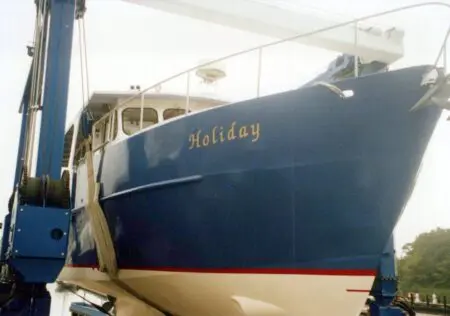
Cruising on our Bristol 30 Santorini could be described as “a bit rustic.” In Fall 1997, we had begun packing for a six-month cruise down the Intracoastal Waterway to Florida. We would leave in late fall/early winter, so we needed heavier clothes such as turtlenecks and fleece sweaters (and even parkas!).
We also planned to pack warm-weather clothing for the Florida portion of the trip. My “minimalist” husband would be happy with a few T-shirts, two pairs of shorts, swim trunks, one pair of long pants, a fleece sweater, and a rain jacket. However, as a fan of coordinated outfits, I piled multiple tops, shorts, bathing suits, and beach towels onto the bed (our staging area). Naturally, I needed a nice outfit for a trip to a decent restaurant. And let’s not forget the toiletries and personal stuff.
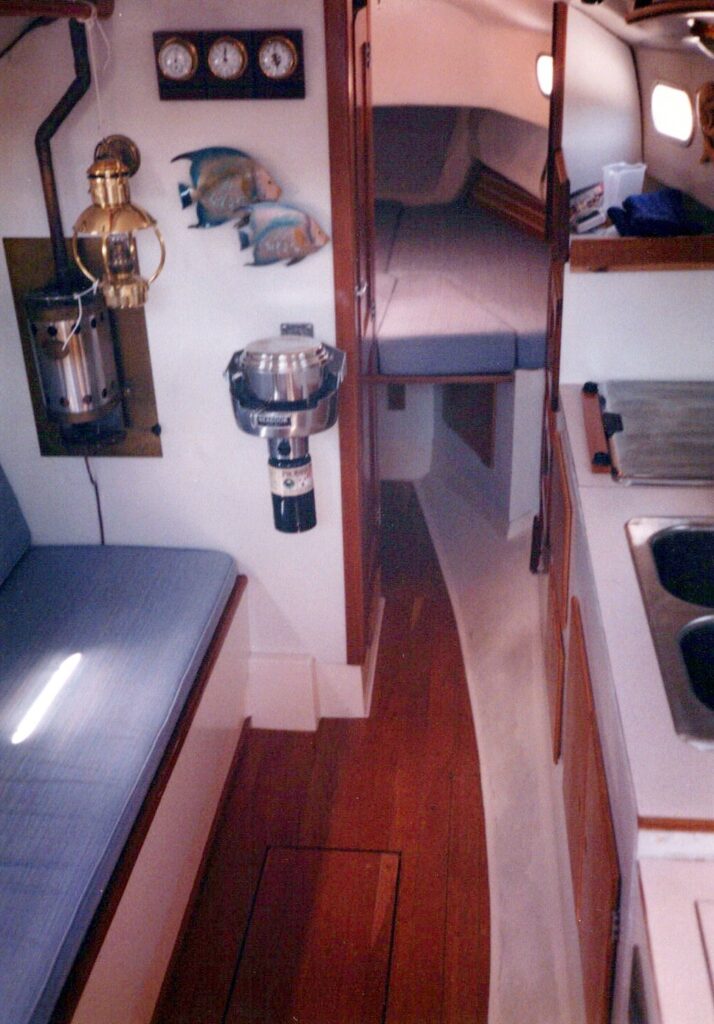
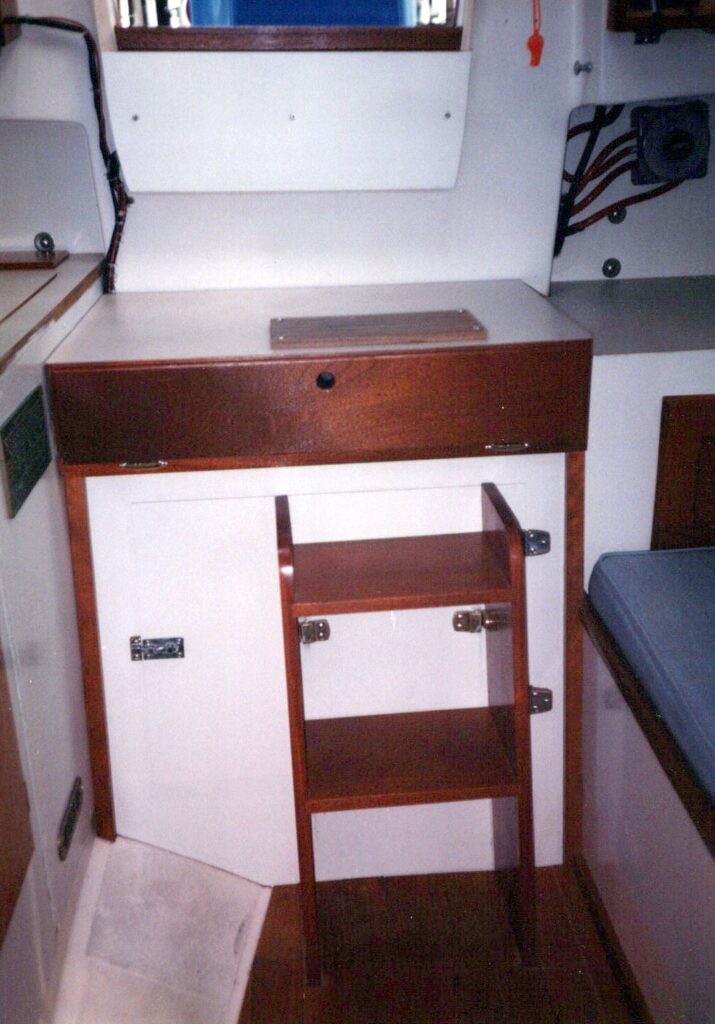
I remember hauling all this gear aboard and piling it on the settee (small sofa). Eyeing up the mountain of items, I realized we were in big trouble. What were we thinking? To be fair, Santorini had an incredible amount of storage space for a boat her size. We found cubbyholes under the settee, behind the backrest cushions, and in various random lockers. I crammed every bin chock full of treasures. That doesn’t mean we remembered where we put everything ─ but we knew it was aboard ─ somewhere.
And now let’s address the food storage situation. In preparation for the cruise, we brought multiple milk crates of HEAVY canned goods, pasta and rice, and lots of other non-perishable food aboard. I quickly filled any remaining space with these items, as we wanted to be as self-sufficient as possible. And if we made it to The Bahamas, certain food items would be difficult (or impossible) to find in small island grocery stores (especially for me, a longtime vegetarian).
After we maxed out the cabinet storage, I piled the remaining milk crates of food on the cabin floor. On the positive side, all that extra weight helped stabilize our light weekender sailboat. However, one night I broke a toe trying to navigate the milk crates barefoot in the dark (see photo of floor next to blue settee). And because we hadn’t catalogued any food, we could never find specific meal or snack items. Finally, did I mention that the extra weight caused the boat to sink about a foot lower in the water?
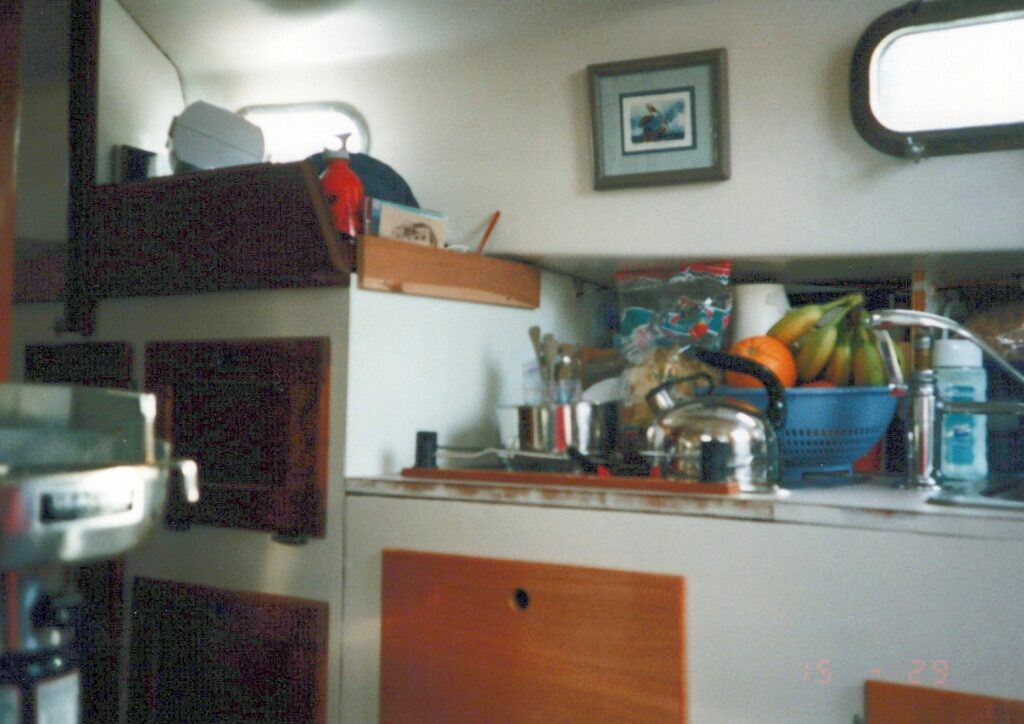
Although Santorini was a lovely older 30-foot sailboat, her hourglass hull configuration offered the living space of a modern 24-foot boat. My 6’ 2” husband found the interior somewhat cramped, and keeping everything in its place was a challenge.
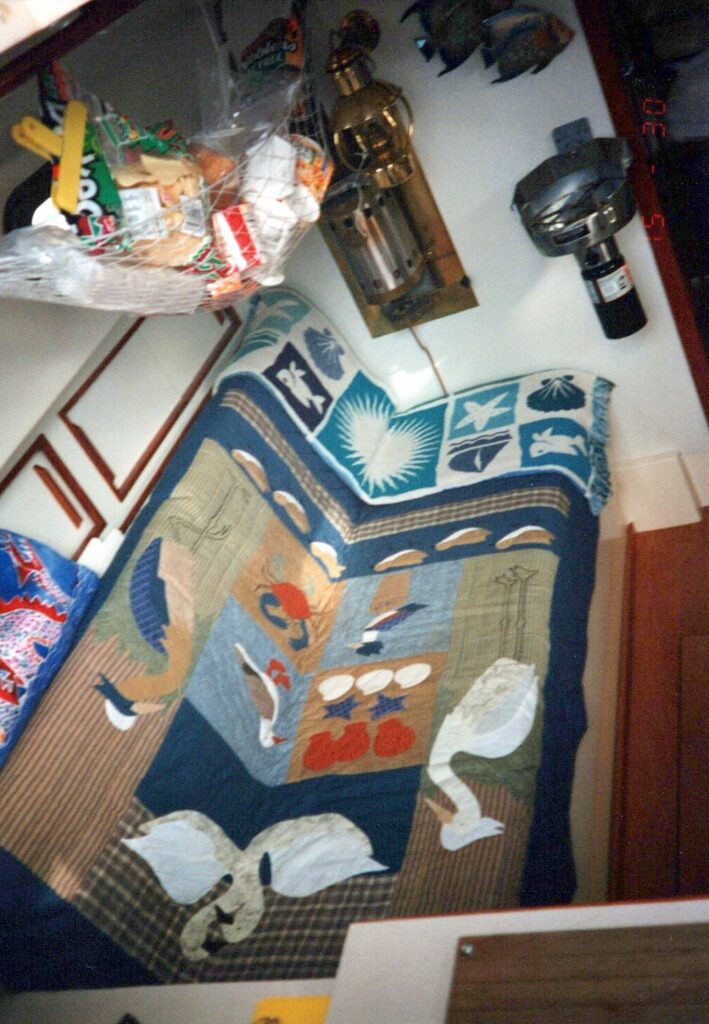
As we progressed down the Intracoastal Waterway, we also realized that some of our stowage methods didn’t work. Two prime examples: (1) The overripe bananas in the hanging macrame basket dripped on me while I was sleeping on the settee. (2) The food items piled behind the stove (see photo) often lurched around as we navigated the choppy water and frequent vessel wakes.
Over time, we learned four priceless small-space living lessons:
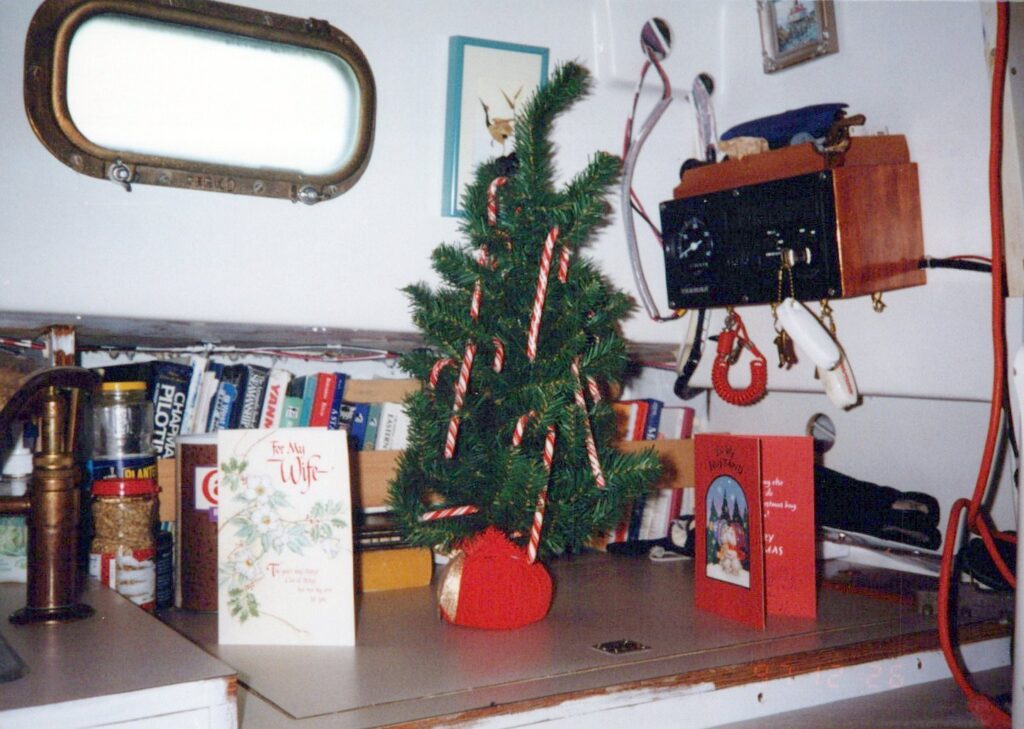
Now almost three decades later, we would approach that trip differently. First, we would find a larger boat with more comforts and conveniences. We are officially done with the “rustic living” phase. Equally importantly, we have re-evaluated our life priorities. Here’s how we would redesign that small-space living experience:
Prioritize Our Health and Well-Being
Getting mired in “To Do” lists can make you feel like a hamster on a wheel. As long as the hamster (you) can keep going, you don’t realize that this frenetic pace takes a toll on your physical, emotional, and mental well-being. By paring down the lists, and taking time for Exercise and enriching activities, you’re taking steps toward a healthier life.
Don’t Overwhelm the Small Space with “Stuff”
A nicely furnished small space offers a pleasant living, working, and/or entertaining setting. That said, cramming too much furniture and décor into it can create a sense of claustrophobia. Today, we would choose a couple of nice furniture pieces along with minimal décor. This creates a more spacious feel and leaves room for a couple of “must have” accent pieces later.
Leave Time for Spontaneity and Fun
Keeping your living space neat and tidy does require some ongoing effort. The phrase “everything in its place” applies to small and large homes, apartments, boats, and RVs. With minimal daily work, you can keep your small space organized (and even ready for unexpected visitors). And when they arrive, it’s permissible to postpone the de-cluttering and savor the time with your Family or friends.