Get your Freebie


Soft Life: How to Embrace a Balanced Lifestyle Without Guilt
The modern world pushes you to work harder, move faster, and achieve more at every turn.
But a growing movement called “soft life” offers a different path forward.
Soft life is a lifestyle that prioritizes comfort, rest, and peace while intentionally reducing Stress and unnecessary struggle.
This approach to living challenges everything you’ve been told about success and productivity.
Instead of grinding through exhaustion, soft life encourages you to set boundaries and choose ease over chaos.
The movement started in the Nigerian influencer community and has spread globally as people seek alternatives to constant hustle.
You might wonder if living a soft life means being lazy or avoiding responsibility.
The reality is more nuanced than that.
Soft life is about working smarter, protecting your energy, and creating space for what truly matters to you.
Soft life centers on choosing ease over stress and peace over pressure.
This lifestyle prioritizes Mental Health, intentional choices, and personal boundaries rather than constant struggle.
The term “soft life” started in the Nigerian influencer community as slang for comfortable, low-stress living.
It described a way of life focused on ease and minimal challenges.
Social media helped spread this concept worldwide.

The idea gained momentum among people tired of hustle culture and constant pressure to achieve more.
Key cultural shifts that fueled the movement:
Young professionals especially embrace this mindset.
They’re rethinking what it means to truly thrive in modern life.
Living a soft life means making intentional choices that reduce unnecessary stress.
You create boundaries that protect your energy and time.
Essential principles include:
Intentional living plays a major role in this lifestyle.
You make conscious decisions about how to spend your time and energy.
This approach focuses on vulnerability and emotional Health.
You allow yourself to feel and process Emotions instead of pushing through everything.
The soft life isn’t about avoiding all challenges.
It’s about removing unnecessary struggles and choosing easier paths when possible.
Many people confuse soft life with luxury living, but they’re different concepts.
Luxury focuses on expensive items and status symbols.
Soft life prioritizes comfort and peace regardless of income level.
Key differences:
| Luxury Lifestyle | Soft Life |
|---|---|
| Expensive purchases | Simple pleasures |
| Status-focused | Peace-focused |
| External validation | Internal satisfaction |
| Material wealth | Emotional wealth |
You can live a soft life on any budget.
It’s about making choices that bring you calm and happiness rather than stress.
Someone with luxury might still feel overwhelmed and stressed.
A person living a soft life focuses on reducing pressure and creating ease in daily routines.
The soft life emphasizes quality of experience over quantity of possessions.
You choose activities and relationships that add value to your well-being.
People are stepping away from the constant pressure to work harder and achieve more.
They’re choosing peace and well-being over endless productivity demands.
Hustle culture tells you that success only comes through constant work.
This mindset says you must always be busy to prove your worth.
The culture measures success by wealth, status, and achievements.
It makes you feel guilty for taking breaks or enjoying free time.
Social media makes this worse.
You see others posting about their work at all hours.
This creates pressure to match their energy levels.
Key problems with hustle culture:
Your mental health takes a hit when you never stop working.
The constant push to do more creates Anxiety and stress.
Many people now question if this lifestyle is worth it.
They’re asking why success has to come with so much suffering.
Burnout happens when you work too hard for too long without rest.
Your body and mind start to shut down from the pressure.
Recent surveys show that 72% of Americans want to define success differently.
They prefer happiness over hustle culture’s demands.
Physical signs of burnout include constant tiredness and getting sick often.
Your body warns you when it needs a break.
Mental symptoms are just as serious.
You might feel empty, angry, or unable to focus.
Work that once excited you becomes a chore.
Common burnout effects:
Young people face this problem the most.
Low wages and high expectations push them toward burnout faster.
The cost of living keeps rising while salaries stay flat.
This makes the hustle mentality feel pointless for many workers.
Balance means making time for work and personal life.
You don’t have to choose one over the other completely.
This approach values your well-being as much as your career goals.
Rest becomes part of success, not something that stops it.
You can set clear work hours and stick to them.
This protects your personal time from work demands.
Ways to create better balance:
Many people are leaving high-stress jobs for simpler work.
They’re choosing peace over paychecks when possible.
This shift doesn’t mean you stop caring about your career.
It means you care about your whole life, not just work.

Setting clear limits helps you create more space for rest and enjoyment in your daily life.
Strong boundaries protect your time and energy while reducing stress at work and home.
Boundaries are limits you set to protect your well-being.
They help you say no to things that drain your energy.
When you set healthy boundaries, you create more time for activities that bring you joy.
This might mean turning off work emails after 6 PM or saying no to social events when you need rest.
Physical boundaries protect your personal space and comfort.
You decide who can touch you and when you need alone time.
Emotional boundaries protect your feelings and mental health.
You choose how much emotional energy to give to others and their problems.
Time boundaries help you control your schedule.
You decide how to spend your hours and protect time for yourself.
Setting boundaries takes practice.
Start small by identifying one area where you feel overwhelmed.
Then communicate your limits clearly to others.
Work-life boundaries prevent your job from taking over your personal time.
These limits help you avoid burnout and enjoy life more.
Digital boundaries are essential in today’s world:
Physical boundaries help separate work and home spaces.
If you work from home, create a dedicated workspace.
Close your laptop at the end of the day.
Communication boundaries involve setting clear expectations with coworkers and bosses.
Tell them when you are and aren’t available.
Practice saying phrases like “I’ll respond to this tomorrow” or “I’m not available after 7 PM.”
Most people will respect your limits when you communicate them clearly.
Personal boundaries protect your relationships and well-being.
Here are specific examples you can use in your daily life.
With Family and friends:
In social situations:
For your mental health:
Financial boundaries include not lending Money you can’t afford to lose and not sharing details about your income.
Remember that boundaries aren’t selfish.
They help you stay healthy so you can be present for the people and activities that matter most.
Self-care becomes the foundation of soft living through daily practices that support your mental and physical health.
Building consistent rituals helps you maintain balance while creating boundaries that protect your energy and time.
Your mental health thrives when you create space for rest and emotional processing.
Soft living means giving yourself permission to slow down when stress builds up.
Daily mental health practices include:
Sleep becomes a priority in soft living.
Aim for 7-9 hours each night to help your brain recover and manage stress better.
You can protect your mental energy by saying no to activities that drain you.
This isn’t selfish—it’s necessary for maintaining good mental health.
Stress management techniques:
Physical wellness in soft living focuses on gentle, sustainable habits rather than extreme fitness routines.
Your body needs movement, nutrition, and rest to function well.
Choose physical activities you enjoy instead of forcing yourself into workouts you hate.
Walking, swimming, Yoga, or dancing all count as beneficial movement.
Simple daily habits for physical health:
Listen to your body’s signals about hunger, tiredness, and pain.
Rest when you need it instead of pushing through exhaustion.
Create a comfortable living space that supports your physical well-being.
Good lighting, clean air, and organized surroundings help you feel better.
Self-care rituals give structure to your soft living practice.
Start with small, manageable routines that fit into your current schedule.
Morning ritual ideas:
Evening rituals help you wind down and prepare for rest.
Turn off screens an hour before bed and do something calming instead.
Weekly self-care activities:
Track what makes you feel good and build those activities into regular habits.
Your self-care rituals should feel nourishing, not like another item on your to-do list.
Start with one small ritual and add others gradually.
Consistency matters more than perfection when building sustainable well-being practices.
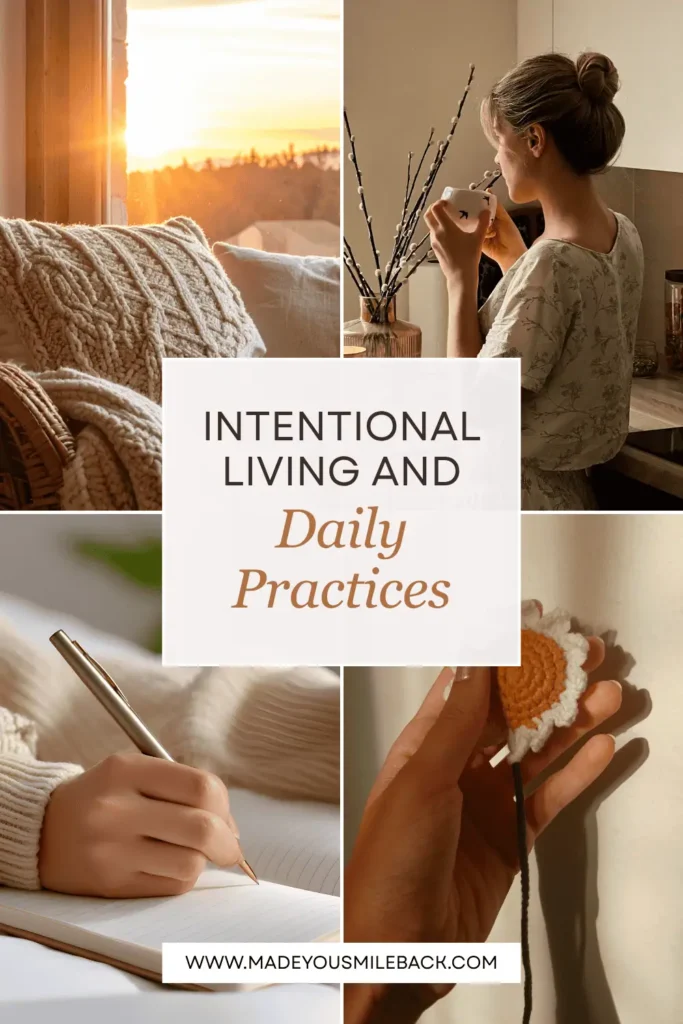
Intentional living forms the backbone of a soft life through purposeful choices that create calm and balance.
Building supportive spaces, developing mindful habits, and recognizing small victories helps you move through life with more ease and less stress.
Your surroundings shape how you feel every day.
A supportive environment makes living a soft life much easier to maintain.
Start with your bedroom.
Keep it clean and free of clutter.
Add soft lighting like table lamps instead of harsh overhead lights.
Choose bedding that feels good against your skin.
Your kitchen should feel peaceful too.
Store healthy snacks where you can see them.
Keep a water bottle filled and ready.
Put away dishes after each meal to avoid piles.
Create calm in your workspace.
Remove items you don’t need.
Add a small plant or photo that makes you smile.
Keep your phone in a drawer during focused work time.
Key Environment Changes:
Daily rituals anchor your soft life practice.
These small actions create rhythm and help you stay centered.
Morning habits set your tone.
Make your bed right after waking up.
Drink a full glass of water before coffee or tea.
Spend five minutes stretching or doing deep breathing.
Evening routines help you wind down.
Put devices away one hour before sleep.
Take a warm bath or shower.
Write down three things that went well during your day.
Meal times become more intentional too.
Eat without distractions like TV or phone.
Chew slowly and taste your food.
Prepare simple meals with fresh ingredients when possible.
Daily Practice Schedule:
Balance comes from noticing good moments in regular days.
Small celebrations keep you connected to what matters most.
Acknowledge when you complete tasks.
Finished all your work emails? Take a moment to feel good about it.
Made a healthy dinner? Give yourself credit for caring about your body.
Share wins with people you trust.
Text a friend about your promotion.
Tell your family about the book you finished reading.
These connections make victories feel bigger.
Create simple rewards for yourself.
Buy fresh flowers after a hard week.
Watch your favorite movie when you reach a goal.
Take a longer bath on Sunday evening.
Ways to Celebrate:
Many people wrongly think a soft life means being lazy or avoiding work completely.
Others believe it’s only for wealthy people who can afford luxury lifestyles.
Soft life doesn’t mean you stop being productive.
It means you work in a way that protects your well-being and mental health.
You can still meet deadlines and reach goals while living softly.
The difference is how you approach your work and daily tasks.
Key differences between soft life and laziness:
Many high-achieving professionals choose soft life principles.
They focus on working smarter instead of harder.
You might take regular breaks during work.
You could say no to extra projects that cause stress.
These choices help you stay productive longer.
Soft life actually improves your productivity over time.
When you rest properly and manage stress, you think more clearly and make better decisions.
Soft life isn’t about having money for spa days or expensive vacations.
You can live softly on any budget by changing your mindset and daily habits.
Free ways to embrace soft life:
You don’t need luxury items to prioritize your well-being.
Simple changes like drinking more water or going to bed earlier cost nothing.
Many people think soft life requires privilege.
While money can make some aspects easier, the core principles work for everyone.
Focus on small daily choices that reduce stress.
You might meal prep on Sundays to make weekdays calmer.
Or you could ask for help with household tasks.
The goal is finding peace within your current situation.
This might mean different things based on your circumstances, but everyone deserves rest and comfort.
Soft life represents a lifestyle shift away from constant stress and hustle culture.
You prioritize peace, comfort, and intentional living over endless productivity.
This movement started in the Nigerian influencer community.
It has spread worldwide as people seek better work-life balance.
Living a soft life means:
You don’t need luxury or excess to embrace this lifestyle.
It works for working professionals, parents, and students alike.
Key principles include:
The soft life isn’t about being lazy.
You still accomplish your goals, but you do it without burning out.
You can start small by creating boundaries around your time and energy.
Focus on what truly matters to you rather than trying to do everything.
This approach helps you move through daily challenges with less stress.
With embracing the ‘soft life’, you learn to value your well-being as much as your achievements.
The post Soft Life: How to Embrace a Balanced Lifestyle Without Guilt appeared first on Made You Smile Back.
Originally Published on https://madeyousmileback.com/