

The call came at 11:47 PM on a Tuesday. Sarah, a VP at a fast-growing tech company, was supposed to be celebrating—her team had just closed their biggest deal of the year. Instead, she was sitting in her home office, laptop open, responding to “urgent” emails that could have waited until morning.
“Doug,” she said when I answered, “I think I’m in trouble. Not with the company—we’re crushing our numbers. But I can’t keep doing this. I feel like I’m always on, always behind, and honestly… I don’t think I’m the leader I used to be.”
Sarah isn’t alone. In fact, she’s part of a massive leadership crisis that’s hiding in plain sight.
According to Development Dimensions International’s latest research, nearly 60% of leaders report feeling “used up” at the end of each workday. Korn Ferry found that 43% of senior executives struggle with imposter syndrome. Mental Health UK’s recent Burnout report reveals that one in three adults experience high or extreme levels of pressure “always” or “often.”
But here’s what these statistics don’t capture: the human cost of leadership approaches that weren’t designed for how we actually work today.
The brilliant executives who are burning out faster than they can be replaced. The innovative companies stalling because their leadership teams are running on empty. The families seeing less of their loved ones because “being a leader” has become synonymous with “being always available.”
This isn’t a character flaw or a lack of resilience. It’s a system problem requiring system solutions.
Through my work with hundreds of executives and three decades of leadership experience spanning military command, Fortune 500 banking, and serial entrepreneurship, I’ve identified three specific crises that are breaking even the most capable leaders:
Remember when leadership meant walking the floor, grabbing coffee with team members, reading the room during meetings? Those days are gone for most leaders.
With 80% of teams now working remotely or hybrid, the informal information network that used to be the backbone of effective leadership has completely vanished. You can’t read the room when everyone’s on mute. You can’t sense tension when you’re looking at a grid of video windows. You can’t have spontaneous conversations when every interaction must be scheduled.
Leaders are trying to inspire people through screens, build Relationships over Slack, and manage team dynamics they literally cannot see. The result? Teams that are technically productive but emotionally disconnected, with problems that don’t surface until they become crises.
Modern leaders are expected to be mind readers, therapists, strategists, and firefighters—all while maintaining a positive, inspiring presence. Every notification could be urgent. Every decision needs their input. Every crisis requires their attention.
The average leader makes 150+ decisions per day, from major strategic choices to routine operational questions. They’re in video calls while reviewing documents, responding to emails during presentations, thinking about the next meeting while trying to focus on the current one.
This constant task-switching doesn’t just reduce efficiency—it reduces the leader’s ability to be fully present for anything. Team members notice when their leader is distracted. Important details get missed because no one is giving anything their complete attention.
The third crisis might be the most complex: the growing gap between traditional leadership approaches and the expectations of younger team members.
Millennials and Gen Z now make up 75% of the global workforce, yet most leaders—and most leadership development—was designed for a workforce that no longer exists.
This isn’t about stereotyping generations. It’s about recognizing that leadership effectiveness requires meeting people where they are, not where you wish they were. When your communication style doesn’t match your team’s preferences, when your feedback approach doesn’t resonate, when your motivational strategies fall flat—that’s not a team problem, that’s a leadership adaptation problem.
Here’s the uncomfortable truth: most leadership development is actually contributing to these problems rather than solving them.
Walk into any leadership conference and you’ll hear the same promises: “Transform your leadership. Unlock your potential. Become the leader you were meant to be.”
It sounds inspiring. It’s also useless.
Why? Because inspiration without implementation is just expensive Entertainment. Most leadership development stops at inspiration, leaving leaders to figure out implementation on their own.
You’ll learn about emotional intelligence, but not how to actually apply it when your team is in crisis mode and you have 20 minutes to make a decision affecting everyone’s quarter.
You’ll appreciate the importance of authentic leadership, but get no guidance on what that looks like when managing someone whose work style is completely different from yours.
You’ll agree that work-life balance matters, but receive no practical tools for creating boundaries when your industry operates across global time zones.
After watching countless capable leaders burn out using approaches that weren’t designed for modern challenges, I developed what I call Common Sense Leadership—a framework built on three foundational principles:
Reality-Based Decision Making: Starting with what’s actually happening, not what you wish were happening or what the latest business book suggests should be happening.
Human-Centered Systems: Designing processes that work with human nature rather than against it, accommodating different communication preferences, working styles, and motivational drivers.
Sustainable Practices: Building approaches that can be maintained over time without burning out people or systems.
This isn’t about lowering standards or avoiding difficult decisions. It’s about being smart enough to work with reality rather than against it.
Let me give you a concrete example. One of my clients, a director at a logistics company, was drowning in communication. Everything felt urgent, nothing felt urgent, and important issues were getting lost in the noise.
Instead of implementing another communication tool or mandating response times, we applied Common Sense Leadership:
Reality-Based Assessment: We tracked what types of communication were actually happening, who needed what information when, and where the real bottlenecks existed.
Human-Centered Design: We created different communication channels for different types of information, with clear purposes and response expectations that matched how people actually preferred to work.
Sustainable Implementation: We built the system to function without constant management oversight, with regular reviews to ensure it evolved with changing needs.
The result? Communication overload decreased by 60%, response quality improved dramatically, and the director regained control of his schedule and mental bandwidth.
The leadership challenges we’re facing—distributed teams, constant change, generational differences, information overload—can’t be solved with motivational speeches or personality assessments.
They require leaders who can think clearly about complex situations, design solutions that work for real humans, and build approaches that are sustainable over time.
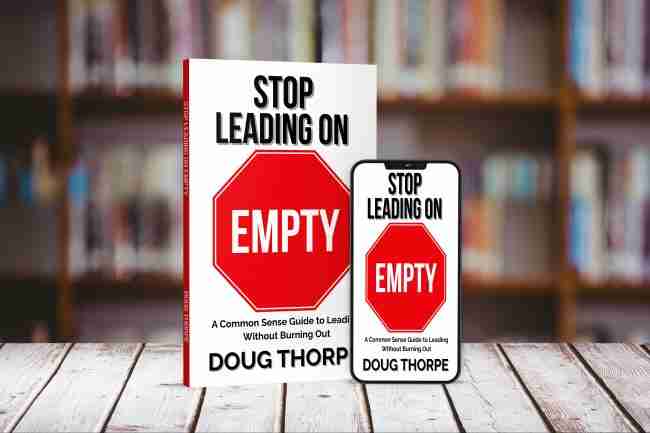
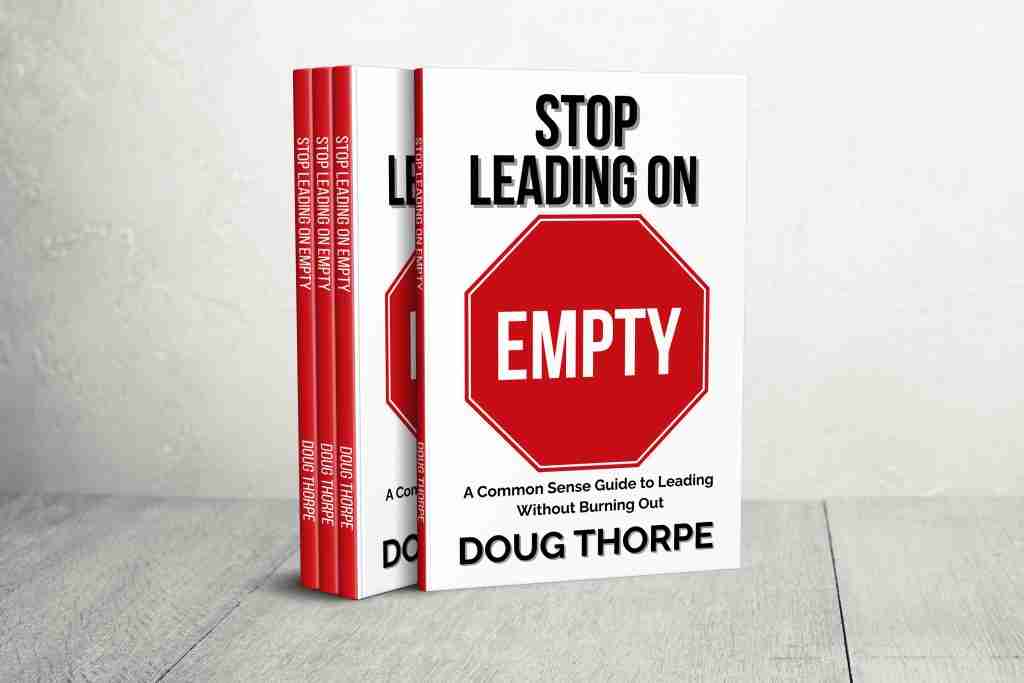
In my new book, “Stop Leading on Empty: A Common Sense Guide to Leading Without Burning Out,” I share the complete framework for addressing these three crises. You’ll discover specific strategies for building genuine connections with distributed teams, creating anti-burnout systems that actually work, and bridging generational gaps without compromising your leadership effectiveness.
But you don’t have to wait for the book to start making changes. Here are three questions you can ask yourself right now:
You can continue trying to solve modern leadership challenges with outdated approaches, hoping that working harder or attending another leadership conference will somehow make the difference.
Or you can start building leadership practices that actually work in the world as it exists today.
The leaders who make this shift will have an enormous advantage in attracting talent, building resilient organizations, and creating sustainable impact.
More importantly, they’ll discover that leadership can be energizing rather than depleting, effective rather than overwhelming, and sustainable rather than something that slowly consumes everything else in your life.
The world needs leaders like that. Your organization needs leaders like that.
And you can become that kind of leader, starting right now.
Doug Thorpe is the author of “Stop Leading on Empty: A Common Sense Guide to Leading Without Burning Out” and host of the “Leadership Powered by Common Sense” podcast. With 30+ years of leadership experience spanning military service, Fortune 500 banking, and serial entrepreneurship, he helps overwhelmed executives build sustainable practices that prevent burnout while maintaining impact. Learn more at www.dougthorpe.com.
The post The Leadership Crisis Nobody Wants to Talk About (And Why Your Next Promotion Might Break You) appeared first on Business Advisor and Executive Coach | Doug Thorpe.