
Part 1 of a 3-part series highlighting some of the key insights from the 2025 Year-End TMA report. Download your copy today for free.
“I’ve tried [to Sleep] less, but … even though I’m awake more hours, I get less done, and the brain pain level is bad if I get less than six hours [of sleep per night].” Elon Musk
One of the busiest people in the world admits he needs to get sleep. Yet so many do not.
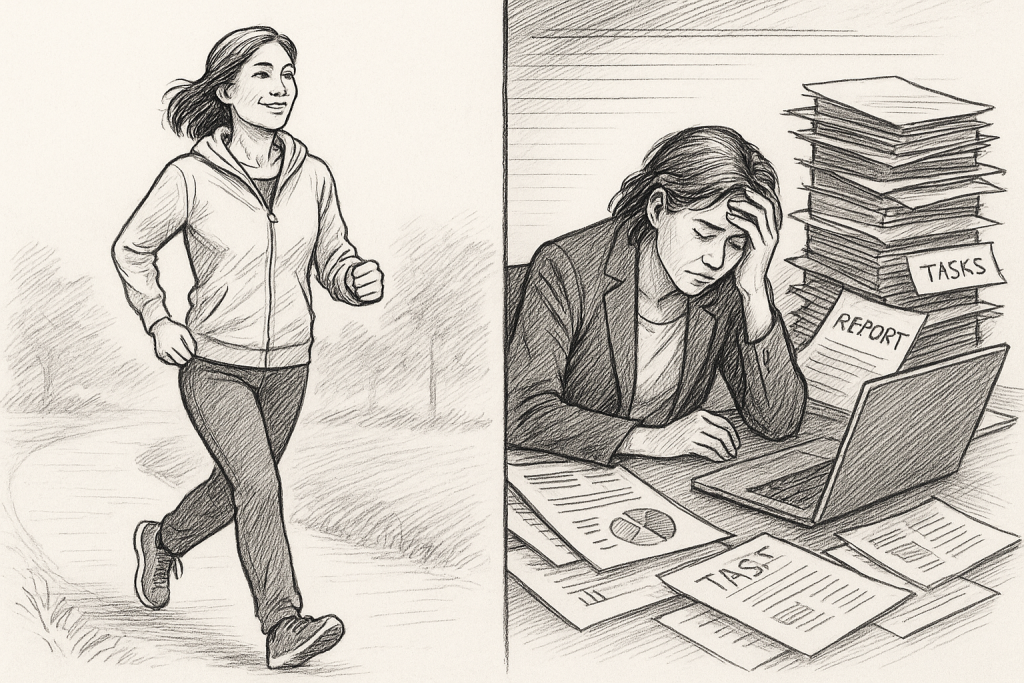
The Time Management Analysis (TMA) assessment looks at our use of time in 5 major categories of task management, personal care, focus, organization, and planning. For those who took the TMA in 2025, personal care was the bottom category by far. It drags overall scores down by 10–12%.
There are three personal care attributes that tie back to the evaluation: sleep, breaks, and Exercise. When you look at the three considering the 2025 data you see:
| Attribute | Max Index | Average Index | % of Optimal |
| Sleep at least 8 hours | 100 | 35.4 | 35% of optimal |
| Take at least one break during the day | 100 | 53.1 | 53% of optimal |
| Exercise regularly | 100 | 52.9 | 53% of optimal |
If you are tracking with the average TMA-er, nearly two-thirds regularly operate in a sleep deficit. Barely half find any time to breakaway from their work duties — checking emails at lunch or multitasking instead of fully recharging. Factor in exercise and at best the group is inconsistent with any fitness habits. Many start strong but lose momentum under work pressure.
Sound familiar? Here’s what you need to consider.
Sleep isn’t just rest — it’s recovery for decision-making, emotional control, and strategic thinking. When professionals consistently get 7–8 hours, they process information faster and make fewer time-costly mistakes.
Chronic sleep debt, on the other hand, erodes focus, reaction time, and self-discipline — the very ingredients of effective time management. Improving sleep hygiene starts with structure: keeping consistent bedtimes, limiting screens after hours, and treating rest as a scheduled appointment, not a luxury. A well-rested leader can plan with Clarity and act with precision — turning each hour into productive, intentional time.
If you can’t do 7 to 8, then at least try and be like Elon and get to 6 hours consistently.
The 2025 Year-End Review combines data from all Time Management Analyses (TMA) assessments in 2025 to reveal where individuals and teams lose time — and how they can regain control.
You’ll see how real professionals scored across the five core categories:
Too many professionals confuse “working through lunch” with dedication. In reality, cognitive performance drops sharply after 90 minutes of uninterrupted focus. Short, intentional breaks restore mental energy and creativity, preventing time-draining errors and decision fatigue later in the day.
A five-minute reset every hour, a walk, deep breathing, or even silent reflection — helps sustain energy for the long game. When teams normalize recovery moments, they get more done with less strain, transforming their daily schedule from a grind into a rhythm.
Adapt what is right for you but take a break.
Regular movement fuels both body and brain. Exercise improves memory, lowers Stress hormones, and boosts stamina — all vital for managing long hours and demanding schedules.
Professionals who move regularly report sharper focus, greater resilience, and more consistent motivation throughout the week. The key isn’t perfection; it’s consistency.
Even 20 minutes of walking, stretching, or resistance work three times a week can improve concentration and mood regulation. Physical energy becomes time energy — the difference between running out of gas midweek or sustaining strong performance all month.
Start small and work your way up.
Of the 5 categories in the TMA, personal care is the easiest to implement because you have the most control over when and how to exercise and sleep. Taking a break might be a little harder, but we’re not talking about a lot of time – just focused breakaway bursts to reset and reinvigorate.
Get started with clarity, download the 2025 Year-End TMA report and then take your own Time Management Analysis assessment. Compare the two and then get on a program that adapts to your unique circumstances.
David Buck is the author of the book The Time-Optimized Life, coauthor of The Retirement Collective, and owner of Kairos (Time) Management Solutions, LLC. Learn how to apply the concepts of proactively planning and using your time. Take the Time Management Analysis (TMA), and the to help bring more quality time into your life.
Content development for this article involved human expertise supported by AI-generated analysis and formatting.
The post Personal Care Is the Weak Link in Corporate Performance first appeared on Infinity Lifestyle Design.