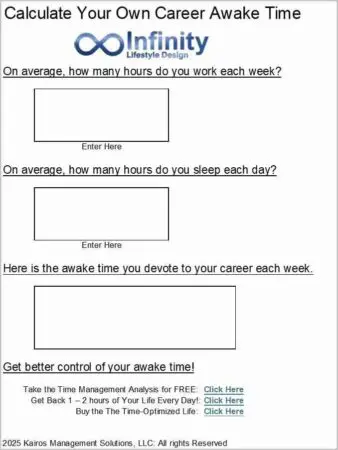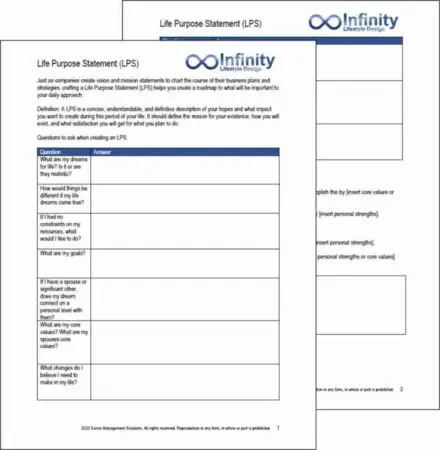

The speed at which we live our personal and professional lives seems to be accelerating. Demands on us, alongside Innovation, have become coupled into an ever increasing push to do more. Ironically I find people (even myself) tell ourselves silently or out loud, “I don’t have time.”
It slips into our thinking when we’re invited to a meeting, asked to take on a project, or reminded about that personal goal we’ve been postponing. The use of time is fixed and constant. The challenge: most people don’t lack time — they lack Clarity on what matters.
Every person gets the same 24 hours each day, we all consume time at the same rate. The difference is how we allocate those hours. The phrase “I don’t have time” is less about the clock and more about our priorities. When you reframe the phrase into the more honest “It’s not a priority”, it changes everything.
Language shapes perception. When we say “I don’t have time”, we make ourselves the victim of a crowded schedule. We react instead of being proactive. But when we say “It’s not a priority”, we confront the real issue: choice.
The honesty may sting, but it also empowers. You’re no longer blaming time; you’re owning your choices.
Through my Time Management Analysis (TMA) work, I’ve seen how people’s schedules rarely match their stated priorities. Many participants claim Family, Health, or Growth are important — yet the analysis shows disproportionate time going to work email, unproductive meetings, or distractions.
On average, people misallocate hours by 20–30%. It’s not that they don’t have time — it’s that their daily actions don’t reflect what they say matters. The gap isn’t in hours, it’s in clarity.
This mismatch creates Stress. People feel “too busy” yet guilty about neglecting what’s truly important. Naming the reality (“it’s not a priority”) is the first step to aligning schedules with values. Too often the guilt is attempted to be assuaged by doing unimportant tasks first.
If priorities are so important, why don’t we align more naturally? Several reasons stand out:
The Retirement Time Analysis (RTA) provides time benchmarks to help you understand the the impact that retirement will have on your approach to life should you choose to stop working.
The way to remove the reactive, “I don’t have time” is to proactively plan your time to set the right priorities.
Mishmash also shows up retirement. Many assume that once they stop working, they’ll “finally have time.” But without clarity, retirees discover that free hours vanish into busyness or drift. The same principle applies: unless you define what’s a priority, time will slip away.
That’s why tools like the Retirement Time Analysis (RTA) help pre-retirees. They highlight how to reallocate time from work into purpose, health, relationships, and growth — before the drift sets in.
The next time you hear yourself say “I don’t have time”, stop and translate it. Say instead: “It’s not a priority.” If the words feel wrong, that’s your signal to realign.
Time isn’t the enemy. Lack of clarity is. When you match your hours to your values, you move from living by default to living by design.
Because in the end, the myth of “I don’t have time” isn’t about scarcity. It’s about ownership.
David Buck is the author of the book The Time-Optimized Life, coauthor of The Retirement Collective, and owner of Kairos (Time) Management Solutions, LLC. Learn how to apply the concepts of proactively planning and using your time. Take the Time Management Analysis (TMA), the Retirement Time Analysis (RTA), or all the other free resources offered to help bring more quality time into your life.
Content development for this article involved human expertise supported by AI-generated analysis and formatting.
The post The Myth of “I Don’t Have Time” first appeared on Infinity Lifestyle Design.