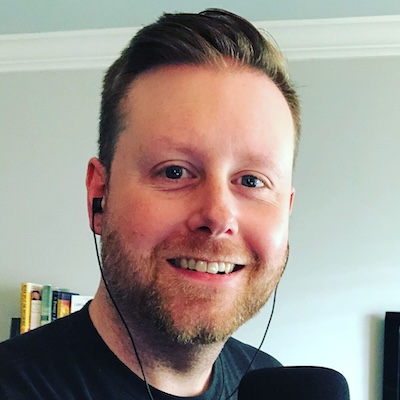

In this episode, Nick speaks with writer and cancer survivor Edward Miskie about identity, resilience, and rebuilding life after cancer. Edward shares his journey through alcoholism, a rare and aggressive cancer diagnosis at 25, and the emotional fallout of survival. He opens up about losing who he was, shedding old identities, learning to create a new version of himself, and the power found in asking yourself what you truly want.
What to listen for:
“The question that changed everything for me was simply: What do you want?”
“Humor and fun helped me survive the darkest moments, even when it felt impossible.”
About Edward Miskie
Edward is currently celebrating 13 years as a sole survivor of a rare Non_Hodgkin’s Lymphoma with the publishing of his book Cancer, Musical Theatre, & Other Chronic Illnesses, available at Barnes & Nobel, Apple Books, Walmart, Amazon, and others.
For the last 20 years, Edward has spent his life in NYC writing, producing, and performing.
Resources:
Check out other episodes about life change from cancer
Interested in starting your own podcast or need help with one you already have?
https://themindsetandselfmasteryshow.com/podcasting-services/
Thank you for listening!
Please subscribe on iTunes and give us a 5-Star review! https://podcasts.apple.com/us/podcast/the-mindset-and-self-mastery-show/id1604262089
Listen to other episodes here: https://themindsetandselfmasteryshow.com/
Watch Clips and highlights: https://www.youtube.com/channel/UCk1tCM7KTe3hrq_-UAa6GHA
Guest Inquiries right here: [email protected]
Your Friends at “The Mindset & Self-Mastery Show”
Nick McGowan (00:01.23)
Hello and welcome to the Mindset and Self Mastery Show. I’m your host, Nick McGowan. Today on the show we have Edward Miske. Edward, how are doing today?
Edward Miskie (he/him) (00:11.107)
How are you?
Nick McGowan (00:12.376)
I’m good, I’m good. I know we’ve had just a little bit of technical issues getting things started, but here we are. I’m excited to talk to somebody who’s from the Northeast. I know when I was describing how the show would be, I was like, here’s kind of a Northeast can of how it’s gonna be. But we’re gonna talk about a pretty fucking heavy topic that sadly a lot of people either experience or know somebody that is going through it or has gone through it.
And I fucking hate cancer and I know you do as well. So man, I’m glad that you’re here. Why don’t you get us started? Tell us what you do for a living and what’s one thing most people don’t know about you that’s maybe a little odd or bizarre.
Edward Miskie (he/him) (00:51.36)
Sure, okay, so I pay my bills working in corporate America, but outside of that, I’m a writer and I consider myself to be a producer in either live or TV film world. It’s been a long journey. I used to do musical theater and some TV and film, and here we are. Here we have landed in this kind of iteration of that life.
thing about me that is kind of weird, bizarre. actually like, and this might be a little bit mild for you, but like, I consider myself more recently than not to be an introvert. And I always thought that I was an extrovert, but that was actually just because I was drinking enough to become an extrovert to kind of like, settle the introverted, introverted want to go home. And I felt kind of
obligated to fight that and stay out and be around people and do all the social things. there is a point to which I really did like that. But it just turned me into an alcoholic. And so I stopped drinking and embraced the fact that I’m more of an introvert than anything.
Nick McGowan (02:08.718)
I don’t think that’s mild and actually man, that’s spot on with my own life. I think there are a lot of us that think, we have to do this sort of thing. Like we have to go out. Like people work in a corporate office, let’s say every Thursday night, everybody goes out to this one specific bar for happy hour. And they all talk about the one person who’s an idiot in their job or whatever else. And they all just do those things. And there are people that are like, well, I want to be part of that crowd. So I’m going to do that. I think that should even ties back to when we were kids.
Like there are certain people that didn’t experience drinking in high school, others that were like, everybody fucking come with me. I got it. We’re going to the woods, you know?
Edward Miskie (he/him) (02:37.654)
No, it-
Edward Miskie (he/him) (02:43.992)
yeah. Little column A, little column B. But yeah, is especially like having, like I said, in theater for so long. Being in New York City, it’s very hard to be introverted in New York City. I remember reading something recently that was like, I’m actually an extroverted introvert in the sense that like, I am pretty comfortable in a social setting. I am very comfortable doing stuff like this.
Nick McGowan (02:47.957)
Yeah.
Edward Miskie (he/him) (03:10.102)
But if you throw me in a social setting where I don’t know anyone, I immediately clam up and disappear. it, that’s what the alcohol was for. You know, and then, and then COVID hit and that just spiraled out of control and then, you know, here we are. So, you know, that I think that is probably the weird thing about me that people might not guess if they know me.
Nick McGowan (03:19.022)
Yeah, yeah, lube you up.
Nick McGowan (03:32.504)
Well, how long have you been sober now?
Edward Miskie (he/him) (03:35.632)
it’ll be two years end of March. So like year and a half.
Nick McGowan (03:39.822)
Cool, nice. That’s not a thing that most people kind of just bring up, you know, unless you’re like, I don’t know, being grossly boisterous about it. Like, hey, I stopped drinking a year and a half ago. The fuck, we’re not even talking about that. Yeah, like, well, okay. Or CrossFitters. Yeah, or Vegan CrossFitters, watch out.
Edward Miskie (he/him) (03:47.99)
Look at me! Right, it’s like vegans. I’m vegan.
or vegan, God, the worst. Yeah, no, I mean, it’s, I think I said to you offline, like, I literally wrote a book about my life that is not does not put me in a good light. And so I just have a very low threshold for things that like, I’m sensitive about talking about. So like being a full raging alcoholic, that’s nothing.
Nick McGowan (04:19.534)
Sure, yeah. That was the fun times. Yeah, that’s funny. I’m sure there are more people than not that listen to this that have like, at some point thought maybe I have a little bit of a problem. And maybe that was the end of it. You know, like, I realized at one point, I’m drinking a lot. And this isn’t helping me. It’s actually stopping me from doing things. Like I remember one time telling myself, I’m gonna go to the gym today. It’s like, no, you’re not.
Edward Miskie (he/him) (04:22.984)
Right, miss those days.
Nick McGowan (04:48.402)
It’s 11 o’clock and you’ve already had two drinks. I was like, I’m not going to the gym today. And the next day being like, that sucks, man. That’s gross. And I hate it or whatever. And I was like, I don’t even want to go outside because I’m making these choices to do this. So, but if you get to that door, you can then make a choice through that. Like we’d even said, kind of offline, like you had to get to a door to be able to be where you’re at today with all this. But let’s break down the alcoholism in a sense, going out and being around with people.
Edward Miskie (he/him) (04:52.277)
Oof.
Nick McGowan (05:18.094)
Excuse me, being in the industry, being in the conversations, all that sort of stuff can be weird for people if they don’t have a drink. And going out after the fact when you’re no longer drinking, it’s like, you just don’t want to stand here with this thing?
Edward Miskie (he/him) (05:34.027)
Yeah, it’s like it that that part I’m fine with. And like up into a certain point, like when people start getting shitty, then I’m that’s my cue to leave. That’s usually the barometer I go by. I’m not like triggered being in a bar. I’m like, cool to be around it. It’s not a big deal. I just don’t like it just makes me feel gross. And I just don’t want to do it. It’s it’s when I’m around people who are getting a little unruly and on the drunk scale that I’m kind of like, okay, well, that’s my cue to go because we’re no longer on the same plane.
Nick McGowan (05:36.686)
Good.
Nick McGowan (05:43.726)
Sure.
Nick McGowan (05:52.302)
Yeah.
Nick McGowan (06:02.442)
Yeah, Irish exit your way on out. I’m glad that you say that there are certain people that are they’re hesitant to stop drinking or stop doing whatever that thing is that they do, because that’s kind of how they hang out with those friends. That’s how they hang out their Family, you know.
Edward Miskie (he/him) (06:05.246)
Yeah, just like, good night guys, bye!
Edward Miskie (he/him) (06:20.596)
I mean, yeah, I mean, that’s that’s part of the reason why I drank a lot because that was my social social circle. And it was just kind of like, well, if I stopped drinking, like, they’re not going to ask me to come out with them anymore. And like, low key, that’s what happened in the long run. But like, you know, it was it was a huge buildup. You know, I started really kind of drinking pretty heavily in like, I don’t know, 2010.
I drank my way through chemo, I drank my way through my 20s and my early 30s. And then I just hit a point where I was like, I don’t, I want to see if I can go a certain period of time without it. And like it was during COVID, I had actually built up my tolerance, like an actual fucking champion and blew through a bottle of Jameson within like four or five hours. And I wasn’t drunk and I wasn’t hung over the next day. And that was kind of like the whole, hmm.
Nick McGowan (07:13.838)
That’s a sign. Yeah.
Edward Miskie (he/him) (07:14.71)
Okay, maybe I should stop now. And then like my doctor was like, your liver numbers are out of control. What are you doing? So we had we had to do a quick course correct, but I wouldn’t I never actually went fully sober because of that because I was like afraid of the social component of it going away. So I would do like 100 days here 100 days there 200 days was I think 210 days was as long as I had ever gone. And then this spring or spring 2024.
Nick McGowan (07:22.382)
man.
Edward Miskie (he/him) (07:43.127)
I just was like, I’m gonna do a year. That’s the longest I would have gone ever. So let me try that and let me go for a year. And then a year hit and I was like, oh, like, I should like ceremoniously break this and then I’ll never be sober for more than a year. And like, I’ll just go out and have one drink and it’ll be totally fine. the day came and went and I was like, I don’t want to. I’m good. So here we are a year and a half later and I’m still.
Still on the sober train.
Nick McGowan (08:13.358)
And that’s cool. mean, for everybody that’s listening that is having one or six you
Damn. All right.
So, yeah, well, I’m gonna start that over again, because at least now I know that there’s a problem. Because like I said, last episode, I was still like, yeah, sure, with like the laptop up. So I’m gonna clip this part out. All right, so three, two. So whether it’s one or six drinks, I mean, the people that are out there kind of thinking like, I know I have probably a little too many, but I don’t really think that there’s much of a problem. I think there’s stuff where we have to think about
Edward Miskie (he/him) (08:25.91)
It’s all good. heard one or six. Great.
Nick McGowan (08:55.03)
Like you said about your liver, like your liver enzymes are probably crazy that you don’t know that you potentially have fatty liver that you have to deal with now. And there are different things that could come up. Like, I don’t know, I don’t want to sound like somebody that’s like, you shouldn’t drink and finger wag and all that. But it’s like, in some ways, the older we get, the more that we can look at the shit that we did when our twenties and thirties and go, my God, what’s going on inside my body right now? Like you kind of just blew straight past it that you drank through chemo.
Time out, back to the chemo. Give us context here.
Edward Miskie (he/him) (09:29.534)
I had cancer. It was a very rare non Hodgkin’s lymphoma. There were only about like 900 or so cases of it reported worldwide at the time. It’s called rare and large B-cell Burke. It’s like non Hodgkin’s lymphoma. It’s very aggressive. You could watch my tumor grow. It was the grossest thing in the world. And it was a very dire emergency situation. And I think maybe like two or three rounds of chemo in and I just asked, it was two, was round two.
And I asked my oncologist if I could have a drink and she was like, yeah, just one or two, but don’t go crazy. And then I promptly left the hospital and went to my friend’s bar and went crazy and had like doubles the whole night. it was, and like she knew that I had was going through, like going through it and she was trying to help and be like, free alcohol, take it, whatever, whatever, whatever. And then just, you know.
that’s that kind of like opened the floodgates of like, you can drink during chemo. That’s fine. And and I did.
Nick McGowan (10:31.03)
I mean, for anybody that drinks even slightly, they’re probably gonna listen and be like, of course you’re gonna drink. I would drink.
Edward Miskie (he/him) (10:38.558)
Well, right. What my justification of it was like, well, you know, liver wise, like it’s not chemo. This is like water at this point. So like we’re good.
Nick McGowan (10:50.672)
the things that will justify, know, like, you know, other poison or this poison I’ve been used to for a while. Why do I use one as a back, you know, like a piggyback? Thank you. It’s a dessert. man. Because you’re piling alcohols in.
Edward Miskie (he/him) (10:53.598)
Right
Actual poison or we’re curated poison. Pick one, you Yeah, the liver is like, oh well, that’s not methotrexate. So cool. We’ll have a little a amuse-bouche
Edward Miskie (he/him) (11:16.926)
yeah yeah yeah like what a respite from chemo was was bourbon
Nick McGowan (11:19.924)
Yeah, jeez, jeez. I mean, it makes sense. Part of the reason why I have the show is to talk about those super dark times, like the times where you’re sitting there. Like, I’m sure I’m not, I’m not you, obviously. So I can’t think and remember this, but I can almost picture you sitting there with a glass in your hand, a couple fingers of scotch or whatever it is, thinking like, huh, this is where I’m at right now.
And like, what a fucking time to think about all that stuff and still put that shit in your body. Cause you, in some ways I’m sure you’re like, I just want to feel a little happy, a little something.
Edward Miskie (he/him) (11:54.433)
Well, it wasn’t even so much a question of feeling happy because like I was 25 when I was diagnosed, right? So like I was still a young person, relatively speaking. I mean, I was a young person. I’m almost 40 now. So like, you know, whatever. But it wasn’t so much about like having that introspective moment of like, I guess this is my life now. It was more like, fuck this. I’m going out and having fun. This shit isn’t going to stop me and I’m going to drink my way through this.
And it it very quickly became a coping mechanism along with a number of other things. And like, and it’s a big narrative that I carry through where it’s just like the coping mechanisms of having cancer and then again, the coping mechanisms of surviving it. You know, alcohol was certainly one of them. I had tried like pot for the first time during this period of time. And that was like pre like
Retail available. So like you were just hoping for whatever the dosage was, and I didn’t know shit about dosage. So like, the friends that I had at the time, like baked brownies. And like, back then, you just like threw a little nug in some butter and hope for hope for the best. And they were bombs. Like, and they were going off, especially if you were mixing. But you know, it was like those two things that like indiscriminate sexual strangers, because I just wanted to feel like hot and normal, even though I was like bloated and bald from chemo. So
Nick McGowan (12:50.848)
Yeah.
Nick McGowan (13:00.886)
Some of them are bombs. Yeah.
Edward Miskie (he/him) (13:18.526)
It was one of the many coping mechanisms that I developed during that period of time.
Nick McGowan (13:24.096)
So I don’t want people to ever go through anything like this ever. I mean, it sucks that we people go through really, really tough and difficult times, but I mean, it also shapes us. Like going through these really trying and like devastating times, you get through it, you are ultimately changed no matter what. Like I have not been through cancer personally, but I’ve had lots of family and different friends and people that I’ve known that have had it.
And it almost seems like it’s like one in like every other person at this point. But then again, like all the stuff that we go through, be it cancer, be it some drastic change, be it some career you’ve had for 15, 20 years and you go, what the fuck am I doing? I didn’t want to be here 25 years ago. Whatever those changes are, that shit can stop us from making additional changes. You were kind of forced in a sense with cancer. Like you had to deal with it. You could not. Yeah.
Edward Miskie (he/him) (14:19.604)
Right, there was no option. I was told I wouldn’t live past 30 if I didn’t do anything.
Nick McGowan (14:24.854)
But as a 25 year old, you’re right. I mean you’re a kid at that point. I can’t remember being 25. Like I know every fucking thing in the planet. Now you look back and like, oh.
Edward Miskie (he/him) (14:28.682)
Yeah. Yeah.
Edward Miskie (he/him) (14:32.992)
my god, I was a, I was a dumbass. Like what and then you give me cancer, like, of course, I’m gonna the dumbassery is going to continue through it. And in a lot of ways, even though like, even though it was awful, cancer saved my life, and it changed it in a good way. And that took a long time to kind of come to terms with that wasn’t like, my god, you’re cancer free. And I’m like, thank god that happened. I didn’t want to talk about it for years.
It just became like a thing I would drop into conversation and passing where they’d be like, where were you for the last year? Like, I had cancer moving on, you know, and it just didn’t want to, I didn’t want it to become my personality. And as I, as I’ve aged, I’ve kind of made a little mini career out of it and has become my personality. You know, I probably, I was probably fighting it to be so honest with you.
Nick McGowan (15:24.874)
Maybe you kind of knew it was coming, you know, like, yeah. Along with being an extrovert, which you’re not, and like fighting that as well. man. Yeah, that, I can’t imagine how something that drastic couldn’t change you, but I also think that there’s, the purpose that we have in our own lives was part of us being here and what we were brought into this planet with.
Edward Miskie (he/him) (15:30.378)
Ha ha ha!
Right, right, yeah.
Nick McGowan (15:53.12)
but everything will shape us. The environment shapes us, Technology shapes us, all this stuff. So what a cool thing for you to tie film along with your journey. Like you and I connected because you’re looking for people that can talk about their cancer story in basically a real YouTube short clip that’s going to be part of a documentary that will ultimately help people even if they go, I’m going through this now and I don’t know what to do. Here’s some sort of
I’m not alone feeling from this. Like you unfortunately had to go through this shit to ultimately be able to do this and be able to help a lot of people. So talk to us a bit about getting up to the point of like, want to create a documentary, to create a film festival and then actually doing something with it.
Edward Miskie (he/him) (16:41.558)
Well, I’m always doing something. Friends and family know that I’m never sitting still. Grass can’t grow on a rolling stone or moss can’t grow on a rolling stone, whatever that phraseology is. That’s me. And it was right after I was told I was cancer free that I just, I think that, and I’ve learned this to be kind of the general consensus that you’d think that you’re just going to go back to the way that your life was before. And it’s like, oh great, this is done.
know, okay, we’re finished here, Wrinkle in Time, we’re gonna meet me, this me is gonna meet me back here where I am currently, and we’ll just go from there. And that is effectively not what happens. I fought that for years, where I thought that I could just shove myself back into the life I had before, and it always felt off. And maybe to the outsider, who is not me, it looked like I successfully did that, you know, I was a working actor for a long time.
And I was going through the motions of the life that I had before, but the entire time I felt so out of place and I felt off and I couldn’t figure out why. And as I started to speak to other people who had been through the cancer experience and come out on the other side, every single one of their stories was the same. I can’t stand the people I’m around. They’re irritating me. I don’t want to go to work. I mean, that’s a normal feeling, but like in a different way.
where it’s like, what am I fucking doing? Like, I don’t want to do this. And it shifts your relationship, Relationships not only with other people in your life, but with yourself. And there isn’t a whole lot of conversation about it. There’s not a whole lot of resources for it. And so what I wanted to do, the more and more I talk about this independently, whether it be on other podcasts or whether it be through something else I’m working on,
it’s why I wrote my first book is that I want to have the conversation not only of like the hard parts of having cancer, because I think a lot of times people just look at you like a cancer patient, and you’re not really a person anymore. And so the conversations of relationships, Dating sex really, then and, you know, body image and everything else kind of go away. Because, you’re a sick person, you shouldn’t be fussing about that. Okay, well, I was a 25 year old guy, like, and I’m very vain. So like,
Nick McGowan (18:59.734)
Hmm.
Edward Miskie (he/him) (19:06.654)
Of course, I was going to be thinking about this. and so those conversations paired with the after cancer conversations and how your life just is complete, a complete unrecognizable thing that like you’re existing in and it’s like it’s like dreams, you know, like when you have a dream and in the dream, you like understand that you’re in your house, but it doesn’t look like your house. That’s what it’s like you come out and you’re like, I recognize everything, but I feel so displaced.
Nick McGowan (19:08.853)
Hmm.
Nick McGowan (19:28.778)
Mm-hmm.
Edward Miskie (he/him) (19:36.363)
and I don’t recognize anything that’s happening. And so you spend a lot of time like I did trying to grasp to get back at that desperately and in so many different ways to try and feel the way that you used to feel before you had cancer. And that’s just not going to happen. And my, I think my impression that I would like to leave with people who are maybe newly cancer free or are presumably going to be soon is that like just
fucking kill off the person that you were before early. Because the sooner you let go of that person, the sooner you can create a new one that is going to be better and have better context and better understanding of your life and your wants. And it’s very much a clean slate. It’s almost, medically speaking, I had a stem cell transplant. That’s not the case with everybody else, but medically speaking, like my immune system was a little baby.
Nick McGowan (20:08.694)
you
Nick McGowan (20:33.45)
Hmm.
Edward Miskie (he/him) (20:33.576)
And so like, in a very literal sense, like my body was infantile and like, didn’t look at but you know what I mean? Like on the inside, the actual clock running on the immune system was was a little baby. And so like, I should have really treated myself the same in the sense that there I have no history from that point on, there’s no history, there’s no context to start over. And I wish I would have done that sooner.
Nick McGowan (20:41.366)
you
Nick McGowan (20:52.904)
Yeah.
Well, it sounds like it’s almost like shedding skin in a sense. Like, but that.
Edward Miskie (he/him) (21:01.224)
yeah, 100%. And especially in almost in a literal sense too, not that your skin is like falling off or unless you’ve had radiation in which case then yes it is. there are pictures, they’re not nice. But like you don’t look the way that you did before cancer really ever again.
You know, and like, relatively speaking, I don’t think I look I’ve ever looked at the way that I did before cancer ever again. And maybe that partially had to do with my age and getting older and whatever. But, you know, you you go into it looking one way and then you get in there and you’re completely wrecked and you look very different during and then after it’s like a rebuilding stage and you bounce back and think your hair comes back curly or sometimes it comes back white or sometimes it doesn’t come back at all and
There’s so many different versions of how you change through that whole process that like on the other side, it’s just like, what skin am I wearing? Who is this?
Nick McGowan (22:07.846)
And with that, it also changes you, you know, as the soul and the being inside. What a cool thing to think about from the perspective of, if you’re changing, you’re changing. So go with it. But that’s not a thing you could have really, I don’t know, I’ve only known you for a little bit, but like, I’m sure somebody at 25 and they’re like, you’re gonna Love the person you’re gonna be, probably would have started off with fuck you and.
anything after that would have just been how you felt about yourself in that moment right then and there. As a 25 year old kid too, you are still forming who you think you want to be. Even if you’re a little further ahead in where you are, like you’re still a couple of years ahead of maybe somebody who’s 22 or whatever. But you have this idea in your head of this is where I think I’m going. And then that all changes. So for you now to be able to look back and say like, all right, well,
I could have flown or like enjoyed that a little bit more and gone with it. I think that’s crucial for people no matter what age. you also have different points. Like 30, you look a little different. 35, you feel a little different. 40, your knees just fucking hurt. Yeah, exactly. And you’re like, what happened? Like, why is my back hurting? I slept for eight hours. That was the problem. But like life just happens and.
Edward Miskie (he/him) (23:20.958)
And you start to look a little different too.
Edward Miskie (he/him) (23:30.422)
Yeah.
Nick McGowan (23:32.81)
I think we have to look at ourselves in the mirror differently at different times anyway. But for those people that are, I don’t know, about to go through something like that, not even just cancer, because I think this kind of ties across different major shifts and changes. What advice would you give to them to be able to say like, hey, keep on that track, but here’s how it go about it.
Edward Miskie (he/him) (23:57.653)
mean, I know several people who have written books that are like the blueprint to going through cancer. And I think that is helpful. And there’s certainly a place for that. I think I think that there is no blueprint and no guidebook because everyone is different. And every circumstance is different. And every prognosis is different. And the treatment I get is not going to be the same treatment that someone else gets. And so it’s very difficult to kind of articulate like, do this. And the only
And I mean, as unfun as the realities of cancer are, and the need to like basically force feed yourself so that you have strength enough to get through it and and like all that crap, even though you don’t want to. I think, I mean, the during the during portion, like, try to have fun, like, really try to have fun. I would invite friends over to like my hospital room and we have like pizza parties.
with hospital food. Like it was fun. Like it was a shitty circumstance. It was fucking terrible. But like we made the best of it. And being surrounded by friends and family really helped that. And it’s certainly a way to fight it. You know, like there’s only so much fighting you can do in a hospital bed and like with doctors and nurses around you and this, that and the other. like, try to have fun, make the best of it. Like that’s, and I feel shitty saying that, you know, because like facing that
if you would have if you would have said if you would have told newly diagnosed 25 year old me to like have fun and be like fuck you you dumb cunt what are you talking about? So that that’s I feel like that’s a pretty hard bill to swallow and I apologize if that comes up. Oh my god you have cancer have fun.
Nick McGowan (25:43.484)
I mean.
Well, I mean, there are things like, I think you can go through shit where you can tell somebody like, man, it’s going to be rough, but here’s what I learned from it or whatever. I’m glad that you went to them. You don’t have, I guess, the right or the authority or all the information even to be able to say, here’s the exact blueprint. Because that is never the thing. Like context and everybody’s situation is always different no matter what it is. But for you to be able to think back to yourself of like, hey, go have fun.
Okay, you probably would have told yourself to go fuck off. In all reality, like you’re still right because you’ve been through all that. And there’s still stages just like Grief, just like anything else, you go through all those stages. But then with the Clarity, here you are doing these things. So with the people that are on their path towards self mastery, maybe you’ve had cancer or they’re in remission or they know somebody that’s had cancer, what sort of advice would you give to them as they’re on their path towards self mastery?
Edward Miskie (he/him) (26:46.666)
Who?
I might have to just talk this one through. think my first reaction is when you have cancer actively, there is no path to self mastery because every single day is just a curve ball. And I feel like that sounds a little womp-womp and I don’t mean it to, but the last thing on my mind when I was in treatment was like, how can I self master? Self master bait, maybe, but that’s a different conversation.
but I do think that there is, there is room to like, live in the active cancer space during treatment and like, make sure that you take moments to appreciate the people around you. And to recognize those who are helping you from a from a good place, because there are certainly people that are going to show up that are not there from a good place. And that’s
much longer conversation, but I would say like be fine find a way to be present and acknowledge the people around you and Appreciate the fact that they’re there
Nick McGowan (28:00.38)
seems important kind of no matter what’s going on but probably really critical for you to look at in such a heavy time of like what the fuck I could imagine most times you can go in through cancer you just don’t want to even anything let alone have fun
Edward Miskie (he/him) (28:11.734)
you
yeah.
No, when I’m listening, I’m not trying to paint this picture that like everyday was rainbows and sparkles. Like it certainly was not. But like there, there were definitive points where I made a purposeful decision to have fun, or do something that was like really out of the ordinary from my day to day. And one thing like, maybe this is off topic, but one thing that I do want to add to the whole transitioning out of cancer thing is like, the again, the misconception of what that
Nick McGowan (28:23.702)
Sure.
Edward Miskie (he/him) (28:46.64)
looks like, right? You know, like you think you’re cancer free, you’re told that you’re cancer free, and everything is going to be amazing. And that you’re you get to go back to your life, right? But I think what people don’t understand, and they couldn’t understand, because they haven’t been in that situation, perhaps, is that like, when you’re being treated, all of the nurses and all the doctors and all the social workers and all the people running, you know, medical studies and whatnot that you inevitably get shoved into,
are like a very concrete support system. And when you’re told that you’re cancer free, all of that goes away, essentially overnight. And so that’s like, it’s another contributing factor to looking around at your life and being like, I don’t know what to do, because you’re also free falling. You’re free falling from like this network of people that have been holding you up for however long and telling you where to go and what appointments to go to and what to eat and what not to eat and how
to take your medication and when to take it and like every single moment of your life is dictated and then all of sudden it’s not. And that’s like, again, like a bomb going off, like where am I? What do I do? How do I get up in the morning? What do you mean I don’t have any appointments? And then in like a really kind of sick, twisted, fucked up way, you’re like wishing something would go wrong so you could go back to the hospital to see your doctor and be like, and feel normal because that has become normal.
And they’re like, it’s it’s a minefield at my five year cancer free appointment, my oncologist, and I didn’t know this, told me that because I hit five years, I no longer need to see her. And like, you’d think like, my god, I hit five years. That’s great. I cried because I was going to miss her. And like, she was great. I loved her. But like, talk about like an unexpected reaction of like, what do mean, I’m not going to see you anymore?
Nick McGowan (30:28.502)
Mm.
Edward Miskie (he/him) (30:39.24)
It like very much was like a weird fucked up breakup.
Nick McGowan (30:42.602)
Hmm. And a very heavy time of your life. Like these relationships that, yeah, that’s, that’s crazy. I, people that don’t have situations like that don’t think about it. that way, I mean, it can almost be like, some jobs that you’re in, you can be familial and there’s some that like push too much of that, but like you work, you work a lot with people or groups or whatever. And then somebody’s just gone or the whole group ended or whatever. Like we all have those little situations at times, but
Edward Miskie (he/him) (30:46.154)
Yeah.
Nick McGowan (31:12.874)
the longer that stuff goes and the heavier it is, I feel like that just makes a ton of sense where it’s like all of that just compounds and like this piece of concrete of this is a giant chunk of your life. And these all mean a lot to you specifically now, but God going forward, you’ll have memories for the rest of your life because of all that stuff. Tevi, yeah, man, I’m glad that you bring that up. So thank you for that. And this has been.
Edward Miskie (he/him) (31:33.782)
for better or worse.
Edward Miskie (he/him) (31:39.521)
No, of course. And I do want to comment, sorry, I do want to comment to the self mastery thing. One thing I do remember doing, and I still do it now, and I actually end up yelling at people about this too, whenever you kind of like hit a place where you don’t know what to do, you you hit a fork in the road or some major thing changes in your life. And this was kind of a later on during that period of time thing, but I’ve carried it over to now and it’s like kind of the default thing that I do.
is I asked myself what I want. And it’s like, it’s like, it has to be a rapid fire response. It cannot be like this existential, like I sat down and journaled about this for five hours, like it has to be like the look at yourself in the mirror and be like, what do you want? Or just like, write it down. I want blood and the first thing that comes to your mind. And I used to, I used to journal a lot more than I do now. But I would have I have pages and pages and pages of like, what do you want? I want
I want I want I want I want and I would just make lists and it’d be stupid shit like I want a coffee. I want a car. I want Money. I want better hair. I like you just write it down. And that’s like the very general version of that. But I think the more specific version of that is like if you’ve hit a crossroad, you have to ask yourself what do you want? Because so many of us end up acting
Nick McGowan (32:42.079)
Mm-hmm.
Edward Miskie (he/him) (33:02.642)
in the shadow of what other people want or what other people expect of us. And that just takes us farther and farther and farther away from who we actually are. This is something I can speak to specifically from cancer. But it’s, it’s something I can also specifically speak to because of being in the Entertainment industry, where you are expected to be something you’re not necessarily or you get shoved into a box that like you have to exist in or you don’t work. And
I wish I would have had this practice a lot earlier to just be like, what do you want? I want this. What do you want? I want this. if we’re getting a job offer, okay, look at it. What do I want out of this? What is this going to do to serve me? And I think the, the, what do I want situation has really shaped the last couple of years of my life. My life now looks
Nick McGowan (33:53.718)
Hmm.
Edward Miskie (he/him) (33:56.745)
exponentially different than it did three years ago, and it’s because I just really sat down with myself and just kept asking me what I wanted.
Nick McGowan (34:05.098)
Yeah, that’s a good point. think for anybody who, trust their intuition or the people that are real heady and think about things a lot. mean, there are certain people that they have to go off their gut instincts. Like, I’m a sacral lead person, so I even do it with dinners. Like, what are we having for dinner tonight? Sushi? Nah. Thai? Nah. Burgers? Yeah. Or whatever it is. It’s like to have that. But I think even if people can just sit down,
and you have to think through things all the times or you have to feel through all of it, just asking yourself that of like, what do I want? There’s something that’s gonna come up, always. I’m glad you pointed out like the normal human shit of like, I want a coffee. Yeah, that makes sense. Cause like that’s what you fucking wanted, right?
Edward Miskie (he/him) (34:46.068)
Yeah, great. Right. And I think a lot of us, especially people who are over thinkers, I’m related to some of them. But like, there just is so much hesitation. And that takes up so much time when you think too hard about what the answer is. And I think that comes from being a people pleaser and wanting to come up with the right answer that everyone else will also be happy with. And like,
Nick McGowan (35:02.784)
Mm-hmm.
Edward Miskie (he/him) (35:13.174)
Again, I know if it’s age, I if it’s cancer, it’s probably a combination of both, but I don’t give a fuck what other people want. I don’t. This is the path that I’m going on that I’ve decided that is right for me, and I don’t give a flying fuck who has to say what about it. Like, you want to pay my rent? Great. Then you get to decide what choices I make.
Nick McGowan (35:34.144)
Hmm, man, I guess even on that note, the people that are kind of in a spot where they’re like, well, I work for somebody and I have to do what they want me to do because I also need to take a paycheck from them to pay for my mortgage and whatever else. I think we can still do that in a balancing way, but we have to ask ourselves at the basics. Like, what do I want right now? I don’t want to be at this job anymore. So start with that. Or I want to do something different or whatever. Yeah.
Edward Miskie (he/him) (35:50.198)
100%.
Edward Miskie (he/him) (35:56.151)
Great, right, then do something else. know, complaining will only get you so far until you actually have to like do something about it. Right, right, right. Well, and that actually ties into like the, I don’t remember what the prompt was in the, before when we were talking offline, but like I literally have a Post-It note on my desk.
Nick McGowan (36:06.358)
Or it’ll get you to Thursday’s and happy hour and then you can play with the group with him.
Edward Miskie (he/him) (36:25.556)
that says stop listening to other people telling you what you can and can’t do, what you should or should not be doing, what you are and are not capable of. They do not know you. Stop waiting. Start doing. Fuck them. That is literally on my desk.
Nick McGowan (36:39.926)
Period. Nice. I love how we all figure out the little things that work for us. Like, yeah, this is going to have this note right here. And yeah, like you get power from it.
Edward Miskie (he/him) (36:54.807)
yeah, I post- I post the notes all over my apartment.
Nick McGowan (36:57.44)
Good shit. Man, it’s been awesome having you on. I appreciate you being here. I appreciate you going through the stuff you’ve gone through and setting up the festival and all that stuff. It’s important work you’re doing, man. So before I let you go, where can people find you and where can they connect with you?
Edward Miskie (he/him) (37:13.362)
you can find, sorry, I just like glitched out. was like, wait, what? You can find me on Instagram or TikTok at Edward Miskey. Also the film festival is called the remission film festival. It is the only festival of its kind that is operating now that is specific to cancer survivors and those impacted by cancer. Everyone who submits to it has a story that they have told through film.
And you can find that at remission Film Fest on Instagram and the website as well, which is just a dot com. And that’s and we talked about a book for a hot second. That’s Cancer Musical Theater and other chronic illnesses. And the other book will be coming out later, but we’re not going to talk about that just yet.
Nick McGowan (37:57.477)
Awesome man, well again it’s been a pleasure having you on, I appreciate your time today.
Edward Miskie (he/him) (38:01.025)
Thanks anytime.