
In 1994, during the Northridge earthquake, several freeway overpasses in Los Angeles suddenly collapsed. This was very relevant to me as I attended CSUN, California State University Northridge, and had driven on many of the streets and overpasses for several years when I was a student.
These weren’t old, neglected structures. They were engineered. Approved. In use every day. Strong—or so everyone thought. Then, in a matter of seconds, the ground shifted violently beneath them. The forces were sudden. Direction changed rapidly. Pressure came from angles the structures weren’t fully prepared to handle. And key sections gave way.
Some support columns cracked and failed. In other places, entire roadway sections slipped off their supports. What had once carried thousands of cars without question… could no longer carry anything at all. For the drivers on those roads, there was no warning. What looked solid wasn’t strong enough for what it faced.
It’s easy to look at something like that and ask: “How could that happen?” But the real answer is both simple—and sobering. It wasn’t just about strength. It was about what the structure was prepared to handle.
Some parts didn’t have enough flexibility. Some connections weren’t reinforced enough. Some critical areas had no backup support when they failed. And when the pressure exceeded the design the structure didn’t bend. It broke.
People are not so different. Many of us look strong on the outside. We carry responsibilities. We show up. We keep moving forward. But underneath, there may be areas that are under-supported, stretched too thin and never reinforced in the first place.
When stress becomes chronic, it affects how you think and respond. Research from the American Psychological Association shows that prolonged stress can impair decision-making, reduce cognitive flexibility, and limit creativity—all of which are essential when navigating change.
Instead of moving forward, you may find yourself: Overthinking instead of acting, avoiding decisions, staying in roles that feel safe but unfulfilling, questioning your ability to learn something new This is where mindset becomes the turning point for true change.
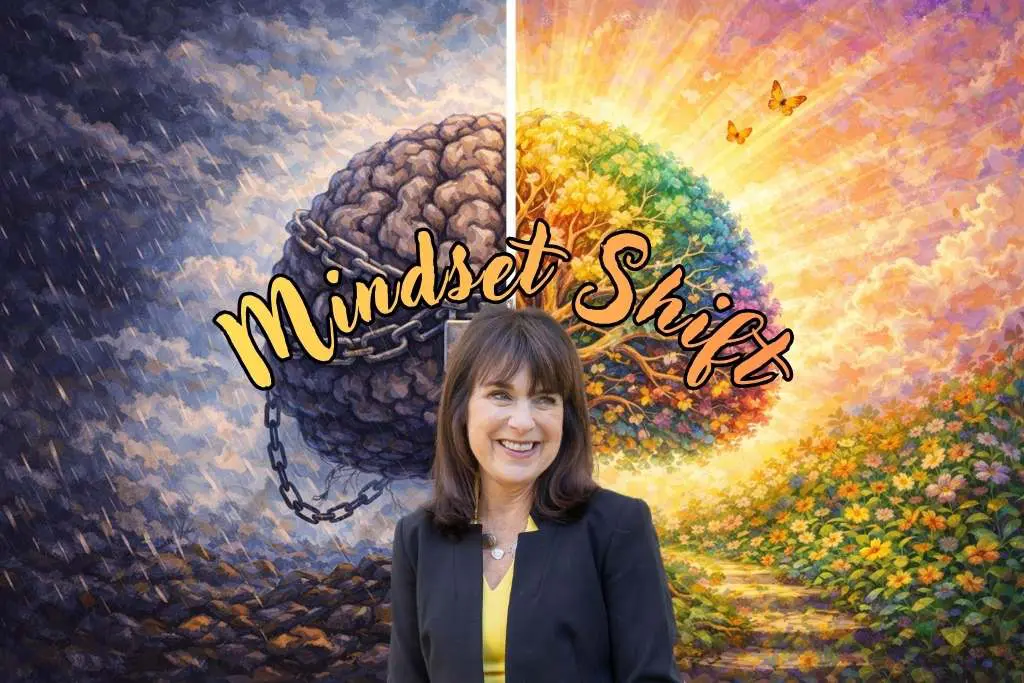
Psychologist Carol Dweck’s research on mindset provides a powerful framework. A fixed mindset believes: “This is just who I am.” “I’m either good at this or I’m not.” “Change is risky.” “I’m too old and Technology is moving too fast.”
A Growth mindset believes: “I can learn this.” “New skills can be developed.” “Challenges are opportunities.” “I’m going to continue to read and learn.”
At mid-career, a fixed mindset often hides behind experience. It sounds like this: “I’ve never been good with technology.” “I’m too far along to start something new.” “I should already know this.”
All of this is self-talk that can either move one forward or keep one stuck in the same place, opening up the opportunity for even more stress to take over. But a growth mindset reframes the entire conversation.

One of the most powerful shifts you can make is this: You are not starting from zero. You are building on: years of experience, hard-earned skills, relationships and perspective. Just think of some of the advice you give your kids. You’ve been in many of the situations they are facing. They may not listen to you, but you have the experience and insight to see roadblocks and warning signs. That perspective is extremely valuable.
I’ve seen some build on their experience and perspective many times—not only in my own life, but in others I’ve worked with. A musician becomes a teacher. A corporate leader becomes a consultant. A parent returning to the workforce brings unmatched organizational and relational skills.
The foundation is already there. What changes is how you apply it and the questions you ask. Instead of asking: “What if I fail?” You begin asking: “What can I learn?” That one shift reduces pressure and opens possibility.
One of the most effective ways to reduce fear is through action—specifically, learning. When you begin learning something new: Confidence increases, uncertainty decreases and momentum builds
Studies on lifelong learning show that continued skill development in midlife improves both cognitive function and emotional resilience. This doesn’t require large, overwhelming steps. It requires small, consistent ones.
One of the most freeing perspectives you can adopt is the mindset of an apprentice. At this stage, you are both experienced and learning. That’s not a contradiction—it’s an advantage.
An apprentice mindset says: “I don’t need to know everything.” “I’m willing to learn.” “I can take the next step.”
I’ve personally had to return to this mindset many times—especially when learning new technology or navigating unfamiliar paths. Today, this more important than ever with the speed of AI and the different tools we can use. (see Halftime Success) There have been many moments of frustration, moments of doubt—but also moments of breakthrough.
Because progress doesn’t come from knowing everything. It comes from staying engaged.
You don’t need to overhaul your life overnight. In fact, trying to do too much often increases stress. Instead, focus on five small, intentional steps:
All of these are small steps that are very doable and will eventually create a large leap of progress that will be worth all the effort. Don’t put this off. Start now.
Mindset mastery is not about eliminating stress. It’s about responding to it differently. You are creating a stronger, reinforced structure. You are not behind. You are not too late. You are well-positioned and your next chapter is not something you have to fear. It’s something you can build—step by step—with Clarity, curiosity, and a growth mindset, all the while making sure all parts of that growth are reinforced because there will be shake-ups but you’ll be ready!
YouTube Channel: Mindset & Mental Strength for Mid-Career Growth
Personalized Mentorship: Thoughtful guidance for your next chapter creating clarity, confidence & momentum.
See chapter 4 in Women at Halftime for more on the Core Common Denominator®
Goal Setting Worksheets-free download!
Hero Mountain Summit– a 5-month “Power of After” journey to help you answer “What’s Next?” with your desired Lifestyle & maximized skills and experience.
Power of After: What’s Next Can Be Your Most Purposeful Chapter by Deborah Johnson
Stop Circling: Steps to Escape Endless Roundabouts by Deborah Johnson
FREE Resources and links: https://GoalsForYourLife.com/DJWorks
YouTube Podcast Playlist: Women at Halftime/Power of After
At mid-career, a fixed mindset often hides behind experience.
Thought Leader, Keynote Speaker, Author
If you are interested in growing and learning, check out our Online Courses here: Online Learning
1,637 words
The post Still Feeling Stuck? The Mindset Shift That Works appeared first on Deborah Johnson.
Originally Published on https://goalsforyourlife.com/