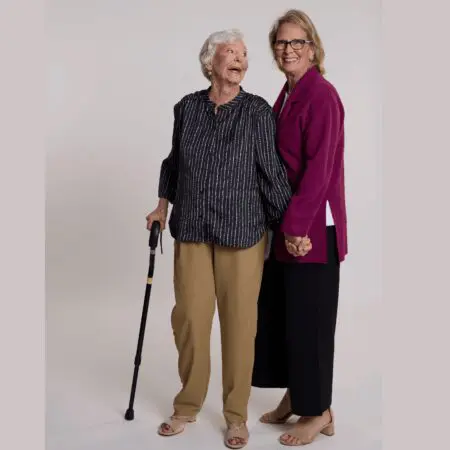
Helping a senior get dressed can become one of the most challenging parts of the day. What used to be a quick routine may now take much longer and involve discomfort, frustration, balance concerns, or physical strain for both the caregiver and the person getting dressed.
Limited mobility can affect dressing in many ways. A senior may have trouble lifting their arms, bending to pull on pants, balancing while standing, gripping buttons, or moving through dressing steps without help. This can happen because of Arthritis, Stroke recovery, Parkinson’s, surgery, muscle weakness, chronic pain, or general changes that come with Aging.
The good news is that dressing does not have to feel chaotic or stressful every day. With the right approach, caregivers can make dressing safer, more comfortable, and more dignified. Often, small changes in routine and clothing make a meaningful difference. Adaptive clothing for seniors with limited mobility can make their days start off so much easier.
Dressing requires more movement and coordination than many people realize. A person may need to:
When mobility becomes limited, even simple clothing can become difficult to manage. A tight waistband, stiff shirt, or hard-to-reach zipper can turn dressing into a draining daily task.
That is why the best dressing support focuses on both how you help and what clothing you choose.
One of the most important caregiver dressing tips is to support independence whenever possible.
Even if a senior needs help, it is often better to assist only where needed rather than taking over the entire task. This helps preserve confidence and routine, and it can make dressing feel less discouraging.
This might mean:
The goal is to make dressing easier, not to remove all participation.
For many seniors with limited mobility, dressing while seated is safer than dressing while standing.
A stable chair can reduce:
Seated dressing is especially helpful for seniors with weakness, dizziness, recent surgery, back pain, or difficulty standing on one leg. It can also make the process easier for caregivers who need to help guide clothing into place.
If one side of the body is weaker, stiffer, or more painful, it usually helps to dress that side first.
For example:
When undressing, reverse that process and remove the stronger side first.
This is one of the most useful dressing strategies for seniors recovering from stroke, shoulder injury, fracture, or joint pain.
Reducing confusion can make dressing go much more smoothly.
Try laying out clothes in sequence:
This helps reduce mental overload and makes the next step easier to follow. It can be especially helpful for seniors with fatigue, memory changes, or anxiety during dressing routines.
You can also make the setup easier by:
The clothing itself can either help or hurt the dressing process.
For seniors with limited mobility, helpful features often include:
These features reduce the need for twisting, pulling, gripping, and balancing. They can also help caregivers assist with less physical effort.
Adaptive clothing can be especially useful here, but the key is not whether a garment is labeled adaptive. The key is whether it truly makes dressing easier.
Some clothes make dressing harder than it needs to be.
Common problem areas include:
If a senior struggles with the same item over and over, it is worth asking whether the clothing is the real problem.
Explore our full collections of adaptive clothing for men and adaptive clothing for women to find easy-dressing solutions that are right for you or your loved one.
Broad directions like “get dressed” can feel overwhelming, especially when mobility limitations are combined with fatigue, cognitive changes, or frustration.
It usually works better to break dressing into smaller steps:
A calm tone matters too. Rushing tends to increase Stress and resistance, while slower, more specific cues can make the routine feel more manageable.
Many seniors do better when dressing happens in a familiar way.
Consistency can help reduce stress by making the process more predictable. Try to keep the same general routine when possible:
This can be especially helpful for seniors with dementia, Parkinson’s, or general fatigue.
Getting clothes on is only part of the job. Comfort after dressing matters too.
Once the person is dressed, check for:
This is especially important for seniors who spend long periods sitting, use a wheelchair, or have sensitive skin.
Dressing is personal. Needing help can feel embarrassing, even when the caregiver is kind and well-intentioned.
A few simple habits can make a big difference:
Dignity should not disappear just because dressing has become harder.
When shopping for easier-dressing clothing, look for items that reduce effort and improve comfort.
Helpful features include:
These details can help with a wide range of mobility-related dressing challenges.
Mornings are often when dressing feels most stressful. A few changes can make the routine smoother:
For some families, it helps to save more difficult outfits for special occasions and keep daily dressing as simple as possible.
Sometimes dressing struggles point to a larger issue than just clothing.
It may be time to get professional input if a senior:
In these cases, an occupational therapist or healthcare professional may be able to identify specific mobility or functional problems and suggest better strategies.
Caregiver dressing help is about more than getting clothes on. It is about reducing stress, supporting independence, improving safety, and helping a senior feel comfortable and respected.
The most effective caregiver dressing tips for seniors with limited mobility are often simple:
When dressing becomes easier, the whole day often starts better.
Originally Published on https://joeandbella.com/blogs/news