

Have you ever wondered why you react the way you do in certain situations? Or why do people behave in strange, unpredictable, or even surprisingly logical ways? That’s psychology at work – not just in textbooks, but in the very way we live, think, feel, and act.
Psychology, the scientific study of the mind and behavior, subtly shapes everything from our morning routines to the choices we make about Relationships, careers, and lifestyles. It’s not just a field reserved for scholars and therapists—it’s a force that influences us in everyday life in ways we may not even realize.
From helping us understand Mental Health to improving Education, relationships, and workplace environments, psychology has deeply embedded itself into the foundation of modern society. It guides marketing strategies, informs public policy, improves criminal justice, and even plays a key role in the design of digital Technology. It’s like an invisible hand directing the orchestra of humans, and the more we understand it, the more we can use it to improve ourselves and the world around us.
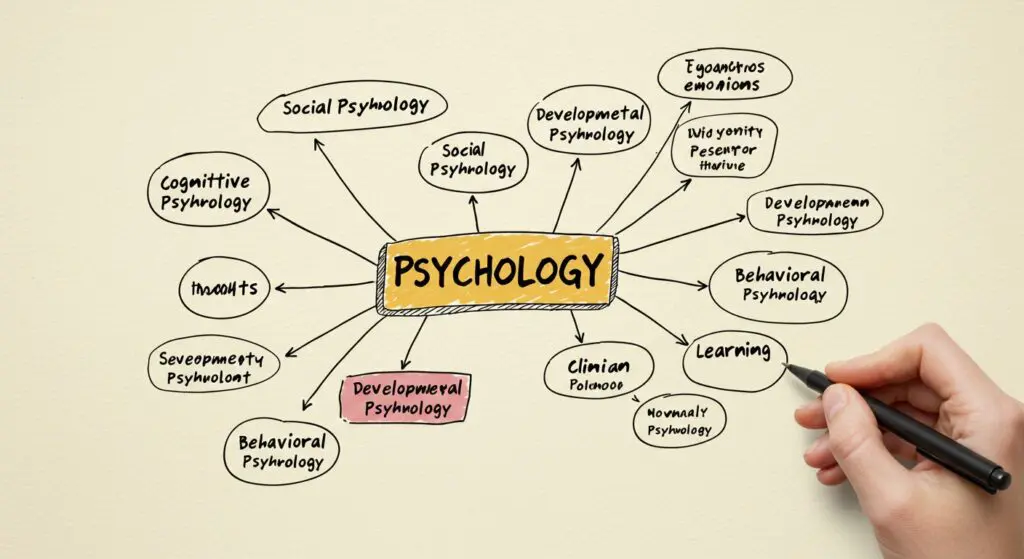
You might think your actions are purely based on logic, but psychology proves otherwise. For instance, think about habits. Why do you always grab your phone first thing in the morning? That’s behavior shaped by conditioning—a cue (waking up), a routine (checking notifications), and a reward (dopamine hit from social media). This concept comes from behavioral psychology and helps explain everything from addiction to productivity hacks that improve our efficiency.
Ever heard of the placebo effect? That’s your brain using expectation to influence physical outcomes. Psychology shows that simply believing a treatment works can cause real improvement, even if it’s just a sugar pill. That’s how powerful your mind is.
Social psychology adds another layer, revealing how our actions are influenced by others. That explains a lot about peer pressure, fashion trends, and even political movements. In short, we’re walking, talking bundles of psychological patterns—and understanding them gives us the power to make better choices.
Every day, we make hundreds of decisions—some trivial, some life-changing. Whether it’s what to eat, whom to trust, or how to respond to a text, psychology is behind each choice. Our brains use shortcuts, known as cognitive biases, to speed up the decision-making process. But those shortcuts don’t always lead us to the best outcomes.
One classic example is confirmation bias—our tendency to seek out information that confirms what we already believe. This affects everything from politics to relationships, and it’s why we often get stuck in echo chambers.
Then there’s the anchoring effect, where we rely too heavily on the first piece of information we receive. Salespeople use this trick all the time—by showing you an expensive option first, the cheaper one seems like a deal, even if it’s still overpriced.
Loss aversion is another biggie—we’re more motivated to avoid loss than to gain something of equal value. That’s why limited-time offers and fear-based marketing work so well.
Even the time of day affects our decisions. Research I read shows that willpower is like a battery—it gets depleted throughout the day. That’s why you’re more likely to eat junk food or procrastinate at night. Psychology helps us understand these patterns and offers strategies such as decision-fatigue management, where you realize the impact of too many decisions and you learn how to prioritize and delegate to simplify the choices. This helps us take back control.
Ever wondered why some people just “get it”? They know how to respond in tough conversations, they handle Stress like pros, and they seem to understand others effortlessly. That’s emotional intelligence (EQ) in action, a concept rooted in psychology that’s just as important, if not more, than traditional IQ. Emotional intelligence is all about recognizing, understanding, and managing your Emotions, as well as recognizing and influencing the emotions of others. In personal relationships, emotional intelligence helps you avoid unnecessary fights, understand your partner’s needs, and help you communicate better. At work it makes you a better leader, a more collaborative coworker, and more resilient under pressure. Within yourself, it helps you manage stress, fight off Burnout, and make clearer, more aligned decisions.
Self-awareness is the foundation of emotional intelligence. Without it, you’re driving blind. Psychology teaches us to pause and reflect: Why am I feeling this way? What triggered this reaction? That kind of inner dialogue builds emotional maturity, which spills over into every area of life. When you learn to observe your thoughts and emotions rather than be ruled by them, you become the master of your mind—not the other way around.
Whether it’s friendships, Family, or romantic partnerships, psychology plays a huge role in how we connect with others. At its core, every relationship is a dynamic dance between communication, empathy, trust, and shared understanding. Also, we must realize that communication is more than just words, it’s body language, tone, timing and even unspoken expectations. Psychology teaches us that 70% of communications is nonverbal with our facial expressions, posture, eye contact, gestures and the tone of our voice. Psychological tools to help us resolve conflict include lowering emotional tension before discussing a problem, seeing the situation from the other persons’ view, actively listen by reflecting back what you hear and showing understanding, and finally working together to find the right solution. Using these tools strengthens your relationships because they build trust, safety and understanding.

Psychology isn’t just about Therapy sessions and textbooks—it’s the very framework through which we understand ourselves and others. From the moment we wake up to the choices we make, the relationships we form, and the careers we pursue, psychology quietly guides us.
It helps us raise children with compassion, learn more effectively, lead with empathy, and communicate with Clarity. It empowers us to challenge injustice, heal Trauma, and become more self-aware. As technology and society evolve, psychology keeps adapting, offering new insights and solutions for modern problems. Ultimately, psychology holds up a mirror to the human experience. It doesn’t just ask “why?”—it asks, “how can we be better?” So, the next time you make a decision, solve a problem, or comfort a friend, remember you’re already using psychology.