

Have you ever stopped to wonder where your thoughts actually come from? One moment you’re focused on brushing your teeth, and the next you’re daydreaming about a beach vacation you haven’t even planned yet. Or maybe you’re trying to fall asleep and suddenly remember something awkward you said in middle school. Weird, right?
Thoughts seem to appear out of nowhere, sometimes helpful, sometimes intrusive, and sometimes just plain strange. But the truth is, these thoughts are not random at all — they’re the result of complex processes happening inside your brain every second. Understanding where thoughts come from is like peeking behind the curtain of the most powerful engine in your body: your mind.
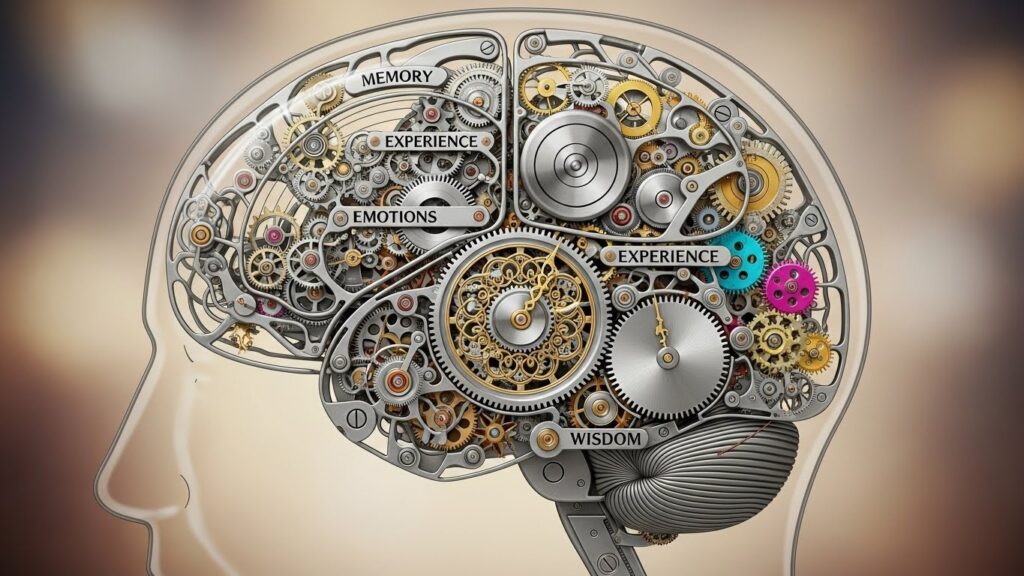
Thoughts are a bit like whispers in your mind — some loud and clear, others subtle and fleeting. But what are they, exactly? At their core, thoughts are mental representations of information. That might sound fancy, but think of it like this: your brain receives data from the outside world (what you see, hear, smell, touch), combines it with what you already know (memories), and processes it to help you make sense of things. That mental process — the combining, analyzing, imagining — is what we call “thinking.”
There are different types of thoughts. Conscious thoughts are the ones you’re aware of — for example, deciding what to eat or solving a math problem. Subconscious thoughts operate below your awareness, silently influencing your actions, feelings, and decisions. Imagine your mind like an iceberg. The conscious part is the tip above the water — what you’re actively thinking. But the massive chunk under the surface is the subconscious, quietly running the show in the background.
Our thoughts can be logical or emotional, creative or analytical, spontaneous or deliberate. They’re shaped by memory, experiences, biology, beliefs, and even the environment around us. In fact, most neuroscientists agree that the brain is like a thought-producing machine, constantly generating thousands of thoughts per day — many of them without you even realizing it. Some researchers say we think over 6,000 thoughts per day, though not all of them are meaningful. But the big question still remains: how exactly does the brain do this?
Your brain is the MVP when it comes to thinking. Weighing just about three pounds, it’s the most complex organ in the known universe. And it’s the place where all your thoughts — every memory, idea, plan, or fear — are born. Different parts of the brain play unique roles in creating thoughts. The prefrontal cortex is your decision-maker, responsible for planning, reasoning, and logic. The amygdala is the emotion center, processing feelings like fear and pleasure. The hippocampus stores and recalls past events, making it crucial for forming thoughts. The thalamus acts like a relay station, directing sensory signals to different brain areas. And the neocortex handles higher-order thinking, language, and perception.
Thoughts begin when neurons — tiny cells in your brain — send signals to each other through synapses (the gaps between them). This signaling process is electrochemical: part electrical impulse, part chemical reaction involving neurotransmitters like dopamine, serotonin, and acetylcholine. Picture a massive city with billions of people sending messages across a network of wires. That’s your brain — over 86 billion neurons, each connecting with thousands of others, constantly “talking.” The result? Thoughts.
Different brainwave frequencies correspond with different types of thought. Beta waves drive active thinking and decision-making. Alpha waves reflect a relaxed but alert state. Theta waves accompany daydreaming and Meditation. Delta waves occur during deep Sleep. So, when you’re pondering life’s big questions or just thinking about lunch, your brain’s internal wiring and chemical signals are firing like crazy behind the scenes.
You’re sitting quietly, and suddenly — bam! — a thought pops into your head. Maybe it’s a to-do list item. Maybe it’s a wild idea. So where did it come from? Every single thought you have — whether it’s remembering your first kiss or deciding whether to hit the snooze button — starts with neurons firing. Thoughts can start from two main sources: external stimuli or internal processes. External stimuli are sensory inputs — what you see, hear, smell, or feel. A dog barks outside, and it reminds you of your childhood pet. Internal processes are thoughts that arise from within: a memory, an emotion, a bodily sensation, or a subconscious association. You’re hungry, and your brain starts thinking about pizza.
In both cases, the brain pulls information from different regions to form the thought. The hippocampus retrieves memories, the amygdala colors them with emotion, and the prefrontal cortex organizes and interprets it all. Most thoughts aren’t totally new — they’re a recombination of things you already know, feel, or remember. Kind of like remixing a song from familiar beats.
This process happens lightning-fast, and often without your awareness. That’s why sometimes thoughts feel like they appear “out of nowhere.” In truth, your brain is always working in the background, filtering millions of bits of data and serving up what it deems relevant or urgent. And yes, the environment plays a big role. Think about how your thoughts change in a quiet forest versus a loud shopping mall. What you’re exposed to shapes what you think, and even how you think.
Ever wonder why a smell or song suddenly triggers a flood of memories — and thoughts? That’s your memory at work, and it plays a starring role in creating your thoughts. Think of your brain like a massive storage unit, full of past experiences, images, Emotions, and facts. Every time you have a new thought, your brain references that storage unit — pulling bits and pieces of information to make sense of what’s happening in the moment.
There are two main types of memory involved in thought formation. Short-term memory (working memory) is where your brain holds temporary information, like a phone number you just heard or what you were doing five minutes ago — it helps you stay focused and process current thoughts. Long-term memory holds the deeper files: your childhood memories, life lessons, emotional experiences, and everything else stored over the years. When your brain needs context, it dips into this archive.
Every time you recall a memory, your brain slightly modifies it, which means your thoughts about a past event are never 100% accurate. They’re reconstructed. That’s why your thoughts about a breakup or embarrassing moment can change over time — you literally reshape the memory through new emotional filters. Memory also contributes to future-based thinking. Your brain uses past experiences to predict outcomes, make decisions, and prepare for what’s next. If you’ve been burned in the past, your thoughts might be more cautious. If you’ve had positive reinforcement, you may think more optimistically. So in a sense, you’re always thinking in the past — even when you’re focused on the future.

So, where do our thoughts come from? They’re born in the brain — but they’re shaped by so much more: our emotions, memories, environment, beliefs, and even our spiritual views. From the first flicker of a neuron to the wild worlds we imagine in our minds, thoughts are a mix of biology and mystery. Your thoughts are not just random — they are messages from your brain, responses to your world, and reflections of who you are and what you’ve experienced. Understanding them is the first step to mastering them. And once you do that? The power to reshape your life is literally in your head.