
In this episode, Elliot Kallen speaks with Michael McNurney, healthcare and Innovation strategist at Janus Henderson. They explore how Artificial Intelligence is revolutionizing medicine—from weight loss breakthroughs to Cancer detection and Diabetes management—and how investors can capitalize on biotech innovation.
Meet Michael McNurney of Janus Henderson
Michael brings his deep expertise in healthcare innovation to the table. As a strategist with Janus Henderson, he works with top-tier analysts and investors to identify high-Growth opportunities in biotech, pharma, and medical Technology.
Artificial intelligence is enabling faster, safer, and more personalized medical breakthroughs—from drug discovery to diagnosis. Michael shares how AI is shaping both patient care and pharma pipelines by improving trial design, speeding up FDA approvals, and personalizing treatment plans.
The conversation turns personal as Elliot shares his experience with GLP-1 injections and the challenges of sustainable weight loss. Michael discusses the evolution of these drugs, future delivery methods (beyond injections), and their impact on Chronic Conditions like cardiovascular disease.
“These aren’t just Diet drugs. They’re tools to reverse chronic disease.” – Michael McNurney
Michael explains how wearable tech and smart insulin pumps are transforming life for diabetics. With real-time glucose monitoring and automatic insulin regulation, the future looks far more manageable—and hopeful—for millions.
From immune-oncology to early detection, cancer treatment is entering a new era. Michael outlines how treatments are moving from “carpet bombing” with chemo to hyper-targeted therapies built around individual genetics.
“Catching cancer early lowers mortality by over 60%. AI is helping us get there.” – Michael McNurney
While many biotech firms are unprofitable today, their future upside is massive. Michael breaks down how Janus Henderson vets early-stage companies and identifies winners before they become household names. He also explains why big pharma is acquiring innovation from smaller firms—and how investors benefit.
From AI-driven diagnostics to the quest for a cancer cure, this episode is a powerful look into the healthcare breakthroughs changing the world—and how you can invest in them.
Meet the Expert with Elliot Kallen is a top 2% global financial podcast featuring entrepreneurs, innovators, and executives shaping the future of business, wealth, and life.
Elliot Kallen: Well, good morning, good afternoon, everyone, and welcome to an exciting episode of Meet the Expert with Elliot Kallen. We are targeting this episode to the individual investor, the future prospect, the current client, whoever you are, you are an investor. It doesn’t matter what you do for a living, but you are an investor, and you value advice and you value companies that give advice. That’s what we’re doing. I’m the CEO of Prosperity Financial Group. We’ve been doing this for a long time with 75 plus episodes. Come and catch all of them at www.prosperityfinancialgroup.com. You can reach me at Elliot, E-L-L-I-O-T, at www.prosperityfinancialgroup.com and 925-314-8503. Let me begin by welcoming Mike McNerney. Mike, thanks for being here.
Michael McNurney: Oh, it’s my pleasure, Elliot. Thanks for having me.
Elliot Kallen: Great. Mike is an equity specialist or a strategist with Janus Corporation out of Denver, Janus Investments. You can look them up if somebody wants to see who they’re with. They deal through people, intermediaries like myself. So we really trust them. He’s got more than 2,000 employees, $382 billion under asset management. That’s a monster number. I guess it’s not a trillion, it’s $382 billion and that’s still a gigantic number. And they’ve got 24 offices worldwide. He is in the innovation side of healthcare and artificial intelligence and how it applies all the tech and the changes. So if you like everything about your personal Health and healthcare and what’s going on, then you are going to find this fascinating, completely fascinating. So Mike, let’s delve into this. Can we do that?
Michael McNurney: Of course, let’s do it.
Elliot Kallen: All right, let’s do it. So why don’t you tell us a little bit what you do and then let’s get into the science fact and fixture of what’s really happening in the marketplace.
Michael McNurney: All right, that sounds fair. I’m really lucky to be able to sit with some of the greatest analysts on this planet and as a component of that, what I get to do is just reflect some of their knowledge out to our customers. So as you said, we’re a financial firm focused on managing assets for people. About 65% of the assets that we have under management are equity assets and so therefore Investing in stocks. And a lot of what we look for is companies that are generating some of the most innovative solutions to the issues that plague us today. And so at Janus Henderson, one of our focuses is innovation and there are a couple of sectors, as you mentioned today, technology, healthcare. Some of the most innovative sectors and it’s my job to be able to keep pace with those innovations and then articulate some of the opportunities for investment to our clients.
Elliot Kallen: Okay, so let’s go right into it. Let’s focus on healthcare if we can. And I want to ask you how artificial intelligence is going to change that. I talk to pharmaceutical companies all the time, Mike, and they were saying they’re going through tough times compared with, let’s say, the biotech companies that, you know, they hope to cure. I think I heard that somebody being born now will live to 150 or 135 or something like that. I’m sure you’re going to correct me on that one. But there are so many things that are wrong, that are right, but that are innovative. And the hottest topic in America right now is weight loss. So you and I were trained and everybody listening to this was trained that if you’re overweight and I’m a big boy, I’m 240 pounds at 5’8 and I have my NFL weight on right now and I wish I was much more of a quarterback than I was with fullback weight. But we were told forever, you eat too much, you eat because of your Stress, you eat because you’re depressed, you eat for other reasons, stop eating. The problem is your mouth and your brain. They don’t connect. And then you add bad food to that. Like for me, I’ve never met a potato that I haven’t loved. So French fries and, I told my wife if I ever leave her I’m going to marry a potato. I don’t have that much of a Love affair.
Michael McNurney: Elliot, I’m with you. French fries are a guilty pleasure.
Elliot Kallen: It’s hard, but my brother and sister-in-law, especially my brother, is six feet tall and about 155, 160 pounds and eats probably twice what I eat. And if a hurricane ever came by, he’d have to stand behind me or he’d just blow away. So that’s just not fair. So what have we learned now? Because the science is changing. And I’ve just started taking, full Clarity here. I just started doing injections on GLP-1s because I want to get down to 205 pounds. And obviously I can’t sew my mouth shut or zipper it shut with some type of padlock. I need help.
Michael McNurney: Yeah, absolutely. And look, a lot of people are looking for that ability to reduce their weight and whether or not that’s aesthetics or if it’s for your health. And certainly there are tremendous health benefits that are associated with losing some of that weight. And GLP-1s seem to be some of the answer for a lot of Americans. And as you said, culturally, there’s a stigma behind having too much weight, but also we know that there are significant health risks that come along with carrying too much weight as well. And GLP-1s seem to be a method for a lot of Americans to be able to lose some of that weight. And look, it’s a tremendous advantage for a lot of people. They’re looking for this way to curb their appetite a little bit and lose some of that weight. And if they do it in a healthier manner, which means of course still exercising, you’re losing a lot of the fat that you’re carrying, but not as much of the muscle. Now, there are those that are using it as a cheat code. And certainly we don’t want to see that where you’re losing muscle mass as well as fat. And of course that’s not healthy weight loss. These drugs promote at least the ability to lose some of that weight, and it’s a tremendous innovation, especially when we think about some of the diseases that are a direct result of carrying too much weight. And, you talk about Heart Disease or cardiovascular disease, which is the number one killer of human beings on this planet. Look, if we can just ameliorate some of those side effects by losing some of that weight, this is a tremendous innovation.
Elliot Kallen: So, Mike, in fairness, because I take these now myself, and my wife’s ejecting me because I’m a big chicken when it comes to putting a needle into my stomach, and I hope I never get diabetes and have to do that. My dad had to do insulin. I don’t know how he did it, but I think he did his thigh most of the time. We know that we’re just in the infancy stage of innovation of diet drugs. And I’ve been told that I’m probably going to have to be on something the rest of my life so I don’t yo-yo. I’ve gone from 205 to 260, I’m everywhere. What’s coming in the next couple of generations of weight loss?
Michael McNurney: Elliot, I think you share the same troubles as a lot of people, and injection is something that we don’t want to do, especially if it’s on a weekly basis, and particularly if this becomes a forever drug. So if you had to do that for the rest of your life. So I think new delivery methods are part of what we’re getting out of the new generation of drugs, as well as drugs that really help promote fat loss as opposed to promoting fat loss and muscle loss in equal measures. So I think a couple of things in clinical trials today that’ll really change the landscape for these drugs, and of course, look, these drugs are fantastic if they’re helping you lose the weight, if they’re helping you feel more confident, and especially if they’re making you healthier. And talking about avoiding type 2 diabetes, for example, these drugs can help you curb your appetite but also help with managing your insulin. So these are fantastic drugs in the respect that they can make you healthier and they can help you achieve the weight loss goals that you have. But if we can get you away from those weekly injections, I think it would be much more palatable from a patient’s perspective.
Elliot Kallen: I hope so. I might be honest for life. My doctor suggested that. He said, you might be one of those 1% or 2% of Americans that just yo-yos all the time and has to be on something steadier than this. Of course, you still got to zip my mouth shut with that bag of potato chips. Those ruffles and the sour cream ruffles, if you’re not handling that, we’re not going to handle the weight either, right?
Michael McNurney: Well, and Elliot, I think in a lot of ways, this is a behavioral change as well, right? The drugs are helping introduce new behaviors that will help you in your weight loss journey. So part of it is, of course, the medicine is helping you fight those appetites. However, as time goes on, hopefully your body begins to adjust to that, number one. And number two, it’s permanent behavior change. And so this is a little bit, you know, psychology in addition to the physiology that you’re going through.
Elliot Kallen: Uh-oh, the me factor, always dangerous.
Michael McNurney: That’s right.
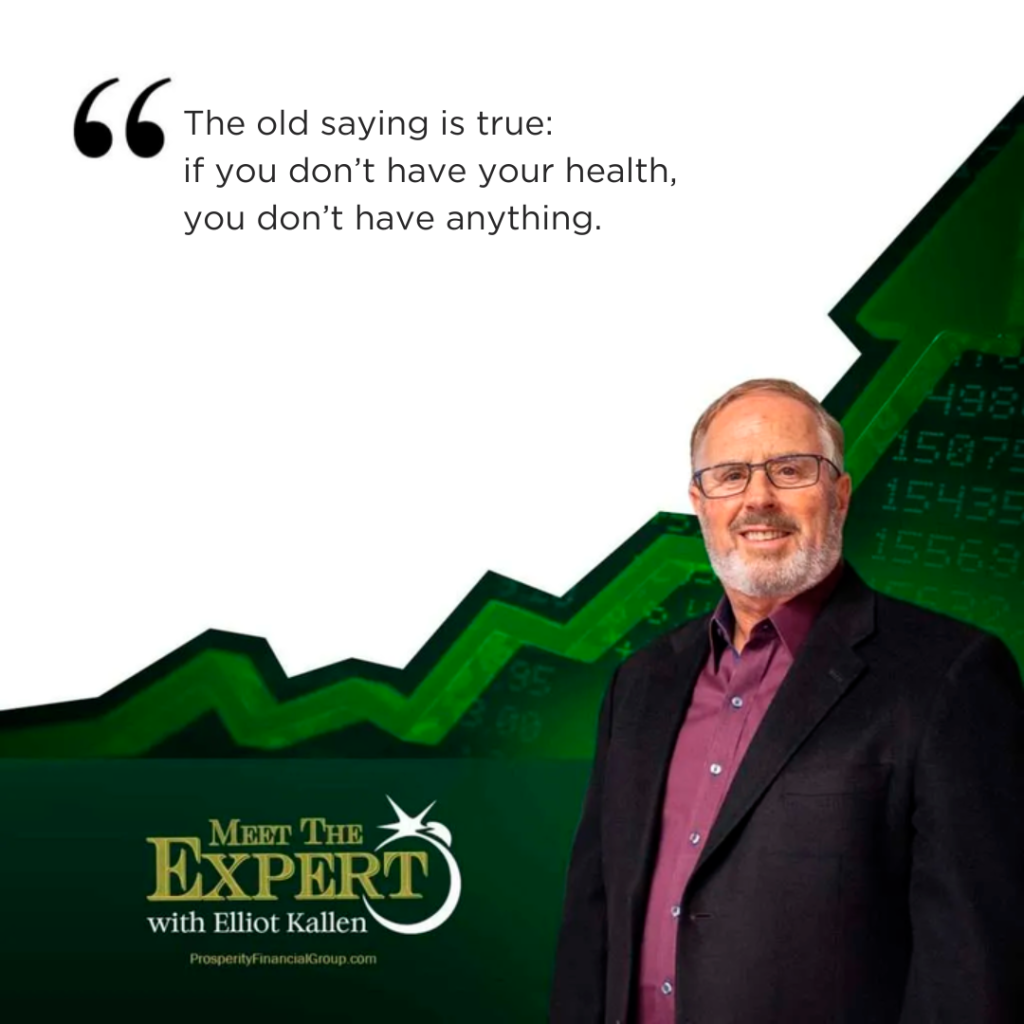
Elliot Kallen: Well, let’s talk about you. You’re so up on the innovation of health care and people are listening to this and maybe we’re going to get a little wonky here for a moment on health care because it’s pressing it at some point. You know, the old phrase when I was young was, if you don’t have your health, you don’t have anything. And it doesn’t really matter until you don’t have your health. And then you realize like, wow, what would I have trade? What would I give up to be healthy again? So we know that when you’re healthy, you don’t have any respect for your health. And when you’re not healthy, you wish you were healthy. So it’s a hard thing to do. But I know that in diabetes, and most people who get diabetes get type two, not type one. It represents, if I’m correct there, my research is correct there, about 2% of all Americans will get diabetes in their lifetime. But it represents about 9% to 10% of all dollars, if I’m correct. Why don’t we have a cure for it? What is the cure for it? How did we not come up with all these years, 50, 70, 80 years of insulin? I know insulin has improved itself a little bit in a way. Insulin is now going into your body and it’s much more automated instead of just looking at a needle and giving yourself a shot when you’re having a sugar issue. So what’s happening in the next few years of diabetes?
Michael McNurney: Well, Elliot, I think one of the most important aspects of this is we’re getting a little bit closer to an artificial pancreas. In other words, we’re getting to the point where not only are you able to take this moment in time snapshot picture of what your insulin levels look like, which is what we’ve had in the past, which again, getting back to this idea of the pain of having to do these treatments, it was a finger poke before, right? And what that finger stick would do is a little bit of blood, you would measure your glucose levels. It would give you a point in time analysis. And now there are continuous glucose monitors. You may see diabetics who wear them in the back of their arm or along their belly. This is giving you a continuous picture of what your glucose levels look like. So as opposed to previously getting that point in time, you knew what your glucose was at that point in time, but you didn’t know, are you trending up? Are you trending down? Now these continuous glucose monitors give you the ability to look at your smartphone, look at your smartphone, look at your smart device and be able to determine not only what your current glucose levels are today, but, or at this moment in time, but the ways that you’re trending. Additionally, those continuous glucose monitors are now becoming able to work with your insulin pump and really act as that artificial pancreas and tell your insulin pump how to manage your glucose levels. So really remarkable transformation. And Elliot, if you think about it, I don’t know if you have any children, Elliot, do you?
Elliot Kallen: I do. I have two stepchildren and two of my own children.
Michael McNurney: Okay. So probably one of the milestones that you remember, all parents remember it for the rest of their life, the first time that their first baby sleeps through the night, right? As a parent, as a young parent, you’re going through these really difficult sleepless nights where your child is waking you up often during the night. You know, the luxury for parents is that eventually that phenomenon goes away. But if you’re a diabetic up until very recently, you were having to wake up in the middle of the night and a lot of cases just to measure your glucose levels. And so these continuous glucose monitors, if they’re continuously monitoring your glucose without your intervention, it allows diabetics to Sleep through the night. So it’s not always about saving lives in terms of healthcare innovation, but it’s also improving our patients’ lives. And in this case, allowing diabetics to sleep through the night, only alerting them to issues when those issues arrive so they can sleep through the night unless their blood sugar levels are out of range. So really remarkable transformation. Or Elliot, again, getting back to kids, look, you know, many diabetics, especially type one diabetics, this is something they deal with for all of their lives. And we’re very good as parents in being able to help monitor what children are eating and what types of sugars they’re eating. But once they are out of our home, they go to school, for example. If a diabetic goes and eats a bag of cookies, parents never know that, but now they’re able to monitor their blood sugar from, again, their smart device to be able to determine whether or not their children remain in range even when they’re out of sight. So really remarkable transformations in different ways to manage the disease. There’s no cure for diabetes on the horizon necessarily, but managing the disease in a much more formidable fashion really does improve the lives of diabetics.
Elliot Kallen: Let’s talk about the big C here because that’s the fear that we all have and one out of three or one out of four people, and certainly everybody we know basically has had cancer. We’re talking with Mike McNerney from Janus Henderson, a 300 plus billion dollar entity out of Denver. They work with people like myself. The reason we’re doing this, so many of our clients want to hear about innovation and high tech and artificial intelligence in different sectors, and we’re talking about the health sector primarily on this show. Today, if you need to reach me, it’s Elliot, E-L-L-I-O-T at prosperityfinancialgroup.com The website you know is prosperityfinancialgroup.com. We’re in the top 2% of all podcasts globally at this point for financial podcasts and 925-314-8503. Very exciting. Again, Mike, thanks for being here. Let’s get to the big C. It’s cancer. When I was younger, I didn’t care about it. I didn’t know about it. I didn’t know anybody with it. And then it started to happen as I got older. We got exposed to more people getting it and more people Dying. And I know percentage-wise, there are probably fewer people dying as a percent than there used to be because breast cancer has had some major innovations. Prostate cancer doesn’t kill you. All these things don’t kill you. But when do we get rid of chemotherapy? And I keep hearing that all of our treatments at some point are going to be targeted specifically to the person. So what’s going on with that? And how does artificial intelligence play in? Because I’m different than you, and you’re different than me, and I’m different than my brother even and familiar. It’s got to be different. And I shouldn’t have to lose all my hair and look like a railroad track just crossed my body.
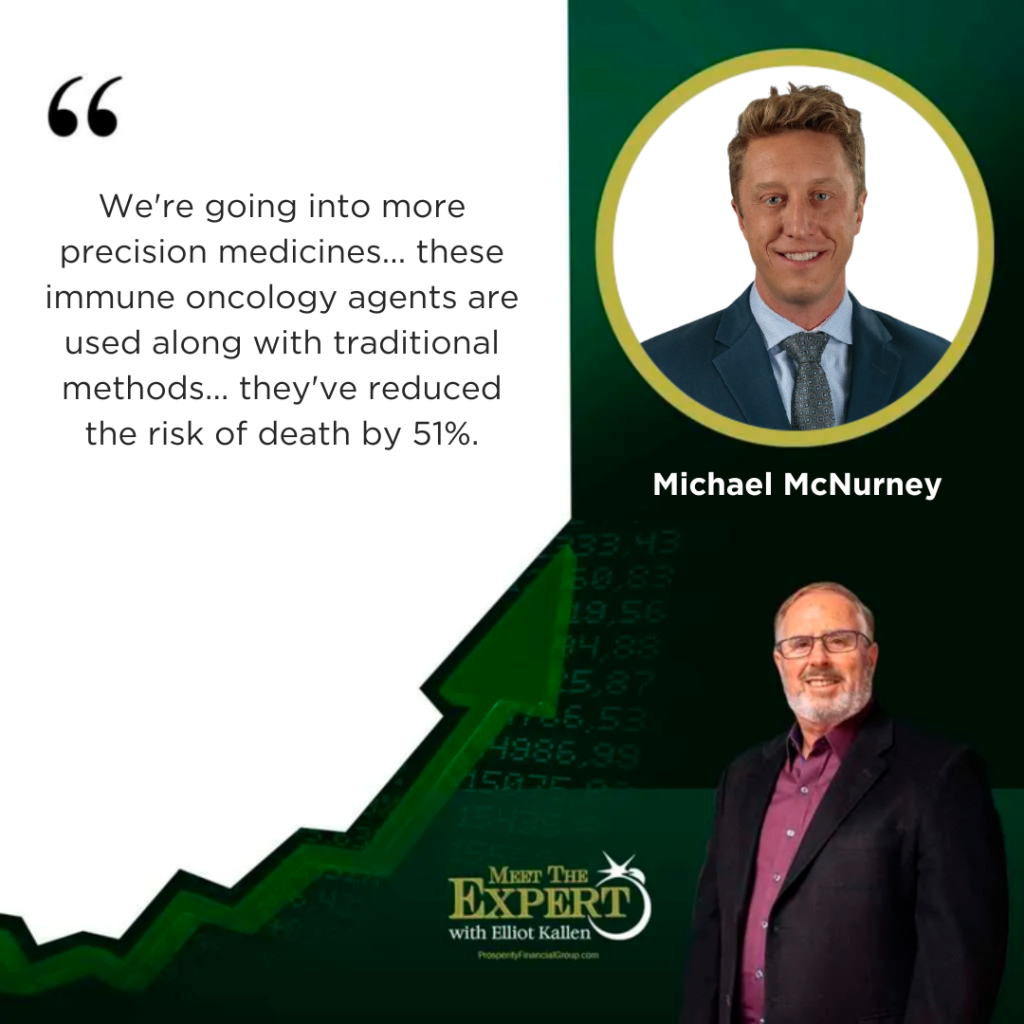
Michael McNurney: Yeah. Look, let’s start with the fact that we’ve traditionally had some very barbaric ways in terms of treating cancer. If you’re irradiating the cancerous area through radiation, if you’re using chemotherapy, you’re essentially killing every dividing cell and hoping to kill the cancer just faster than you’re killing the patient. So these have been carpet-bombing techniques. And now we’re going into more precision medicines, where those precision medicines are targeting the cancerous cells using immune oncology agents in order to find those cells that exhibit the genetic markers of cancer and then attack those cells specifically. There are new methods, and I think there are two innovations that I think are incredibly important right now. Number one, cancer screening has improved dramatically. The five-year mortality rate for cancers when they’re diagnosed in the later stages of the disease are 79%. So if you’re thinking stage three, stage four cancer patients, their mortality rates are much higher. So early detection really does save lives. As a matter of fact, cancers that are caught earlier in the progression of the disease only exhibit about an 11% mortality rate. So significant improvements in the technology that helps us identify cancer and identify that cancer much earlier on in the disease’s progression. And those innovations themselves are life-saving techniques. And then we have new methods for being able to fight the disease. As I mentioned, immune oncology agents are used along with traditional methods of fighting cancer like chemotherapy. And there’s the disease non-small cell lung cancer. It’s one of the top killing cancers on a global basis. And the use of immune oncology agents plus traditional methods like chemotherapy have reduced the risk of death by 51%. So even if we just look at harnessing the body’s immune system in order to attack the cancer, number one, it’s much more tolerable for the patient. And number two, it’s leading to much better outcomes for those patients. So like you said, 39% of people at one time in their life are going to battle cancer. And if we come up with new methods for detecting that cancer earlier and new methods for fighting that cancer once it’s identified, it leads to a much better prognosis for those patients. And as you mentioned, as we move forward, one of the things that we’re looking at is new methodologies to attack cancer that are personalized. So instead of attacking non-small cell lung cancer, so creating a treatment plan for the disease, we create a treatment plan that’s specific to that individual attacking those cancerous cells in the way that we can be much more precise in terms of identifying the genetic markers that make up that patient’s disease and then attacking all of the cells that exhibit those markers. So a lot of progress being made in cancer and a lot of progress that’s already been made even over the last decade. I think it’s a really exciting progression, especially given the fact that it’s one of the top diseases in terms of contributing to mortality. We sort of started this conversation with the notion that perhaps the first person to live to 150 has already been born. It’s more of a table-side conversation. As we started this conversation, I mentioned that I get the luxury of sitting with some of the best analysts on Wall Street here at Janus Henderson and some of the side discussions become those things like what-if scenarios, or in this case, has the first person to live to 150 already been born? And that debate amongst our healthcare analysts is vociferous, and there are those that believe that we’ve already seen that, and part of that is being able to address these diseases like cardiovascular disease, as we mentioned before, with the weight-loss drugs, or like cancer today. And then there are other methodologies, there are new treatments, especially for genetic diseases that are really exciting. So you know, there will always be these diseases that we have to fight, but the innovation that we’ve seen in this sector, which I would postulate is the most advanced sector in terms of innovation, regardless of what our technology team is saying, and it’s just that we don’t, it’s not as consumer-oriented. We don’t tend to see the progress that’s being made by biotech or pharmaceutical or medical devices, those fields. And so you know, luckily, knock on wood, we’re not confronted with having to use those products on a daily basis, but when we do need them, we know that progress is happening.
Elliot Kallen: So these are pretty exciting things in innovation, and you want, before I ask you the final question here, Mike, maybe you can give us one or two wows that nobody’s even considered that’s coming down the pipeline with innovation and AI, and the Marriage of those two things.
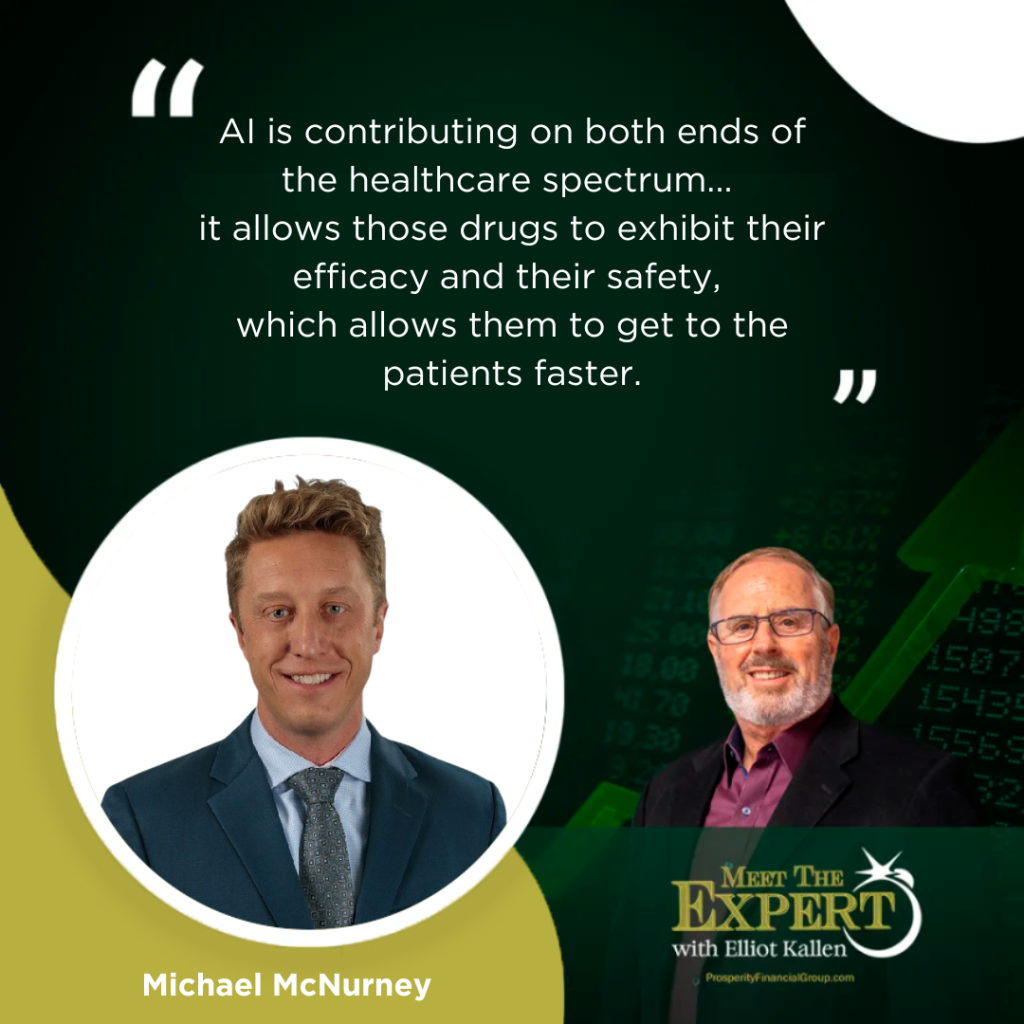
Michael McNurney: I think innovation in terms of artificial intelligence, one of the sectors where you’re seeing tremendous change with artificial intelligence is the healthcare sector. And look, AI is contributing on both ends of the healthcare spectrum, if you will. So you know, we think about clinical trials, and we know that 90% of drugs approximately fail human clinical trials, and largely they fail for one of three reasons, right? Either it’s an unsafe drug, it’s not effective, or because the clinical trial doesn’t exhibit these characteristics that lead the FDA to approve these drugs. Artificial intelligence is helping in each of those.
respects. So helping with drug discovery, helping with drug development, helping with clinical trial design. So we know that artificial intelligence is allowing us to do two things, then bring drugs to market more predictably. So avoiding those pitfalls by being able to utilize artificial intelligence to design better drugs and to bring them to market more quickly, and then allow those drugs to exhibit their efficacy and their safety, which allows them to get to the patients faster. So tremendous innovation in terms of artificial intelligence on that end of the healthcare spectrum. And then the very opposite end, the one that matters to you and I, Elliot, is with patient care. And if you go in and see a doctor, they can utilize artificial intelligence to look through your lab results and help diagnose your situation. And the important part about that is utilizing artificial intelligence, you’re getting a faster, more accurate and more complete diagnosis, which again, going back to the concept that we just talked about, allows artificial intelligence and your doctor to develop a treatment plan that’s not designed to treat whatever ails you but is designed to treat you specifically as the patient. So a much more personalized treatment plan that’s artificial intelligence enabled. So that’s just one of the very few ways that artificial intelligence is going to transform the global Economy and healthcare is one of the first beneficiaries and certainly one of the biggest beneficiaries of that technology.
Elliot Kallen: So this has been great. It’s amazing what’s going on in healthcare. We’ve been talking about this. The one thing we haven’t talked about is making Money in here because majority of these companies are don’t have any profits. They’re small they have I mean, we know about the Merck’s and the Pfizer’s and now Moderna’s and you know, Eli Lilly. We know that those are multi-billion dollar companies with multi-billion dollar bottom lines as well. And it seems that, you know, I live near South San Francisco, which is a very innovative place to be. You’re in Denver, which is very innovative to be. A lot of great innovation there, but making money is totally different on it. And so how do I help my clients navigate the world of money because that’s our business at the end of the day is the clients say they don’t say to me at the end of the day, I didn’t make money, but at least I helped the cure cancer. Nobody says that to me. Even though we want them to think that what they think is how am I doing? Well, you’re up double digits, you’re not up, you’re underperforming, you’re overperforming. So how does this convert it to real dollars?
Michael McNurney: Yeah, I think two things, Elliot. Number one, I mean, there’s tremendous opportunity when you do have a successful Therapy for whether that’s a drug or whether that’s a medical device. You have a, you have two things to your advantage. Number one, obviously, people’s health is so important to them. As you mentioned, you talked about the how crucial having health is and that people desire that I used to work with somebody who is now located in the Bay Area, working for a company that’s working on medical treatments. And he used to say that it’s very high on Maslow’s hierarchy of needs, right? It’s food, it’s shelter, and it’s our health. These are things that are extremely important to us. And so you do have a lot of pricing power when you do have a successful drug. The other thing that you get alongside of that is because the process of getting through clinical trials is so fraught with risk, from a company’s perspective that they do get patent protection. And that patent protection provides them with a runway to be able to grow revenue and ultimately earnings in these for these companies. Now, look, again, if you’re a clinical stage company, that means you don’t have a commercial therapy on market, you’re essentially burning through cash as you go through your clinical trial process, hoping that ultimately, you’re going to get approval for the from the FDA and then be able to market your drug. And the beauty is you’re marketing your drug, not just to Americans, for example, but you’re marketing your drug for on a worldwide basis. So getting through that process means that you’re not profitable at the outset. And the really important component when you’re investing in that phase of healthcare companies is that you understand the science and Elliot, I don’t know about you, the last science class I took was a biology course like in the 1990s. So I am not a scientific expert, I don’t know these therapies the same way that a doctor would know them certainly, or that people with the Education and the experience to be able to understand whether or not the science is valid first, that is the number one thing in investing in these companies that are still in their clinical stage. Now, when you get to commercial stage companies, so some of the big pharma names that you mentioned, they have a pipeline of drugs that contributes some of the value of that company. But it’s really the commercial stage. And those companies become much more like any other company that an investor would invest in, you’re looking at revenues, you’re looking at margins, you’re looking at earnings, there are much more traditionally based financial company. Now, if you take a step back from that the pipelines form those companies aren’t as exciting. So one of the things that we also see is a lot of M&A activity, large pharma companies that may have drugs coming off of patent protection, looking to buy innovation from smaller companies at very, very attractive valuations, I might add. So it creates an additional benefit for those who are investing in some of those clinical stage companies. Now, the other piece to that is Janice Henderson is extremely fortunate of having really remarkable people who many of them who are working in biotech or pharma or medical devices, they’ve worn lab coats to work before they understand the science, they understand the pitfalls that are associated with bringing these drugs to market, and they’re able to identify whether or not the science is valid, number one, and then how that drug can be commercialized. So it’s a really fascinating field. It’s a space where the outcomes are practically binary when you’re talking about clinical stage companies. And it leads to the widest disparity in terms of returns for companies that you can potentially invest in those clinical stage companies.
Elliot Kallen: That’s great. Mike, if somebody wants to reach you for more information, how do they do that?
Michael McNurney: They can reach out. We have a number of salespeople around the globe, as I mentioned before, and those are all local and can reach out to those salespeople. They’re available to you on our website, janicehenderson.com. They can also reach out to me, I’ve got the easiest email in the entire corporation. My email is mm at janice.com. So if you’d like to reach out, I’m always happy to talk to our clients.
Elliot Kallen: That’s great. And so we’ve been talking about Mike McNerney, who is a specialist, obviously, a health care, innovative health care and AI specialist more than anything else. And we’ve been talking about changing, we’re talking about cancer, we talked about diabetes, we’ve talked about losing weight, that’s a big thing for me. And it’s also a big thing for about another 30 million obese people on a BMI chart, which I think I was obese, but before I graduated high school, it’s because of the width of my shoulders, a 49 inch chest and all that stuff. But these are things that matter to people. And that’s what we’ve talked about here. If you want to get some more information, if you want to talk about how health care fits into your portfolio, what we do with it, in about what’s called the value space, give me a call at 925-314-8503, or Elliot E-L-L-I-O-T at Prosperity Financial Group. Or just look us up at Prosperity Financial Group, and you can see all these and all the meet the expert with Elliot Callens that we recorded. It’s exciting, it’s fun, it’s innovative, and can be super profitable with no guarantees there. But it can be because we get people like Mike on here. Mike, thanks for being with us today.
Michael McNurney: Oh, it’s my pleasure, Elliot. Thanks for having me.
Elliot Kallen: You’re welcome. Have a great day, everybody. We’ll see you again.
The post Investing in the Future of Healthcare with Michael McNurney appeared first on Prosperity Financial Group | San Ramon, CA.