


n
A few weeks ago I wrote u201cArriving for the Break,u201d wherein I poke fun at my way of being in the world, which might be called ,u201dcontrarian temporal synchronicity,u201d arriving when the band goes on break, buying high and selling low as investment strategy, and adopting new Technology after everyone else has moved on to the next new thing.
n
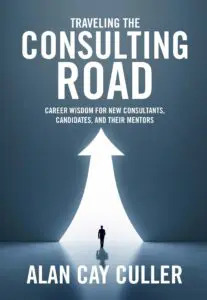
In keeping with this tradition, in January I published Traveling the Consulting Road: Career Wisdom for New Consultants, Candidates, and Their Mentors. Surprise! This year it looks like consulting firms are not hiring in the same numbers they did for the last two years; in fact, they are letting go substantial numbers of the bumper crop new hires of the previous two years.u00a0 Timing!
n
Consulting is always a boom and bust business. Consultants help leaders change their business in response to new competitors, new technology, new demographic or psychographic trends of customers, global and regional geopolitics and the economies of industries and nations. These influences move up and down in unpredictable ways.
n
During the past two years the United States has been recovering from the Covid 19 pandemic, which slowed business in general. Technology boomed for a while because of remote work, but then began to retrench. Electric vehicles boomed, after supply chains recovered, but then the charging station deficit hindered further expansion. Banks were hurt by interest rates, as was Real Estate and construction. Oil and gas declined in the pandemic because people werenu2019t driving, but then they were, and then not-so-much.
n
The consulting industry does well in periods of change characterized by consistent Growth (new strategies, Innovation)u00a0 or in periods of consistent decline (cost cutting, reorganization, continuous improvement). The industry does less well in periods of systemic instability.
n
n
I wrote a book sharing what I learned as a consulting lifer: how to get hired, how to get promoted and be successful when the job changes as you rise. These are boom-time concerns, but I included some bust-time advice as well.
n
For anyone who doesnu2019t know the consulting industry, one of a firmu2019s primary challenges balancing the size and skill base of its workforce to the needs of its market. Firm partners have often lived through several boom and bust cycles. Especially painful memories were the times when they found clients but had no appropriate staff and had to turn work down or delivered poorly. These senior people often talk about u201chiring ahead of the curve this time.u201d
n
These same partners seem less concerned about having too many staff. This pain just isnu2019t as personal (for them); they just cut staff.
n
Most large firms have an u201cup or outu201d or u201cgrow or gou201d policy. This means every so often consultants are evaluated not just on current performance, but on promotion potential. If, in the view of partners, with input from managers, if you canu2019t grow, you have to go, or if you canu2019t go up, you must go out. u00a0The great un-leavening can happen anytime, but often happens in the spring, in time to make room for the new cadre of hires from university or business school. At the end of first quarter, the firm notifies certain staff members that there are u201cconcerns,u201d about performance. The idea is the firm keeps the best performers it hired and allows the bottom of the distribution to u201cget on with the value-added part of their career,u201d (someplace else).
n
At the beginning of April, Fortune magazine reported that McKinsey had given an unusually high number of u201cconcerns noticesu201d in March. A McKinsey Human Resources spokesperson commented, (somewhat defensively?) that the u201cperc3ntage of concerns this year was absolutely in line with previous years.u201d The story went on to describe the tens of thousands of potentially unemployed consultants across the major firms and how this yearu2019s cadre of new consultants was likely to be significantly smaller.
n
Perfect – just in time for my booku2019s second quarter sales. Timing!
n
n
This isnu2019t all about me. (Really?)
n
Maybe you were part of the large cadre or the last two years, or maybe you are a more mid-career consultant who for some reason has come a cropper on the u201cconcerns listu201d this year. Maybe you were hoping to get one of what you now know to be fewer consulting job offers this year. Maybe you even had a summer internship at a big consulting firm last year and the offer didnu2019t materialize or was rescinded, (yes, they do that sometimes).
n
It’s time to get creative, resilient and determined. Here are a few ideas:
n
n
n
n
n
n
n
n
n
n
n
n
n
n
n
n
n
n
n
n
n
n
n
n
n
n
n
n
n
n
Some of it even has the same urgent problem-solving and change-driven learning as consulting. Maybe write a book. Just be sure to get your timing right.
n
n
Ill-timed perhaps, but still useful.
n
n
EBooks are now available in many places. Print is only available on Amazon (for now) but will be coming soon to a bookstore near you.
n
I would be grateful if you read it. Thanks
“,”tablet”:”
n
A few weeks ago I wrote u201cArriving for the Break,u201d wherein I poke fun at my way of being in the world, which might be called ,u201dcontrarian temporal synchronicity,u201d arriving when the band goes on break, buying high and selling low as investment strategy, and adopting new technology after everyone else has moved on to the next new thing.
n
In keeping with this tradition, in January I published Traveling the Consulting Road: Career Wisdom for New Consultants, Candidates, and Their Mentors. Surprise! This year it looks like consulting firms are not hiring in the same numbers they did for the last two years; in fact, they are letting go substantial numbers of the bumper crop new hires of the previous two years. Timing!
n
Consulting is always a boom and bust business. Consultants help leaders change their business in response to new competitors, new technology, new demographic or psychographic trends of customers, global and regional geopolitics and the economies of industries and nations. These influences move up and down in unpredictable ways.
n
During the past two years the United States has been recovering from the Covid 19 pandemic, which slowed business in general. Technology boomed for a while because of remote work, but then began to retrench. Electric vehicles boomed, after supply chains recovered, but then the charging station deficit hindered further expansion. Banks were hurt by interest rates, as was real Estate and construction. Oil and gas declined in the pandemic because people werenu2019t driving, but then they were, and then not-so-much.
n
The consulting industry does well in periods of change characterized by consistent growth (new strategies, innovation) or in periods of consistent decline (cost cutting, reorganization, continuous improvement). The industry does less well in periods of systemic instability.
n
n
I wrote a book sharing what I learned as a consulting lifer: how to get hired, how to get promoted and be successful when the job changes as you rise. These are boom-time concerns, but I included some bust-time advice as well.
n
For anyone who doesnu2019t know the consulting industry, one of a firmu2019s primary challenges balancing the size and skill base of its workforce to the needs of its market. Firm partners have often lived through several boom and bust cycles. Especially painful memories were the times when they found clients but had no appropriate staff and had to turn work down or delivered poorly. These senior people often talk about u201chiring ahead of the curve this time.u201d
n
These same partners seem less concerned about having too many staff. This pain just isnu2019t as personal (for them); they just cut staff.
n
Most large firms have an u201cup or outu201d or u201cgrow or gou201d policy. This means every so often consultants are evaluated not just on current performance, but on promotion potential. If, in the view of partners, with input from managers, if you canu2019t grow, you have to go, or if you canu2019t go up, you must go out. The great un-leavening can happen anytime, but often happens in the spring, in time to make room for the new cadre of hires from university or business school. At the end of first quarter, the firm notifies certain staff members that there are u201cconcerns,u201d about performance. The idea is the firm keeps the best performers it hired and allows the bottom of the distribution to u201cget on with the value-added part of their career,u201d (someplace else).
n
At the beginning of April, Fortune magazine reported that McKinsey had given an unusually high number of u201cconcerns noticesu201d in March. A McKinsey Human Resources spokesperson commented, (somewhat defensively?) that the u201cperc3ntage of concerns this year was absolutely in line with previous years.u201d The story went on to describe the tens of thousands of potentially unemployed consultants across the major firms and how this yearu2019s cadre of new consultants was likely to be significantly smaller.
n
Perfect – just in time for my booku2019s second quarter sales. Timing!
n
n
This isnu2019t all about me. (Really?)
n
Maybe you were part of the large cadre or the last two years, or maybe you are a more mid-career consultant who for some reason has come a cropper on the u201cconcerns listu201d this year. Maybe you were hoping to get one of what you now know to be fewer consulting job offers this year. Maybe you even had a summer internship at a big consulting firm last year and the offer didnu2019t materialize or was rescinded, (yes, they do that sometimes).
n
It’s time to get creative, resilient and determined. Here are a few ideas:
n
n
n
n
n
n
n
n
n
n
n
n
n
n
n
n
n
n
n
n
n
n
n
n
n
n
n
n
n
n
Some of it even has the same urgent problem-solving and change-driven learning as consulting. Maybe write a book. Just be sure to get your timing right.
n
n
Ill-timed perhaps, but still useful.
n
n
EBooks are now available in many places. Print is only available on Amazon (for now) but will be coming soon to a bookstore near you.
n
I would be grateful if you read it. Thanks
n
“}},”slug”:”et_pb_text”}” data-et-multi-view-load-tablet-hidden=”true”>
A few weeks ago I wrote “Arriving for the Break,” wherein I poke fun at my way of being in the world, which might be called ,”contrarian temporal synchronicity,” arriving when the band goes on break, buying high and selling low as investment strategy, and adopting new technology after everyone else has moved on to the next new thing.
In keeping with this tradition, in January I published Traveling the Consulting Road: Career Wisdom for New Consultants, Candidates, and Their Mentors. Surprise! This year it looks like consulting firms are not hiring in the same numbers they did for the last two years; in fact, they are letting go substantial numbers of the bumper crop new hires of the previous two years. Timing!
Consulting is always a boom and bust business. Consultants help leaders change their business in response to new competitors, new technology, new demographic or psychographic trends of customers, global and regional geopolitics and the economies of industries and nations. These influences move up and down in unpredictable ways.
During the past two years the United States has been recovering from the Covid 19 pandemic, which slowed business in general. Technology boomed for a while because of remote work, but then began to retrench. Electric vehicles boomed, after supply chains recovered, but then the charging station deficit hindered further expansion. Banks were hurt by interest rates, as was real estate and construction. Oil and gas declined in the pandemic because people weren’t driving, but then they were, and then not-so-much.
The consulting industry does well in periods of change characterized by consistent growth (new strategies, innovation) or in periods of consistent decline (cost cutting, reorganization, continuous improvement). The industry does less well in periods of systemic instability.
I wrote a book sharing what I learned as a consulting lifer: how to get hired, how to get promoted and be successful when the job changes as you rise. These are boom-time concerns, but I included some bust-time advice as well.
For anyone who doesn’t know the consulting industry, one of a firm’s primary challenges balancing the size and skill base of its workforce to the needs of its market. Firm partners have often lived through several boom and bust cycles. Especially painful memories were the times when they found clients but had no appropriate staff and had to turn work down or delivered poorly. These senior people often talk about “hiring ahead of the curve this time.”
These same partners seem less concerned about having too many staff. This pain just isn’t as personal (for them); they just cut staff.
Most large firms have an “up or out” or “grow or go” policy. This means every so often consultants are evaluated not just on current performance, but on promotion potential. If, in the view of partners, with input from managers, if you can’t grow, you have to go, or if you can’t go up, you must go out. The great un-leavening can happen anytime, but often happens in the spring, in time to make room for the new cadre of hires from university or business school. At the end of first quarter, the firm notifies certain staff members that there are “concerns,” about performance. The idea is the firm keeps the best performers it hired and allows the bottom of the distribution to “get on with the value-added part of their career,” (someplace else).
At the beginning of April, Fortune magazine reported that McKinsey had given an unusually high number of “concerns notices” in March. A McKinsey Human Resources spokesperson commented, (somewhat defensively?) that the “perc3ntage of concerns this year was absolutely in line with previous years.” The story went on to describe the tens of thousands of potentially unemployed consultants across the major firms and how this year’s cadre of new consultants was likely to be significantly smaller.
Perfect – just in time for my book’s second quarter sales. Timing!
This isn’t all about me. (Really?)
Maybe you were part of the large cadre or the last two years, or maybe you are a more mid-career consultant who for some reason has come a cropper on the “concerns list” this year. Maybe you were hoping to get one of what you now know to be fewer consulting job offers this year. Maybe you even had a summer internship at a big consulting firm last year and the offer didn’t materialize or was rescinded, (yes, they do that sometimes).
It’s time to get creative, resilient and determined. Here are a few ideas:
Some of it even has the same urgent problem-solving and change-driven learning as consulting. Maybe write a book. Just be sure to get your timing right.
Ill-timed perhaps, but still useful.

EBooks are now available in many places. Print is only available on Amazon (for now) but will be coming soon to a bookstore near you.
I would be grateful if you read it. Thanks
The post Life After Consulting appeared first on Wisdom from Unusual Places.
Originally Published on https://wisdomfromunusualplaces.com/blog/