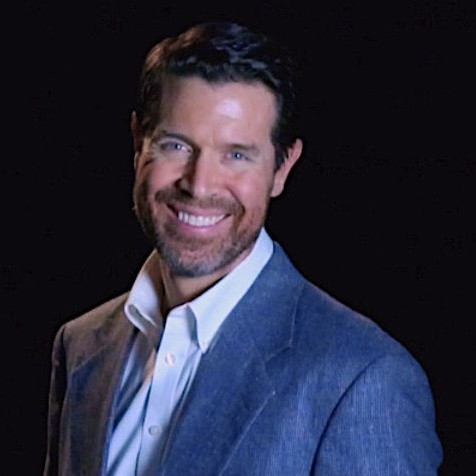

If you’re treating Parkinson’s disease (PD) as solely a disorder of movement, you are missing a significant portion of what negatively affects outcomes. If that diagnosis of your treatment upsets you, good. It’s time we took a look at emotional IQ and how it impacts those you serve. As a care partner to a father who has lived with his poorly delivered PD diagnosis since 2001, I have seen and felt the effects of ignoring the whole person. In full disclosure, I also completed a PhD program at UNLV in Interdisciplinary Health Sciences in Dec. 2022, where I studied the effect of improvisation and storytelling on People with Parkinson’s disease (PWPD) and run the 501(c)3 nonprofit organization, ,,Yes, And…eXercise!

Let’s start here: The emotional and psychosocial elements of PD are at least, and much research suggests even greater, as big an issue for people with PD, their families and loved ones as the physical symptoms. Because of the chronic, degenerative nature of PD and its lack of a cure or disease-modifying therapies, doctors must set realistic and hopeful expectations. It is highly unlikely that the minimal training on delivering the diagnosis received in medical school prepared most for this challenge. The emerging literature on the psychosocial and emotional needs of PWPD from researchers such as ,,Dr. Indu Subrammanian, ,,Dr. Bradley McDaniels, and ,,Dr. Soania Mathur,, is clear.
The question becomes how to help PWPD not only understand but also explore their own constantly shifting emotional and psychosocial challenges? The default answers tend to be Cognitive Behavioral Therapy (CBT) and support groups. While these may be effective for some, there are gaps in both interventions. For CBT:
Support Groups are highly variable, too.
There is a new option to explore the emotional and psychosocial elements of PD in a safe and brave space: ,,Day,, One is a unique, highly-engaging, evidence-based narrative exploration program that provides the opportunity for everyone in the PD community to explore, discover, and share their stories. This includes doctors who need help in connecting with their PWPD, delivering the diagnosis, and offering ongoing support. Knowing your story helps you be more compassionate with others.
Participants engage in an interactive 16-session online workshop that employs elements of Joseph Campbell’s Hero’s Journey as a framing device. The Day One program can be taken as an asynchronous course with instructive videos that can be accessed on any WiFi connected device.
As a longtime care partner for my father and now a researcher in this field, I hope you’ll reach out to me to discuss how you can use these valuable tools to improve your connection with those you serve. Feel free to email me at: ,,[email protected].
Thank you,
Robert Cochrane, PhD
CEO & Founder, Yes, And…Exercise!
a 501(c)3 nonprofit org.
Originally Published on https://www.yesandexercise.org/