

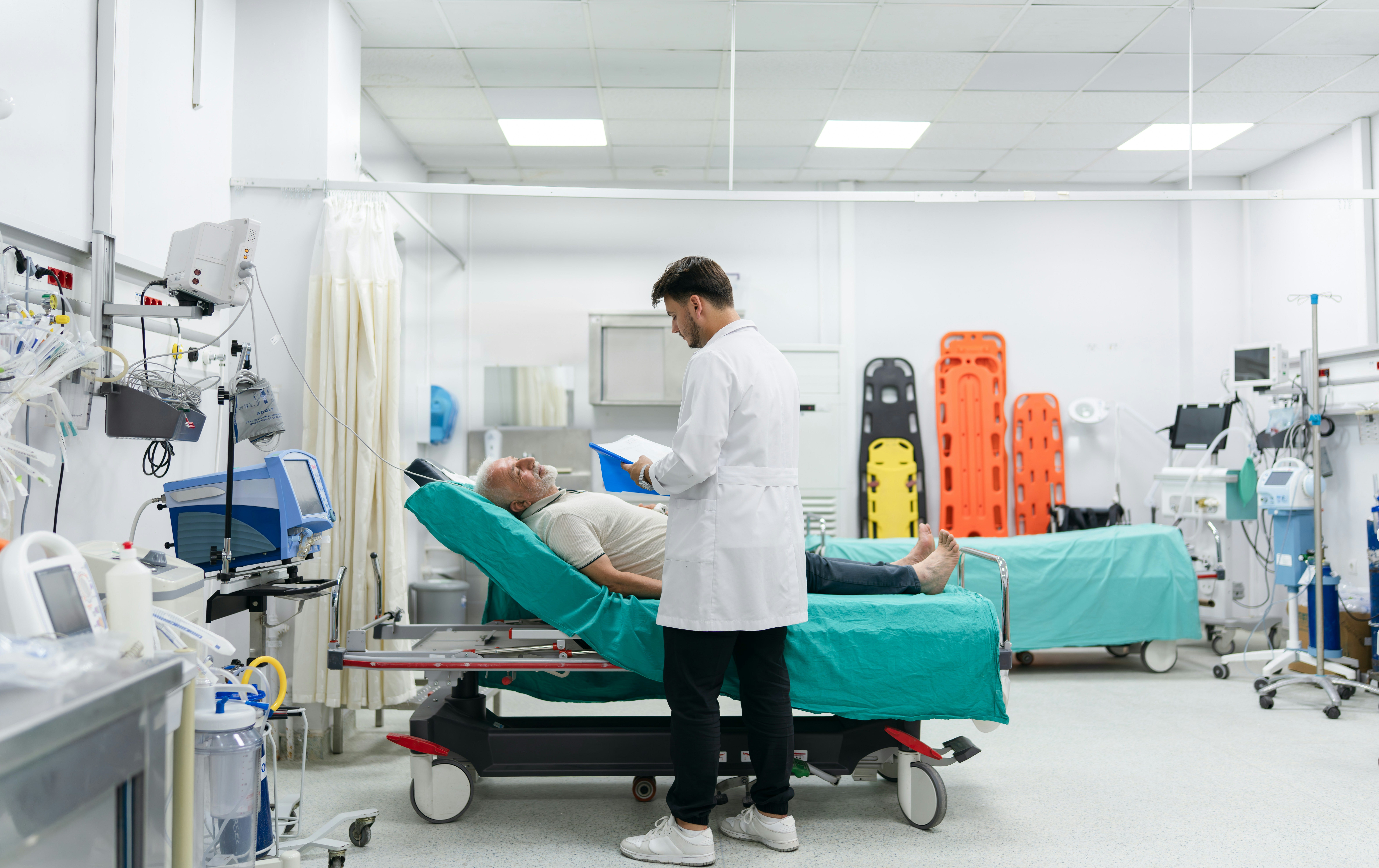
Photo by Yunus Tug for Unsplash+
Fresh from a recent adventure in an emergency room, I was intrigued to learn of a trend in emergency medicine that is gathering momentum: the Geriatric Emergency Department.
I grew up in an era when “separate but equal” was associated with outdated, politically incorrect thinking. Consequently, I tend to be skeptical of separate anything. In the case of separate emergency rooms for older adults, however, I’m willing to make an exception. Evidence suggests that these separate facilities can lead to better outcomes for older patients.
“The emergency department is a very fast-paced, loud environment,” says Dr. Liz Goldberg, associate professor of emergency medicine and geriatrics at the University of Colorado School of Medicine. Because of overcrowding, she told an interviewer, patients may spend hours or days in a hallway, under bright lights and with constant activity all around.
Older patients who stay overnight in an emergency department “are at greater risk for developing delirium, even potentially having an inpatient mortality,” says Ula Hwang, professor adjunct of emergency medicine at Yale School of Medicine.
Hwang co-authored the first nationally representative study of hospital admission and mortality associated with Geriatric Emergency Department care. Published in April, the study found that receiving acute care in a Geriatric Emergency Department was associated with lower odds of hospital admission and 30-day mortality after the visit.
Hwang says that in an urgent situation, patients of all ages receive the same fast, specialized care. The age-related difference comes into play in more ambiguous cases, which lead to longer and more thorough workups.
Geriatric emergency rooms are staffed with medical teams that have geriatric training, and they follow structured processes that put a premium on careful assessment and coordination. Following these processes is more likely to identify and manage geriatric syndromes, reduce harmful interventions, reduce complications, prevent unnecessary admissions, and support safer discharge planning.
These ERs are also more age-friendly environments. Non-slip floors, plenty of handrails, and an ample supply of walkers can prevent falls. Clear signage helps prevent people from getting lost, while forms that use large print ensure that vision problems don’t prevent patients from understanding instructions. Quiet areas with ambient lighting (in place of harsh fluorescents) reduce Anxiety and confusion.
One goal of Geriatric ERs is to lessen the likelihood of delirium, for which people with dementia are at higher risk. Protocols try to prevent delirium by keeping the patient hydrated and minimizing the use of equipment, such as monitors, that attach to the patient.
Another goal is better, more accurate diagnoses. As one geriatrician explained to National Public Radio, “If you don’t know that person’s baseline, if you don’t know that there was a new medication started, if you don’t know that they had a fall a week ago, and you can’t get that information because they’re not able to communicate, it’s very hard to diagnose accurately.”
For the record, older adults are the frequent flyers of emergency care. Data from the Centers for Disease Control and Prevention shows that older adults account for 21% of the 33 million annual visits to emergency departments.
Roughly 10% of emergency departments have some level of geriatric certification from the American College of Emergency Physicians, which started a certification program in 2018. Many of them are urban teaching hospitals.
Though the number of certified departments has expanded rapidly, the number of patients receiving care in geriatric emergency rooms is still small.
And there remains one major obstacle to further Growth: the shortage of doctors specializing in geriatric care. In one year only 170 fellows were placed in U.S. geriatric fellowship programs, compared to more than 1,000 fellows in cardiology. But that’s another story, for another time.