The Pain of Perfection
As one who continues to try and read self-help information, I approach business books in two ways.
- How can I take what I am reading and implement this into a system that will improve my life across a variety of areas?
- What can I take away from this book that I will use as a reminder to correct myself in the future?
About 15 years ago I was trying to up my Personal Development game and so I started to read books on strategy. One of them was called Strategic Acceleration: Succeed at the Speed of Life by Tony Jeary. While it was not a life-changing read, it still fell into the second category. However, the one phase has stuck with me all the years later is, “Production before perfection.”
In essence, Jeary challenges you to just start and figure it out as you work. It resonates with me because I can find myself needing everything to be perfect. In fact, I tend to use that false sense of flawlessness as an excuse to stay where I am at. The result is a lot of unintentional pain.
That anguish will manifest itself in a variety of ways. Perfectionism leads to procrastination, analysis paralysis, and wasted time. It creates a cycle of self-doubt and anxiety, hindering productivity. It often leads to burnout and a feeling of never being “good enough.”
Therefore, borrowing from Jeary’s phrase, lets look at some time-optimized approaches you can take to better produce without having everything exactly the way you want it.
Featured Free Resource
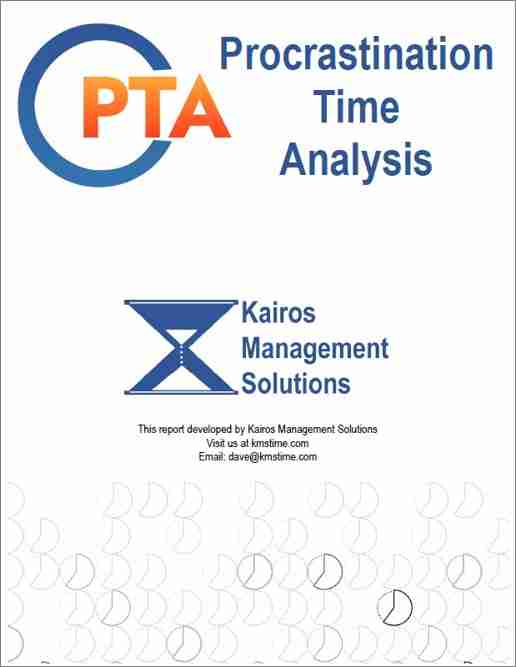
The Procrastination Time Analysis (PTA)
The Procrastination Time Analysis (PTA) asks you to evaluate how well you manage through personal, planning and professional aspects that can cause delay.
Embrace the “Good Enough” Mindset:
- Detail: Actively challenge the belief that everything must be flawless. Understand that “good enough” is often sufficient and efficient.
- Actionable Tip: Set realistic standards for yourself and your work. Ask, “Will this achieve the intended purpose?” instead of “Is this absolutely perfect?”
Set Time-Bound Deadlines:
- Detail: Impose strict deadlines on tasks to prevent endless tweaking and refining.
- Actionable Tip: Use a timer or schedule blocks of time for specific tasks. When the time is up, move on, regardless of perceived “perfection.”
Prioritize Progress Over Flawlessness:
- Detail: Focus on making consistent progress rather than achieving an unattainable ideal.
- Actionable Tip: Break down large tasks into smaller, manageable steps. Celebrate completing each step, regardless of its “perfect” execution.
Practice Imperfect Action:
- Detail: Deliberately take action even when you feel unprepared or uncertain.
- Actionable Tip: Start a project before you feel fully ready. Share your work in progress with a trusted friend or colleague for feedback.
Learn from “Failures” and Mistakes:
- Detail: Shift your perspective on mistakes from catastrophic failures to valuable learning opportunities.
- Actionable Tip: After completing a task, reflect on what you learned, not just what went “wrong.” Focus on improvement, not perfection.
Use the 80/20 Rule (Pareto Principle):
- Detail: Recognize that 80% of results come from 20% of effort. Focus on the most impactful tasks.
- Actionable Tip: Identify the 20% of your work that yields the most significant results and prioritize those tasks. Don’t waste time perfecting the other 80% that has minimal impact.
Limit Review and Revision Time:
- Detail: Set a specific time limit for reviewing and revising your work.
- Actionable Tip: After a set period, stop editing and submit or publish your work. Over-editing can lead to diminishing returns and unnecessary Stress.
Embrace Feedback and Collaboration:
- Detail: Seek feedback from others to gain different perspectives and avoid getting stuck in your own perfectionist loop.
- Actionable Tip: Share your work with a trusted colleague or mentor for constructive criticism. Be open to suggestions and avoid taking feedback personally.
Focus on Completion, Not Just Creation:
- Detail: Prioritize finishing tasks over endlessly refining them.
- Actionable Tip: Set a goal to complete a certain number of tasks each day, regardless of whether they are “perfect.” Celebrate completing projects, not just starting them.
Practice Self-Compassion:
- Detail: Treat yourself with kindness and understanding when you make mistakes or fall short of your expectations.
- Actionable Tip: Talk to yourself as you would to a friend who is struggling. Acknowledge your efforts and celebrate your progress, even if it’s not “perfect.”
I am not perfect when it comes to following “production before perfection.” I Love planning and the Clarity that it creates. However, when I sense that I am staying in place when I should be moving (figuratively or literally), I seek and on ramp to action. The sense of activity (however imperfect) automatically increases my efficiency. I find my stress level goes down, and I usually ask myself, “Why didn’t I start sooner?” I get more quality time in life, and I sense and see progress.
David Buck is the author of the book The Time-Optimized Life, coauthor of The Retirement Collective, and owner of Kairos (Time) Management Solutions, LLC. Learn how to apply the concepts of proactively planning and using your time. Take the Time Management Analysis (TMA), the Retirement Time Analysis (RTA), or all the other free resources offered to help bring more quality time into your life.
The post The Pain of Perfection first appeared on Infinity Lifestyle Design.
In 35+ years of business development, David developed a strong awareness of what it took for people to be productive and efficient, not just busy. He also personally sought to gain a balance of having a successful career along with the ability to pursue a meaningful personal life.
That led David to start Kairos Management Solutions, focusing all his attention to guide business professionals who struggle with a lack of flexibility in their life to gain more quality personal time. David helps others craft a strategy around their current management of time, and then define a lifestyle of intention, ease, and joy.
In 2024, David released two books, the first being The Time Optimized Life. The book reframes the reactive nature of time management and replaces it with a proactive method of time optimization. In addition, he co-authored The Retirement Collective, where he highlights and provides solutions for how to maximize the use of time for people in post-career life.