
George was a senior vice president of sales at a large pharmaceutical company. Accomplished and confident, he headed into Retirement thinking he was done with work. That didn’t last long. He took a part-time job at a small company, calling clients who had not ordered in over a year to convert them back into active customers. He figured it was a way to use his skills to fill the time but also help the rest of the team. It didn’t go as planned. You probably serve some Georges today in your advisory practice.
This article first appeared in Rethinking65
For decades, your clients have introduced themselves with impressive titles like owner, managing director, and chief financial officer. These titles weren’t just labels; they were badges of lifelong accomplishment, accumulated expertise, responsibility and social standing. But what happens when those carefully crafted business cards become artifacts of the past?
The transition from a title-driven identity to retirement often blindsides even the most prepared professionals. As financial advisors, you excel at preparing your clients for the fiscal aspects of retirement. However, many overlook a crucial element: helping clients prepare for the psychological impact of losing their professional identity.
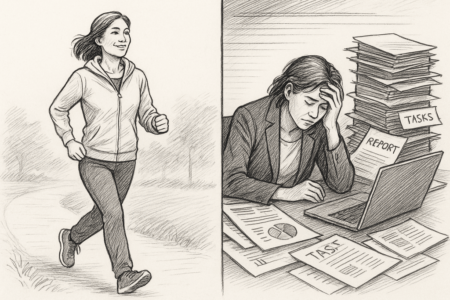
George did not expect to sit in leadership meetings and plan strategy in his part-time job. But he did believe that he could help improve processes and provide knowhow when others struggled. It became very frustrating when the sales leader in the company was not receptive to George’s suggestions and at one point told him to “stay in his lane.”
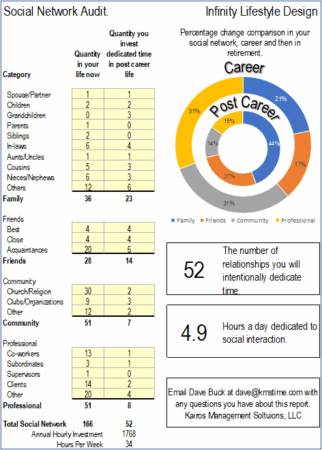
Imagine former President Biden, who recently went from what many would call the most important job in the world to a life of greater obscurity out of the public eye and away from the pressures of constant attention. His experience isn’t unique. Over 51% of those who have taken my Retirement Time Analysis (RTA) assessment assert that their job provides them with one of the main fulfillments in life, and without a career they will lack direction and purpose.
Additional research shows that professionals who strongly identify with their careers often struggle with self-worth and purpose in retirement. The challenge isn’t just filling time; it’s finding new sources of identity and meaning in a world where past accomplishments carry diminishing weight.
Participants answer 36 questions around their retirement status; lifespan, career mindset, general time management, retirement mindset, financial mindset, anticipated Lifestyle, and planned activities. Based on their answers, the RTA full report highlights the “time phase” they will spend in retirement and an overall classification.
As advisors, it’s important to start to identity transition planning well before the retirement date. Here are key strategies to help clients navigate this shift.
George went into his post-career sales role with a set of expectations to contribute and share. His employer had a very specific role to fill that was regimented and rigid. What was supposed to be fun and fulfilling became boring, unsatisfying, and even exasperating.
Your clients who are financially ready to retire have been influenced through your preparation and successful implementation of an adapting strategy. Financial advisors are uniquely positioned to help clients coach for the non-financial transition. You see them at their most vulnerable, discussing hopes and fears about the future. By expanding your advisory role to include identity transition planning, you provide more comprehensive retirement preparation.
Consider incorporating these elements into client meetings:
Retirement doesn’t have to mean the end of recognition or purpose — it’s an opportunity to build a new identity based on Wisdom, experience, and personal interests rather than professional titles. By helping clients prepare for this transition, we enable them to write their next chapter with confidence and Clarity.
As for George, he took an extended leave of absence, deciding to Travel more with his wife. His post-career employer reached out to see if he planned to return. Knowing he did not want to go back to a job where he felt unappreciated and unfulfilled, he was ready to tell them he wasn’t. However, he offered an alternative. He was willing to stay but wanted to work remotely. Knowing the company lacked analytical experience; he developed a proposal to work in a project-based role. This afforded him the flexibility he wanted to provide much needed knowledge. George and his employer are currently negotiating the particulars.
David Buck is the author of the book The Time-Optimized Life, coauthor of The Retirement Collective, and owner of Kairos (Time) Management Solutions, LLC. Learn how to apply the concepts of proactively planning and using your time. Take the Time Management Analysis (TMA), the Retirement Time Analysis (RTA), or all the other free resources offered to help bring more quality time into your life.
The post A Life Without Titles first appeared on Infinity Lifestyle Design.