

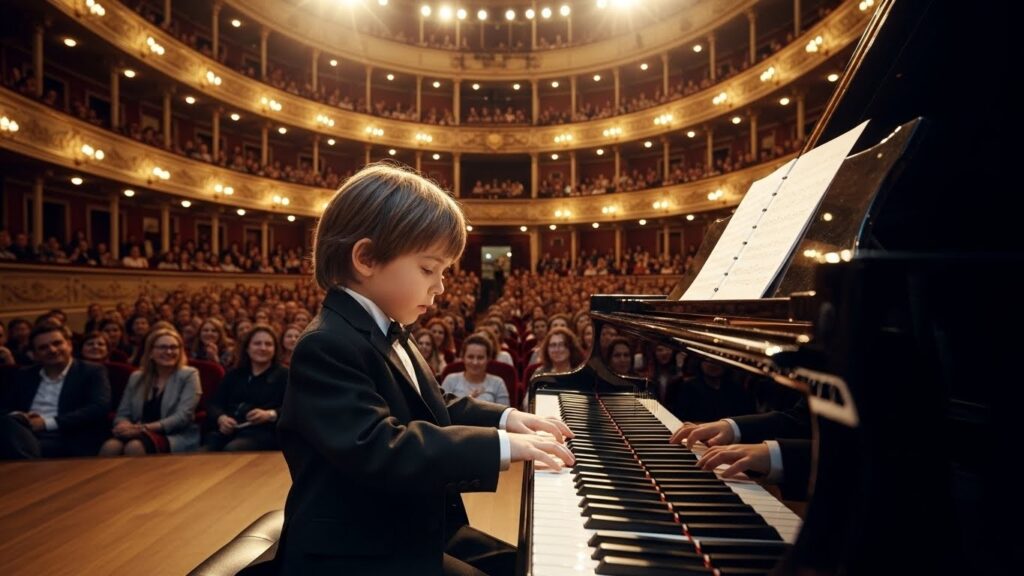
Talent is often described as a natural aptitude or skill — a kind of built-in ability that someone seems to possess from an early age. We say things like “She has a talent for music” or “He’s a natural at sports.” But what does that really mean? Is talent something you’re born with, or can it be developed? At its core, talent is the potential to do something well. It might show up in physical activities like running, dancing, or drawing, or in mental skills like problem-solving, emotional understanding, or inventiveness. Some talents show up early in life, almost like magic. A child who plays the piano without ever taking a lesson, or someone who sketches realistic portraits as a teen, seems to have been gifted something special. But there’s more to talent than just “raw ability.” It also includes interest, since people often show talent in areas they enjoy; practice, because even the most gifted individuals have to hone their skills; and mindset, since confidence and perseverance can unlock hidden talent.
While we often think of talent as rare or mysterious, the truth is everyone has talent — they just show up in different ways. Some people have a talent for understanding Emotions, others for organizing spaces, telling stories, making people laugh, or building things with their hands. Recognizing talent isn’t always about standing out; it’s about paying attention to what comes naturally and what brings satisfaction.
Talent is often confused with skill or intelligence, but they aren’t the same. Talent typically refers to an innate or natural ability to do something well — that raw potential that seems to appear effortlessly in some people. Skill is developed through learning and practice. And then there’s intelligence, which refers to cognitive abilities like reasoning, memory, and problem-solving. Talent might give you a head start, but skill is built through repetition, and intelligence affects how you solve problems. They’re all interconnected, but talent is that initial spark.
Genes do play a role in our talents — there’s no denying that. Research has shown that genetics can influence factors like memory, rhythm, motor coordination, and even personality traits like curiosity and persistence, all of which contribute to the development of talent. Some families seem to pass down certain abilities through generations. Think of the Bach Family, where musical genius ran in the bloodline. Or the Williams sisters in tennis, both trained intensely but also potentially predisposed to athleticism.
No single “talent gene” has been discovered. Talent isn’t like eye color or height; it’s influenced by a complex mix of many genes working together. Even then, those genes need the right environment to be expressed. This is known as epigenetics — how your environment influences the expression of your genes. Let’s not forget about IQ, often cited as a measure of intellectual talent. Studies have found that IQ is partially heritable, but again, it doesn’t guarantee success. Many high-IQ individuals don’t reach their full potential, while average-IQ people achieve great things through determination and environment. So yes, genetics can stack the deck in your favor — but it doesn’t play the entire game.
Neuroscience gives us fascinating insights into how talent shows up in the physical structure and function of our brains. Certain regions of the brain are more active in people with specific talents. For instance, the motor cortex in elite athletes or the auditory cortex in musicians may be more developed or activated when they’re performing. However, our brains are highly plastic, meaning they can change and adapt based on what we do repeatedly. So even if you weren’t born with a brain “wired” for a specific talent, you can rewire it through consistent practice and training. This process is called neuroplasticity, and it’s how we build new skills and even develop talents later in life.
The other major player in the talent equation is the environment. Even if you have genetic potential for a certain talent, it might never blossom without the right surroundings. Environment includes everything from the family you grow up in, the schools you attend, the resources available to you, and even the culture you live in. Think about Mozart — yes, he was a musical genius, but he was also born into a family of musicians. His father was a music teacher who started training him at an incredibly young age. Would Mozart have still been Mozart if he’d grown up in a family that never owned a piano? Maybe not. Elite athletes often start training in childhood, with access to Coaching, nutrition, and supportive communities. The right environment acts like a greenhouse — it nurtures the seeds of talent.
There’s also the Pygmalion Effect, a psychological phenomenon where higher expectations lead to better performance. If parents, teachers, or mentors believe in your abilities, you’re more likely to live up to those expectations. On the flip side, if you’re constantly told you’re “not good enough,” it can limit your Growth, even if you have the raw talent. Talent doesn’t exist in a vacuum. It’s deeply affected by your environment — which means we all have the power to influence our own development, and others’, just by changing the conditions we’re exposed to.
Ever notice how people tend to be good at what they Love doing? That’s not a coincidence. Passion and interest are two of the biggest drivers of talent development. When you’re deeply interested in something, you naturally spend more time doing it. That time and effort can evolve into what people later recognize as “talent.” Take, for example, a kid who loves drawing. No one tells them to practice; they just want to do it. Over the years, that passion turns into skill. By the time they’re adults, people say, “Wow, you’re so talented!” — but they didn’t see the thousands of sketches and doodles behind the scenes.
This links closely with the idea of flow, a psychological state where you’re so engaged in an activity that time seems to disappear. People who spend a lot of time in this state — often in areas they love — tend to make rapid progress. Passion makes practice feel less like a chore and more like a game. While passion might not be talent itself, it acts like rocket fuel. It accelerates growth, pushes you through obstacles, and keeps you coming back even when things get tough. If you want to discover your talents, a great place to start is by asking: What lights me up?
You might be walking around right now with a talent you’ve never even tapped into. It’s more common than you think. Many people discover their talents accidentally. A hobby turns serious, a side project becomes a career, or a personal challenge reveals strengths they didn’t know they had. Why do so many talents stay hidden? One reason is lack of exposure. If you’ve never tried painting, you’ll never know you’re good at it. Same with public speaking, coding, Gardening, or anything else. Our lives often become routines, and we rarely step out of our comfort zones to explore.
Another reason is self-doubt. You might have tried something once, failed, and gave up too soon. But failure isn’t a sign that you lack talent — it’s just part of the learning curve. Even the most talented people struggled in the beginning. Talent is often like a buried treasure. You’ve got to dig a little to find it — but once you do, the payoff is incredible.
Talent can change and evolve over your lifetime. You might be great at one thing in your twenties, shift to another in your forties, and uncover a whole new skill set in your sixties. Life experience, changing interests, and brain development all affect what you’re drawn to and what you become good at. For example, some people develop public speaking skills later in life, even if they were shy as kids. Others might pick up painting or writing during Retirement and show remarkable talent. It’s never too late to start something new — and just because you weren’t good at it once doesn’t mean you won’t be now.
There’s also something called cumulative advantage — skills and talents build on each other. A talent for storytelling might lead to a career in marketing. A knack for organizing could evolve into leadership. Talents are rarely isolated; they interact and grow with your experiences. So don’t lock yourself into a narrow identity. Be open to evolving. Your talent isn’t behind you — it might just be waiting in the next chapter of your life.
So, where does our talent come from? It’s not just one thing. It’s a powerful mix of genetics, environment, passion, practice, and mindset. Some of us start with a head start, others with a hunger to catch up. Talent isn’t reserved for a chosen few — it’s accessible to everyone who’s willing to explore, experiment, and grow. You might not feel “naturally talented” right now, but that doesn’t mean you lack talent. It might just be hiding under the surface, waiting for you to uncover it, nurture it, and share it with the world. Stop waiting for talent to find you. Go out and find it within yourself.