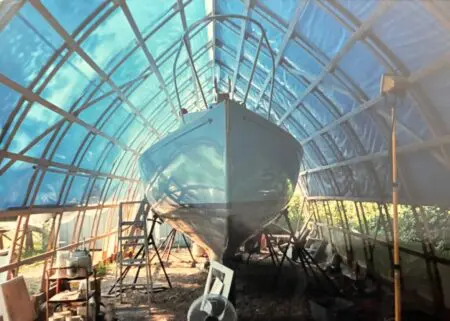

The highly individual creative process can take many forms. Talented artists use oil or watercolor paints to bring images to life on canvas. Writers use their gifts to tell stories, often bringing readers to the edge of their seats. And wooden boatbuilders continue to transform piles of wood, nails, and paint into distinctive boats. In fact, wooden boatbuilding’s long history extends back thousands of years.
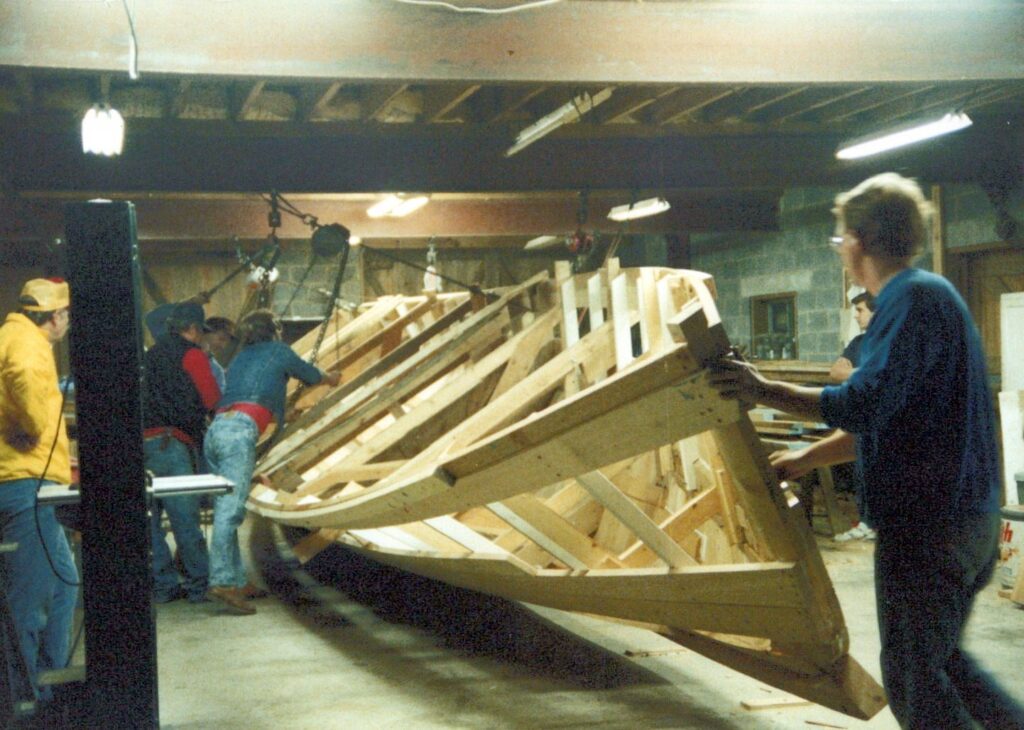
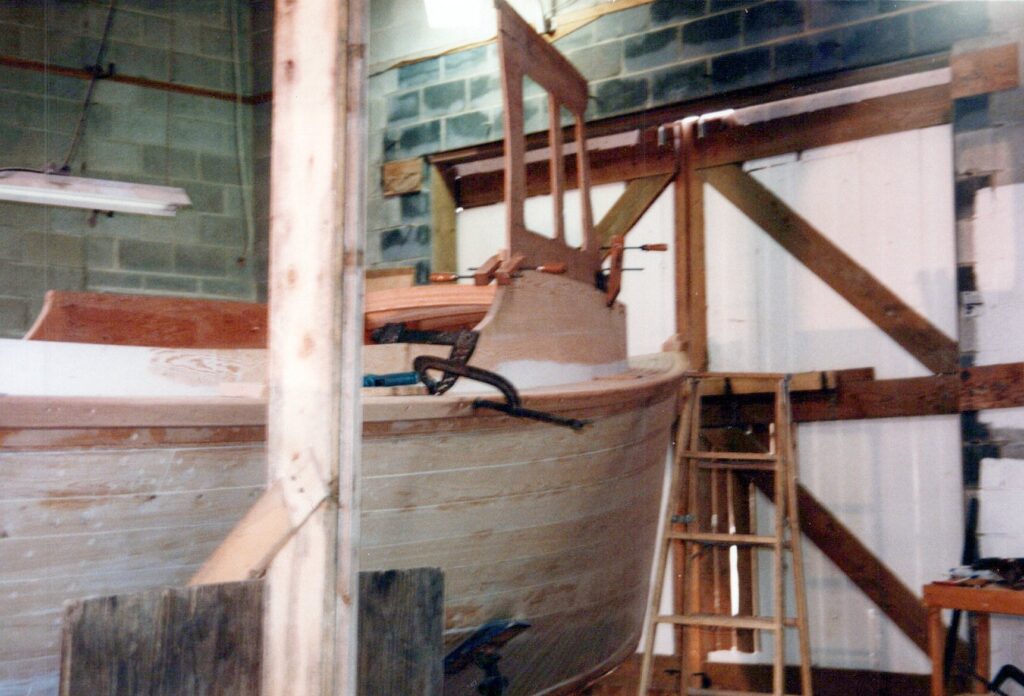
Building a wooden boat is a three-dimensional Exercise. First, a skilled boatbuilder carefully cuts and fastens the frames, creating the boat’s internal structure. Next, they fit precisely machined planks together atop the frames, forming the boat’s hull. When all planks are in place, the stacks of wood have begun to resemble a real-life boat.
Once the boat’s cabin (interior) is complete, and the vessel receives paint and finishing touches, she’s almost ready for the water. Tradition-minded owners often christen their new craft with a bottle of good champagne. However, other owners might simply throw their fishing gear aboard and head out to stalk fish on the local creeks and rivers.
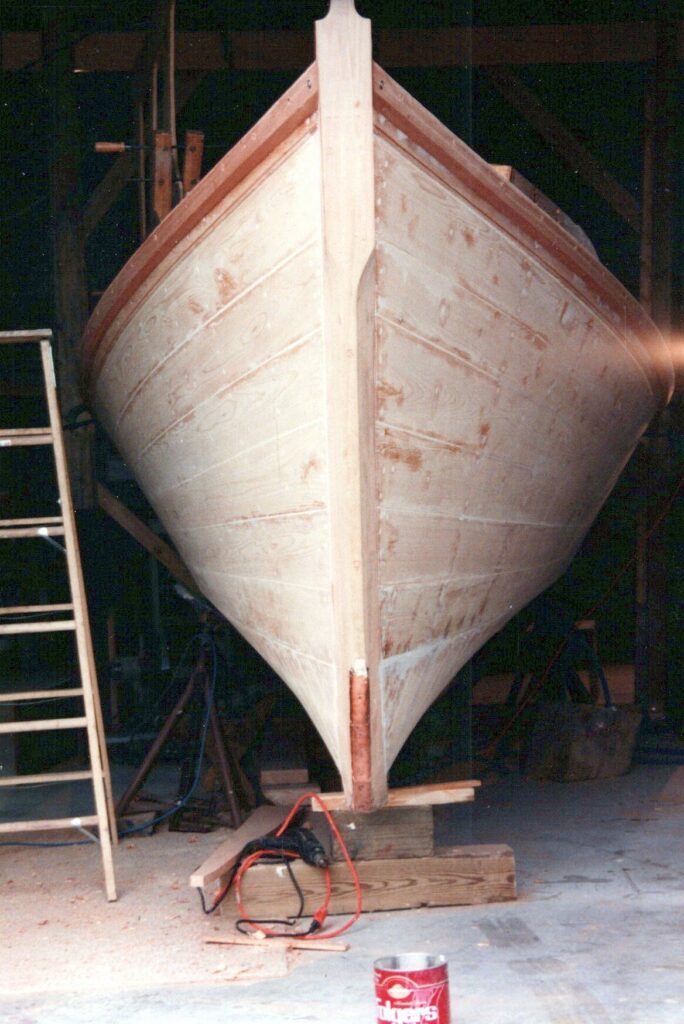
Even though 21st-century boatbuilding typically involves molded fiberglass rather than wood, clients who appreciate wooden boat construction still commission traditional vessels. Wooden boatbuilders generally ply their craft without any fanfare or public attention. But back in the early 1990s, a decidedly unconventional group of boatbuilders just south of Annapolis, Maryland snagged the national spotlight. The Draketail Maritime Project combined the appeal of traditional workboat construction with a multigenerational workforce. My husband Mark and I, intrigued by the group’s mission, happily climbed aboard for the adventure.
Before we dive into the draketail boatbuilding project, here’s a look at the original Hoopers Island Draketail workboat. Boasting sleek lines and a duck tail-like stern (hence the “draketail” name), these salty boats were first built on Maryland’s Eastern Shore before World War I.
Each draketail workboat was essentially built around the boat’s notoriously weak engine. Fortunately, the draketail’s narrow beam (width) and streamlined profile helped the vessel scoot through the water. This allowed crabbers and oystermen to tend their pots and oyster beds with minimal wasted time. During Prohibition, some enterprising draketail owners were said to transport bootleg alcohol via the speedy vessels. Today, fewer than 20 Hoopers Island Draketails survive, although several restorations have been completed.
Back in the early 1990s, southern Anne Arundel County, Maryland was mostly farming and “horse country” territory. Just a short drive to the east, however, the beautiful West River’s numerous creeks emptied into the Chesapeake Bay.
A couple of those creeks run into Shady Side, an historic fishing community with a rich (and quirky) character. For several years, we had a house in Shady Side, just a short walk from a shallow-water creek. We sold that property after completing our sailboat cruise to Florida.
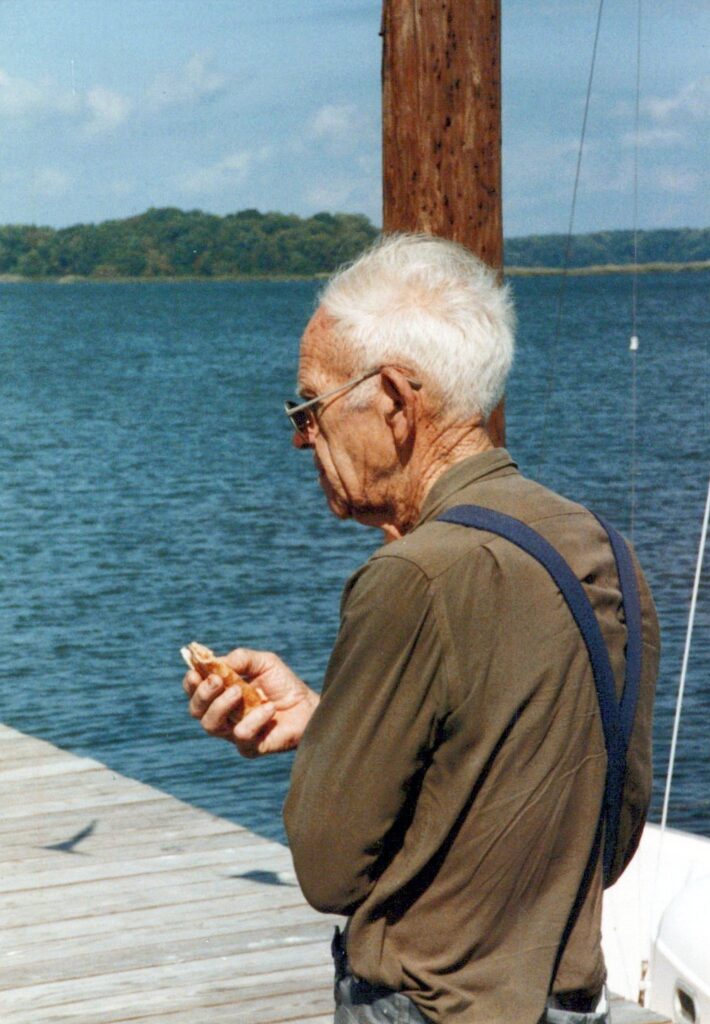
Interestingly, retired boat designer and master boatbuilder John Gregory also lived in Shady Side. An octogenarian full of real-world Wisdom and dry wit, his name would grace one of the first wooden draketails built in decades. Unbeknownst to him, John Gregory would play a key role in a one-of-a-kind boatbuilding program.
Around 1990, esoteric anthropologist Bob Besse stepped up with an interesting proposition. He sought to recruit some Anne Arundel County students and their parents to build an authentic Chesapeake Bay workboat (a draketail, in this case). Once the vessel was afloat, the students would add scientific gear to study Chesapeake Bay ecology.
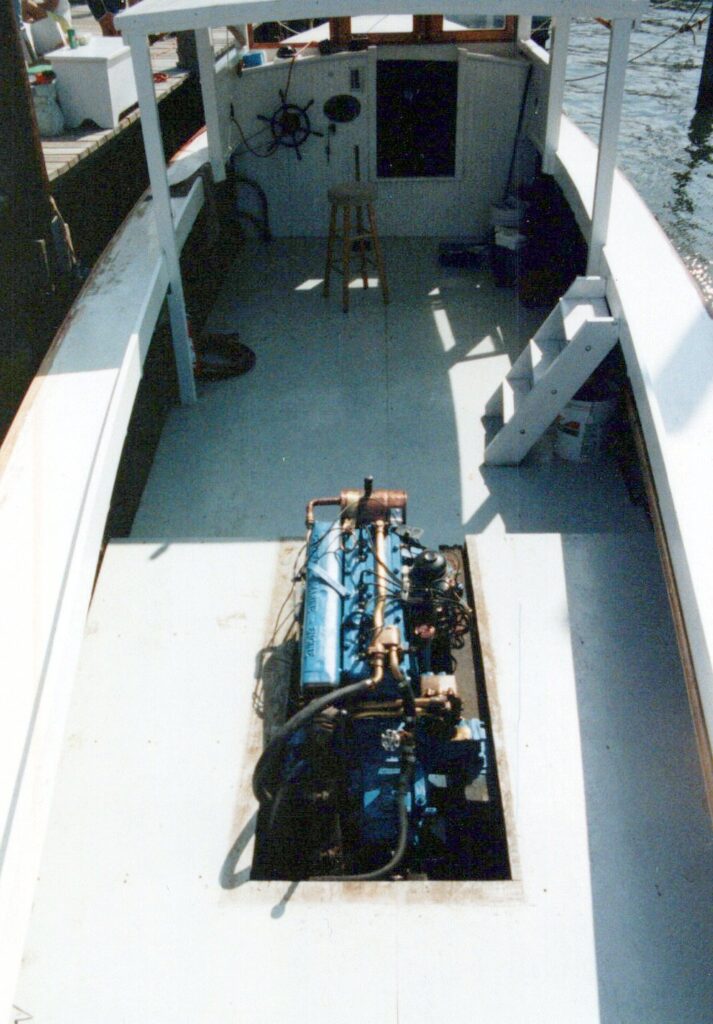
To get the ball rolling, Draketail Maritime Project founder Bob Besse obtained a U.S. Department of Labor $100,000 grant. He convinced Ford and Volvo executives to donate a 229-horsepower engine worth $12,000. A local science teacher donated the use of their barn, enabling the boat’s construction to take place on Tuesdays after school and on Saturdays.
Local school officials also gave their blessing, allowing southern Anne Arundel County students aged 10 to 15 to participate in the boatbuilding program. Bob Besse required each student to work hand-in-hand with an adult, typically a parent or grandparent. Fifteen families jumped aboard, with a core group of students heading to the barn at least once weekly.
Like any project requiring meticulous craftsmanship, the Draketail Maritime Project needed a construction supervisor with real-world skills. Eighty-one-year-old master boatbuilder John Gregory gladly jumped aboard, saying he was intrigued by the draketail’s challenging design.
During the project’s workdays, John Gregory provided oversight for several students and their Family members. Once a week, several United States Naval Academy midshipmen helped build the boat and tutored the students in navigation. But these hardworking young men and women also put on their student hats. They listened with respect (and even awe) as renowned naval architect (and John Gregory designer) Tom Gillmer shared his intriguing stories.
My husband Mark and I contributed completely different skill sets to the program. Mark is a talented woodworker (and woodturner) with furniture and jewelry boxes under his belt. He’s also a natural teacher with a gift for explaining challenging concepts in terms his audience can understand. Mark developed a natural rapport with the students, and they really enjoyed working with him.
Although I’m a respectable go-fer, woodworking isn’t in my wheelhouse. However, I’m a good organizer who assisted with Draketail Maritime Project logistics and fundraising efforts. We each contributed to the program in our own way.
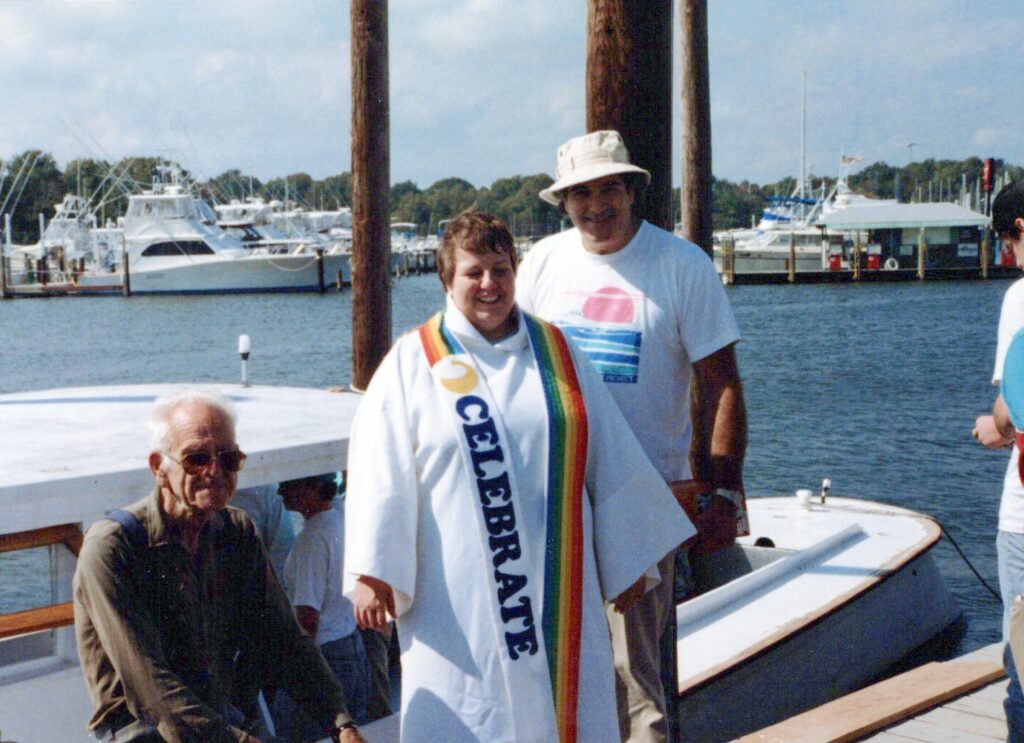
On May 30, 1992, the long boatbuilding slog was finished. The just-completed John Gregory, a 39-foot Hoopers Island Draketail, was freshly painted and bobbing in her slip. Before her young crewmembers could hop aboard, though, the John Gregory received a christening (and a blessing) from a local pastor.
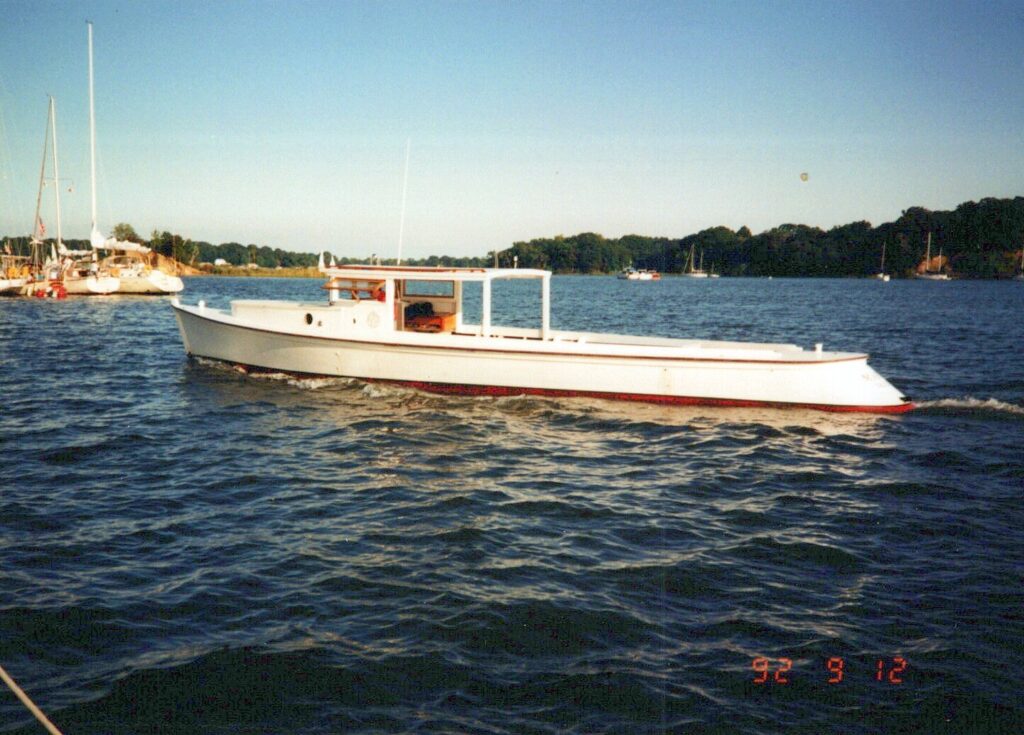
But the Draketail Maritime Project crew had one more task to complete. With the John Gregory build in the history books, the students focused on restoring the Mary Edna, a 47-foot draketail built in 1934. At the project’s completion, this grand old lady had received the attention she so richly deserved.
Looking back, the Draketail Maritime Project students were happy to add boatbuilding techniques to their growing skill sets. They also gained critical thinking skills and the ability to excel on a multigenerational team. Finally, the students enriched their Relationships with family members, enabling them to engage with confidence and thrive in their future relationships.