
Our late 1990s sailing trip to Florida allowed us to escape the brutal Maryland winter. While spending two months docked in Titusville on the Atlantic Coast, we enjoyed nightly gatherings with other cruisers in the marina’s spacious hot tub. We also rented a red convertible for a week. Hopping down to the Florida Keys, we took the high-speed ferry to Fort Jefferson in the Dry Tortugas. It would be tough to top that experience (or so we thought).
Our mutual fascination with space exploration sparked our next great adventure. Our Titusville marina is located on the Indian River Lagoon, about a half-hour drive from the Kennedy Space Center (as the seagull flies). We knew we couldn’t go home without visiting this iconic destination, so we set aside an entire day for the trip. After an easy drive, we snagged a parking spot on the KSC grounds and laced up our walking shoes. We opted out of the bus tour, as a DIY visit was more our style.
Located in Merritt Island, Florida, NASA’s sprawling Kennedy Space Center (KSC) is ideally situated for rocket launches. The site’s completely flat land makes it relatively easy to transport rockets and related equipment between the assembly buildings and the launch pads. Equally importantly, launching rockets over the ocean minimizes hazards to surrounding communities.
KSC is also home to approximately 100 private-sector companies involved in space exploration. These commercial entities are creating solutions to enable future explorers to live and work on the Moon (and potentially other planets).
As I write this, the landmark Artemis II mission is in full swing. Safely housed in the Orion capsule, the four astronauts yesterday rounded the dark side of the moon ─ which means they traveled further in space than any humans in history.
During the seven-hour Moon flyby, the astronauts split into two two-person teams. One team photographed some of the Apollo mission sites, potential Artemis mission landing spots, and interesting lunar surface phenomena. This team also took photos of several other visible planets. While this photographic odyssey unfolded, the second team shared relevant data with Mission Control.
Together, the targeted photos and flight data will help NASA prepare for future Artemis mission launches. Current plans call for Artemis III to land at the Moon’s south pole by 2028. However, there’s an outside chance the landing could take place in 2027.
Following these productive exercises, the Orion capsule lost communication with Mission Control for approximately 40 minutes. The explanation was simple: there was no line-of-sight transmission capability on the Moon’s far side. Fortunately, the 40-minute communications blackout ended after Orion performed a “slingshot” around the Moon and began heading back to Earth. Orion is expected to splash down off the San Diego coast on the evening of April 10.
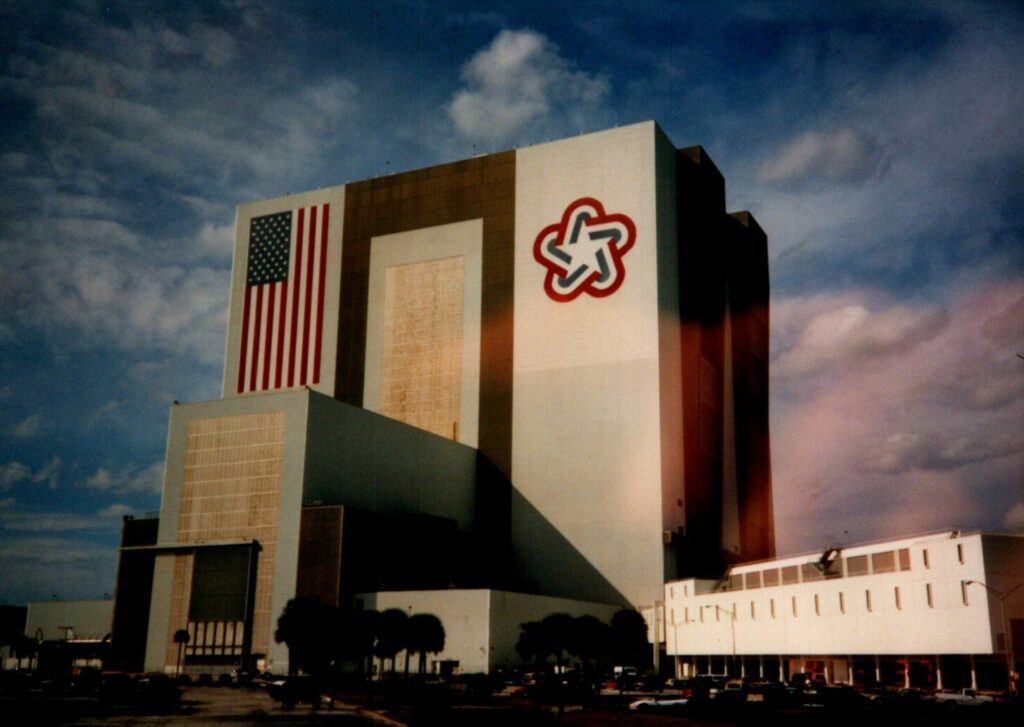
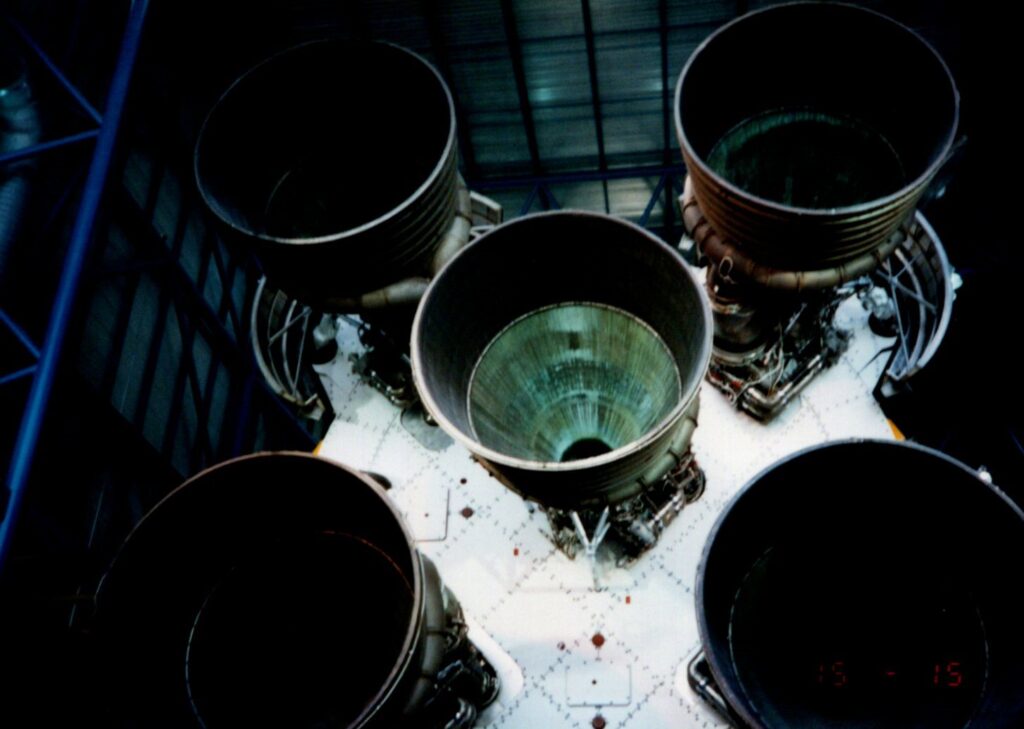
Back in Winter 1998, today’s epic space event probably wasn’t even on the drawing board. However, NASA’s Vehicle Assembly Building (or VAB) was already in place, as this impressive facility had been in service since 1966. The world’s largest single-story structure, the VAB was originally designed to house (and vertically assemble) the Saturn V rocket components for the Apollo Moon Landing Program (see rocket engine photo). After that endeavor wound down, the VAB underwent a substantial remodel prior to its 30-year Space Shuttle Program service.
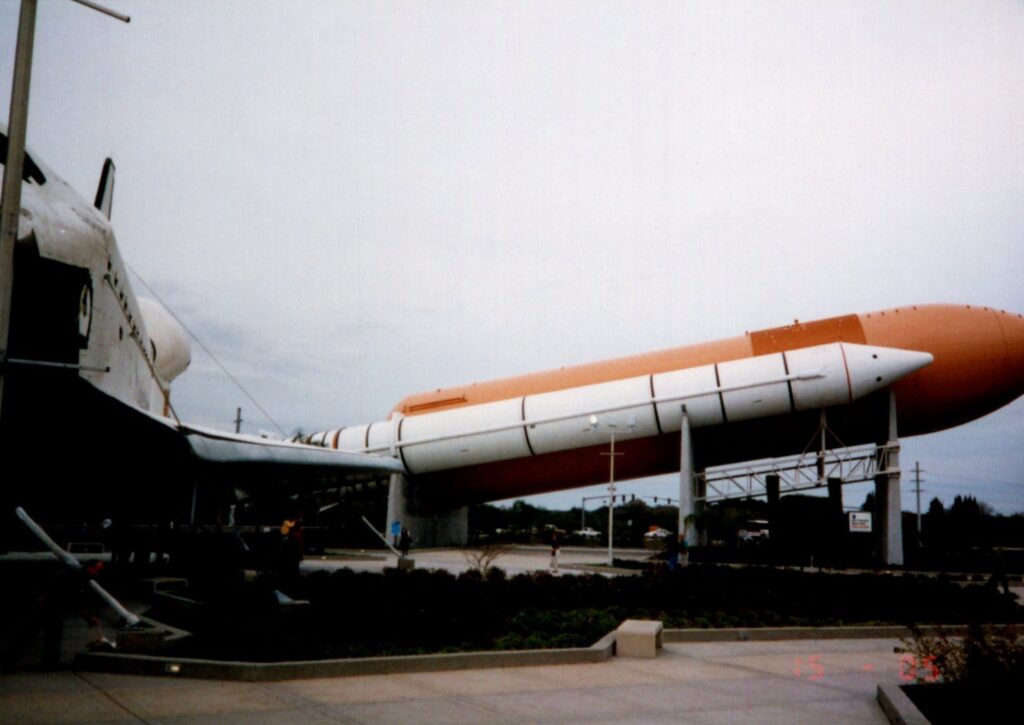
Once the Space Shuttle Program was underway, the Vehicle Assembly Building served as NASA’s final Space Shuttle assembly platform. Before each launch, the orbiter was fitted with two solid rocket boosters, each adjacent to the shuttle’s external fuel tank (see photo). Once the installation was complete, two huge crawler-transporters slowly nudged the shuttle assembly toward Launch Pad 39A or 39B. The several-mile journey was excruciatingly slow.
In the 21st century, NASA’s Vehicle Assembly Building plays a key role in the Artemis Program. The Space Launch System, and the Orion spacecraft, were assembled in this imposing facility that sports the largest-ever American flag and NASA logo on its front. The VAB will also transform into a global spaceport for multiple commercial partners.
For nearly 30 years, NASA’s Space Shuttle fleet carried astronaut crews on 135 essential missions before returning to the Kennedy Space Center. From April 1981 to July 2011, crews launched, repaired, and recovered satellites. The astronauts also performed targeted research, adding variables such as zero gravity to the experiments.
Equally importantly, Space Shuttle crews made key contributions to the International Space Station (ISS) construction. Every Space Shuttle soared into space on a powerful rocket while coasting back to Earth like an engineless glider.
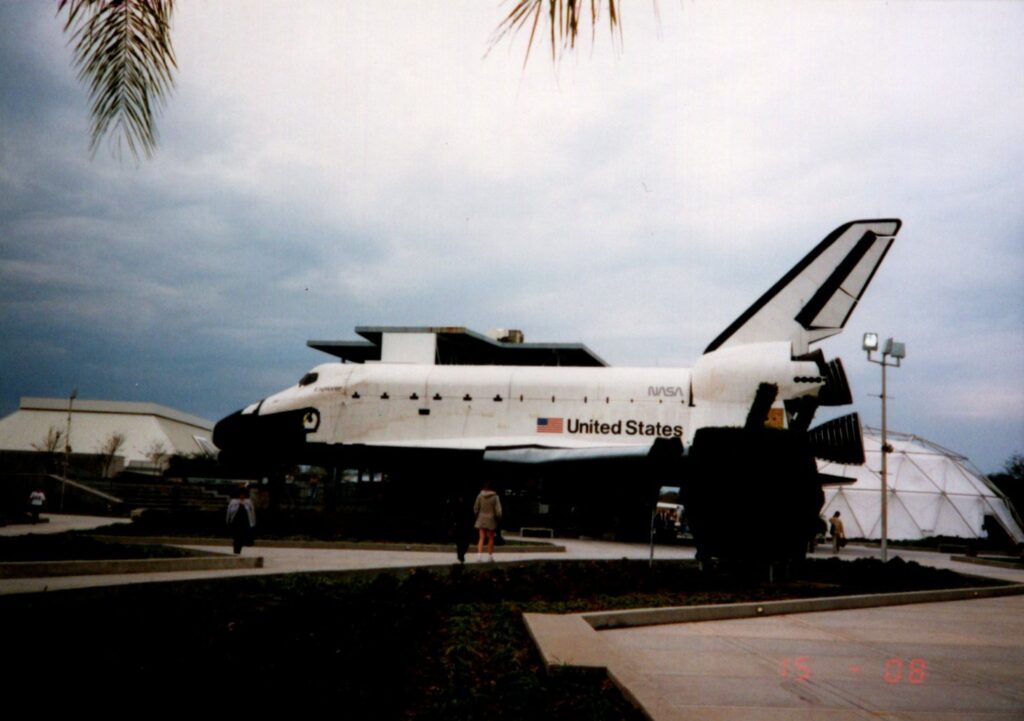
Visitors who want to see a new-condition Space Shuttle can view a replica on the KSC grounds (see photo). The slightly worn (but well traveled) Space Shuttle Atlantis rests in a dedicated 90,000-square-foot building at the facility. Atlantis’ payload doors are open as if ready to retrieve a satellite. Space Shuttle Atlantis’ Canadarm is also extended, as it was after the ship undocked from the ISS in preparation for the trip home.
Many children (and grandchildren) are fascinated by Technology and space exploration. Perhaps they plan to embark on a science or technology career. Maybe they even think about becoming an astronaut someday. These inquisitive youngsters would likely enjoy visiting the Kennedy Space Center during their summer break or Family vacation. Once onsite, they can take a deep dive into space exploration:
Like many Florida attractions, visiting the Kennedy Space Center is on the pricey side. But if your budget allows, and you’d enjoy the experience as much as the kids, it’s a great way to dive into space exploration without leaving the comfort and convenience of Earth.