
Viewing a Tall Ships gathering is like getting a front-row seat at a maritime history reenactment. Beginning with ancient mariners, and continuing throughout much of the 20th century, merchants and navies plied the world’s waters aboard diverse types of boats. Tall Ships, with their impressive sail areas and large cargo holds, were the most visible reminders of sail-powered commerce and military maneuvers.
Today, a growing fleet of newer Tall Ships continues to participate in goodwill port stops around the globe. Growing up outside Baltimore, Maryland, I vaguely remember several Tall Ships visiting Baltimore’s Inner Harbor for the 1976 Bicentennial celebration. In mid-June 2000, a fleet of 32 Tall Ships graced Baltimore’s docks during the OpSail 2000 event. The stars aligned, and Mark and I got to see these magnificent vessels. Definitely an experience to remember!
Baltimore’s Tall Ship showcase was part of the Operation Sail 2000 (or OpSail 2000) festivities. Eight United States East Coast ports hosted these impressive vessels to share goodwill and to recognize the coming of the new millennium.
The Tall Ships arrived in Baltimore in late June 2000, giving visitors ample time to step aboard for free public tours. Many foreign Tall Ships serve as naval training vessels, carrying hundreds of young crew members from around the globe. Following several days of public tours, the Tall Ships prepared to cast off their lines and head north to their New York City celebration. I’ll cover The Tall Ships Parade of Sail in the next installment.
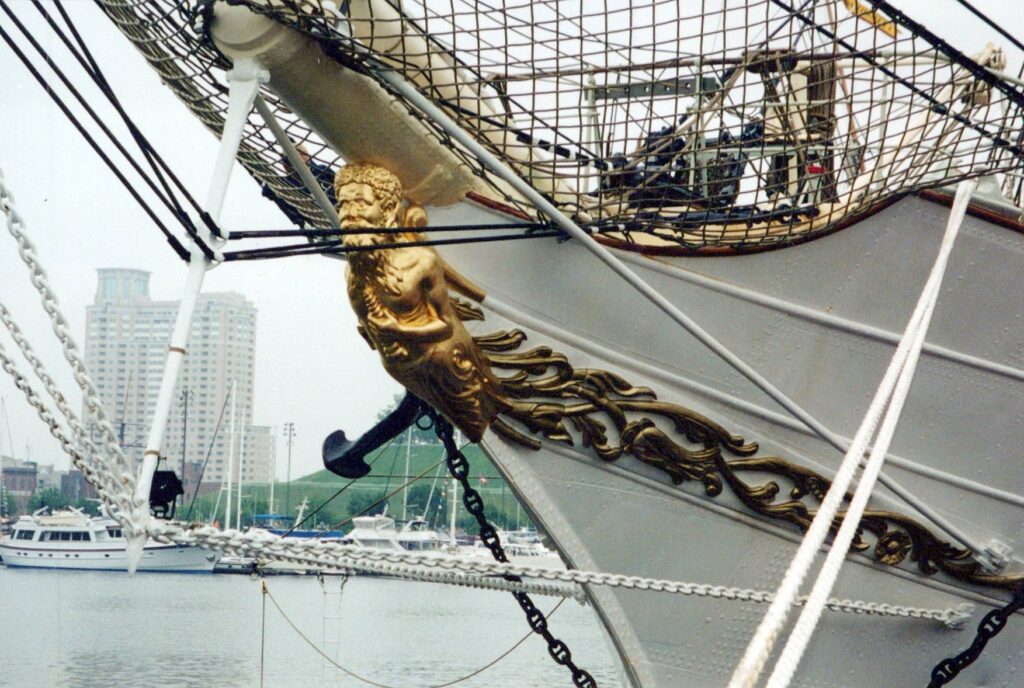
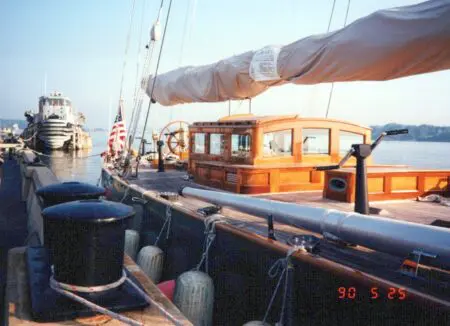
Arriving at Baltimore’s Inner Harbor, we immediately saw multiple tall ships docked right in front of Harborplace (a shopping and restaurant complex). We strolled the entire length of the promenade, capturing the striking vessels in dozens of pictures. We compared this view to our 1990 Baltimore visit to see the J-class yachts Endeavour and Shamrock V. During that event, we had to view the yachts as they sailed by the National Aquarium in Baltimore ─ on the other side of the harbor.
As a sailor myself, I was mesmerized by the sheer scope of the Tall Ships’ hulls, equipment, and rigging. Whether a vessel was several decades or almost a hundred years old, its sail plan included massive amounts of canvas to move the ship without the benefit of engines.
However, the Tall Ships certainly weren’t the most efficient sailing ships, as the sails could only be trimmed to power the vessel in certain directions. That said, each vessel’s crew members were trained to handle the ship on the high seas. Back then, SeaTow wasn’t an option ─ each captain and crew were on their own.
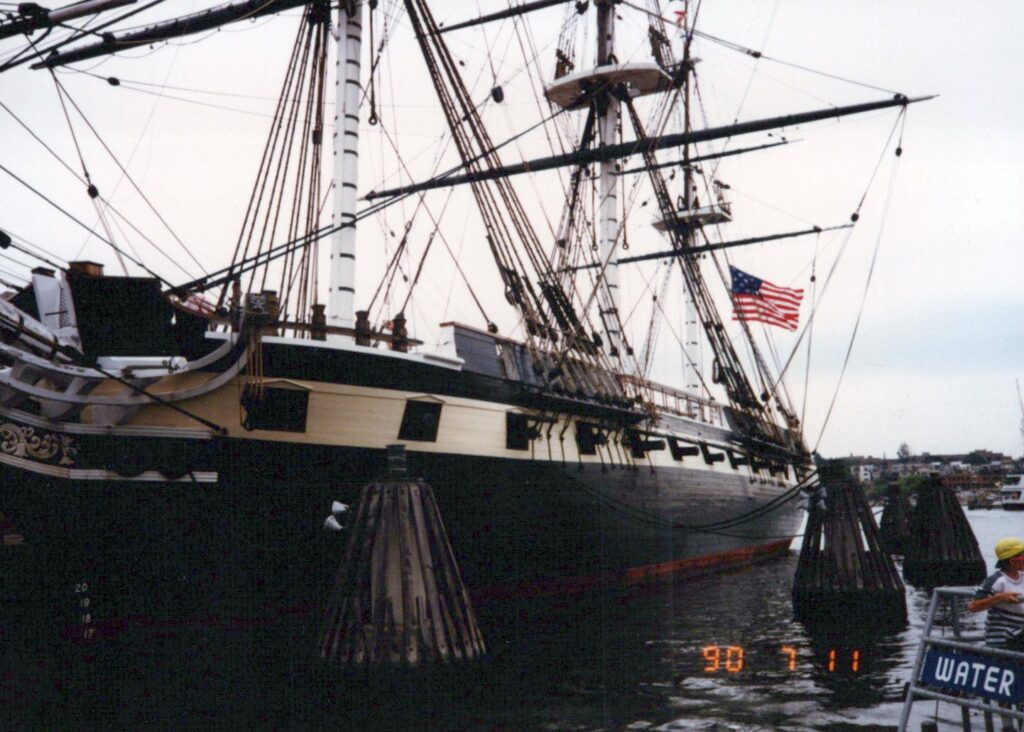
Personally, I think the Baltimore-based USS Constellation is the original Tall Ship. Built in 1854, this sloop-of-war is the United States Navy’s last sail-only warship. She contains material salvaged from the frigate USS Constellation when the latter craft was dismantled. Today, the newer USS Constellation is a National Historic Landmark and a museum ship permanently docked at Baltimore’s Inner Harbor.
Not surprisingly, the USS Constellation benefits from substantial restoration and ongoing maintenance. Fortunately, the vessel’s “bones” are still solid, as she has hull planking of clear white oak and frames crafted from live oak (both hardwoods). With yellow pine decks, and with masts and spars from spruce or white pine, the USS Constellation was designed to last for generations.
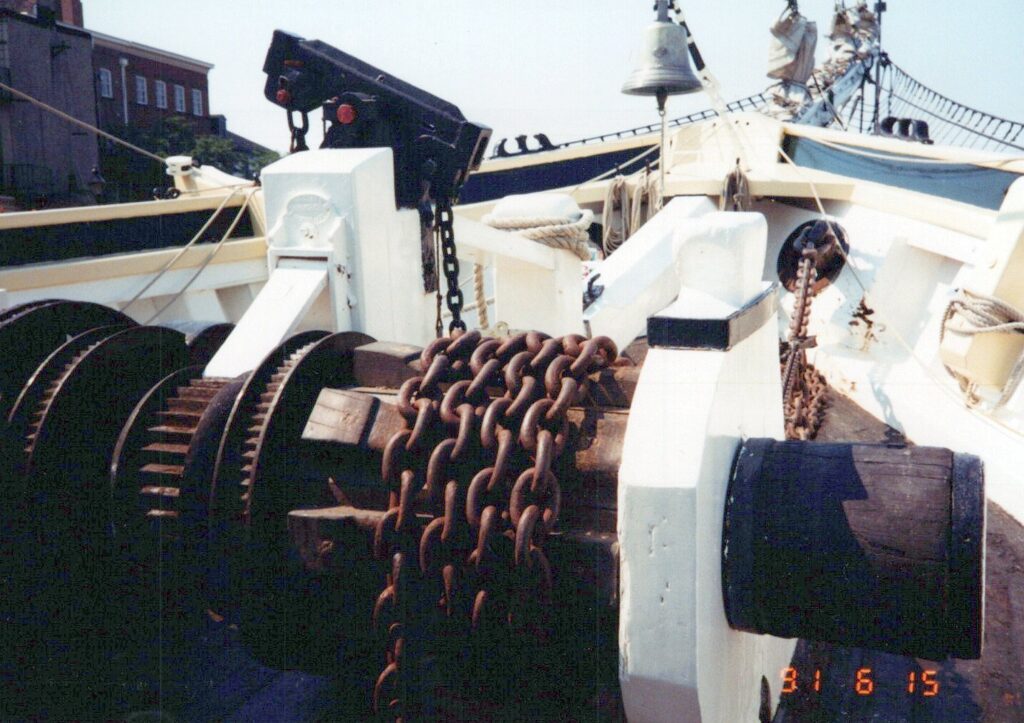
I’m excited to report that I have been aboard the USS Constellation. During my elementary school years, our class occasionally took field trips to downtown Baltimore. I was fortunate that one of those excursions included a tour of the grand old USS Constellation.
Although it was decades ago, I remember that the ship had significant deterioration issues, as the restoration program had not yet begun. As a result, visitors could only tour the top deck. But even with that, navigating around the historic ship was an epic experience I still remember.
Today, the USS Constellation is in much better shape. Because of her extensive restoration and ongoing maintenance, it’s likely that visitors are permitted to explore more of the vessel’s four decks.
The ship’s top deck was designed for sailing operations, and the gun deck is beneath that. Besides the vessel’s main gun battery, the gun deck holds the galley and the Captain’s Cabin. Most crew members lived on the third-level berth deck. The ship’s fourth-level hold contained provisions and gear for the USS Constellation’s crew of 325 men.
Capitan Miranda of Uruguay: The oldest participating Tall Ship, this schooner was built in 1930. Originally a cargo vessel, she later served as a hydrographic survey ship before being repurposed for sail training. She carries 53 permanent crew and 28 trainees.
Danmark of Denmark: Launched in 1932, Danmark was built to train Danish Merchant Marine officers. She carries an 80-person crew along with trainees. After the Pearl Harbor attack in 1941, Danmark’s captain offered the ship to the United States government to train U.S. Coast Guard cadets. The U.S. returned the vessel in 1945. Today, she participates in international maritime events.
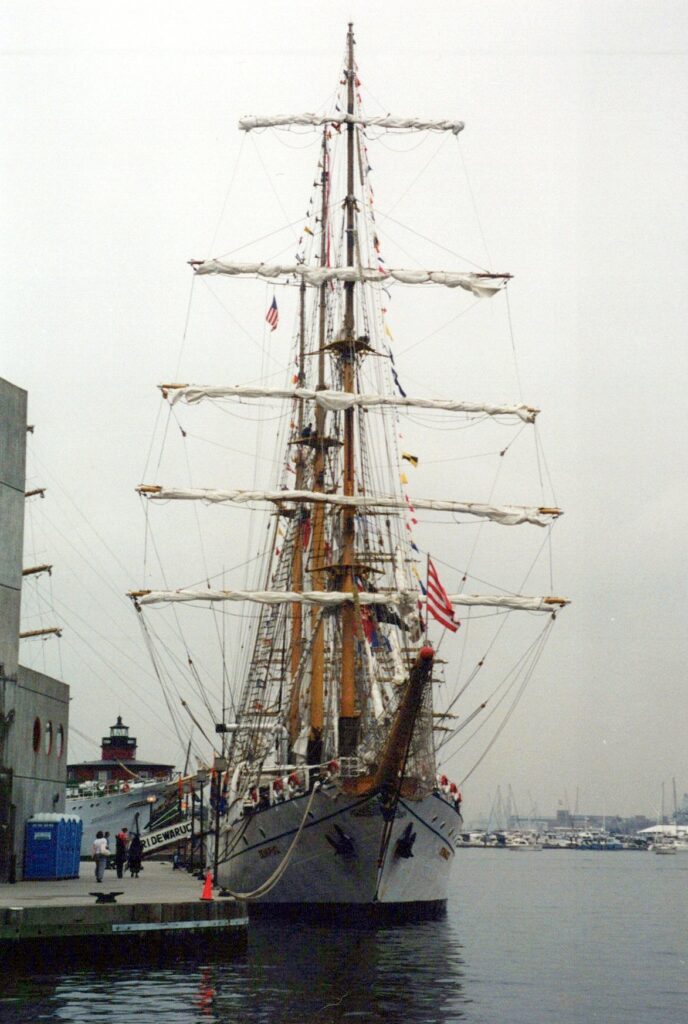
Dewaruci of Indonesia: Launched in 1953, this barque provides Indonesian Naval Cadets with real-world sail training. She also serves as an Indonesian goodwill ambassador at international maritime gatherings.
Gazela of Philadelphia: Built in 1901, this sturdy wooden ship formerly carried fishermen to Newfoundland’s Grand Banks. Today, as the City of Philadelphia’s maritime goodwill ambassador, she regularly cruises to East Coast ports.
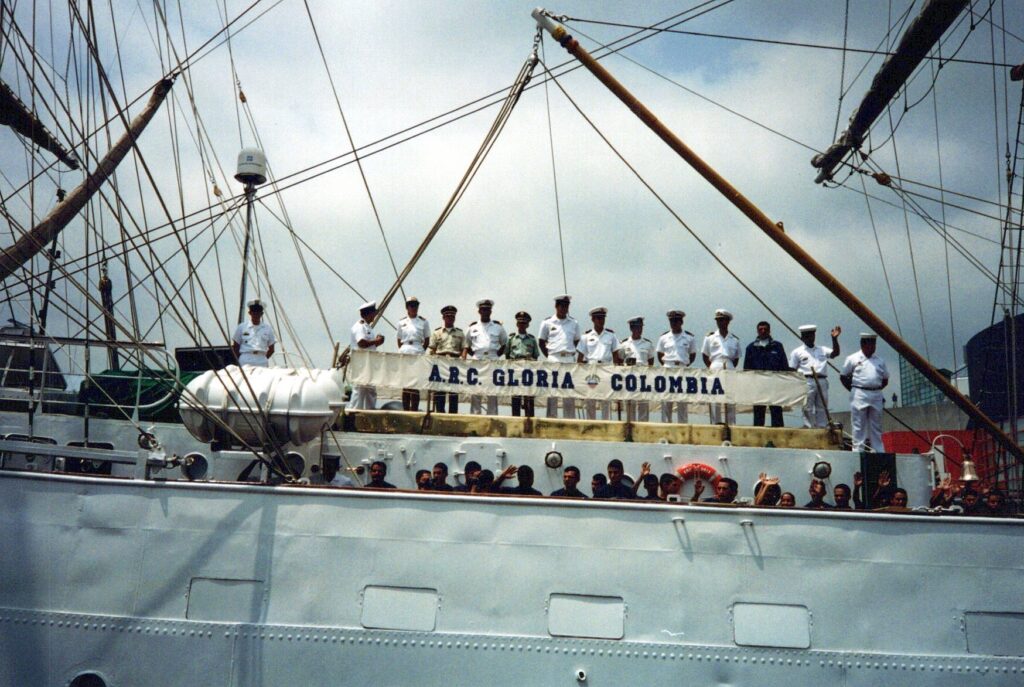
Gloria of Colombia: The Colombian Navy’s Training Ship, Gloria was launched in 1968 and still attends international maritime events. She carries 85 permanent crew and 75 trainees.
Gorch Fock of Germany: Built in 1958, this German Navy barque has an older sister (the 1933 Gorch Fock version). With 146 cruises and one 1988 global voyage, the “newer” Gorch Fock is a staple at international maritime gatherings.
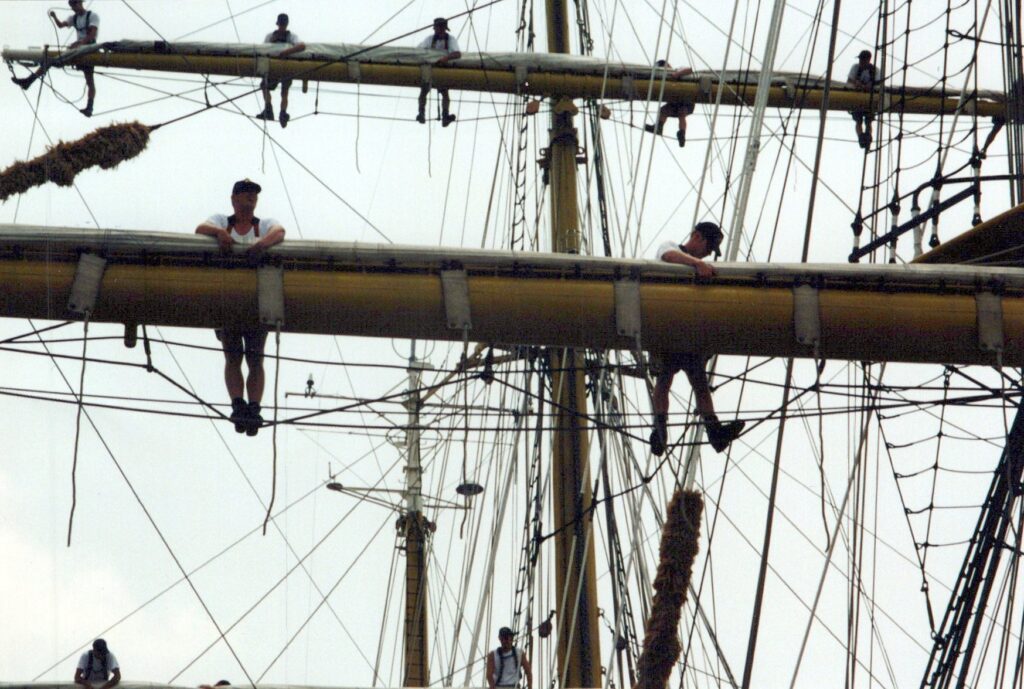
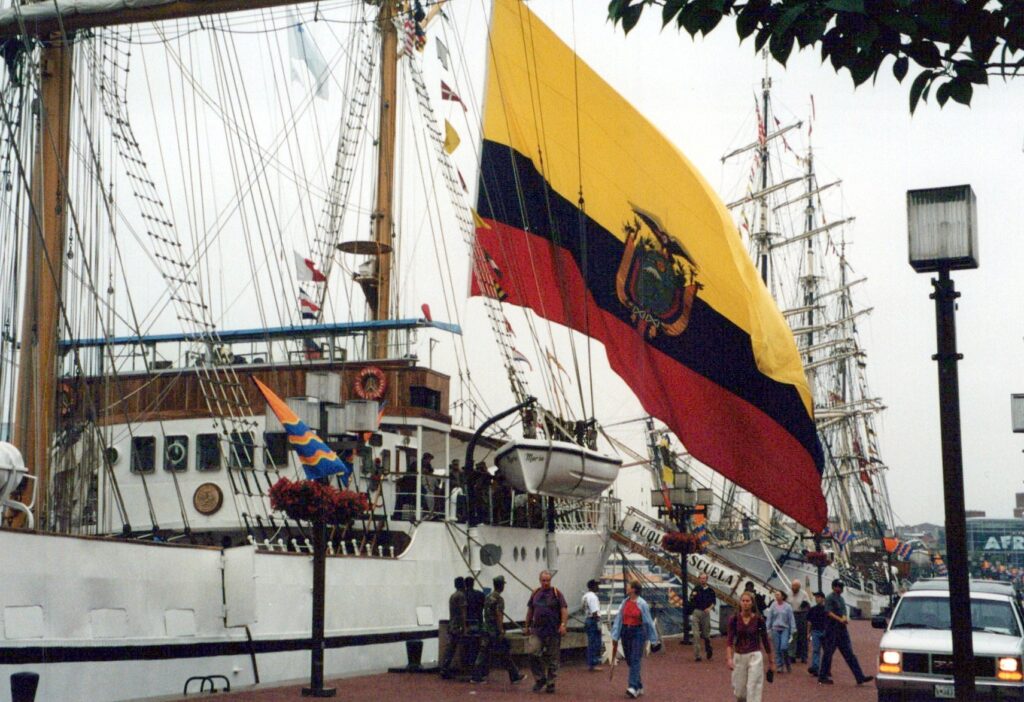
Guayas of Ecuador: Built in 1977, this barque is the Ecuadorian Navy’s sail training ship. Her 96 permanent crew, along with 57 trainees, regularly participate in international maritime events.
To celebrate the United States’ 250th anniversary, the Tall Ships are returning to Baltimore from June 24-30, 2026. As part of the SAIL250 Maryland and Airshow Baltimore celebration, 14 Tall Ships will dock across the Baltimore waterfront. Five of them attended OpSail 2000: Capitan Miranda, Gazela, Gloria, Gorch Fock, and Guayas.
Anyone new to Tall Ships, and younger visitors who weren’t born before the OpSail 2000 event, should consider marking their calendars for this “Bucket List” maritime gathering. Maryland’s Living Classrooms Foundation is producing the SAIL250 Maryland and Airshow Baltimore event. James Piper Bond, the organization’s President and CEO, emphasized the event’s value. “This is a once-in-a-lifetime type activity, to have the world coming to Baltimore with 14 tall ships.”