
Preparing for our sailboat cruise to Florida was an epic undertaking. Before we cast off the lines and headed south, we planned our 1000-mile route, including marinas that offered good facilities and a place to receive our mail and packages. Next, we completed dozens of boat projects and purchased needed parts and supplies. We intended to be self-sufficient, as my engineer husband Mark is an expert Mr. Fix-It.
On the personal side, we packed bulky clothing for cold-weather Travel along with shorts and T-shirts for our time in Florida. We planned our meals and purchased eye-popping quantities of canned goods, non-perishable food, and staples. And finally, we arranged to stay in touch with Family and friends during our six-month voyage.
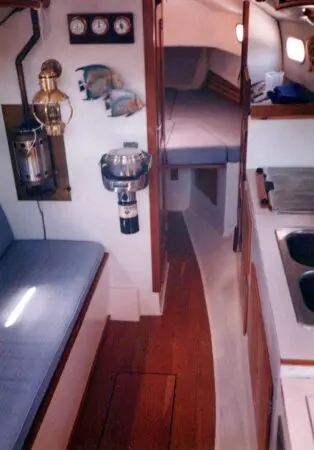
But before any of those preparations could take place, we had to complete some serious boat refit work. When we purchased our 1973 Bristol 30 Santorini in 1991, this lovely sailboat had enjoyed many weekend and week-long cruises with her original owners. Although the boat was solid, she needed some serious upgrades to provide us with a safe, reliable platform for a 2,000-mile cruise. And with rather limited living space, we wanted to reconfigure the interior to offer the best quality of life during the trip.
Choosing a base camp for the refit was easy. Our home was just a mile from the local marina, allowing us to easily sail the boat to the dock. Then, we hired a boat delivery driver to transport the vessel to our driveway, right next to Mark’s workshop. With Santorini just 50 steps from our front door, we figured the convenience factor would entice us to work on the boat regularly. On the flip side, we felt guilty when we bypassed the boat to go somewhere else.
Not surprisingly, our few major tasks turned into an endless series of “While we’re at it…” projects. Although we initially figured Santorini’s refit would take about six months, the never-ending project list stretched on for four years. However, this long, tedious slog provided us with three valuable life lessons.
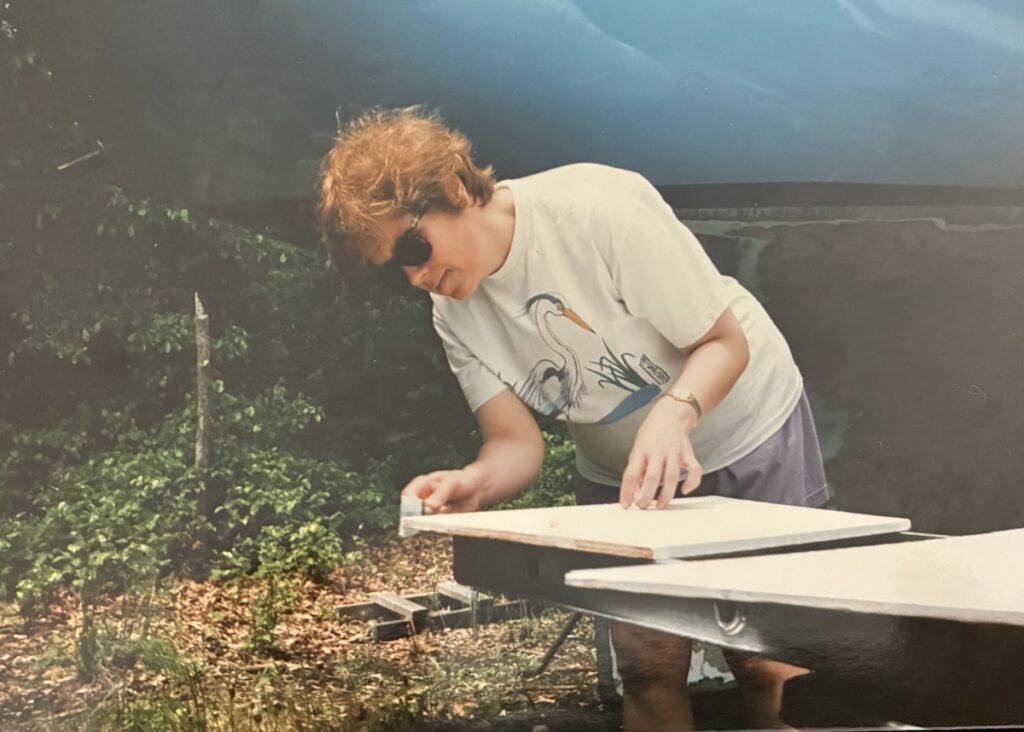
Mark and I share a common Baby Boomer trait: If something’s worth doing, it’s worth doing well. When tackling any project, we always want to do the best possible job. Here, we wanted to transform Santorini from a nice-looking weekender into a cruising yacht that would turn heads in every port. We naturally wanted an impeccable level of finish on every square inch of the boat.
And that’s where our lofty goals crashed into reality. After painting Santorini’s deck, our eyes zeroed in on a super-small paint run that just barely marred the smooth surface. Our first instinct: sand the section, wipe it down, and repaint it. We conveniently ignored the schedule impacts and extra expense that would likely result.
But then we came to our senses. If we were contractors painting a multi-million-dollar yacht for a customer, we’d go above and beyond to achieve perfection. In this case, however, we were working on a mind-numbing “punch list” on a sailboat almost two decades old. Our sweet Santorini had some age-related wear and tear ─ and it wouldn’t disappear with just a fresh coat of paint.
So we abandoned our quest for perfection, deciding that a “pretty good” level of finish wouldn’t hurt the boat’s integrity and would allow us to keep moving forward. And truth be told, we used this “good enough” justification for a variety of boat refit projects.
While planning our boat refit, Mark and I decided to complete an engine upgrade before heading south on the Intracoastal Waterway. We knew the tides would be more dramatic, and the current would grow stronger, as we headed further south along the Atlantic coast. Plus, we would be navigating near (and occasionally through) commercial ship channels. Given that, we needed an engine that could provide us with adequate horsepower to quickly escape potential jams.
Although the old Atomic 4 engine was adequate for local cruises, a properly powered diesel engine was a top priority. That year, Mark and I gave each other half of a brand-new Yanmar diesel for Christmas. We purchased it through a local dealer, and the company’s forklift loaded the beefy engine into our reliable old Volvo’s cargo bay. We drove Yoda Yanmar into our driveway, where Mark parked the Volvo near the boat.
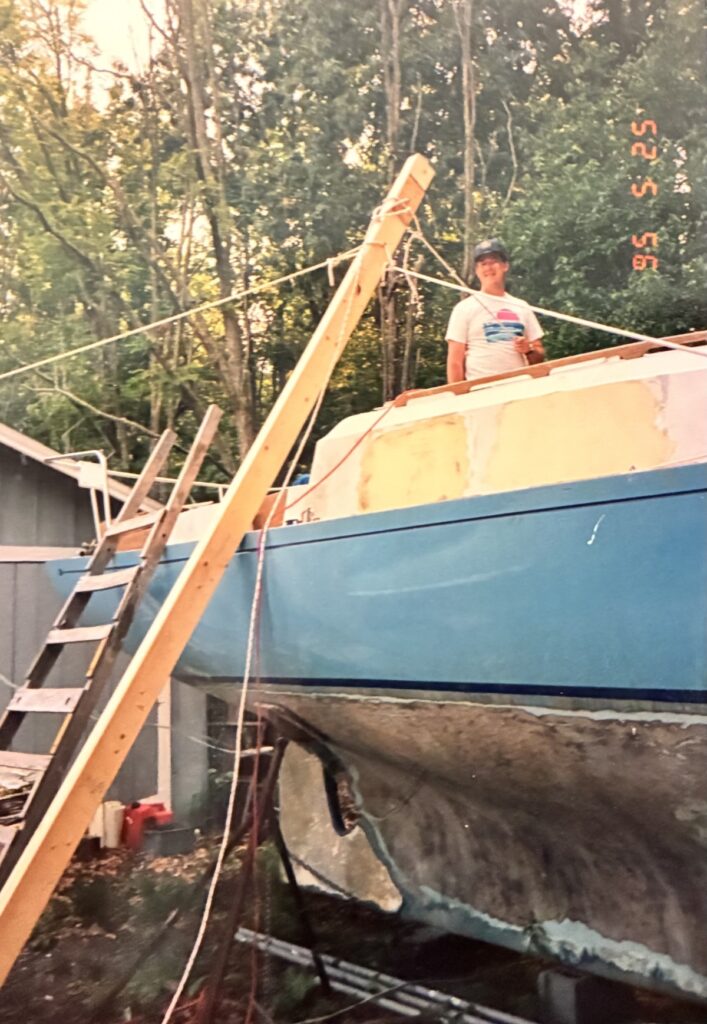
That was the easy part. Now, we needed to transport the engine from the Volvo up into the boat ─ without damaging the 400-lb. engine or gouging up the boat’s nicely painted sides. Fortunately, Engineer Mark came up with a great (and cheap) solution. He’s a longstanding out-of-the-box thinker with an uncanny ability to solve problems that defy conventional approaches.
Without getting too deep in the weeds, Mark used some 2x4s to make an engine hoist. He rigged a network of lines, one hauling the engine up using leverage while another kept Yoda Yanmar under control (and away from the boat). Finally, Mark lowered the engine onto its engine mounts inside the boat. After bolting the engine down, only a few hookups and adjustments were needed.
Not surprisingly, thinking out of the box can pay dividends in every part of your life. You’ll likely save time, reduce unnecessary expenses, and enjoy the thrill of accomplishment. Somewhere along the way, you’ll realize you’re a real-life MacGyver.
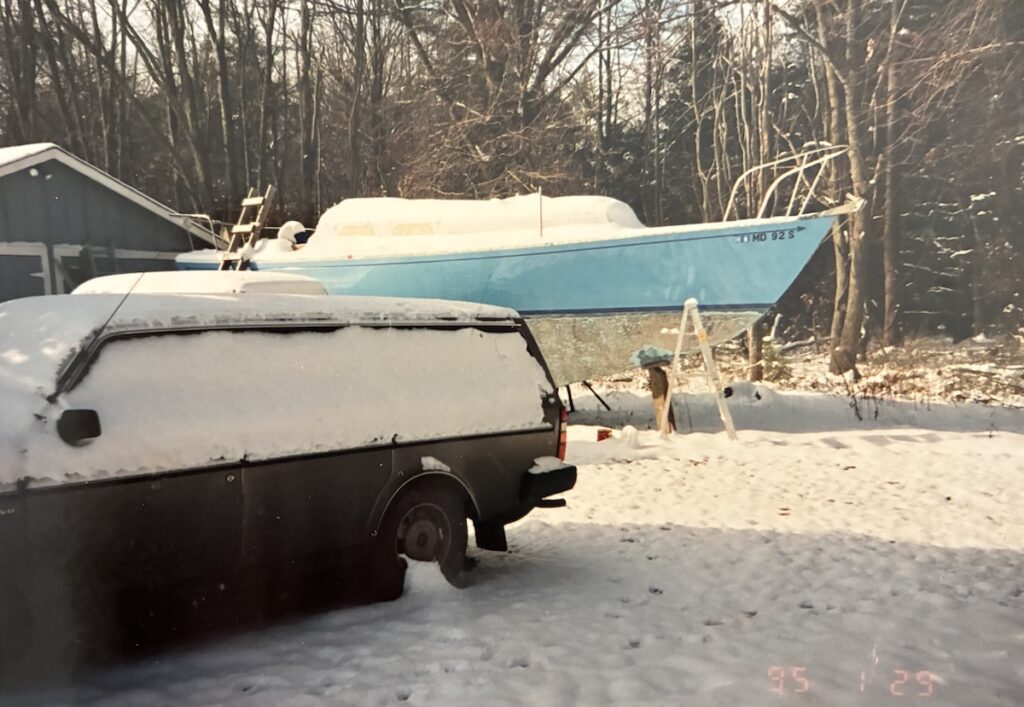
Sometimes, laughing at a ridiculous situation is the only response that makes sense. We had plenty of those moments during our four-year boat refit marathon. For starters, attempting to work on the boat in Maryland’s often-brutal winter cold left us mentally drained and half-frozen (even with a cabin space heater). On several occasions, we awoke to snow on the ground and on the boat’s deck.
Although two-footer snowstorms are relatively rare, we once found ourselves shoveling two feet of white stuff off the boat. That’s when we realized the Universe was conspiring against us ─ trying to bury our dreams of a Bahamas cruise beneath two feet of snow. While we acknowledged the humor of the situation, we vowed to never shovel snow off the boat again.
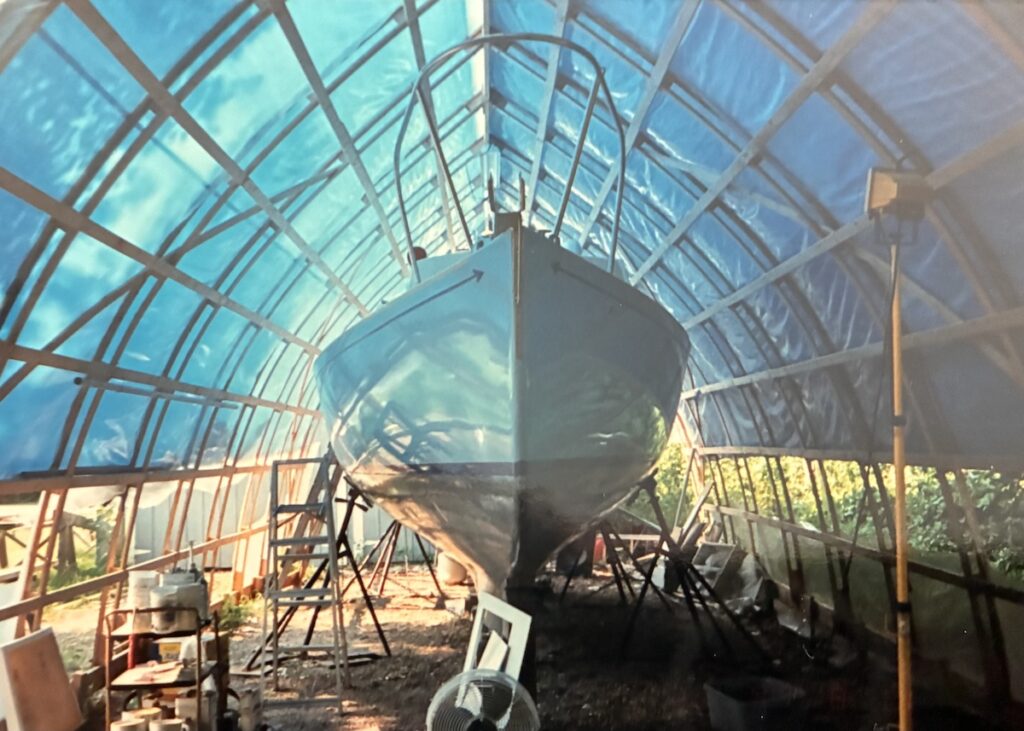
Fortunately, Engineer Mark devised a relatively cheap (and effective) solution. He built a nicely framed plastic cover that would shake off the snow while providing us with a dry workspace. Our setup grabbed lots of attention, with joggers and drivers regularly stopping for a closer look. At night, this funky “boat shed” was lit up like Cape Canaveral before a rocket launch.
The bottom line: this unconventional setup was the game-changer we desperately needed. We finished the structural projects, and completed enough of the interior finishing work, to get the boat trucked back to the marina. The refit’s final phase would include Santorini’s christening and launch ─ and that’s a story for a future installment.