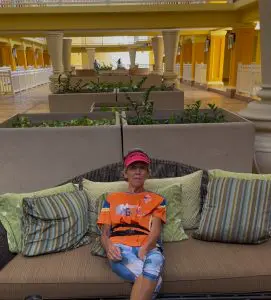
When Catherine broke her ankle, the timeline seemed clear: weeks of recovery, physical Therapy, return to normal life. But Catherine and Anthony had never been the type to follow a predictable path. They were endurance athletes in their fifties who had just uprooted their entire lives, sold their home, and become nomads after receiving life-altering diagnoses. A broken ankle was not going to stop them from what they had set out to do.
Just weeks after the break, Catherine stood at the starting line of a half-marathon in the Australian Outback. The decision wasn’t reckless. It was driven by something deeper: a refusal to let circumstances dictate their journey. For a couple navigating the early stages of Catherine’s Early-Onset Alzheimer’s diagnosis while also dealing with Anthony’s recent heart-valve replacement, the half-marathon represented more than athletic achievement. It was a declaration that they would not be defined by illness or injury.
There’s a particular kind of toughness that emerges when someone decides to keep moving forward despite physical pain. Catherine’s choice to run wasn’t about proving anything to the world. It was about proving something to herself and her partner.
For caregivers and endurance athletes, the drive to keep going often goes beyond logic. It’s rooted in:
When someone you Love is facing a progressive illness, the ordinary rules of recovery and rest can feel less important than the extraordinary opportunity to still be together, still be moving, still be alive in the fullest sense.
The Outback is not a forgiving landscape. It’s vast, remote, and unforgiving in ways that make most people reconsider their athletic ambitions. The terrain is red earth and sparse vegetation under a merciless sun. A half-marathon here is not a flat city course with water stations every mile. It’s a test of mental fortitude as much as physical capability.
For Catherine, already managing the early cognitive changes of Alzheimer’s while recovering from a serious ankle injury, this wasn’t just difficult. It was an act of extraordinary resilience. The pain in her ankle would have been constant. The heat would have been intense. The distance would have felt endless. Yet she finished.
And she finished hand in hand with Anthony, running partners in every sense of the phrase.
Catherine’s half-marathon in the Outback wasn’t about athletic glory. It was about something messier and more human: the refusal to let circumstances shrink your world. Her story speaks directly to anyone facing significant Health challenges, whether as a patient or a caregiver.
Resilience isn’t always about pushing through in silence. It’s about having someone beside you who believes you can. It’s about choosing to show up, even when showing up is hard. It’s about recognizing that a broken ankle and a devastating diagnosis don’t have to mean the end of adventure, movement, or meaningful shared experience.
This is what Running With Cat documents across Anthony’s two memoirs. The first, ‘Running All Over the World,’ covers five-plus years of travels to Madagascar, Bhutan, Antarctica, and beyond. The second, ‘One Footstep at a Time,’ chronicles the next five years as Catherine’s disease progressed and their journey necessarily shifted. It’s not a story where everything works out neatly. It’s a story where two people found ways to live fully within their constraints.
Catherine’s broken ankle and her decision to run anyway is just one moment in a much longer story of adaptation and love under pressure. It illustrates what caregiver Burnout literature rarely captures: the joy and meaning that can exist alongside loss and hardship.
Many caregivers describe a phenomenon where they feel pressure to be stoic, to endure quietly, to minimize their own struggles. Catherine and Anthony’s approach was different. They named their experience. They traveled. They ran. They kept moving, knowing that the disease would eventually slow them down regardless. The decision to act while they could wasn’t denial. It was Clarity about what mattered.
As more people receive diagnoses like Early-Onset Alzheimer’s and as Caregiving becomes a more visible part of American life, stories like Catherine’s become increasingly important. They’re not inspirational in the saccharine sense. They’re honest. They acknowledge pain and limitation while also honoring the human capacity to find meaning and beauty even within serious constraints.
If you’re a caregiver watching someone you love face illness, or if you’re dealing with your own health crisis, Catherine’s story offers something rare: permission to keep living, keep moving, and keep choosing shared experience over safety. Not recklessly, but thoughtfully, with someone who understands what you’re going through.
Running With Cat exists to share these stories in their full complexity. The memoirs ‘Running All Over the World’ and ‘One Footstep at a Time’ document what real love and resilience look like when everything is on the line. They’re invitations to see your own journey reflected in someone else’s hard-won Wisdom.
The post Running Half-Marathons With Broken Ankles first appeared on Running With Cat.