
“Past performance is not a guarantee of future results.” Typical financial disclaimer.
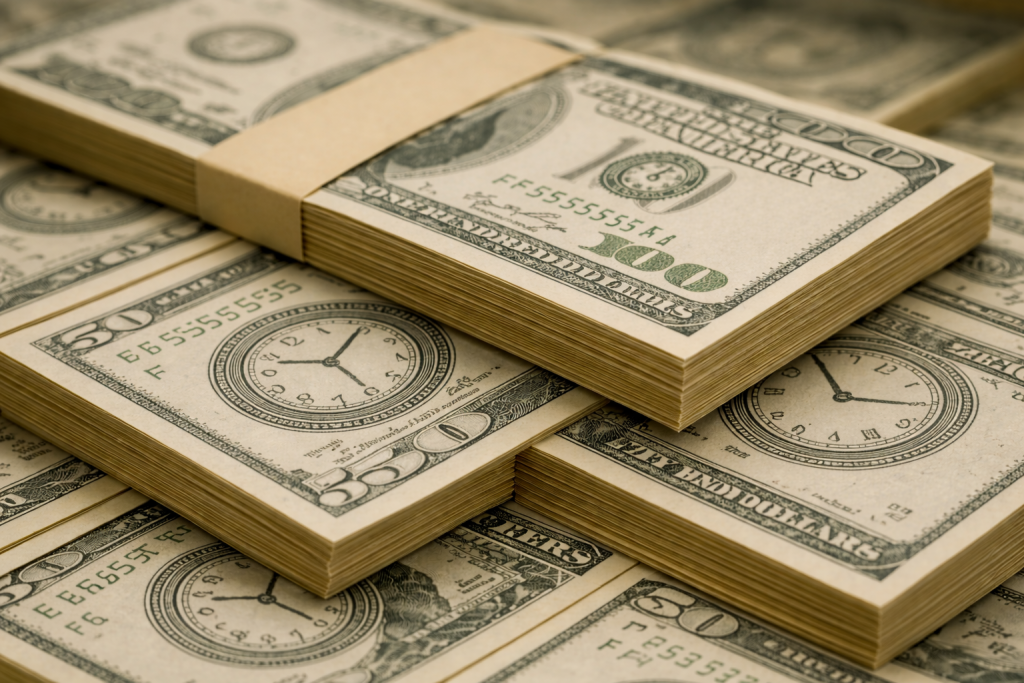
In the course of 2025, I had multiple personnel changes at all levels of the organizational structure. Where I had hoped to be more focused on navigating and Coaching through the strategy changed as I needed to lead in tactical (albeit important) day to day activities in open positions. I found myself managing my hours like I would manage assets.
When most people think about portfolios, they think about Money: stocks, bonds, Real Estate, or other investments. But there’s another portfolio that matters just as much — your time. Just like money, time has Growth potential, risk, and opportunity costs. And just like financial assets, the way you allocate your hours determines whether you end up depleted or flourishing.
We all draw against the same 24 hours each day. Time is consumed at the same rate the use of time is unique and that can created wildly different results. Why? Because time, like money, must be managed with intention. Left unchecked, hours get spent on low-yield activities — mindless scrolling, endless meetings, or procrastination. When managed wisely, time is invested in high-return activities that generate Health, purpose, and strong Relationships.
Think of it this way: your calendar is the ultimate statement of values. Where your time goes is where your life goes. In my case, the calendar became the guardrails of priorities. I became very rigid and ensured I was prepared and so were the participants of any meetings or activities to ensure we got the most value.
Just as a financial advisor recommends diversification, your time portfolio needs balance across several categories. In my Retirement Time Analysis (RTA) framework, I focus on areas such as:
You don’t need to be in post-career life to practice time diversification. If all your time is invested in only one category (for many of us career), you create volatility. During this season, I focused too much time on the job and wore myself out and ended up with Covid, the long form where the symptoms lasted for weeks. I could have done a better job Investing more time in personal care.
In Finance, compounding is the magic of small investments that grow over time. The same principle applies to time. Ten minutes of daily walking doesn’t feel like much, but over years it compounds into stronger health. A weekly lunch with a friend compounds into a lifetime of trust. Consistency, not size, creates growth.
This is why the “I’ll do it someday” mindset is so dangerous. Delay robs you of compounding. The earlier you start allocating time into high-return areas, the greater the long-term payoff. I am back to daily walking, formal breaks in the work schedule, and a rigid lunch plan.
Identify your time opportunities for a more productive and time quality life.
Every “yes” is also a “no.” If you say yes to another hour of email, you’ve said no to an hour of Exercise, connection, or creativity. These are the opportunity costs of time.
Risk also shows up in how you allocate hours. Just as an investor who puts everything into one stock risks losing it all, a professional who invests every waking hour into work risks Burnout, health breakdown, or fractured relationships.
Spreading your time across categories lowers risk and creates resilience. I learned quickly, when key positions need to be filled, professional “no’s” and “not yet’s” became standard operating procedure.
Financial advisors help clients balance short-term needs with long-term goals. What if we applied the same discipline to time? Imagine doing an annual review not just of your financial portfolio, but your time portfolio. Where did your hours actually go? Did they align with your values, or drift into unintentional spending?
This is where tools like the Time Management Analysis (TMA) or Calendar Time Analysis (CTA) come in. They give individuals (me included – I still take them to help keep me honest) data to have more meaningful conversations — not just about whether a behavior can be improved, but about how we’ll actually live once we do.
If you want to know your future, look at your calendar. Are you investing in purpose, health, relationships, Education, growth, and enjoyment — or just spending time on whatever shouts the loudest?
Your time is the only asset you can never replenish. Once gone, it’s gone. But when you manage it like a portfolio, you gain Clarity, reduce risk, and maximize the compounding effect of your daily choices.
In the end, money builds Security. But time builds a life. As I look at 2026 on the horizon, I am giving my time assets a thorough review. Invest time yourself to increase your time portfolio .
David Buck is the author of the book The Time-Optimized Life, coauthor of The Retirement Collective, and owner of Kairos (Time) Management Solutions, LLC. Learn how to apply the concepts of proactively planning and using your time. Take the Time Management Analysis (TMA), the Retirement Time Analysis (RTA) to help bring more quality time into your life.
The post The Time Portfolio: Managing Hours Like Assets first appeared on Infinity Lifestyle Design.