

At its core, a trade war happens when countries impose tariffs or other trade barriers on each other in retaliation. It’s basically an economic showdown. The goal? To protect domestic industries, but it often backfires. Countries hit each other with higher import taxes, and these costs trickle down to businesses and everyday consumers.
When the U.S. slaps tariffs on products from China or another nation, that imported product becomes more expensive. The idea is to encourage Americans to buy U.S.-made alternatives. But here’s the problem: in many cases, there aren’t affordable or equal-quality U.S. versions available. So, instead of choosing something local, consumers are just stuck paying more.
Companies caught in the middle are left making hard choices. Do they eat the cost of tariffs? Pass them on to consumers? Or move operations elsewhere entirely? Meanwhile, other countries step in to fill gaps or seize market share, further complicating global supply chains. It’s not just an economic fight—it’s political, technological, and deeply personal for millions.
And that’s where the pain begins for regular Americans. While politicians talk about the “big picture” and “economic strategy,” the average person is more concerned about why their grocery bill just jumped 15% this month.
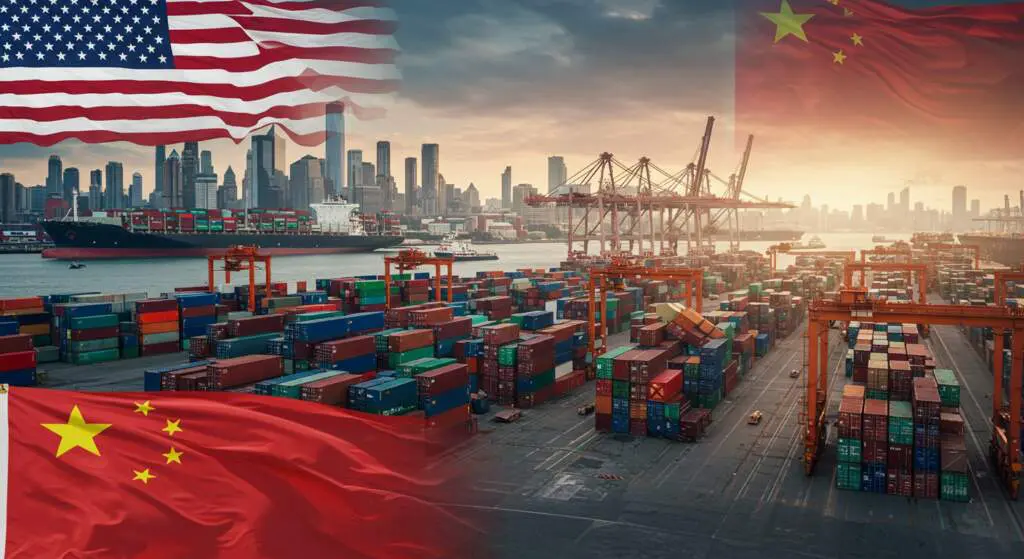
Your Retirement fund might not have a passport, but it still travels the globe. In today’s interconnected world, trade wars don’t just affect importers and exporters, they ripple into long-term investments, too.
If you’re a middle-class American with a retirement account, chances are you’re invested in mutual funds, index funds, or stocks tied to global markets. That means your nest egg was likely impacted by trade tensions, even if you never buy or sell individual stocks. So yes, while the trade war might seem like a high-level economic chess match, its effects sneak into everyday financial goals—like retiring comfortably, paying off a mortgage, or funding your kid’s college Education.
Let’s talk about groceries, gadgets, and gas. These are the essentials every household deals with—and they’ve all seen price spikes thanks to the trade war.
When tariffs are imposed on goods like steel, aluminum, electronics, or even food items, companies don’t just absorb those extra costs. They pass them on to me. That shiny new cell phone is more expensive now. That lawnmower I wanted from Home Depot? Add a few extra bucks.
Even items you wouldn’t think are affected—like canned soup—have seen price jumps. Why? Because the cans are made of imported steel or aluminum that now cost more due to tariffs. It’s like a chain reaction: import costs go up, production costs go up, Retail prices go up—and your wallet feels lighter.
According to the Federal Reserve, the average American household pays an extra $800–$1,000 per year due to tariffs. That might not seem like much at first glance, but for families already on tight budgets, it adds up fast. Parents are cutting corners. Students are delaying purchases. Seniors on fixed incomes are feeling the pinch. And what was supposed to be a strategy to “bring jobs back home” is making home life more expensive for everyone.
Budgeting used to be a juggling act. Now it feels more like walking a tightrope in a windstorm. Every price hike—from diapers to dishwashers—forces families to make tough choices. Do you skip date night because groceries cost more? Delay that dentist appointment because healthcare premiums rose again? Cancel the vacation because gas prices shot up after new tariffs on oil-related goods?
This is the new reality for many Americans. It’s not just about numbers—it’s about quality of life. Families are saving less, borrowing more, and worrying constantly. Emergency funds are being depleted faster than ever, and more folks are leaning on credit cards or side hustles just to stay afloat. Some have turned to cheaper, lower-quality alternatives or second-hand goods. Others are relying more heavily on food banks and community support. These changes reflect the true toll of the trade war—not in GDP numbers or Wall Street charts, but at kitchen tables across the country.
Being a small business owner, I am seeing firsthand what our politicians are doing to us. Small Businesses is America’s backbone, right? We were hit with a double whammy: rising costs and unreliable supply chains. And we don’t have the cushion big corporations do.
Imagine you run a small clothing brand and import fabric from abroad. Suddenly, your material costs rise by 25% overnight because of new tariffs. And guess what? Your supplier also got slammed by their country’s tariffs, so delays and shortages start happening. You’re stuck in limbo, losing both time and Money.
Farmers are the unsung heroes of the Economy, but in a trade war, they’re often the first casualties. When countries like China slapped retaliatory tariffs on U.S. soybeans, pork, dairy, and corn, American farmers lost massive export markets. China was once the top buyer of U.S. soybeans. Farming equipment becomes more expensive due to metal tariffs, fuel prices surge, and insurance premiums climb. It is a perfect storm, and most farmers didn’t have a way to weather it.
Many small business owners reported losing customers because they had to raise prices. Others had to switch suppliers, rework their product lines, or even pause operations. And while the big players negotiated better rates or moved production elsewhere, the little guys didn’t have that luxury.
According to the National Federation of Independent Business, nearly 40% of small businesses affected by tariffs reported moderate to significant hardship. For mom-and-pop shops, that’s often a make-or-break situation. The worst part? These challenges aren’t just financial. They cause Stress, Burnout, and uncertainty for families who built their livelihoods from scratch.

The trade war may have started as a battle between nations, but its true effects are felt around dinner tables, factory floors, and small business counters across America. While politicians argue over numbers and strategy, regular Americans are dealing with the consequences in real time—rising prices, job losses, uncertain futures.
It’s not all bleak. This economic upheaval has spurred Innovation, resilience, and a renewed focus on local economies. But it’s also exposed deep vulnerabilities in how we trade, produce, and protect our livelihoods.
Moving forward, the key isn’t to retreat from the world but to engage smarter. America needs a trade policy that balances protection with progress, and competitiveness with compassion. Because at the heart of all these numbers and charts are people—people who deserve a system that works for them, not against them.