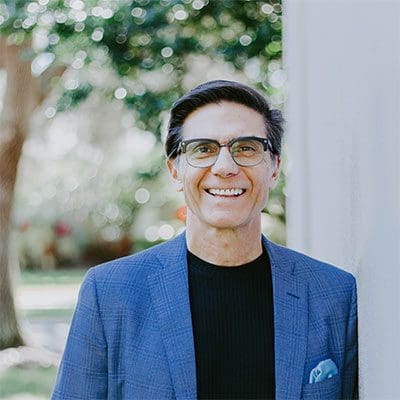

Most companies have an AI strategy. Task forces, governance frameworks, a growing list of use cases. And most of them are stalling out, not because of the Technology, but because of where they started. Whynde Kuehn, founder of S2E Transformation, has spent decades closing the gap between strategy and execution. Her take on this moment cuts right to it. You don’t need an AI strategy. You need a business strategy that knows how to use AI.
That one reframe changes who’s in the room, what questions get asked, and whether your people trust you in what comes next or if they feel like collateral in a cost cutting Exercise. And that’s exactly why this conversation belongs on the Life Fulfilled podcast. When employees are fulfilled in their work, they perform better, and that performance is what actually drives the business results leaders are chasing with AI in the first place.
Who This Is For
This episode is for the business leader who is under pressure to show results from AI and isn’t seeing them yet. You’ve got the task force, the governance framework, the growing list of use cases, and still something isn’t landing. Maybe you’re watching your team get faster without getting more fulfilled, or you’re starting to wonder if the strategy itself was built on the wrong starting point. If you’re trying to lead people through this transformation and not just manage a technology rollout, this conversation is for you.
Five Key Takeaways
1. The AI strategy trap starts the moment AI becomes its own strategy. When organizations build a separate AI strategy instead of tying AI back to the business strategy, they end up with a long list of use cases that never move the needle. Whynde’s fix is simple to state and hard to do: ask how AI expands the value you already deliver, then target use cases against the performance you actually want to move.
2. The real risk is below the surface, not above it. Bernie calls this the iceberg effect. Above the waterline is everything leaders are already focused on: tools, automation, governance, Security. Below it is what actually determines whether the transformation works: trust, Clarity, and whether people feel like they’re part of something meaningful or just being managed through a cost cutting exercise.
3. Human led AI transformation rests on four pillars. Reducing fear, creating clarity, preserving meaning, and building adaptability. Whynde’s addition to this framework is to put the human at the center from the start, not as damage control after the strategy is set, but as part of how the strategy gets built in the first place. Address these four and employees have room to feel genuinely fulfilled in their work, and fulfilled employees are the ones who deliver the performance leaders are counting on.
4. Three human capacities AI cannot replace. Discernment, the judgment to know what AI output is accurate, relevant, or viable. Relational intelligence, the trust and connection built between people. Purpose driven judgment, knowing why you’re deploying a given technology in the first place. Whynde and Bernie both point to companies rehiring employees after AI didn’t deliver as proof these capacities are not optional extras.
5. The real competitive advantage is an organization designed to adapt. Whynde’s closing challenge to leaders: what are you doing to intentionally design your organization to sense change, interpret what it means, imagine a new direction, and act on it faster than before? A strong strategy today is not enough if the organization can’t keep adapting tomorrow.
Summary
Whynde Kuehn joins Bernie Borges to challenge one of the most common assumptions in business right now, that AI transformation starts with an AI strategy. Instead, this conversation makes the case for starting with the business strategy and the people inside it, arguing that the leaders who get this right will build not just more efficient organizations, but more adaptive and more human ones. The conversation moves from the AI strategy trap to the iceberg effect to the human capacities no algorithm can replace, closing with a single question every leader should be asking about their own organization’s ability to adapt. Underneath all of it is the same idea this podcast keeps coming back to: a fulfilled employee is a better performing employee, and that connection is what makes the human dividend a business strategy, not just a people strategy.
Learn more about the Human Dividend Assessment
https://fulfilledatworkacademy.com/human-dividend-ai-transformation-assessment/
Watch this episode on the Fulfilled Leadership YouTube channel.
Connect with Whynde Kuehn
LinkedIn: https://www.linkedin.com/in/whynde-kuehn/
Books & Website: Strategy to Reality and The Execution Challenge
S2E Transformation: https://www.s2etransformation.com/
Connect with Bernie Borges
Website: https://fulfilledatworkacademy.com/
LinkedIn: https://www.linkedin.com/in/bernieborges/
Instagram: https://www.instagram.com/bernieborges/
TikTok: https://www.tiktok.com/@bernieborges
Speaking: https://fulfilledatworkacademy.com/speaking/
Music attribution:
Old Bossa
Twin Musicom
Learn more about your ad choices. Visit megaphone.fm/adchoices