
In this episode of Meet the Expert, Elliot Kallen talks with David Pinn, CEO of BrainCorp, about how automation and Artificial Intelligence are revolutionizing the shopping experience—from robotic floor cleaners in Walmart to AI-driven shelf scanners that boost operational efficiency and customer personalization. Learn what’s next for Retail, why automation is critical to labor productivity, and how CEOs are leading the shift toward smarter commerce.
Elliot Kallen introduces David Pinn, CEO of BrainCorp—a venture-backed AI company revolutionizing the retail space with automation software. David shares his background as an engineer-turned-CEO and discusses BrainCorp’s venture capital journey with investors like Qualcomm Ventures and SoftBank.
BrainCorp started as a neuroscience-inspired AI research company. Today, it’s known for autonomous floor-cleaning robots and shelf scanners used in major retailers and airports. David explains that BrainCorp is a software-first robotics company, partnering with hardware makers to automate manual machines.
“Think Roomba meets Zamboni—but for commercial retail spaces.” – David Pinn
Retailers like Walmart and Home Depot face massive labor shortages. David shares how automation supports—not replaces—workers by taking over mundane, repetitive tasks so employees can focus on customer service and efficiency.
Using automation for shelf scanning helps ensure pricing accuracy and stock levels, creating a smoother shopping experience. David envisions a future where automation allows staff to spend more time providing personalized, human-centric service—one that even Amazon can’t match.
“Automation removes the mundane so humans can deliver the memorable.” – David Pinn
As a non-founder CEO, David shares how he’s shaping the company’s vision—“robots everywhere helping people.” He emphasizes the importance of balancing investor timelines with the long-term nature of tech adoption in retail and other Legacy industries.
BrainCorp’s team of engineers embrace generative AI tools like ChatGPT to increase productivity, not replace jobs. The company views AI as a multiplier, not a threat—both for their staff and their clients.
Elliot and David explore how automation will increasingly impact consumer habits. From improved in-store experiences to reduced errors, automation could be what saves brick-and-mortar retail from extinction.
David urges retailers to think of automation as a way to differentiate, not just cut costs. BrainCorp is focused on lowering adoption barriers and helping legacy industries adapt at their own pace.
Meet the Expert with Elliot Kallen is a top 2% global podcast for financial leadership and entrepreneurship. Featuring CEOs and industry leaders, we explore what drives success in today’s evolving world of Finance, tech, and business strategy.
Elliot Kallen: Well, good morning and good afternoon, everyone. I’m Elliot Kallen, CEO of Prosperity Financial Group. Today, we have a great subject. We’re talking with Meet the Expert with Elliot Kallen. We’re going to be talking about David Pinn, and we’re going to be talking about automation, robotics, artificial intelligence, inventory management, autonomous products. Wow. That’s not something we always talk about here. David is the CEO. He’s a gunfire of BrainCorp. Former engineer, David? That’s right. Right. Well, welcome to the show, David. Thank you for being here.
David Pinn: Thank you so much for having me, Elliot.
Elliot Kallen: All right. So, folks, what we do with these shows, we talk to CEOs around the United States who have great stories, great products, really interesting, cutting-edge people, because so many of our clients are entrepreneurs, and they want to know as business owners, because they’ve started their baby. Some of them are in the infant stage, phase one. Some of them are just making a ton of Money and are finally maturing enough to make a cash flow. And some of them are in an exit strategy mode, thinking, I’ve done this my whole life. It’s time for me to get to the next generation, the next company, sell to a competitor, all types of things. And we give expertise and expert advice to them while we manage their money through life and through Retirement. And we’re averaging, with both of our companies, almost a billion dollars. So a lot of money out there being managed by Prosperity Financial Group, Elliot, E-L-L-I-O-T at prosperityfinancialgroup.com, or prosperityfinancialgroup.com is the website. So let’s talk a little bit about your company, what they do, how they got started. You’re a gun for hire, which means you didn’t start the company, but you’re running it. So it’s your baby now. And you’re doing something very different. You’re running it for a bunch of money people, people in the venture capital business, right? People who, they’re there, I don’t want to say, they’re the brutal capitalists of American society.
David Pinn: Yeah, you have it right. So BrainCorp is a venture-backed Technology company. That’s exactly right. So a large part of our ownership are venture capital firms. Qualcomm Ventures is one of our main investors. The SoftBank Vision Fund is another one of our investors. So we’re very fortunate to have such names supporting our company. But you’re absolutely right. It’s a different beast when you’re running a company that’s venture capital-based versus one that’s perhaps bootstrapped or private equity-based. It’s always a slightly different flavor. So yeah, happy to delve in and tell you a little bit more about the company. Please do. Please do. Yeah. So BrainCorp was founded about 15 years ago by a group of neuroscientists who know a lot about how the biological brain works and wanted to apply that knowledge to artificial intelligence, to robotics, basically to the real world through biomimicry. And the first few years of the company’s existence were spent doing largely contract R&D, so helping semiconductor companies, helping the Defense Department, DARPA, et cetera, understand how to apply this knowledge of the biological brain to technology. The company invented some pretty cool technology around learning by demonstration, how to show a machine how to do something once, and for that machine to understand how to generalize that and then do that task over and over again, even if the conditions change. And so that learning by demonstration core technology was commercialized by BrainCorp first in the form of robotic floor cleaning machines. And so maybe similar to your Roomba but operating on a much larger scale. Some people joke it’s like a Roomba and a Zamboni got together, and the result is the kind of machine.
Elliot Kallen: These are the machines I see at Walmart. These are machines I see at large companies, Home Depot type of companies. So they’re not hiring the floor polisher and the sweeper anymore. That’s what they’re taking over.
David Pinn: Yeah, so the challenge in this industry, in the floor cleaning industry in general, is a lack of labor availability, right? So I think we’re all aware of some of the demographic challenges that we’re all facing, right? Aging population, reduced percentage of the population that’s of working age. And so these companies are really faced with a need to augment their workforce with automation. And exactly as you described if you go around in a retail store, in an airport, you’ll see our machines running autonomously, basically cleaning the floor in a self-driving way. And I think one thing that I want to add is that we’re a software company. That’s something that makes us unique in the robotics world. Most robotics companies sell a robot. We sell software, and we partner with manufacturers of manual machines to help them turn their machines into self-driving machines. So when you go to, for example, your local airport, you’ll see a machine manufactured by one of our partners running our software that lets it drive autonomously. So that’s on the robotic floor care side. We’ve had a lot of success with retailers, in particular. And a lot of retailers ask, hey, while you’re going up and down my aisles cleaning the floor, can’t you also tell me what’s going on with my shelf? Can you help me identify an out-of-stock, identify maybe something’s at the wrong price label on it? And we said, yeah, that’s a terrific idea. And so we’ve now migrated our business or expanded our business into robotic shelf scanning as well. And so now the suite of solutions includes not only helping, for example, retailers keep their floors clean, but also helps retailers ensure that the right product is on the right shelf at the right price.
Elliot Kallen: Wow, that’s amazing. So that’s all of it. That’s robotics. That’s automation. You know, I’m a golfer. I should probably fix that word for a second. I play golf. And I know we drive the cart. We’ve been driving carts for as long as carts have been around. What’s going to happen with robotics and self-driving with car? I mean, am I just going to have a car take me to my ball and I’ll never lose a ball again?
David Pinn: That’s interesting. Yeah, yeah. I feel like part of the – you tell me I’m not much of a golfer, but part of the fun of the golfing experience is actually driving your cart, right? So maybe this will be one of the last ones to be automated. But, you know, yeah, a lot of what we do is similar, as you joke, around self-driving cars, right? So we have self-driving robotic floor cleaners. We have self-driving robotic shelf scanners. People often ask me about self-driving cars. And, yeah, it’s a lot of fairly similar technology. In our particular application, obviously, it’s a little bit different. You know, self-driving cars or golf carts operate outdoors, typically like in a designated lane. If you think about something indoors, it’s a lot more kind of chaotic. You know, we’re going up and down the aisles of a retail store. And so just different challenges depending on the environment. But, yeah, certainly I would say in the end state, my expectation would be, you know, everything with wheels is going to be self-driving at some point.
Elliot Kallen: I think I agree with you. I think it’s inevitable. I mean, if they can figure out how not to run somebody over or catch on fire, I think that’s it. That’s the final frontier on doing that. You know, we’ve got in California here, and I know you’re in San Diego, too, so I know you have the same thing. We’ve got these Jaguars, self-driving Jaguars that are out there. And my wife said, I’m afraid to get in one. My stepson loves them, use them every day. My wife’s afraid to get in them. And I said, they have more sensors on them than anything you can imagine. They know we’re here before we know we’re here.
David Pinn: And I’m a huge fan of those self-driving Jaguars, which is Waymo, right? So that’s Google’s video. And, yeah, no, they’re incredible. And whenever I’m in San Francisco, I go out of my way to experience the Waymo self-driving.
Elliot Kallen: Is that more expensive than other ways? I’ve never tried it myself.
David Pinn: I think it’s about this. I think they’re trying to just keep it at a cost parity. But, yeah, so you’re not going to save money with it. But it’s an experience to sit there and have no one behind the wheel. I highly encourage it.
Elliot Kallen: Okay. That sounds pretty good. So because you didn’t start the business, you’ve really been running it, what, for three years now, you said?
David Pinn: Yeah, I’ve been the CEO for three years, been at the company for seven.
Elliot Kallen: Which is great. You’ve got to share a vision. You’ve got to create a vision for your board, for the people that are supervising you. How do you do that and what is it?
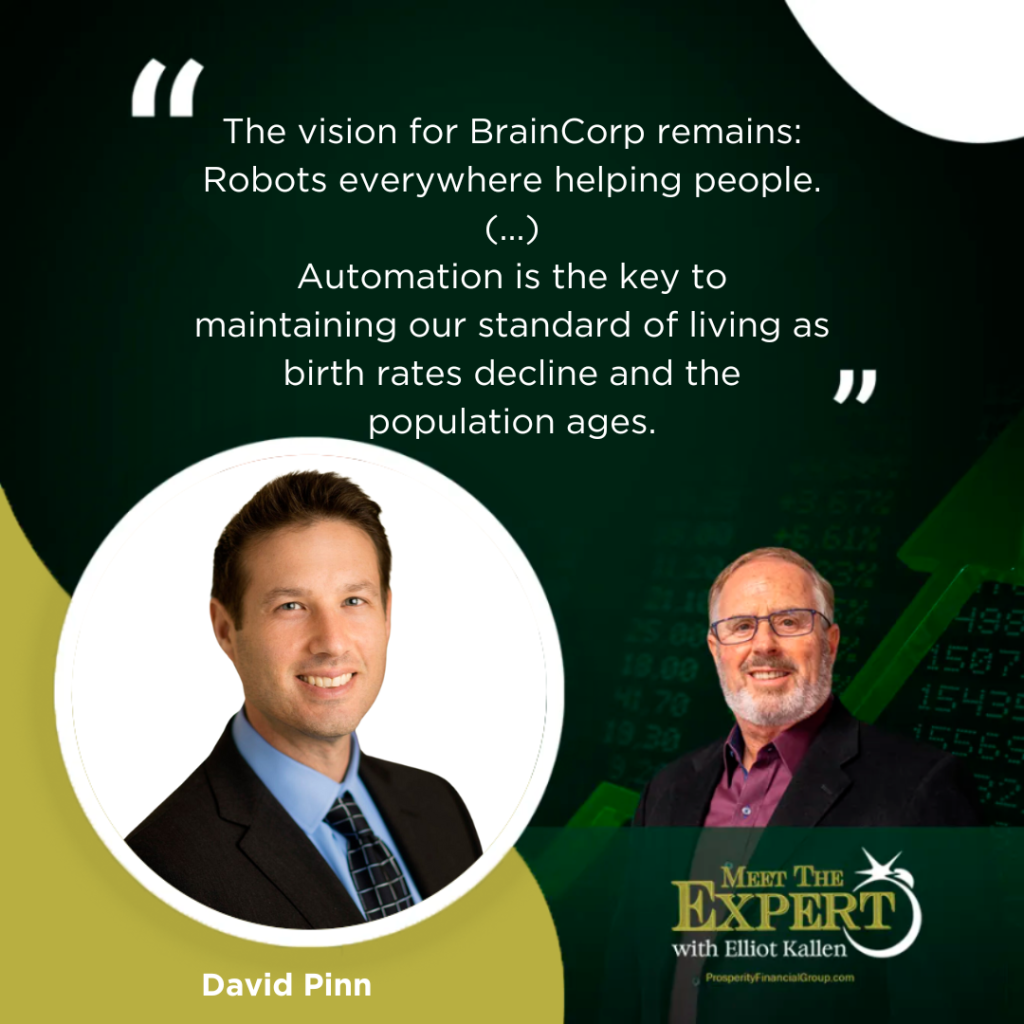
David Pinn: That’s a great question, right? Because, typically a founder-led business, of course, the founder starts the business with a vision. My job as someone who was fortunate to take on the CEO role from our founder is really to continue his vision. But also, as you point out, maybe add my own flavor to it, and help execute on that core vision for the company. So that’s a very big part of what I do. I can tell you that the vision for the company when I started, when I interviewed with our founder, was robots everywhere helping people. I think it’s an extremely powerful vision and it’s one that I share as well, right? And so the vision for BrainCorp remains. Robots everywhere helping people. I think something that’s very motivating for me is something that I touched on a little bit earlier, which is around the demographic challenges facing all of us as a society. We’ve seen this first in countries like Japan, Italy, South Korea that have plummeting birth rates. But it’s coming for us too here in the United States. We can see the birth rates declining and the natural consequence of that is there’s a lower labor force participation rate. There’s more old people who are in retirement than there are working age people. And in order to maintain our standard of living, we need to automate. We need to make labor productivity rise faster than this decline in labor participation due to aging demographics. And so that’s something that’s very motivating for me. It’s a why behind robots everywhere helping people. It’s such an important thing to focus on. And it’s something that I’m very passionate about as the CEO of BrainCorp.
Elliot Kallen: Okay. And we’re talking with David Pinn, who’s CEO here, about automation and robotics and use of artificial intelligence here. If you need to reach me, it’s elliot, E-L-L-I-O-T, at prosperityfinancialgroup.com. Very exciting. Let’s talk about challenges. As a CEO, we face all types of challenges. In the startup phase, one of the biggest, two biggest challenges you have are employee-based, which means I have to go from me to a team around me, and you have to face a money issue because you need financing and you need somebody to cover accounts receivables and accounts payable and all the things that people do. But you’re much more of a mature entity here. But you face challenges every day. You have 240 employees, I think we talked about, give or take. Some of these people probably believe that you’re going to automate them right out of their jobs, too, because that’s how you guys think in terms of automation to improve labor. What are you feeling there? What challenges do you have and the typical problems that you encounter?
David Pinn: Yeah first of all, let me address one thing that you said, which is quite interesting, right, around like automating our own employees. And that’s absolutely not what our employees think because they’re so involved in this space, they understand the reality that when we create automation, it’s a tool for employees to use to get more productive. And so we do a lot of automation here in BrainCorp. For example, I don’t know how much you’re aware of what’s going on with ChatGPT and cloud and all of these generative AI solutions. A big application for all of them is in writing software. And most of our employees are software engineers. So you would think, well, aren’t your software engineers worried about, these tools getting them out of a job? And that’s absolutely not what our people think. Our people think about these tools as an empower for them, right? They can now write two, three times more code than they otherwise could, which makes them two or three times more valuable. And so that’s the nature of how we think about automation internally. And I think that’s been brought to bear over time. And so it really is not about replacing labor. It’s about making people more efficient to improve labor productivity, improve quality of life. So I do want to make sure that that is clear. But to answer your question, yeah, of course, there’s challenges, as you point out, at every stage along the way in our company and in others. We talked a little bit about being a venture backed technology company. And one of the challenges there is that, as you’re aware, as a financial advisor, venture capital firms, they have a time horizon, right? The people who invest in the firm expect to get their capital back over typically a 10 year horizon, right?
Elliot Kallen: Absolutely.
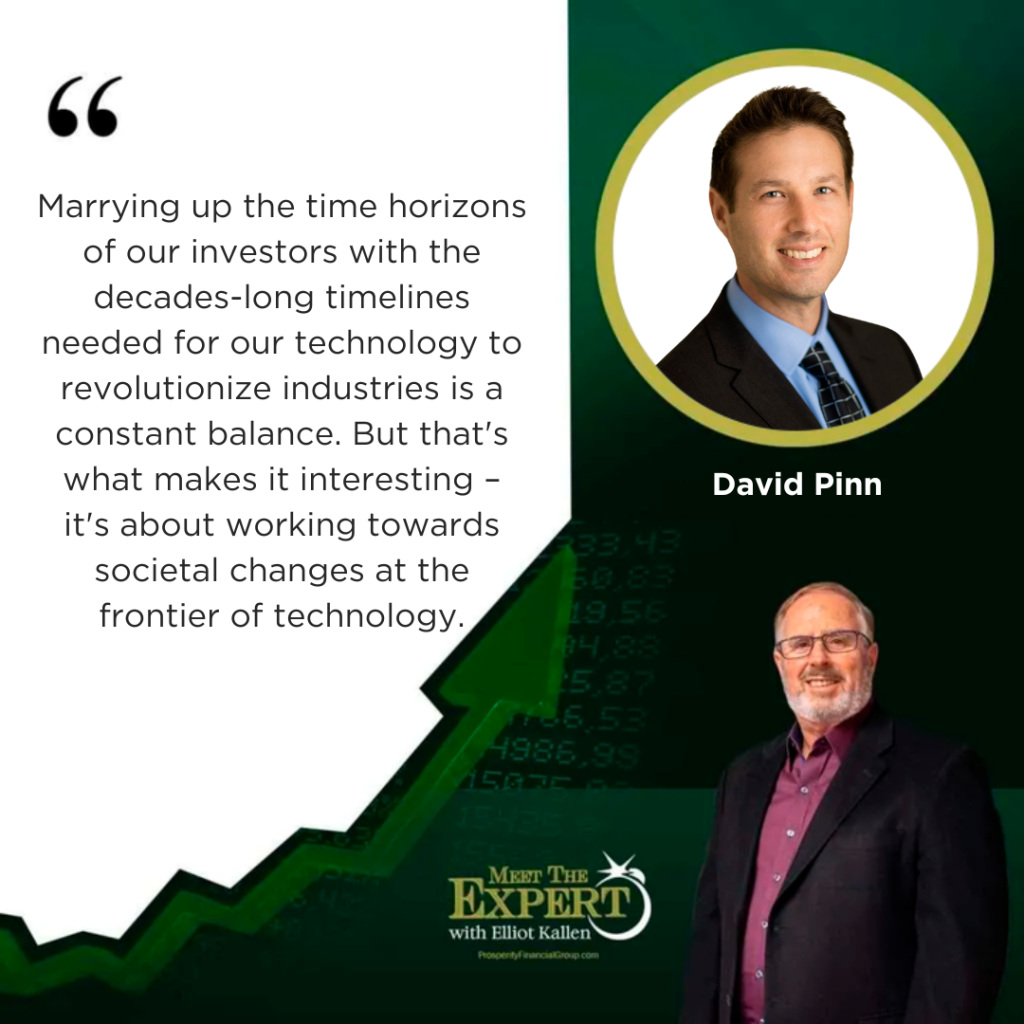
David Pinn: Yeah. And sometimes in the case of, you know, we’re on the bleeding edge of technology. This is not a 10 year cycle, right? We’re talking about societal changes. We’re talking about revolutionary technology, that is going to advance on a decades long time horizon. And so marrying up the time horizons of our investors with the time horizons that, are appropriate for our business revolutionizing, centuries old industries like retail can be a challenge. And so making sure that we’re aligned with our investors on timelines is certainly a very interesting challenge from my perspective.
Elliot Kallen: So have you found these challenges, David, handled differently because you have an engineering background, which is very methodical and spatial as compared with a CFO? When nothing take away that what they do, but very math oriented, bottom line type of thing. You think you come at it from a different point of view?
David Pinn: I think to a certain extent. Yeah. So, I mean, I was an electrical engineer way back when, early in my career, and I found my way into finance through a circuitous route as we all go through journeys in our careers. But, having had an engineering background, having had a finance background, I do think to your point that I take a fairly numerical approach. I like to look at the numbers. I like to kind of reason through a spreadsheet to understand the nature of a problem. That definitely has a big impact on how I think about problem statements for sure.
Elliot Kallen: That’s pretty good. So where do you think this technology is in five years? So let me put the hat on of a consumer here, David. Can I do that? Please. Okay. So I don’t really care how Home Depot cleans its floors. I’m just going in to buy my screws, my wood, my tools, and whatever. Walmart, same thing. You care. They care. But I’m the consumer. I may not even notice it on air. But all these are going to change my life dramatically. Don’t question about it. Because look what Amazon has done or Instacart. I don’t go to Target anymore because Amazon delivers to my house. They lost me as a customer because of Amazon. It’s amazing. That’s a major change. It’s a gain for one and a loss for another. And all these are gains and losses because of tradeoffs on that. So how do you see this in three to five years from the consumer, from my point of view? And you’re a consumer as well. People forget that all the time that you’re space-ly of space-ly space rockets. All you care about is cars that fly through space. But you’re just as much of a consumer as I am or your spouses or your children and so forth and so on. How do you see the big changes coming?
David Pinn: Absolutely. And as you point out, I’m a consumer. I Love browsing at the grocery store, seeing what’s new, something that I love to geek out on. So absolutely. My perspective, I’m really pleased that you brought up Amazon versus brick-and-mortar retail because one of the things that I see changing pretty dramatically for the consumer is the retail store experience. And you’re right. Today, why would I go to the store versus buying something online? It’s the same completely impersonal experience. And then when I got to get hassled to go in my car and do all the things that are involved in going to brick-and-mortar. What I think our technology and others like us unlock is if we can take the mundane parts of the retail job out of the equation, retailers are going to have people on the sales floor that can actually give you a personalized experience in the store, give you a reason to get in the car and go drive to the store. I imagine, for example, three to five years from now, I show up to my local grocery store, and rather than the employees worried about putting stuff on the shelves and fixing price labels and all that mundane stuff, I’m greeted by someone who knows me. They know my weird food habits. They know what kind of assortment I like. They know that this latest thing came in stock. And so I can actually have a personalized experience in the store that Amazon cannot duplicate. And so I think that’s the power of automation, is that if you can automate the things that humans aren’t very good at, which is the mundane detail work, and free up labor to work on the things that are really differentiating, like human engagement, salesmanship, recommendations, just getting to know you, that’s very powerful. And I think that that can be a huge differentiator for brick-and-mortar retail that’s unlocked by automating the mundane.
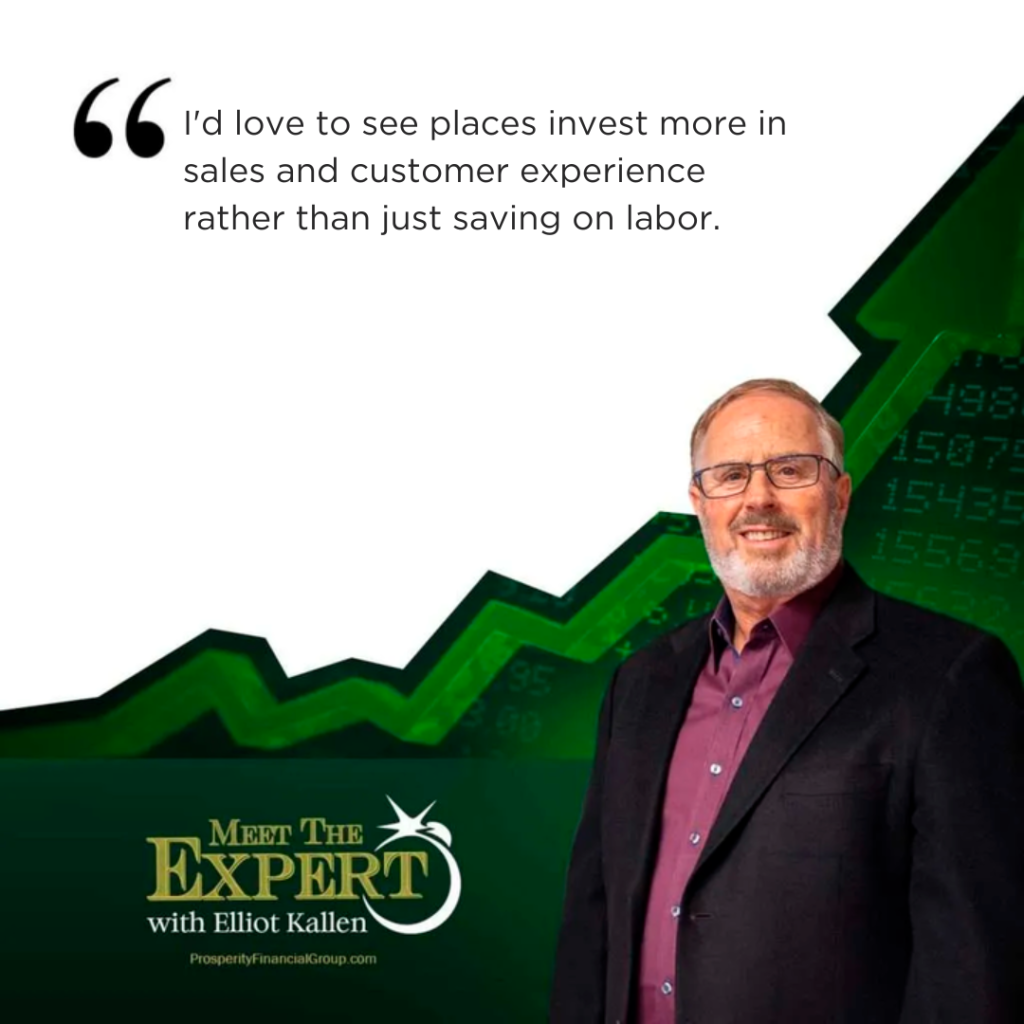
Elliot Kallen: Well, I hope you’re right, because I have studied this, what you’re talking about, the retail world for many years, being in finance and working with clients that are going into sectors, because we do a lot of sector Investing, and we avoid the retail sector. Even though they had a great week last week, we’ve been avoiding them because they’ve been so weak. And we look at Amazon as a technology company and not a sector bet in retailing, obviously. Just like you look at Tesla, not in the automotive industry. Same type of thing. And I’ve always tried to compare over the many years the Nordstrom experience, and I know Nordstrom has had their own financial problems, but the Nordstrom experience against the Macy’s experience, which is really an inexperience. It’s a lack of experience. It’s just go in there, go through the pennies in a Macy’s, find it, somebody comes over to help you if they do, and you say, just browsing, just lucky, leave me alone. You can’t wait to walk in a mall and tell people to leave you alone rather than ask for help. And so I hope you’re right that the companies like a Macy’s are federated. The parent companies of so many of these companies will go and say, now let’s put more money into sales and give a better experience versus, oh, now we can save money in labor.
David Pinn: Right. Yeah. My expectation is that this is going to be an unlock for them to really differentiate. Because if there’s no differentiation between a brick and mortar store and an online store, you’re just wasting Real Estate dollars. Right, Elliot?
Elliot Kallen: And that’s why I stopped shopping at Target because their shelves were relatively empty. Not completely, but relatively empty. Their pharmaceutical products like toothpaste and so forth was anemic. And I was like, well, why am I doing this? This is silly. And even so, they changed my – Target’s ineptitude changed my consumer buying habits. And that’s amazing when that happens. That’s amazing. So what you’re talking about is that Target or a Macy’s or any of these stores are going to go and change my buying habits once again to want to enjoy the experience. Because I go to Costco because I love Costco. I love these – like you’re talking about – I love Costco. Now, they’re not helping me, but I just enjoy the experience more. But I’d never go to Safeway in California. I’d rather go to a specialty store or Trader Joe’s because I think the experience is just so bad and the lines – the cashiers don’t care. They just crank them through automatically, next, next, next. And we have a local store, same thing, where I go over to the butcher counter and they spend time talking to me about how to cook the meat because the experience is so good on that. So I – you’re right. I really do. As a consumer, I would love that. Let me just ask you a couple more questions because this has been great and interesting. We’re talking with Dana because we talk to CEOs all the time on that. What do you think in your industry are the greatest problems? What are you trying to overcome that just – these are the headwinds for you?
David Pinn: Sure. Yeah. So I think adoption is always a challenge with new technology, right? And so the challenge that we at BrainCorp face and all of our friends in our industry face is how to accelerate that adoption. We’re selling to facility managers, we’re selling to, as I mentioned, pretty traditional industries. The retail industry has been around for, I don’t know, thousands of years, if you tell me, a long time, and sometimes it’s hard to change. There’s a lot of legacy in the status quo. And so the biggest challenge for us and the biggest opportunity for us is to help those customers by reducing the barriers to adopting new technology. One of the ways that we do that is we have a portfolio of technologies that we can offer. We spoke about automating floor care, we spoke about automating shelf scanning and out-of-stocks and price labels and all that. And you can imagine that there’s kind of a hierarchy or a set of steps in terms of which kinds of automation maybe are simpler than others. And so if we can get someone started, for example, on automating floor care and getting comfortable with having a robot in their space, we kind of earn the right to have them adopt the next layer of maybe more complex automation around checking for out-of-stocks, as an example, and we can help them move up the stack in that manner. And so we work really hard on creating a portfolio, but also creating tools that will help our customer be able to adopt this technology while minimizing the risk, and really just having a good experience, taking that leap with us.
Elliot Kallen: I think it’s fascinating. We’ve been talking with David Penn, our CEO of BrainCorp out of San Diego, and we’ve been talking about robotics and automation and the use of artificial intelligence, and it’s coming, folks. And if you don’t think it’s coming, then you’re not going through life with your eyes open. And I wanna give you the story of Safeway. 10 years ago, I heard that Safeway was gonna hire, was gonna, not hire, but it’s gonna purchase optic scanners, and they were gonna put them into stores. I don’t think that ever happened, and maybe if they did, it didn’t catch on. And so they were gonna catch me as a consumer walking down and buying Skippy peanut butter, and then I would receive an instant ad on my cell phone for jelly or jam or preserves. And they were gonna do that throughout the store, to try it out, and they didn’t do it. It sounds like a fantastic idea, but that’s really what you’re talking about. The use of artificial intelligence, instead of, if we could do this, then we could do that, and if we could do this, we could do that. Am I right?
David Pinn: Yeah, I think you’re right in general. I mean, I think, of course, there’s also, in the example that you gave, probably a creepiness factor that, we’re very clear that with our technology, that’s a third rail that we don’t wanna touch around, surveilling people or, learning, trying to kind of get at people’s heads. That’s not what we’re about at all. So I can picture in my mind why that idea, even though it sounds amazing, was probably gonna be a failure with consumers. But yeah, I’m with you on the general premise that, this technology is coming. Sometimes, I think, was it a Bill Gates quote? People overestimate what’s possible in a year and they underestimate what’s possible in 10 years. I probably butchered that quote and its attribution. But I think that’s exactly what happens in a lot of these spaces, including ours, where it does take some time. And you need some early adopters, companies like Walmart, for example, that are really paving the way with robotics and automation in order for the rest of the industry to see that approach and follow along. And so things do take time on the adoption side, but whatever we can do to reduce the barriers to that adoption, make it an easier decision, that’s something that we’re very focused on.
Elliot Kallen: So David, if somebody wants to get more information about BrainCorp or pop you an email, what’s the best way to do this?
David Pinn: Sure, yeah, so our website is braincorp.com, B-R-A-I-N-C-O-R-P.com. So please come visit us on our website. You’ll be able to see videos of all the robots that I’ve been talking about. You can also follow me on LinkedIn. Just search for my name, David Pinn, probably David Pinn, BrainCorp. I’ll pop up on LinkedIn, but would love to connect with you there as well.
Elliot Kallen: Super, well, we’ve had a great conversation about CEOs, marketing, automation. Come listen to our exciting episodes. We’ve got more than 75. I think we’re up past 80 episodes of Meet the Expert with Elliot Kallen, top 2% in the world of financial podcasts. David, thank you for being here.
David Pinn: Thank you very much, Elliot. Congratulations on all the success with the podcast.
Elliot Kallen: Thank you, and have a great day, everybody. We’ll see you again soon.
The post How Automation is Transforming the Shopping Experience with David Pinn appeared first on Prosperity Financial Group | San Ramon, CA.