

By Doug Thorpe | dougthorpe.com | Executive Coach & Servant Leadership Advocate
I get it. You heard the words “servant leadership” in a conference breakout session or some LinkedIn post, and your first thought was: “That sounds like a great way to get walked all over.”
I’ve been there. When I was running teams on Wall Street, nobody was talking about “serving” anybody. The language was all about commanding, directing, driving results. And honestly? That approach worked—until it didn’t.
So if you’re a skeptic, good. Skeptics ask better questions than true believers. And here’s the question that matters most: Does servant leadership actually work when you’ve got a real company to run, real payroll to make, and real problems that need solving by Friday?
After 30+ years of leading teams—from the military to Wall Street to building five companies—my answer is a flat-out yes. But not the version of servant leadership you’re probably picturing. Let me show you what it really looks like inside a 50-person company, where there’s no place to hide and every leadership decision has a name attached to it.
The biggest misconception about servant leadership is that it means being soft. That you become some kind of office therapist who nods along while deadlines blow up and performance tanks.
That’s not servant leadership. That’s abdication.
Real servant leadership is more like being a great athletic coach. Think about the best coach you ever had. Did they let you skip practice? Did they shrug when you showed up unprepared? Of course not. They pushed you harder than anyone. But the reason you gave them everything you had was because you knew—deep in your gut—that they actually cared about your Growth, not just the scoreboard.
That’s servant leadership. High standards held by someone the team trusts. And in a 50-person company, trust isn’t theoretical. People know whether you mean it by lunchtime on day one.
Let’s get specific, because theory without practice is just a nice-sounding TED talk.
In a 50-person company, servant leadership shows up in concrete ways. When your operations manager comes to you with a problem, your first instinct isn’t to solve it for them. It’s to ask, “What do you think we should do?” Not because you don’t have an opinion—you definitely do—but because developing their judgment is more valuable than showing off yours.
When you’re sitting in a hiring meeting, you’re not just asking “Can this person do the job?” You’re asking, “Will this person thrive here? What will they need from us to succeed?” That subtle shift changes the entire trajectory of how your team grows.
When a project goes sideways—and they always do—you resist the urge to find someone to blame. Instead, you get curious. What barrier did this team hit that I should have cleared? What tool, resource, or piece of information was missing? Your job as a servant leader isn’t to point fingers. It’s to remove the obstacles your team can’t remove themselves.
And here’s the one that separates the pretenders from the real thing: when you have to make a tough call—a layoff, a restructuring, a change nobody asked for—you explain the why. Not in a corporate memo with jargon so thick you need a machete. In plain language, face to face, because your people deserve to understand the reasoning even when they don’t Love the decision.
Here’s something most leadership books skip: servant leadership hits differently in a mid-sized company.
At five employees, everyone sees everything. At five thousand, there are layers and systems that absorb leadership failures. But at 50? You’re in the Goldilocks zone of accountability. Big enough that you can’t personally manage every relationship. Small enough that everyone still knows if you’re full of it.
Think of it like a neighborhood versus a big apartment complex. In a 500-unit building, you can be a terrible neighbor and nobody really notices. But on a street with 50 houses? People know who mows their lawn and who lets it grow to their knees. People know who shows up with a casserole when someone’s sick and who pretends they didn’t hear about it.
At 50 employees, your leadership style isn’t an abstraction. It’s the lived experience of every person who walks through the door every morning. That’s why servant leadership is so powerful at this scale—there’s no gap between what you say and what people see.
I know you’re thinking: “Okay, Doug, this sounds nice, but what about results?”
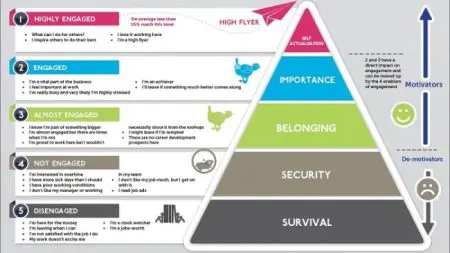
Fair question. Here’s the reality. Companies that practice servant leadership consistently outperform on the metrics that actually matter. They see dramatically lower turnover, which saves real Money when replacing someone costs six to nine months of their salary. They see higher engagement, which translates directly into better customer experiences and stronger revenue. And they build deeper bench strength, which means your next leader is already being developed before you need them.
I had a client—a manufacturing company with about 55 employees—who was hemorrhaging talent. They were losing their best people to competitors and couldn’t figure out why. The pay was competitive. The benefits were solid. When we dug in, the real issue was that their leadership team was running on a pure command-and-control model. People didn’t feel heard. They didn’t feel valued. They felt like interchangeable parts.
Over the course of six months, we shifted their leadership approach. The owner started holding monthly one-on-ones where the entire agenda was set by the employee, not management. Team leads were trained to ask questions before giving answers. And when mistakes happened, the response changed from “Who dropped the ball?” to “What can we learn from this?”
Within a year, their voluntary turnover dropped by more than half. Not because they threw money at the problem. Because they changed how they led.
Let me be direct about what I’m not suggesting. Servant leadership doesn’t mean you avoid hard conversations. It actually requires more of them—but you have them with respect and Clarity, not anger and blame. It doesn’t mean everyone gets a vote on every decision. You’re still the leader. You still make calls. But you make them with input, not in isolation. And it absolutely does not mean you tolerate poor performance. In fact, ignoring someone’s poor performance is the opposite of serving them. It’s robbing them of the honest feedback they need to grow.
Think of it this way: A good doctor doesn’t tell you what you want to hear. They tell you the truth about your Health because they care about your outcomes. That’s the servant leader’s posture toward their team. Kind? Always. Honest? Especially.
If you’ve read this far and you’re thinking, “This sounds like a massive overhaul,” I have good news. It’s not. Servant leadership starts with small shifts that compound over time.
Start by asking your team members one simple question this week: “What’s the biggest obstacle standing between you and your best work?” Then listen. Really listen. And then go remove that obstacle. That’s it. That’s the first step.
Because here’s the truth that skeptics eventually discover: servant leadership isn’t soft. It’s the hardest form of leadership there is, because it requires you to put your ego second and your people first. But the companies that figure this out—especially at the 50-person stage where every relationship matters—build something that command-and-control never can: a team that doesn’t just work for you, but works with you.
And in 2026, that’s not just a nice-to-have. That’s a competitive advantage.
Ready to explore what servant leadership could look like in your company?
Book a free 20-minute discovery call at dougthorpe.com/chat and let’s talk about it.
The post Servant Leadership for Skeptics first appeared on Servant Leadership Coaching | Practical Leadership Development | Doug Thorpe.