
There is no shortage on the concept of employee onboarding. While there are many perspectives, a successful onboarding process is one that makes someone feel welcomed, valued, and prepared for their new role. It’s more than just paperwork and training. It’s about fostering a sense of belonging and providing the tools and support needed to succeed. In a recent search on LinkedIn, I found there are almost 700 groups devoted to the concept.
However, as the workforce ages – companies, financial advisors, trust lawyers, and employees themselves need to create a more formal “Offboarding” program. While Retirement parties, thank you luncheons, and financial transition workshops are examples of common programs offered, they lack the necessary details to prepare the older worker to know how life will be lived post-career. Let’s explore ways to change that.
As I have noted before, if someone is working 48 hours a week and sleeping 7 hours a night, that is 40% of their awake time today. If they head into retirement with no plans for working, that time will need to be filled. An offboarding process could look like:
Through this planning you help move them from “I need to maximize every hour.” to “I want to invest time in what matters most!”
When leaving a career to post-career, a typical greeting goes away. No longer does, “What do you do for a living?” mean a lot, particularly if a person chooses not to work. A defined meaning in life becomes diluted. That can be addressed by replacing job or career with a broader view of life purpose. Offboarding aid can be:
The more a person is focused on purpose, the better they will fill in time with meaningful activities.
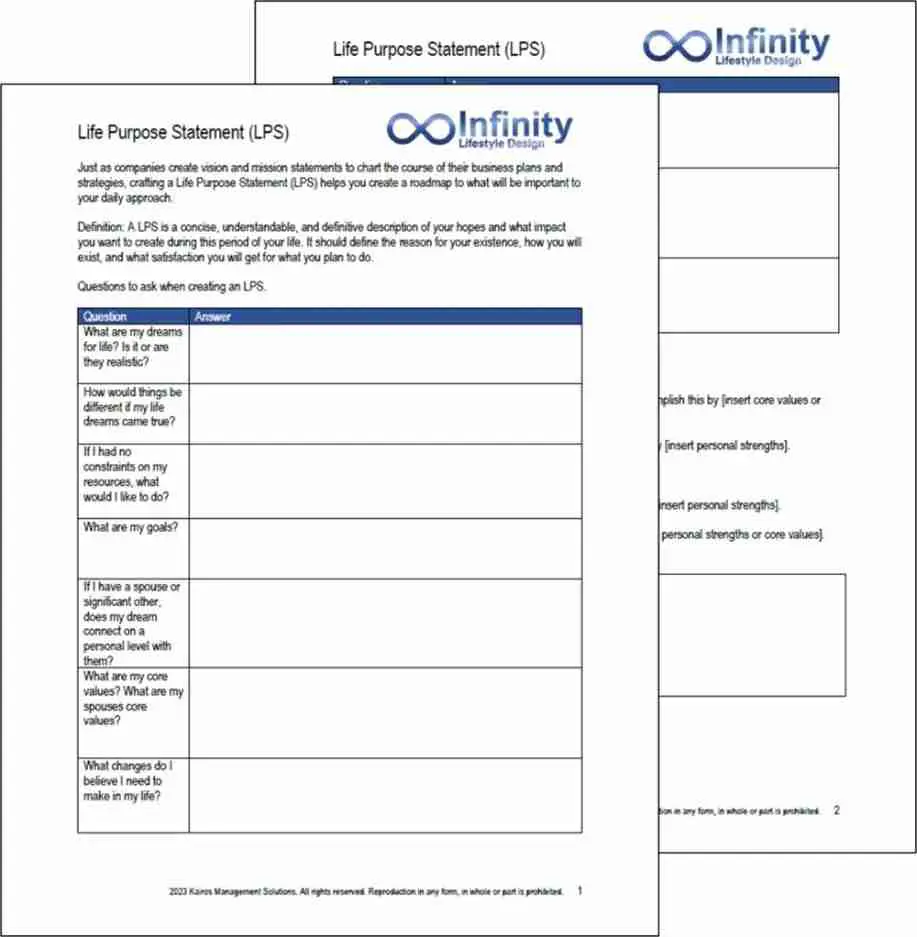
A LPS is a concise, understandable, and definitive description of your hopes and what impact you want to create during this period of your life. It should define the reason for your existence, how you will exist, and what satisfaction you will get for what you plan to
When a career is removed from a person’s life, there is a “time vacuum”, ready to be filled with new and diverse patterns, or mundane and boring repetitions. Resetting or retooling post-career time models can keep the pattern interesting and adaptable. Think about it this way:
Planning time proactively can keep and increase energy levels to embrace each day positively.
Careers provide a natural sense of engagement. Take away a job, and most people will see their social interactions drop by at least half. Consequently, many are surprised at how much less they interact with other people when a job no longer takes up much time in the day. This challenge can be addressed by:
A social network audit can be a great place to start.
These concepts could be framed as part of a formal outboarding process that helps bridge the structured time management of work life with the more fluid but equally purposeful time management needed in retirement. Companies might find they can still have access to a great employee, while also helping the employee feel valued, and prepared for their new phase. It can still be about fostering a sense of belonging and providing the tools and support needed to succeed, in or out of career life.
David Buck is the author of the book The Time-Optimized Life, owner of Kairos (Time) Management Solutions, LLC. Learn how to apply the concepts of proactively planning and using your time. Take the Time Management Analysis (TMA), the Retirement Time Analysis (RTA), or all the other free resources offered to help bring more quality time into your life.
The post The Importance of Offboarding first appeared on Infinity Lifestyle Design.