
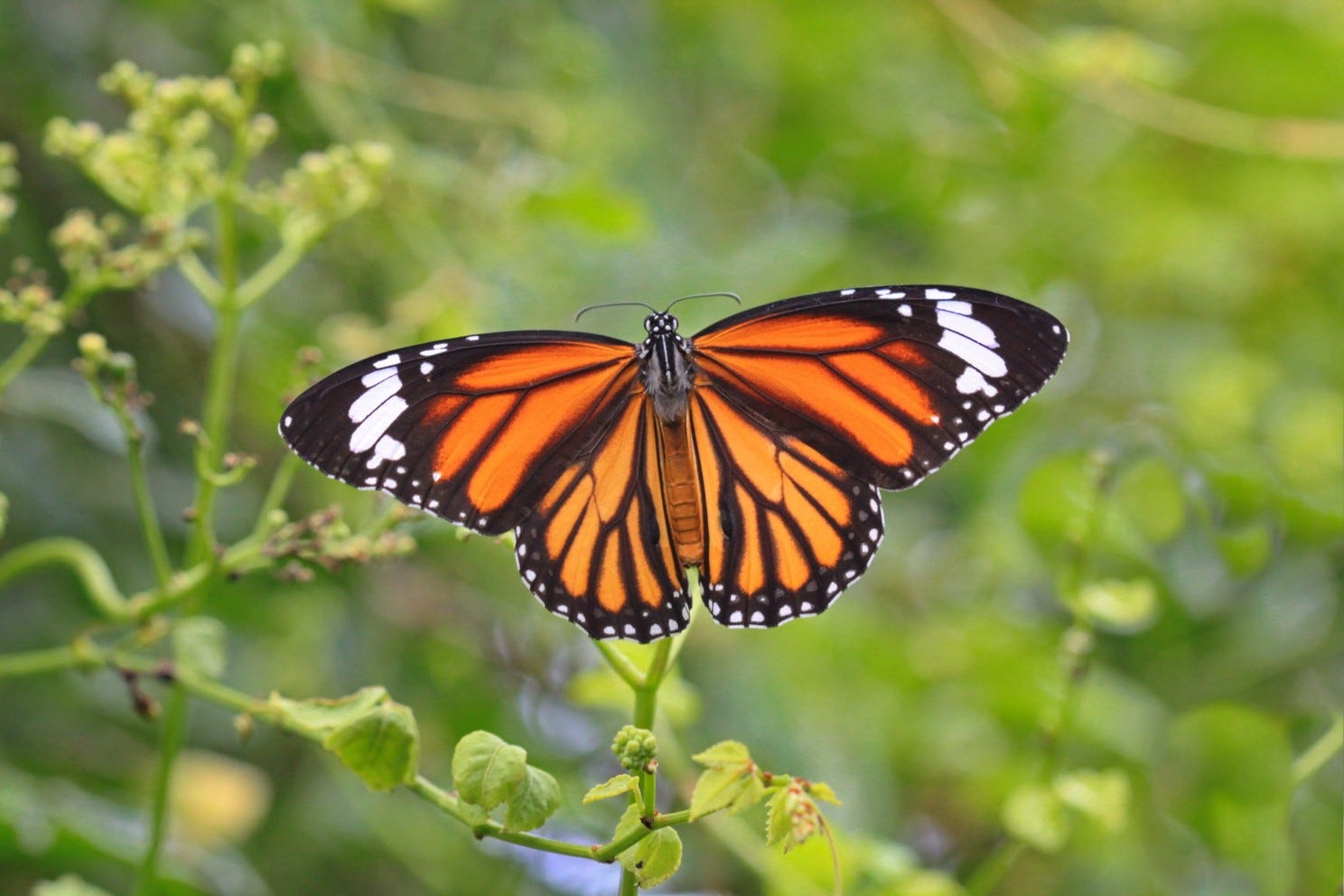
“You have been created in order that you might make a difference. You have within you the power to change the world.” — Andy Andrews, The Butterfly Effect
Most people read a line like that and feel a flicker of something. Then they move on, because the distance between those words and the life they are actually living feels too wide to take seriously.
This article is about why that distance is an illusion.
In 1970, a man named Norman Borlaug won the Nobel Peace Prize. He had spent decades developing high-yield, disease-resistant varieties of wheat and corn that could grow in arid climates. The work he did is credited with saving more than two billion people from starvation. Two billion. It is one of the most significant humanitarian achievements in recorded history.
But Andy Andrews, in his remarkable little book The Butterfly Effect, asks a question that stops you in your tracks: what if Norman Borlaug had never been in a position to do that work?
The answer leads you back through a chain of people, most of whom never knew the scale of what their choices set in motion.
Borlaug was mentored and funded by Henry Wallace, a visionary agricultural thinker who later became Vice President of the United States. Without Wallace’s belief in him, Borlaug’s research would likely never have reached the world. But Wallace himself had been profoundly shaped as a young boy by a man named George Washington Carver, the brilliant agricultural scientist who spent hours walking through fields with young Henry, showing him the wonder of the natural world and planting in him a lifelong reverence for science and Growth. Carver once told the boy, “Remember, God made you to make a difference. And I believe you will.”
And Carver almost did not survive infancy. He was rescued and raised by a farmer named Moses Carver, from Diamond, Missouri, who took in a baby that almost nobody else would have. A quiet man in a small town making a choice that, at the time, looked like nothing more than basic human decency.
Two billion lives. Traced back to a farmer in Missouri who simply did the right thing.

“How wonderful it is that nobody need wait a single moment before starting to improve the world.” — Anne Frank
One of the most pervasive and damaging beliefs people carry is that they are not significant enough to matter in any real way. That their choices are too small, their reach too limited, their life too ordinary to leave any meaningful mark.
This belief shows up everywhere… In the leader who hesitates to speak up in a meeting because they do not think their perspective is important enough. In the person who pulls back from a friendship because they assume the other person does not really need them. And in the professional who holds back a kind word, a piece of honest feedback, or an introduction, because they underestimate what those things might set in motion.
What I’ve seen in my work with leaders and teams is that this is one of the most common and most costly forms of self-diminishment. And it is almost never based in truth.

Here is what’s interesting about the Butterfly Effect as Andrews presents it: none of the people in that chain could see what their actions were building toward. Moses Carver did not know he was raising a man who would shape a future Vice President. George Washington Carver did not know that the boy he walked through fields with would one day fund the research that fed two billion people. They simply did what was in front of them, with the care and intention they had available.
This is both humbling and deeply liberating. It means that the full significance of your life is not something you can measure from the inside. The conversation you have today, the encouragement you offer, the decision you make with integrity when no one is watching, the person you choose to believe in when they have stopped believing in themselves — these things move outward in ways you will likely never fully see or know.
“In every day, there are 1,440 minutes. That means we have 1,440 daily opportunities to make a positive impact.” — Les Brown
The ripple does not ask your permission. It simply moves.

In my experience, the people who grasp this most fully tend to show up differently. Not loudly or dramatically. But with a quality of intentionality that changes the atmosphere around them.
They take the mentoring conversation seriously, even when it feels inconvenient, send the message of encouragement that they almost talked themselves out of sending, introduce two people who have no idea they need to meet, tell the truth in the room when it would be easier to say nothing, and they show up fully for one person at a time, trusting that fully is enough.
This is not idealism. It is a deeply practical understanding of how influence actually works. Not through grand gestures visible to everyone, but through consistent, human, often invisible acts of care and courage that compound over time in ways none of us can predict or trace.
For leaders specifically, this reframes the entire question of impact. The leader who invests genuinely in one person’s growth, who sees something in someone before that person can see it themselves, who creates a space where people feel safe enough to bring their best thinking, is doing work whose consequences will outlast any strategy, any quarter, any title.
You do not need to save two billion people to matter. Moses Carver did not set out to do that either. He simply made one human choice with the care and decency he had available to him in that moment.
What I want to leave you with is this: your life is already influencing people and situations beyond what you can see. The only question worth sitting with is whether you are making that influence conscious.
Because when you begin to live with the awareness that everything you do matters, even the small things, especially the small things, something shifts in how you move through the world. You become more deliberate. More present. More willing to believe that the ordinary moments of your ordinary days are silently building something far larger than yourself.
They are. They always have been. The butterfly has always been flapping its wings.
You just did not know it yet.
The post You Matter More Than You Will Ever Know appeared first on Showit Blog.