
If I asked you what your go-to filler-word when you have a conversation was, would you know?
Is it: “Er”?
Is it “Umm”?
Perhaps it’s “Yep!” or “Oh!”
I discovered my go-to word this week and I learnt it the hard way.
This week was my first shift on the phones as a Samaritan and, because I’m still in probation, I’m being mentored by an incredibly experienced Samaritan of 22 years.
We kicked off the shift with me listening to a few of his calls and then it was my turn to take the hot seat. My first call was straight in at the deep end (I won’t go into the details) and I was on the call for almost an hour talking to a person who was not in a good place.
Once I’d finished the call, I took my headphones off to decompress and my mentor stepped in to debrief the call with me.
“Do you know which word you said most on that call?” he said to me.
“No; was it something bad?” I responded [unconsciously channelling a negativity bias]
“It depends what you consider as bad. Your default filler word is “OK!”, which ordinarily comes across as quite business-like and this is not a business environment so you probably want to fix that when speaking to people who are emotionally vulnerable”
As you can imagine, ever since that conversation, I’ve been acutely conscious of every time I say “OK!” and I’ve been working to reduce the frequency.
I suspect I knew on one level that I said “Ok” a lot but not to a point that I’d made a decision to do anything about it.
That’s why I was immensely grateful for someone taking the time to point it out to me — especially if it could mean the difference to someone’s life or not.
It reminded me of the time 25 years ago when, as someone new to teaching, I was one of the faculty parodied by the students at my first school in the end-of year Year 13 comedy show.
The terrible mannerisms I saw in the sketch they wrote about me, sat with me for a long time and I quickly worked on them to be a better teacher.
In hindsight, what I learnt that day was gold dust and I have the students to thank but realistically how many of us are actually getting this level of insight regularly?
I work specifically on stuff like this with clients and I know I’m still a long way off having even half-decent self-awareness.
The reality is most of us bury our heads in the sand about our own behaviours and, ironically, in my experience the people with the least self-awareness are the ones who need the most support but are the least likely to ask for it.
I see this time and time again with clients; the ones who ask for help are already pretty well functioning on IQ, EQ and FQ. Whilst those who don’t are the ones we could make the biggest impact with. [I have one client who asks me to attend monthly board meetings to keep an eye out from any biases that may effect the board’s decision making; I assure you that they are so highly functioning that many months I don’t have to say a single word].
I often joke that it’s a lot like being a vampire looking for juicy targets whose blood you can drink: being a vampire, you need the victims to invite you into their homes but the only ones who do invite you in are the ones that don’t have enough blood; whilst the juiciest victims are the ones who won’t even answer the doorbell. [Ok, ok, that analogy might need a bit of work].
It’s simple really…ok, it’s not, but the 6 steps are actually quite straightforward:
Step 1 is always about curiosity and humility – if you’re not even willing to countenance that you could improve then you’re already screwed
Step 2 is about getting way more feedback — this could be asking your friends, colleagues or AI (I find filming yourself a great input for this so you can actually show people a presentation you have given, or how you act in a meeting or providing copies of how you write).
I regularly run an Exercise with clients where 5 peers give them anonymous feedback on a presentation so they can raise their own levels of self awareness. Clients are always nervous when I suggest it but immensely grateful when we’ve done it.
Step 3 is about looking for the patterns in what people are telling you — don’t just take one person’s word for it (unless you respect them immensely as an expert in that field), sift for what multiple people are saying and work out how important that is
Step 4 is about developing a concrete goal — visualise what you want to do differently; be specific and don’t try to change too much in one go
Step 5 is about building a realistic plan — how will you get there? Over what timescale? Whose help will you need? What specific things do you need to do?
Step 6 is Give it a go and be gentle on yourself – Rome wasn’t built in a day and you ain’t gonna change overnight but when you do….amazing things will be at the end of it
That’s it!
Honestly even if you raise your self-awareness by even just 1% and don’t do anything about it then I assure you, you will be all the better for it.
In fact, if I only had 3 wishes in the world, one of them would definitely be to increase everyone’s level of self awareness in one go.
Until that happens, I’ll just have to content myself on working on the number of OKs I say and hoping more juicy victims invite Shiageto in to help work on their IQ, EQ and FQ.
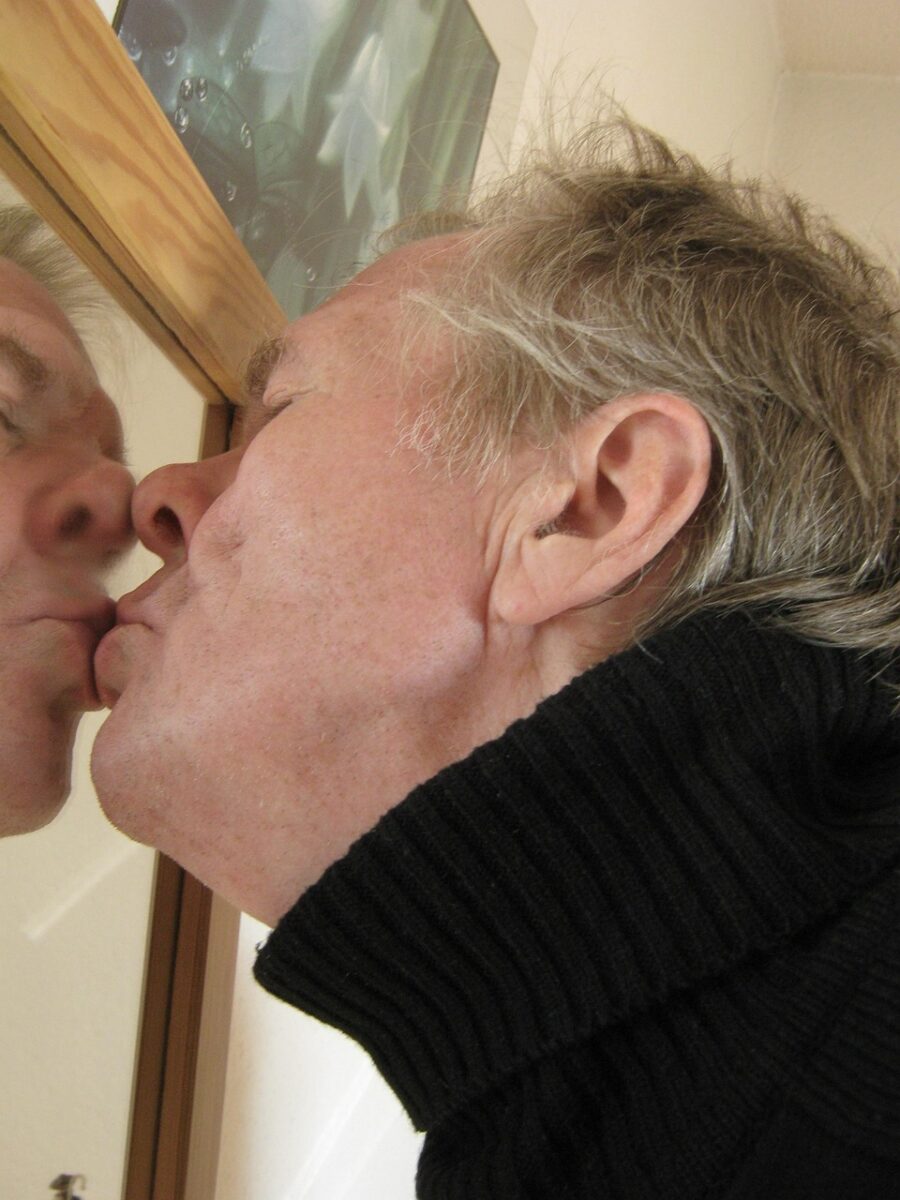
If you are sitting on the fence about whether you could do with improving your own levels of self-awareness, here’s a quick test:
No need to thank me…but if you need some help with this, drop me a line, even if it’s to let me know how you are getting on
Catch you all soon! 🙂
Faris
Faris is the CEO and Founder of Shiageto Consulting, an innovative consultancy that helps firms and individuals sharpen their effectiveness. Connect with him here
Success = IQ x EQ x FQ
Want to assess your levels of IQ, EQ and FQ? click here
Originally Published on https://farisaranki.medium.com/