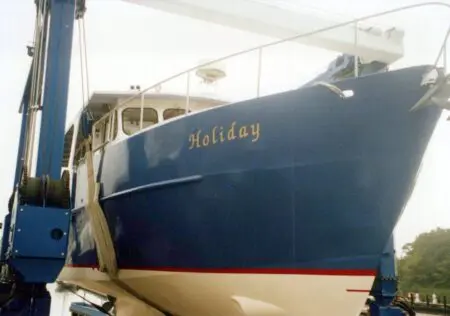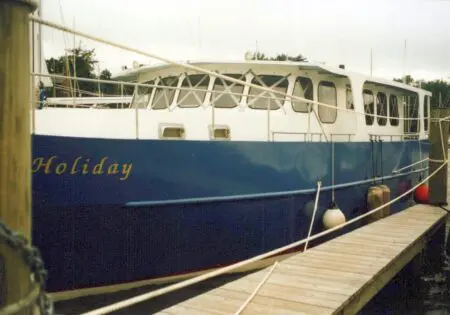

Preparing for our six-month sailing sojourn to Florida required tons of attention to detail. I made packing lists, provisioning lists, and an endless progression of “To Do” lists. My engineer husband Mark created (and constantly updated) cruising itineraries, boat maintenance checklists, and parts inventories. Both skill sets complemented each other very nicely.
When we cast off the lines on December 3, 1997, we were confident of our pre-trip preparation, and indeed everything functioned perfectly. Thanks to Mark’s expertise, we only had a single burned-out light during the entire six-month trip.
However, we quickly scrapped our original anchoring plan, designed to save on slip fees. After the first night anchored just south of frigid Annapolis, Maryland, we (actually I) decided that electric heat would greatly improve our quality of life. Thereafter, we paid for marina dockage and vowed to save Money elsewhere.

Although we originally planned to sail to The Bahamas for the winter, our plans changed during our southward trip. A miserably cold slog down to Florida sapped our physical and mental energy. In addition, we heard that a succession of nasty Bahamian cold fronts kept hammering cruisers who were attempting to soak up the sun in paradise.
After assessing the situation, we decided to abandon the Bahamas trip and stay in Florida for the next two months. We booked a slip at (then) Kennedy Point Yacht Club in Titusville, just across the Indian River Lagoon from the Kennedy Space Center. While there, we completed boat chores, read books, spent time with other cruisers, and watched a rocket and Space Shuttle launch.
When we found the Titusville, Florida Air Show, we immediately put this event on our calendar. My husband and I have been aviation fans for years, and we especially Love the excitement that surrounds air shows. When we lived in Eastern North Carolina, we attended the epic Marine Corps Air Station (MCAS) Cherry Point Air Show in Havelock, North Carolina.
During that May weekend, the weather was blazing hot. However, we still enjoyed the aircraft displays and demonstrations from all flight eras. The aerobatics displays did not disappoint, as the world-class pilots put on an amazing show. And because the event was held on a military base, we got a close-up look at some very interesting aircraft.
The Titusville Air Show featured a completely different vibe. Held at the Valiant Air Command Warbird Museum, this event welcomed numerous vintage aircraft (mostly World War II-era aircraft under the Commemorative Air Force banner). The Titusville Air Show also showcased several United States military airplanes and helicopters.
We were certainly intrigued by the other air show attendees. Then in our forties, we were among the youngest visitors. Most attendees were in the Baby Boomer demographic, with a smaller group perhaps in their 70s and 80s. Numerous attendees sported military-style ball caps containing their service designations. We figured some attendees were retired aviators, likely from the Vietnam War era or earlier. We felt fortunate to share the air show experience with these remarkable men and women.
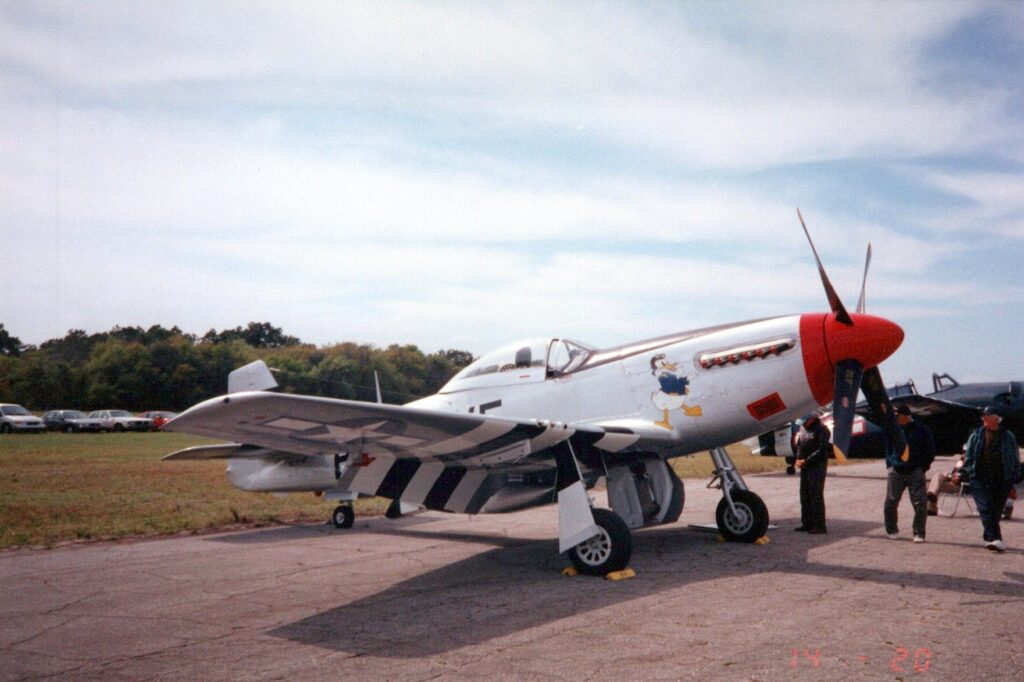
While at the air show admission table, a flight line of colorful vintage aircraft caught our attention. Strolling past airplanes of varied sizes and configurations, we wondered about the stories these riveted-together aircraft could tell. What kind of missions did they fly ─ and where did they go? Was the airplane a dream to fly ─ or did the pilot have to constantly keep his hands locked on the controls? And what roundabout path led the plane’s current pilot to the Titusville Air Show?
Although privately owned, each vintage aircraft was a member of the Commemorative Air Force (or CAF). The group’s mission is to “educate, inspire, and honor through flight and living history experiences.” The CAF was formed in 1957, and the men first purchased a World War II-era P-51 Mustang. Over the years, the group crystallized their goal: “to save an example of every aircraft that flew during World War II.”
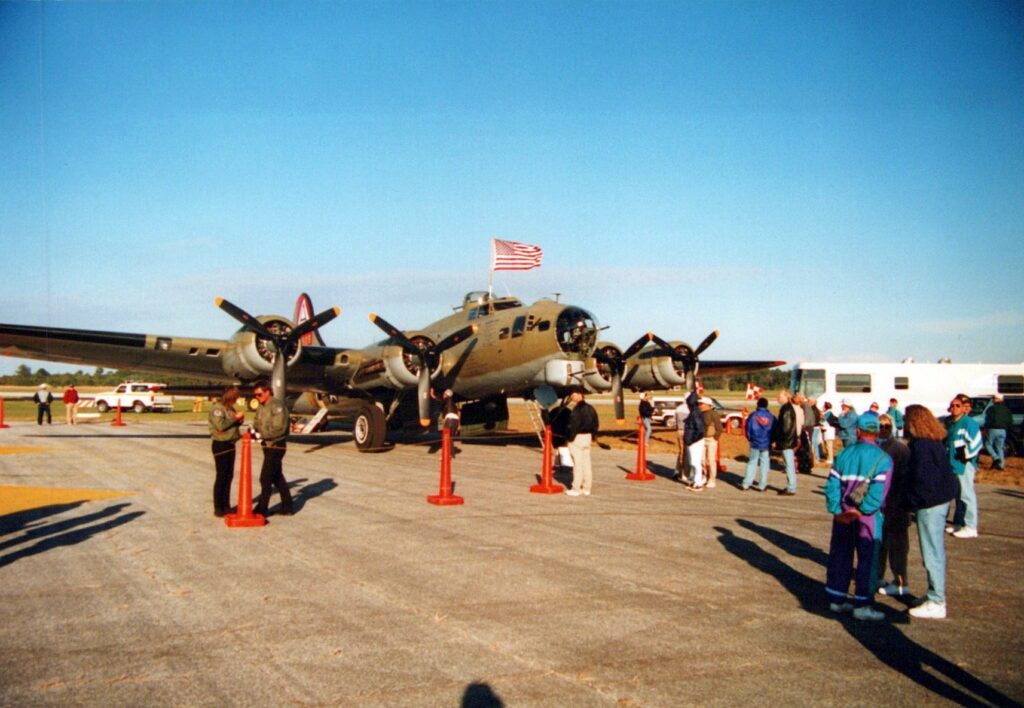
In 1965, the Commemorative Air Force completed its first museum building in Mercedes, Texas. As the group expanded, the CAF moved to Harlingen, Texas to display WWII aircraft in three spacious buildings. Today, the CAF has 183 aircraft of over 60 different varieties, making it one of the world’s largest air forces. Approximately 13,000 members ensure that the CAF can continue to fulfill its mission.
The Commemorative Air Force’s “Tora Tora Tora” Living History Reenactment depicts the events of December 7, 1941 ─ the day Japanese pilots attacked Hawaii’s Pearl Harbor Naval Base. One of North America’s longest-running civilian air show performances, this event involves multiple planes plus pyrotechnics (see aircraft, smoke, and fireball photos).
Each “Tora Tora Tora” performance involves pilots, ground crew and maintenance personnel, and pyrotechnics Experts. Together, these volunteers create an impactful demonstration of the event that spurred the United States’ entry into World War II.
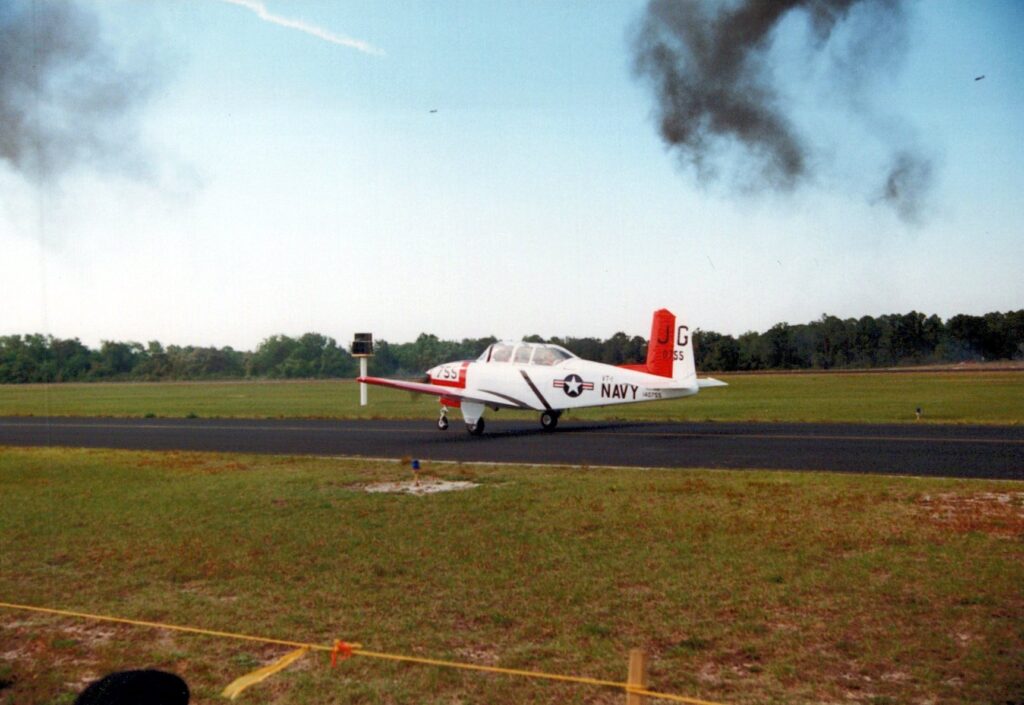
I have always been intrigued by military aircraft. For decades, these purpose-built airplanes and helicopters have completed often-complex missions, frequently in the far corners of the world. I appreciate the airmen and Marines who fly these aircraft, and I wonder what skill sets are required to be successful.
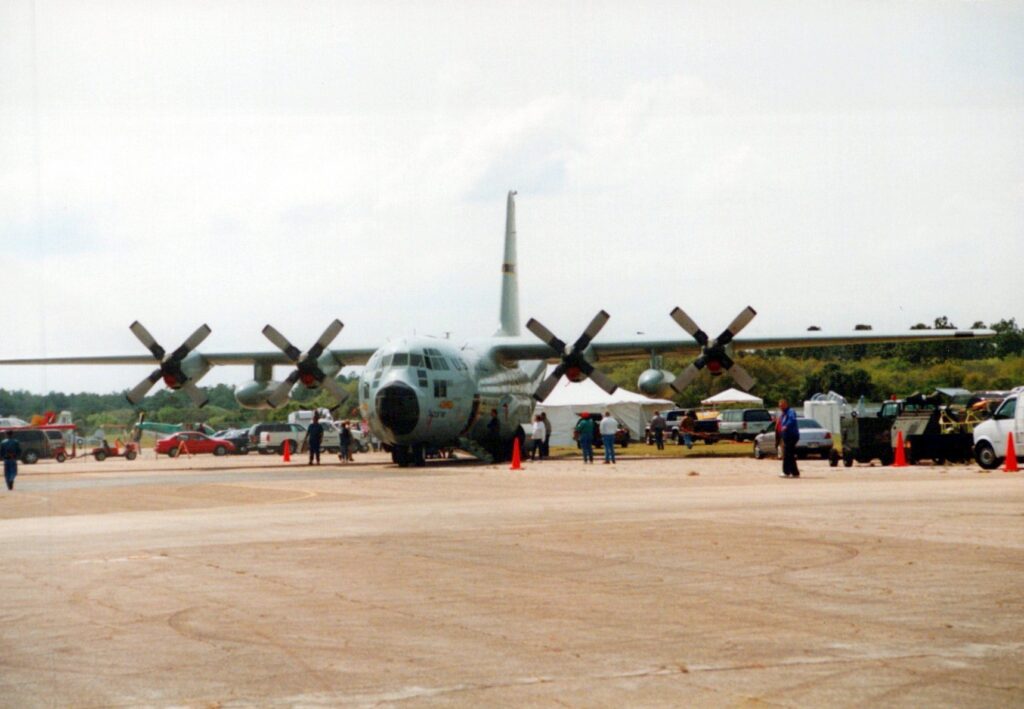
That said, I’m 100% certain about two qualifications to fly on the Air Force’s 53rd Weather Reconnaissance Squadron Hurricane Hunter aircraft: (1) A super-strong stomach and (2) The ability to perform your job even when your work platform is lurching in all directions around you.
Based in Biloxi, Mississippi, these fearless crews perform aerial weather reconnaissance of waters adjacent to the United States. The Hurricane Hunters are mostly active throughout the United States hurricane season. The team operates 10 WC-130J Super Hercules aircraft, each one chock full of meteorological data collection equipment. The five-member crew includes the pilot, co-pilot, navigator, and two team members who perform meteorological functions.
Here in Florida, we prepare for a hurricane by gathering bottled water and small propane cylinders for our camp stove. The Hurricane Hunter crew flies into the developing storm ─ again and again ─ to gather weather data that enables more accurate forecasts. While enduring bucking bronco-like turbulence, the crew members keep obtaining and recording data no matter what ─ with rare exceptions. During 2025’s Hurricane Melissa, severe turbulence forced the crew to return to base to check for aircraft damage.
As longtime boaters who always watched the weather, we were excited to tour the Hurricane Hunter aircraft at the Titusville Air Show. The aircraft’s interior is surprisingly compact, but there’s room for everyone to perform their jobs (although the “you’re free to move about the cabin” advisory doesn’t apply). I thoroughly enjoyed our time aboard.
Almost three decades later, I would jump at the chance to attend an air show. Walking the flight line full of vintage (and modern) aircraft, and turning my eyes skyward to view the aerobatics demos and military aircraft fly-bys, never gets old. These experiences help connect me to all those who have enjoyed the freedom of flight.