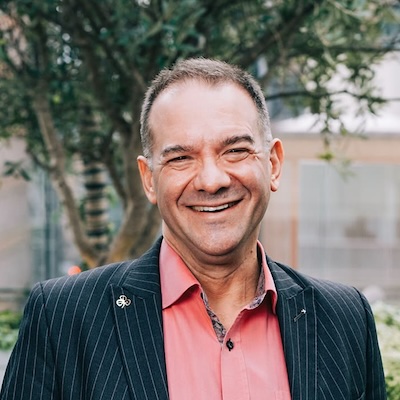

Are today’s young adults really that different from previous generations? In this fascinating episode, Andy Lopata sits down with Alexis Redding, who shares the incredible story of a Harvard study where she unearthed a lost trove of college student interviews from the 1970s and tracked down the participants 50 years later to play back their tapes.
Through this unique “time capsule” research—and by replicating the study with the college classes of 2025 and 2026—Alexis reveals the surprising connective tissue across generations. Andy and Alexis look closely into the myth of generational differences and the impact of “micro-mentoring” and “mirror mentoring” in both academia and the workplace.
Alexis Redding is a developmental psychologist, faculty co-chair of higher Education at the Harvard Graduate School of Education, and a leading expert on young adults navigating college and career. She is the co-author of The End of Adolescence: The Lost Art of Delaying Adulthood and the author of the upcoming book, Mental Health in College: What Research Tells Us About Supporting Students. Alexis’s work has been featured in The Atlantic, The New York Times, Harvard Business Review, and Teen Vogue, and she recently delivered a TEDx talk on her groundbreaking research.
What We Discussed:
The 50-Year Time Capsule: What happened when 70-somethings listened to audio recordings of themselves at 20 years old—and how we often forget the raw Emotions and insecurities of our own youth.
Generational Continuity: Why college students from the 1970s and the post-COVID Class of 2025 share surprisingly identical fears, hopes, and emotional experiences.
Deconstructing the Mental Health Crisis: How modern young adults are using clinical language to describe normal, developmentally appropriate struggles (like loneliness and career uncertainty), and how mentors can tell the difference between typical growing pains and the need for clinical intervention.
The Nuance of Social Media: Moving past the “black and white” narrative to
understand how social media both harms and uniquely supports today’s youth.
The Power of Micro-Mentorship: Why transformational mentoring doesn’t always require a long-term, formal relationship. Sometimes, it’s a focused 15-to-20-minute conversation where someone truly sees you.
Mirror Mentors: The vital role that peers, roommates, and close friends play in reflecting our blind spots and guiding our career trajectories.
Building Mentorship into Organisational DNA: Why algorithmic, forced corporate mentoring programs often fail, and how to organically weave everyday mentoring into a culture of workplace belonging and psychological safety.
Resources Mentioned in this Episode:
Book: The End of Adolescence: The Lost Art of Delaying Adulthood
by Nancy Hill and Alexis Redding
Upcoming Book: Mental Health in College:
What Research Tells Us About Supporting Students by Alexis Redding
TEDx Talk: Why we keep telling young adults the wrong stories
The Grant Study: The longitudinal Harvard study currently led by Robert
Waldinger.
Dr. Emily Weinstein: Co-director for the Centre for Digital Thriving at
Dory Clark: Alexis’s co-author on the topic of Micro-Mentoring.
Reach Out
Connect with Andy Lopata: Website | Instagram | LinkedIn | X/Twitter | YouTube
Connect with Alexis Redding: Website |Instagram |LinkedIn
The Financial Times Guide to Mentoring