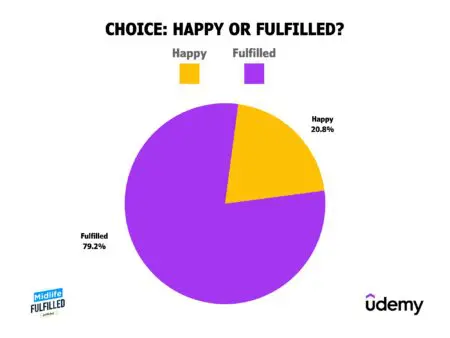
If you’ve been following Fulfilled@Work for a minute, you know that my North Star is to help people thrive in Health, Fitness, Career, Relationships, and Legacy, so they can feel fulfilled at work. That’s the heartbeat behind my Fulfillment Centric Leadership (FCL) framework. I’ve told this story before.
Fun fact: Every time I present FCL from the stage or in a webinar, or in a private meeting, I always say the quiet part out loud: I’m not the first to point out that employee engagement is good for business!
That’s been proven again and again. But I am puzzled why leaders act like engagement is a “nice to have,” when it’s really a performance strategy. Here’s some data to back up this claim.
When teams feel engaged and fulfilled at work, good things happen. We consistently see outcomes like: (Source: Gallup)
Unfortunately, many engagement programs fizzle because they’re built around perks and rewards. Free snacks are perks, but they don’t move the needle if someone’s exhausted, worried about Aging parents, feeling disconnected from their team, or lacking clear direction in their career. Rewards only recognize achievement. They have their place. But, they can lack appreciation for attributes like effort, initiative, creativity, leadership, resilience, mentorship, etc.
That’s why FCL starts with a simple premise: when people show up for work, they bring their whole humanity.
When leaders understand what helps their people thrive across the five life pillars, engagement becomes the byproduct, not the target.
In my work, I’m often asked, “How can leaders support their team’s personal lives, such as health, fitness, and relationships?” The answer is that leaders don’t need to. They just need to acknowledge that the five pillars are real and, if an employee needs support in any of them, start a conversation about it. Don’t sweep it under the rug. Leaders have more influence than they think by offering resources (internal or external) to help an employee. The gesture alone goes a long way toward building trust, loyalty, engagement, and a willingness to do good work.
. It’s free. Grab a sticky note and rate yourself 1–10 on each pillar:
Circle the lowest score and write one tiny step you’ll take this week. Now repeat the same ritual with your team, no oversharing required. Just a quick conversation and a simple commitment. You’ve just brought fulfillment into the culture in a light lift, with a big signal. Revisit these conversations to show your team that you care.
As I mentioned at the top of this post, I’m not the first to suggest that engagement drives business results. The evidence is plentiful. What we do need is for leaders to claim engagement as a priority and embrace a realistic pathway to get there.
I am biased in believing that Fulfillment Centric Leadership is the pathway because it is human-centered, measurable, and scalable. When people are fulfilled, engagement shows up, performance follows, and retention improves. These benefits show up in dashboards, status reports, and income statements.
If you’re ready to embrace fulfillment in your leadership model, without abandoning your current values, message me, and I’ll share the starter playbook we use with clients.
My motivation goes beyond revenue. I genuinely want to see people thrive. I want to help build teams that are not just productive, but genuinely fulfilled@work.
That is my North Star.
The post Engaged Teams Perform: The Business Case for Fulfillment appeared first on Fulfilled@Work Academy.
Originally Published on https://midlifefulfilled.com/