Get your Freebie

25 Top Shakespeare Quotes With Insights For Deeper Understanding
Shakespeare’s words continue to shape how you think about life, Love, and human nature.
His lines capture simple truths with Clarity, offering lessons that still apply centuries after they were written.
You gain practical insights into human behavior and timeless wisdom when you look closely at his most memorable quotes.
This collection highlights twenty-five of his most quoted lines, paired with clear insights that help you understand why they remain so powerful today.
As you explore them, you see not just famous phrases, but ideas that guide how you view choices, Relationships, and the challenges you face.

Shakespeare’s words remain present in classrooms, theaters, and even everyday speech.
You find lasting value in them because they address shared human experiences and use language that still feels powerful centuries later.
You encounter Shakespeare’s quotes in discussions of love, ambition, betrayal, and mortality because these ideas never lose importance.
His plays highlight Emotions and conflicts that you recognize in your own life, whether through family struggles, personal goals, or relationships.
Unlike works tied to specific events or eras, his writing speaks to broad human concerns.
For example, the tension between fate and free will in Macbeth or the exploration of jealousy in Othello mirrors dilemmas you can still relate to today.
His words also capture the balance between personal desire and social duty.
When you read about characters torn between love and responsibility, you see reflections of choices people continue to face.
You notice Shakespeare’s impact not only in the themes but also in the way he shaped language.

He used imagery, metaphor, and wordplay to make ideas memorable and emotionally strong.
These tools give his quotes rhythm and clarity that help them stay in your mind.
For instance, repetition and contrast highlight tension, while vivid images make abstract ideas concrete.
His creative phrasing also introduced new words and expressions into English, many of which you still use today.
By combining simple truths with inventive style, Shakespeare made lines that are easy to recall yet layered with meaning.
1) “To be, or not to be: that is the question.” – William Shakespeare
You see Hamlet weigh life against death.
You watch him question if enduring pain is worth it.
You notice how the line reflects human doubt and choice.
2) “A fool thinks himself to be wise, but a wise man knows himself to be a fool.” – William Shakespeare
You see how self-awareness separates Wisdom from arrogance.
You learn more when you admit limits.
You avoid mistakes by questioning your own certainty.
3) “We know what we are, but know not what we may be.” – William Shakespeare
You recognize your present self clearly, but your future remains uncertain.
You understand your current identity, yet you cannot predict your potential growth.
4) “Love all, trust a few, do wrong to none.” – William Shakespeare
You show kindness to everyone without expecting anything in return.
You choose carefully who earns your trust.
You avoid harming others in your actions.
5) “My crown is called content, a crown that seldom kings enjoy.” – William Shakespeare
You value peace of mind more than wealth or power.
You find strength in simple satisfaction.
You learn that true contentment is rare among leaders.
6) “There is nothing either good or bad but thinking makes it so.” – William Shakespeare
You see how thought shapes your view of events.
Your judgment creates meaning, not the event itself.
You decide if something feels positive or negative.
Your perspective influences how you respond to challenges.
You control how much weight you give to experiences.
7) “The empty vessel makes the loudest sound.” – William Shakespeare
You notice people with little knowledge often speak the most.
You see this in daily conversations where empty words replace real substance.
You learn that quiet confidence usually shows deeper understanding than loud claims.
8) “Better three hours too soon than a minute too late.” – William Shakespeare
You learn the value of punctuality through this quote.
It reminds you that being early shows respect for others’ time.
You avoid Stress when you arrive ahead of schedule.
Even a short delay can cause missed chances.
You control your time by choosing to be early.
9) “Some are born great, some achieve greatness, and some have greatness thrust upon them.” – William Shakespeare

You find this line in Twelfth Night.
You hear it in a letter read to Malvolio.
You see it describe different paths to power.
You notice how it reflects chance, effort, and circumstance.
You use it to think about leadership and opportunity.
10) “All the world’s a stage, and all the men and women merely players.” – William Shakespeare
You see life described as a performance on a stage.
Your roles change as you move through different stages of life.
You enter, act, and exit, just like characters in a play.
11) “Cowards die many times before their deaths; the valiant never taste of death but once.” – William Shakespeare
You see fear repeat the pain of death long before it arrives.
You face mortality only once when you act with courage.
You learn that fear creates many endings, while bravery accepts one.
12) “If music be the food of love, play on.” – William Shakespeare
You see music compared to food, showing how it can nurture your feelings of love.
The line comes from Twelfth Night, spoken at the start of the play.
You notice the speaker wants more music, hoping it will feed and grow emotions.
This quote reminds you how art can influence your mood and relationships.
13) “What’s done cannot be undone.” – William Shakespeare
You see this line in Macbeth, spoken by Lady Macbeth.
It reminds you that past actions stay fixed.
You cannot reverse choices, but you can decide how to respond next.
This quote pushes you to accept responsibility for what you have already done.
It also shows you the importance of focusing on what you can still control.
14) “This above all: to thine own self be true.” – William Shakespeare
You learn to trust your own values.
You avoid living by others’ expectations.
You choose actions that match your beliefs.
15) “The course of true love never did run smooth.” – William Shakespeare

You see this line in A Midsummer Night’s Dream.
It reminds you that love often faces obstacles.
You understand that challenges test patience and commitment.
You recognize that struggles do not mean failure.
You learn to expect effort in lasting relationships.
16) “Parting is such sweet sorrow.” – William Shakespeare
You find this line in Romeo and Juliet.
You see Juliet say it when she must leave Romeo.
You notice it shows how goodbyes can feel both painful and tender.
You understand it means you feel sadness and joy at the same time.
17) “Some rise by sin, and some by virtue fall.” – William Shakespeare
You see how success does not always follow virtue.
You notice that wrongdoing can sometimes bring power.
You understand that good choices may still lead to loss.
18) “Men at some time are masters of their fates.” – William Shakespeare
You see this line in Julius Caesar.
You learn that choice shapes your path.
You recognize responsibility rests with your actions.
19) “Expect the unexpected.” – William Shakespeare
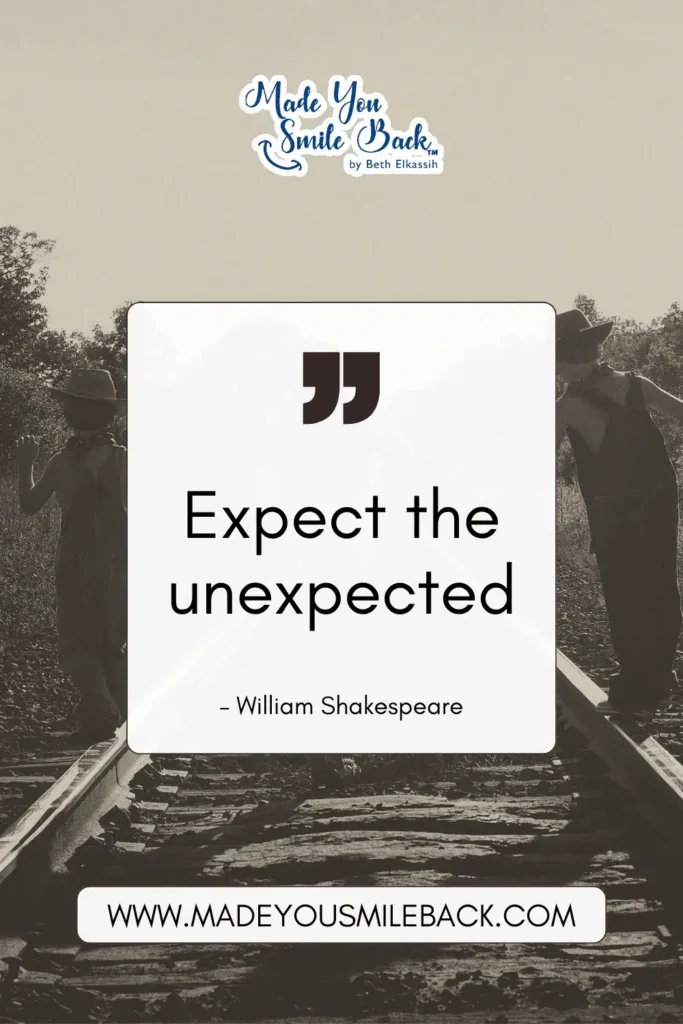
You face moments that challenge your plans.
You learn to adapt when surprises appear.
You prepare by staying flexible in your choices.
20) “The better part of Valour, is Discretion.” – William Shakespeare
You find this line in Henry IV, Part 1.
Falstaff says it during a battle scene.
You see him use it to justify avoiding danger.
The words suggest courage needs careful judgment.
You understand bravery without thought can risk your life.
This reminds you that restraint can be wise.
21) “How far that little candle throws its beams! So shines a good deed in a naughty world.” – William Shakespeare
You see how even a small action can make a clear difference.
Your good deeds can brighten situations that feel negative or unkind.
You learn that kindness often reaches farther than you expect.
22) “Love looks not with the eyes, but with the mind.” – William Shakespeare
You see love as more than physical beauty.
You understand it grows from thought and connection.
You value how the mind shapes feelings beyond appearances.
23) “The fault, dear Brutus, is not in our stars, but in ourselves.” – William Shakespeare
You see this line in Julius Caesar.
It reminds you to take responsibility.
You shape your choices, not fate.
You control your actions, not destiny.
You decide your path, not the stars.
24) “Give every man thy ear, but few thy voice.” – William Shakespeare
You learn more when you listen before you speak.
This quote reminds you to value careful listening.
You protect your thoughts by speaking less and hearing more.
It encourages you to show respect without giving away every opinion.
25) “When sorrows come, they come not single spies, but in battalions.” – William Shakespeare
You see this line in Hamlet, spoken by King Claudius.
It shows how troubles often arrive together, not one at a time.
You notice the imagery compares sorrow to organized groups, not isolated events.
This reminds you that challenges can feel heavier when they cluster closely together.
You can use Shakespeare’s words as practical guidance when thinking about choices, relationships, and personal growth.
Understanding the setting and meaning behind a line helps you apply it with accuracy instead of relying only on surface impressions.
When you read a Shakespeare quote, start by asking who said it and why.
Many of his most quoted lines come from characters who are flawed or conflicted.
Knowing the speaker’s situation prevents you from misusing the message.
Advice about time, honesty, or ambition may reflect irony or caution rather than simple encouragement.
Looking at the play’s scene gives you the tone—serious, playful, or critical.
Without this step, you risk taking the words at face value.
You can then connect the insight to present-day situations.
A line about patience in adversity might guide how you handle stress at work.
A warning about pride could shape how you approach teamwork.
By linking the original context to your own life, you make the wisdom practical rather than abstract.
Quick check before applying a quote:
To gain more from Shakespeare’s language, focus on close reading.
Pay attention to word choice, rhythm, and imagery.
These details often carry meaning beyond the literal statement.
Break down longer passages into smaller parts.
Ask what each phrase reveals about the character’s emotions or intentions.
This method helps you see patterns of contrast, repetition, or metaphor that clarify the message.
Comparing different translations or annotated editions can also help.
Editors often explain terms that no longer appear in everyday English.
This gives you a clearer sense of how the audience in Shakespeare’s time might have understood the line.
You can also keep a simple table when analyzing:
| Step | What to Do | Example |
|---|---|---|
| 1 | Identify speaker | Hamlet |
| 2 | Note context | Talking about uncertainty |
| 3 | Examine language | Use of “to be” as choice |
| 4 | Apply insight | Reflect on decision-making |
By working through these steps, you build a habit of reading Shakespeare with both accuracy and depth.
When you look at the Top 25 Shakespeare Quotes with Insights, you see how his words capture common experiences like love, ambition, and uncertainty.
These short lines often connect with everyday choices and feelings.
You can use these Shakespearean quotes to reflect on themes such as friendship, honesty, and self-knowledge.
Some phrases remind you to act with integrity, while others highlight the limits of human control.
Some quotes encourage patience, while others urge courage.
They give you language to describe feelings and decisions that still matter in daily life.
The post 25 Top Shakespeare Quotes With Insights For Deeper Understanding appeared first on Made You Smile Back.
Originally Published on https://madeyousmileback.com/