Wednesday - June 24th, 2026
Apple News
×

What can we help you find?

Open Menu
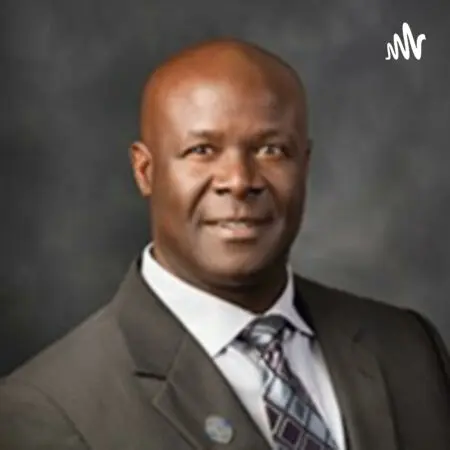
Stephen Middleton PhD, Possibilityman, Podcaster & Transformational Coach

I grew up in a rural community in South Carolina. My father was a general laborer, and he, along with my mother and their eight children, were sharecroppers. I am their sixth child, and I spent my formative years picking cotton and plowing with a mule. I gained a burst of insight when I was 15 years old from an internal Consciousness that told him I could do better with his life. I heeded the inspiration and enrolled in college, graduating with honors. I earned a Master of Arts from The Ohio State University and a doctorate from Miami University (Ohio). I received a Golieb post-doctoral fellowship from the New York University School of Law, where I enrolled in the first-year curriculum and the Legal History Seminar. I began teaching at Wilberforce University in Ohio. I also taught at the University of Cincinnati and was a long-time constitutional history professor at North Carolina State University. I was the inaugural director of the African American Studies Program at Mississippi State University. I have lectured and presented scholarly papers in the United States, Canada, and Europe. I presented at the American Society of Legal History, the British Legal History Association, the Southern Historical Association, and the Association of African American Life and History. I have lectured at the University of Washington, Cambridge University, and Keele University in the United Kingdom. My scholarly endeavors have taken me to three African countries, including Ghana, where the University of Ghana boasts an African Studies program.

As a speaker and workshop facilitator, I presented “Four Elements of Progressive Constitutionalism” in the Amicus Curiae Lecture series at Marshall University (2012); “Abraham Lincoln and Executive War Powers,” Wilmington College (2013); “Reconstruction and the Politics of Expedience,” Old Capitol Museum in Jackson, MS (2015); and facilitated teachers at summer seminars for the National Endowment for the Humanities at Georgia State University in 2016 and 2018.

Now retired from academic work, I am the founder of The Possibility-Action Network and host of The Possibility-Action Network Podcast. I am a speaker, transformational coach, and social entrepreneur.


Recent Content

Loading...
Episode 195: Gettysburg Address, Movement Three &Raquo; 21919450 1665614156476 F71C21Cab1B1E
Episode 195: Gettysburg Address, Movement Three

In this episode, I examine the final paragraph of the Gettysburg Address—Movement Three—where AbrahamLincoln turns from honoring the dead to calling the living to action.Lincoln shifts the moment.…

In this episode, I e…

In this episode, I examine the final paragraph of the Gettysburg Address—Movement Three—where AbrahamLincoln turns from honoring the dead to calling the living to action.Lincoln shifts the moment. What began as a ceremony of remembrance becomes a moral responsibility. “It is rather for us, the living…” places the burden on those who remain. The ground has already been consecrated by sacrifice—the question is whether the living will complete the work.He names that work clearly: “the great task remaining before us.” The Civil War is not only about victory but also about fulfillin…

Listen · 11:02
Episode 194, Gettysburg Address, Movement Two &Raquo; 21919450 1665614156476 F71C21Cab1B1E
Episode 194, Gettysburg Address, Movement Two

In this episode, I examine the second paragraph of the Gettysburg Address—what I call Movement Two. Lincoln begins with a simple purpose: dedicating a battlefield cemetery. But within a few sentence…

In this episode, I e…

In this episode, I examine the second paragraph of the Gettysburg Address—what I call Movement Two. Lincoln begins with a simple purpose: dedicating a battlefield cemetery. But within a few sentences, he transforms that moment into something much larger.The Civil War, he explains, is not just a conflict—it is a test. A test of whether a nation built on liberty and equality can survive its own contradictions. Lincoln shifts the focus fromceremony to sacrifice, reminding his audience that the fallen soldiers have already given meaning to the ground through their actions.In one of the most po…

Listen · 13:40
Episode 193, Gettysburg Address, Movement One &Raquo; 21919450 1665614156476 F71C21Cab1B1E
Episode 193, Gettysburg Address, Movement One

In this episode, I begin a close reading of the Gettysburg Address—one of the most powerful speeches in Americanhistory. Focusing on the opening paragraph, what I call Movement One, I explore how Ab…

In this episode, I b…

In this episode, I begin a close reading of the Gettysburg Address—one of the most powerful speeches in Americanhistory. Focusing on the opening paragraph, what I call Movement One, I explore how Abraham Lincoln redefined the meaning of the nation in just a few lines. Rather than starting with the Constitution, Lincoln reaches back to the Declaration of Independence and its bold claim that “all men are created equal.” This was not accidental—it was a deliberate reframing of America’s purpose in the middle of the Civil War. This episode examines the historical meaning of Lincoln’s…

Listen · 9:15
Episode 192, The American Ideals Are Worth Embracing &Raquo; 21919450 1665614156476 F71C21Cab1B1E
Episode 192, The American Ideals Are Worth Embracing

Episode 192, The American Ideals Are Worth EmbracingIn this episode, I reflect on the ideals expressed at the founding of the United States and the long struggle to make those ideals real. The Declara…

Episode 192, The Ame…

Episode 192, The American Ideals Are Worth EmbracingIn this episode, I reflect on the ideals expressed at the founding of the United States and the long struggle to make those ideals real. The Declaration of Independence proclaimed that all people are created equal, yet the nation began with deep contradictions, including slavery and laws that denied freedom to many.One way to see this tension clearly is through the experience of Black Americans. From the Constitution’s fugitive slave clause and the Fugitive Slave Act of 1793 to the Supreme Court’s decision in Dred Scott, the law often fai…

Listen · 9:39
Episode 191, Knowledge Is Power &Raquo; 21919450 1665614156476 F71C21Cab1B1E
Episode 191, Knowledge Is Power

Today I’m reminded that knowledge truly is power.The right information can change the direction of your life.I focus on three areas:• Finances — using smart systems to build stability and freedo…

Today I’m reminded…

Today I’m reminded that knowledge truly is power.The right information can change the direction of your life.I focus on three areas:• Finances — using smart systems to build stability and freedom.• Peace — learning how to calm the nervous system and live with emotionalclarity.• Timing — understanding that it’s never too late to begin again.My book, Break Free From Emotional Distress, explores the path to personal peace and emotional freedom.If this message resonates with you, share this video. Someone you know may need it today.

Listen · 2:42
Pisode 190, John S. Rock, Never Quit, Part 2 &Raquo; 21919450 1665614156476 F71C21Cab1B1E
pisode 190, John S. Rock, Never Quit, Part 2

When John S. Rock’s Health collapsed in the 1850s, his fight for justice did not end. It only changed form. Forced to leave medicine and dentistry, Rock turned to law, choosing apath that relied on …

When John S. Rock’…

When John S. Rock’s health collapsed in the 1850s, his fight for justice did not end. It only changed form. Forced to leave medicine and dentistry, Rock turned to law, choosing apath that relied on intellect, reason, and moral courage rather than physical endurance. In Boston, he built a legal practice at the heart of abolitionist life and argued for black citizenship. He also supported black military service during the Civil War. Rock used both the courtroom and the lecture platform todemand equality under the law. His admission to practice before the U.S. Supreme Court in 1865 symbolized m…

Listen · 11:29
Episode 189, John S. Rock, Never Quit, Part 1 &Raquo; 21919450 1665614156476 F71C21Cab1B1E
Episode 189, John S. Rock, Never Quit, Part 1

John S. Rock was born in 1825 in New Jersey, a state that called itself free while still living with the long shadow of slavery. New Jersey’s Gradual Emancipation Act of 1804 promised freedom only s…

John S. Rock was bor…

John S. Rock was born in 1825 in New Jersey, a state that called itself free while still living with the long shadow of slavery. New Jersey’s Gradual Emancipation Act of 1804 promised freedom only slowly, binding black children to long indentures—twenty-one years for females and twenty-five for males. Rock, however, was born to free parents who understood that in a slaveholding republic, Education was not simply uplift but self-defense. From an early age, his abilities were obvious. As a teenager, he became a teacher and was drawn into the abolition movement, doing adult work and absorbing…

Listen · 10:39
Episode 188, Is It Right, Part 2 &Raquo; 21919450 1665614156476 F71C21Cab1B1E
Episode 188, Is It Right, Part 2

James Otis’s Moment of Moral ClarityIn this episode of the Possibility-Action Network, we return to the question that once shook the conscience of the colonies: Is it right to enslave a man because …

James Otis’s Momen…

James Otis’s Moment of Moral ClarityIn this episode of the Possibility-Action Network, we return to the question that once shook the conscience of the colonies: Is it right to enslave a man because he is black? James Otis asked that question with moral Clarity. If liberty is a natural right, how can slavery ever be right? His idea began to shake the foundations of a nation that claimed freedom as its creed.We step into late 1700s America, a paradise for slaveholders, where the law protected slavery. The Northwest Ordinance of 1787 promised free territory but allowed the removal of runaways. …

Listen · 14:14
Episode 187, Is It Right? &Raquo; 21919450 1665614156476 F71C21Cab1B1E
Episode 187, Is It Right?

This episode begins with a single powerful question that once unsettled the American colonies: Is it right to enslave a man because of his race? The man who asked it, James Otis, a lawyer from Boston,…

This episode begins …

This episode begins with a single powerful question that once unsettled the American colonies: Is it right to enslave a man because of his race? The man who asked it, James Otis, a lawyer from Boston, did not set out to start a moral revolution. He stood in a courtroom in 1761 and argued against government overreach; his argument went against Writs of Assistance—open-ended search warrants. His case led him to a deeper truth. If liberty is grounded in natural rights, then those rights must extend to all people. From this insight emerged his challenging question: Is it right to enslave a man b…

Listen · 22:58
Episode 186, Ibsc’s Financial Strategy &Raquo; 21919450 1665614156476 F71C21Cab1B1E
Episode 186, IBSC’s Financial Strategy

In this episode, we explore how a group of extraordinary black leaders in 1880s Washington, D.C.—known as the Committee of Eleven—responded to political abandonment with bold economic strategy. Af…

In this episode, we …

In this episode, we explore how a group of extraordinary black leaders in 1880s Washington, D.C.—known as the Committee of Eleven—responded to political abandonment with bold economic strategy. After the 1884 election signaled that the federal government would no longer protect black rights, men like Andrew F. Hilyer, Milton Holland, Leonard Bailey, Dr. Charles Purvis, and Lewis Douglass gathered to ask a hard question: What shall we do to be saved? Their answer was groundbreaking: build their own financial institutions.From these meetings emerged the Industrial Building and Savings Compan…

Listen · 14:47
Episode 185: The Power Of One Realization &Raquo; 21919450 1665614156476 F71C21Cab1B1E
Episode 185: The Power of One Realization

In this episode, we look at the moment that changed Frederick Douglass’s life—and how one insight can change ours. As a boy enslaved in Maryland, Douglass discoveredthe key to freedom when his ens…

In this episode, we …

In this episode, we look at the moment that changed Frederick Douglass’s life—and how one insight can change ours. As a boy enslaved in Maryland, Douglass discoveredthe key to freedom when his enslaver warned that teaching a slave to read would “ruin” him. From that moment, Douglass understood that learning was liberation.We follow his quiet fight for literacy, his brutal season under the slave-breaker Edward Covey, and the day he finally stood up for his dignity. That physical fight was powerful, but his real freedom began much earlier—with one life-altering realization: If I can le…

Listen · 12:58
Episode 184 — It Is A Rising Sun &Raquo; 21919450 1665614156476 F71C21Cab1B1E
Episode 184 — It Is a Rising Sun

In this episode of the Possibility–Action Network, Dr. Stephen Middleton — Possibility Man — reflects on Benjamin Franklin’s famous observation at the close of the Constitutional Convention. F…

In this episode of t…

In this episode of the Possibility–Action Network, Dr. Stephen Middleton — Possibility Man — reflects on Benjamin Franklin’s famous observation at the close of the Constitutional Convention. For months, Franklin wondered whether the carved sun on Washington’s chair was rising or setting. Only at the end did he conclude: “It is a rising sun.”Dr. Middleton explores the powerful contradictions of 1787 — especially the status of Black Americans — and connects Franklin’s insight to the American creed and the ongoing struggle for belonging. The episode also recalls Franklin’swa…

Listen · 10:59