
Exploring Dakar’s Medina: Marche Tilene and Local Culture

Senegal
Missed my earlier post about Senegal? Click here to read about my first impressions of the country.
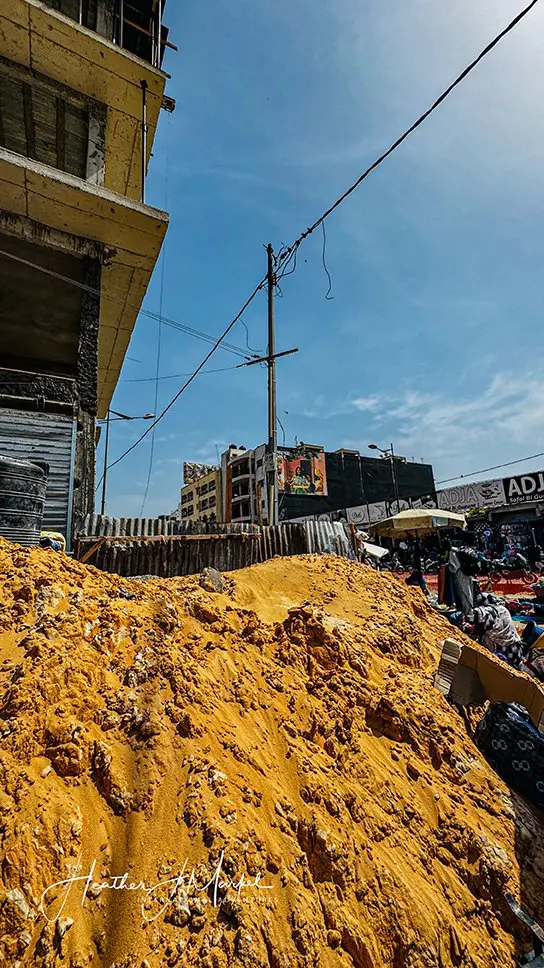
Being in Senegal in early March means we’ve arrived at the tail end of harmattan. Never heard of it? I hadn’t either before coming here. It refers to the dry, dusty wind that blows from the Sahara to Western Africa. I noticed that it was very hazy the first day, but didn’t think anything of it until day two, when I realize I’m having trouble breathing. So, I wear a mask and that solves the problem. I notice many other people also wear them, not for Covid, but for the dust!
As we walk through sand-covered streets, it feels like a magical moment as I realize I’m walking on sand from the Sahara desert! It’s traveled like I have, and there are moments I feel like I’m in two places simultaneously.
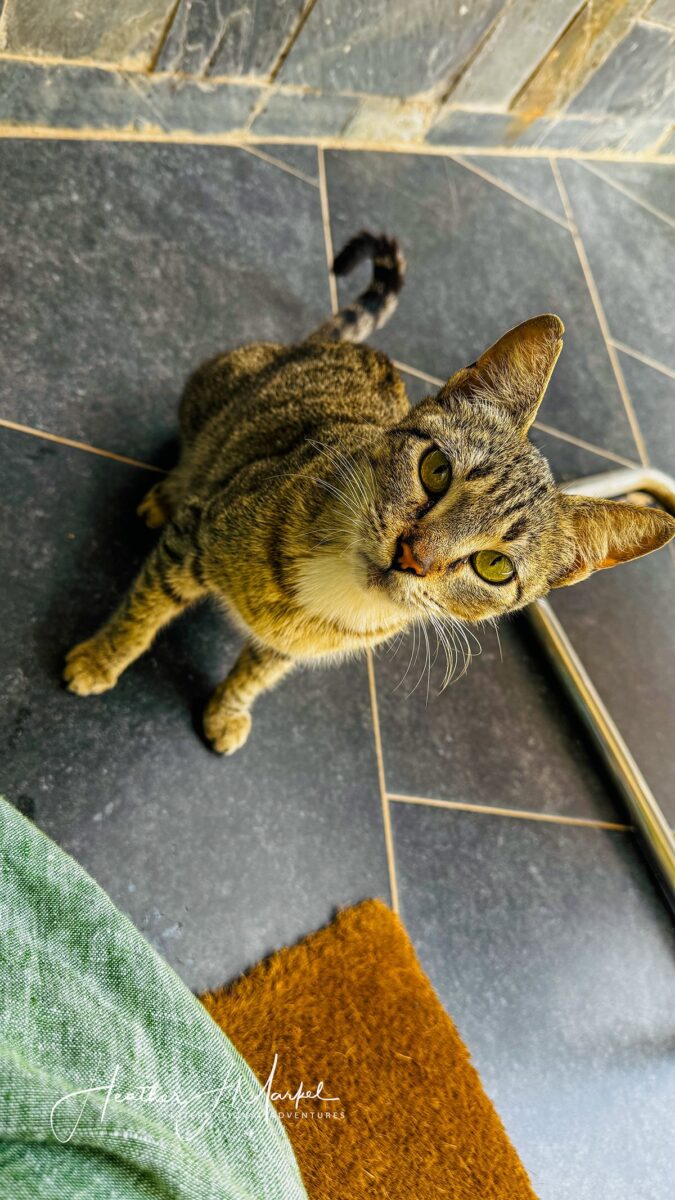
From my first exit of the Lighthouse hotel, a cat has greeted me like it knows I’m a sucker for animals, and I’ve pet it. There are also a couple of stray dogs who hang out in the rubble nearby. I get dog and cat food a few times during our first week in Dakar. The cat really grows on me, and I feed her every day, and over time she makes biscuits on my leg or the ground nearby.
There seems to be only one breed of dog in Dakar, maybe all of Senegal, at least where strays are concerned. A sort of yellow dog with a tiny resemblence to a golden labrador, but also nothing like them. (Yeah, I know that was not helpful at all.) They’re mostly friendly, but the boy dog on our little street eventually starts jumping on me and wrapping his front legs round my waist so I ended up focusing more on feeding the kitty.
I’m so grateful that Julie has looked into some of the markets in Dakar and we head to one apparently reputed for having all sorts of African fabrics, and, loads of shops with a sewing machine sign, indicating we could have them make clothes for us!
We grab a Yango to the Marche Tilene, passing by some great artsy scenery. Yesterday, I got yelled at by some locals when they thought I was photographing them. So, I now try to be very careful because I’m realizing many people don’t want to be photographed here.
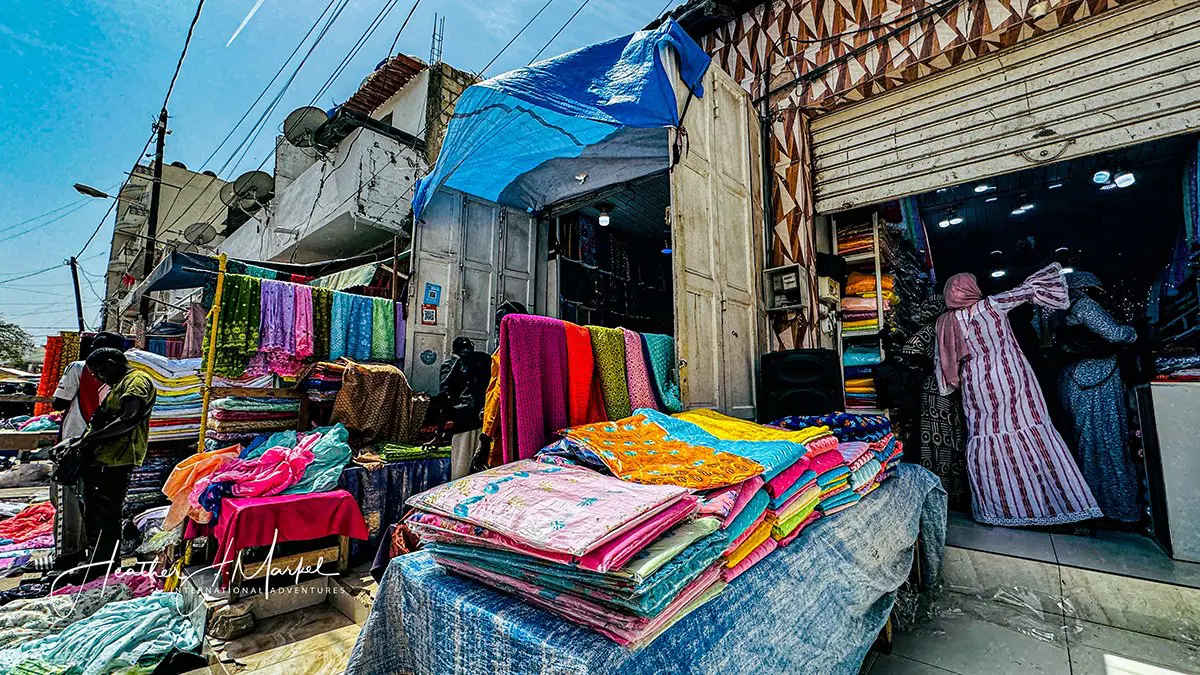
The market is wall-to-wall people, or, should I say, like a pedestrian traffic jam, since there are no walls? The streets are narrow, congested with vendor stalls, and all of Dakar is here. Julie and I are almost the only white people in the vicinity, so I feel like we’re seeing something authentic. (As it will turn out, most of Senegal is wonderfully authentic, and that’s one of the things I Love about it.)
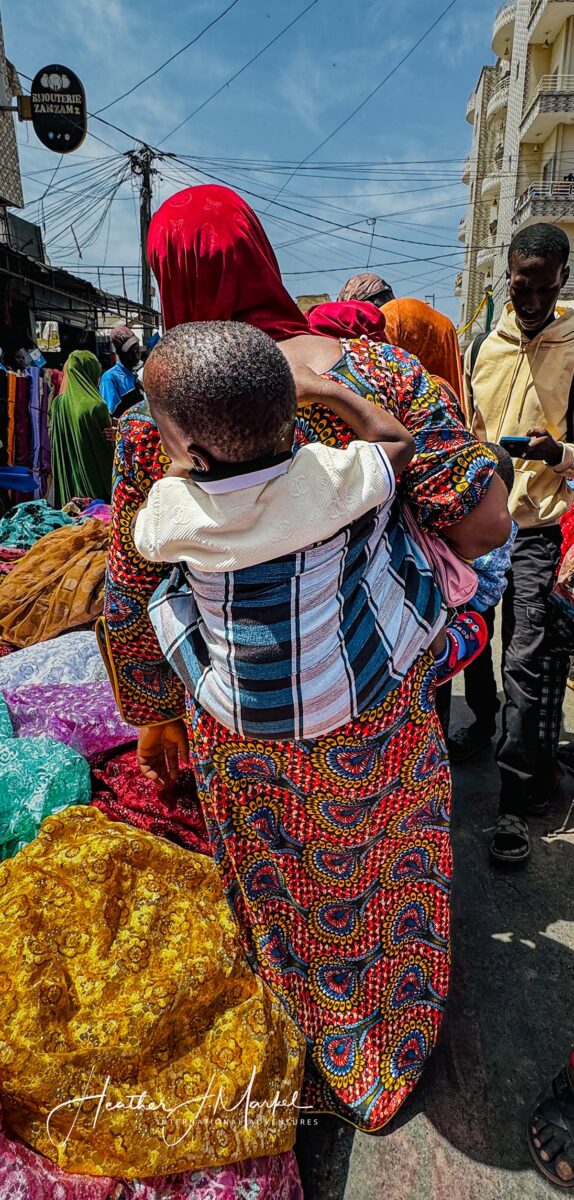
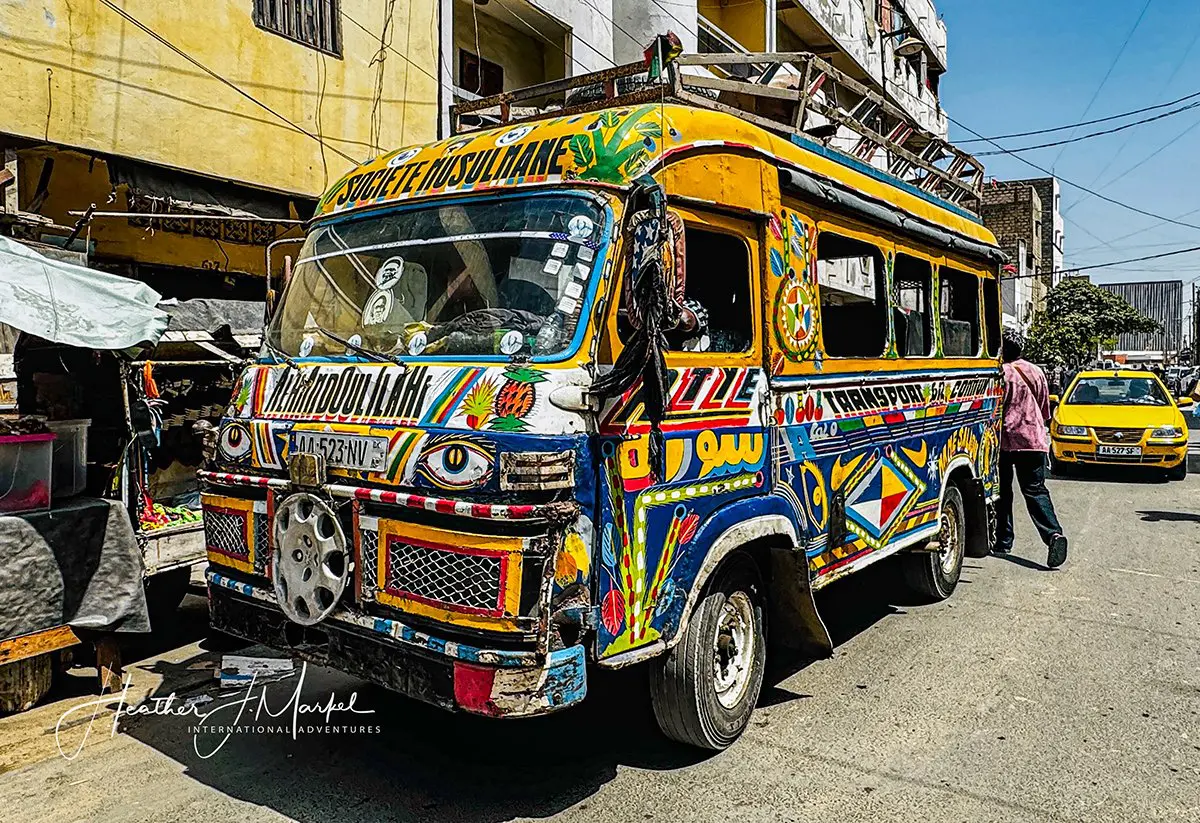
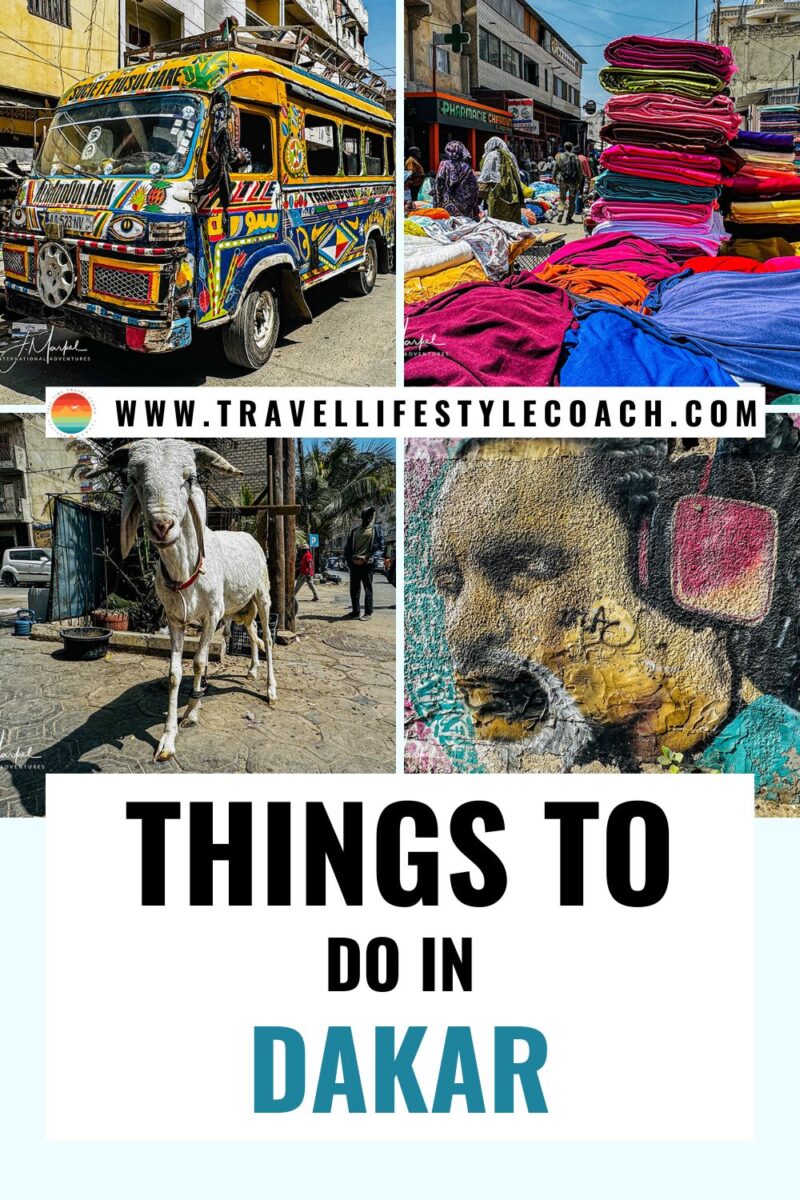
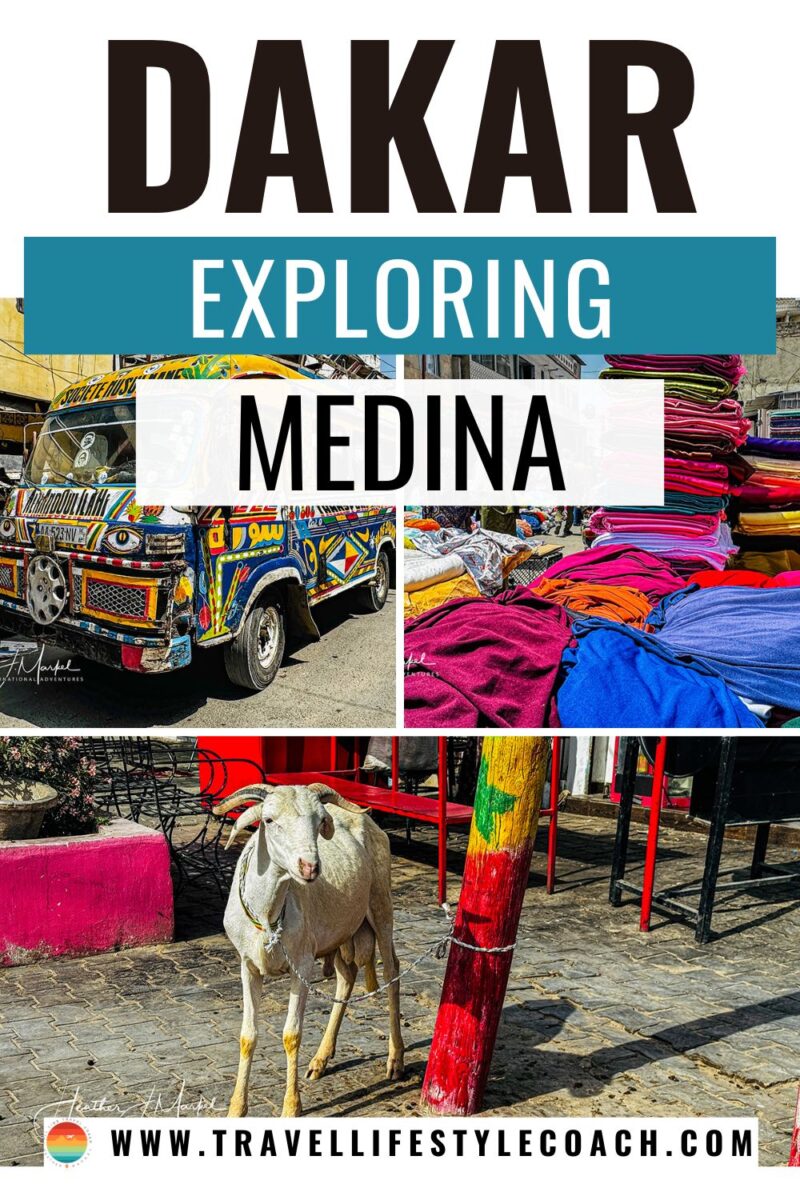
Colorful fabrics line the streets. Between the vendor tables full of African patterns and flowing fabrics full of shapes, and the women carrying babies on their back, dressed in gorgeous clothing, I don’t know where to look. I have to get some photos and am careful to attempt to only get the backs of people. I also spy one of the communal buses that every souvenir shop has a model of, and it’s really cool in person.
This is when I realize something else. Coming to Senegal I had the impression there were pickpocketers everywhere, and bought underwear with a zipper pocket, and a Money pouch I wear under my shirt. There may be pickpocketers, but I don’t experience any, the entire time I’m in Senegal, and a crowded market seems like an ideal place for them to be.
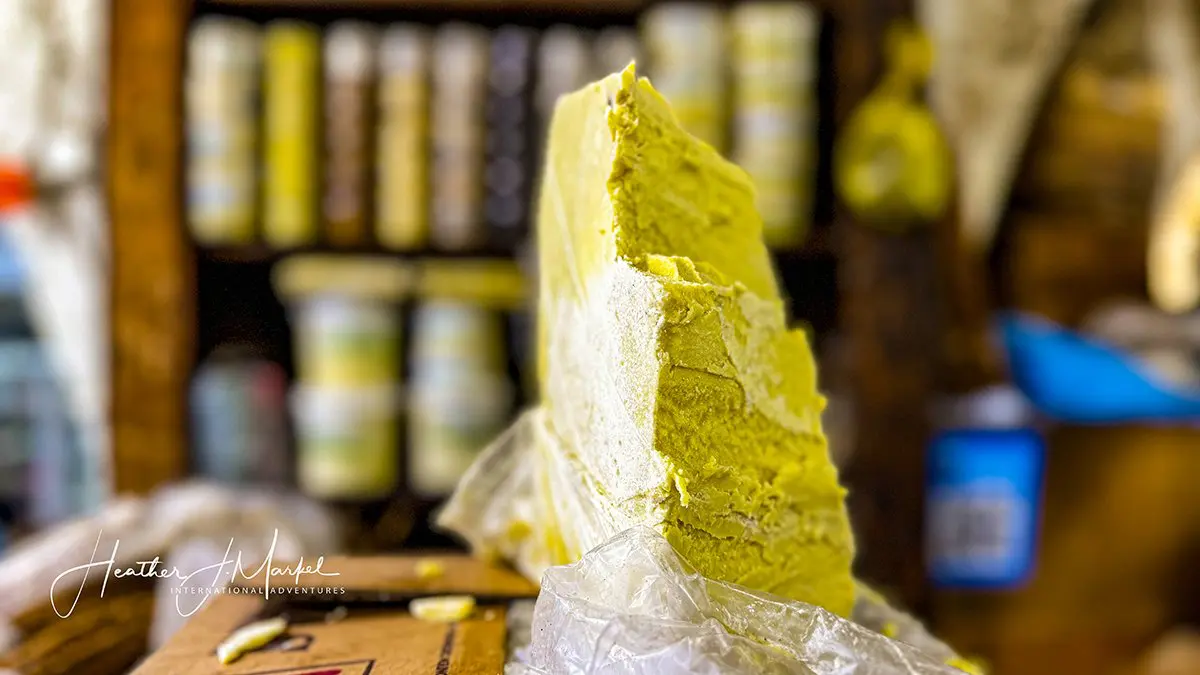
Eventually, as we begin to tire of the crowds, we find ourselves at an indoor jewelry market. This is the last place I expected to find an item high on my purchase list – African shea butter! I happen upon what looks to me like the most authentic shea butter I have ever seen. There’s a woman, a giant chunk of shea butter on display, and hundreds of containers full of it. I end up buying a giant 1 kilo vat of it. In the US, it would easily cost over $25. Here, it’s $7.
Taking a queue from earlier today, I ask the shop owner if I can take a photo of the shea butter chunk, instead of just doing it. She tells me she does not want to be in the photo and makes me show it to her. I ask her why so many people here seem to dislike being photographed (caveat – some of them are ok with it, but only if you pay them). She explains that she doesn’t want her photo used for nefarious purposes, and hates the thought that her image could end up somewhere on Facebook without her knowing. Point taken. I only photograph the backs of people, or else, ask permission from this point onwards. It means there are a lot of great photos that will be eternally stored in my human memory instead of the cloud.
Neither of us has spotted any sewing machine shops, the supposed tailors in the area. At this point though, we’re both burned out by the crowds, and I realize I don’t want to come back here to pick up clothing. While I love this market, and highly recommend it, once is enough. So, we head away from the market, onto a sand-covered street, onto another side street where we find….goats. Everywhere we look, there are goats tied to street poles. It’s quite a site! Happily, the goats don’t mind being photographed. Also, technically, I think they’re sheep, but they look like goats to me, so I’m confused. Who cares?! They’re adorable. I’m obsessed and take photos of every goat I see until….I find cows tied to poles in the street. Then I go nuts taking their photos. I presume, sadly, that all this livestock will be brought to a nearby butcher. I try to put it out of my mind as we pass through what feels almost like the streets of a village farm, rather than a major city.
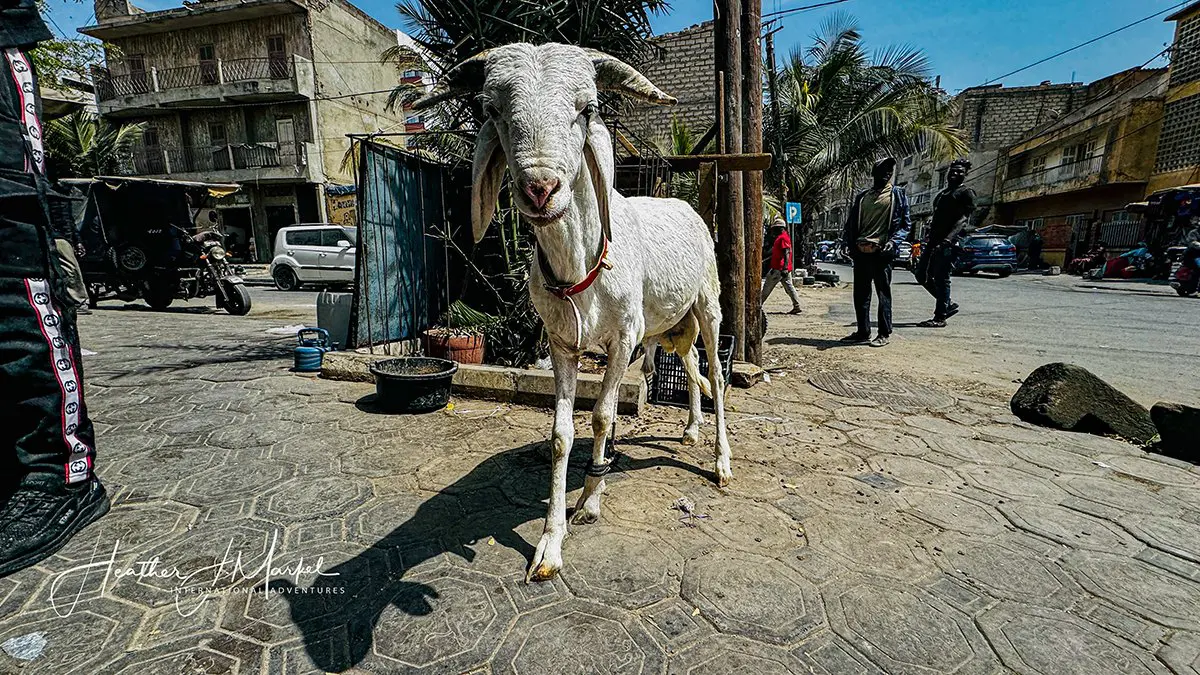
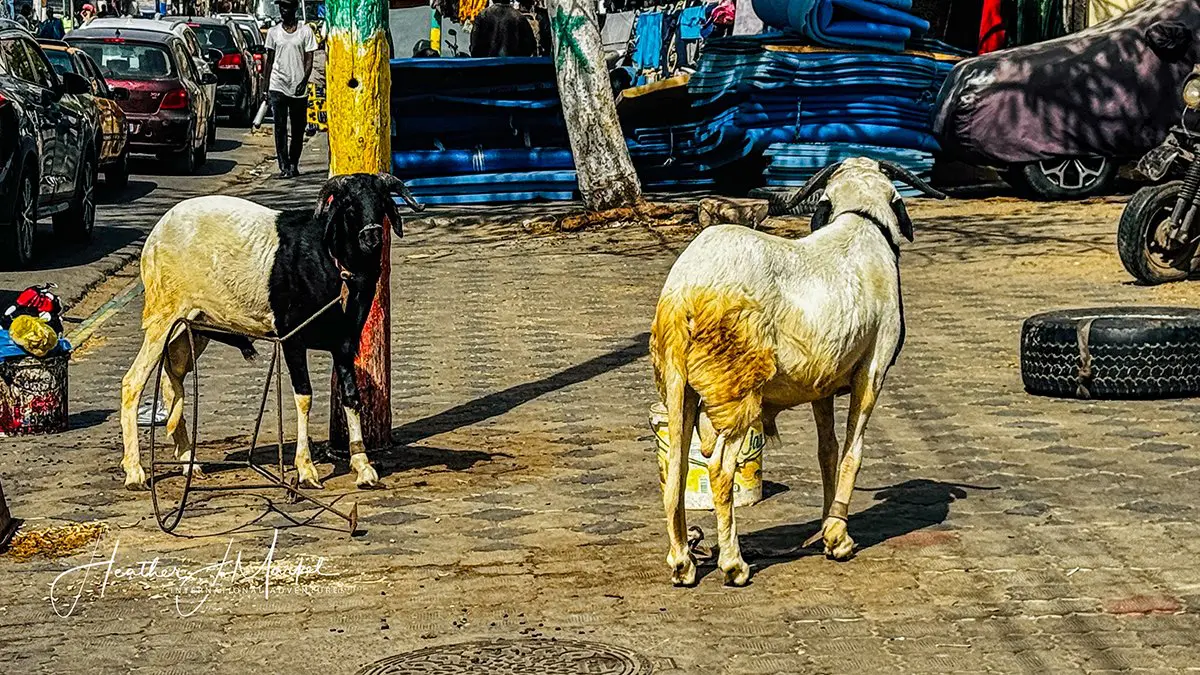
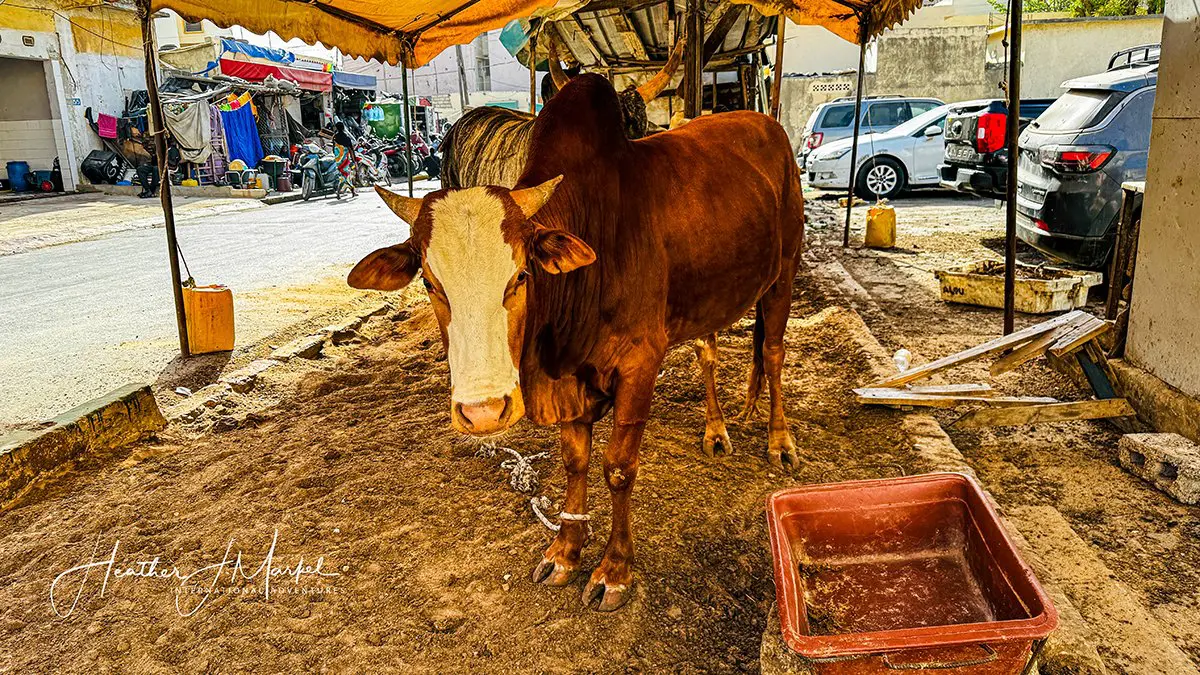
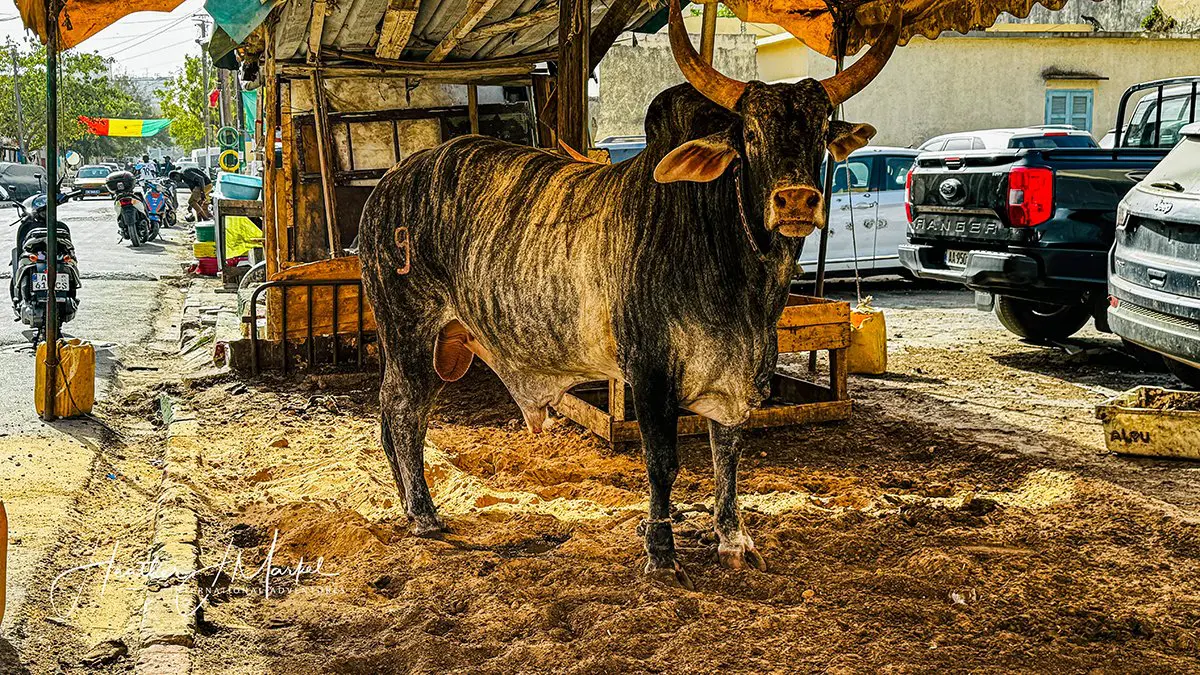
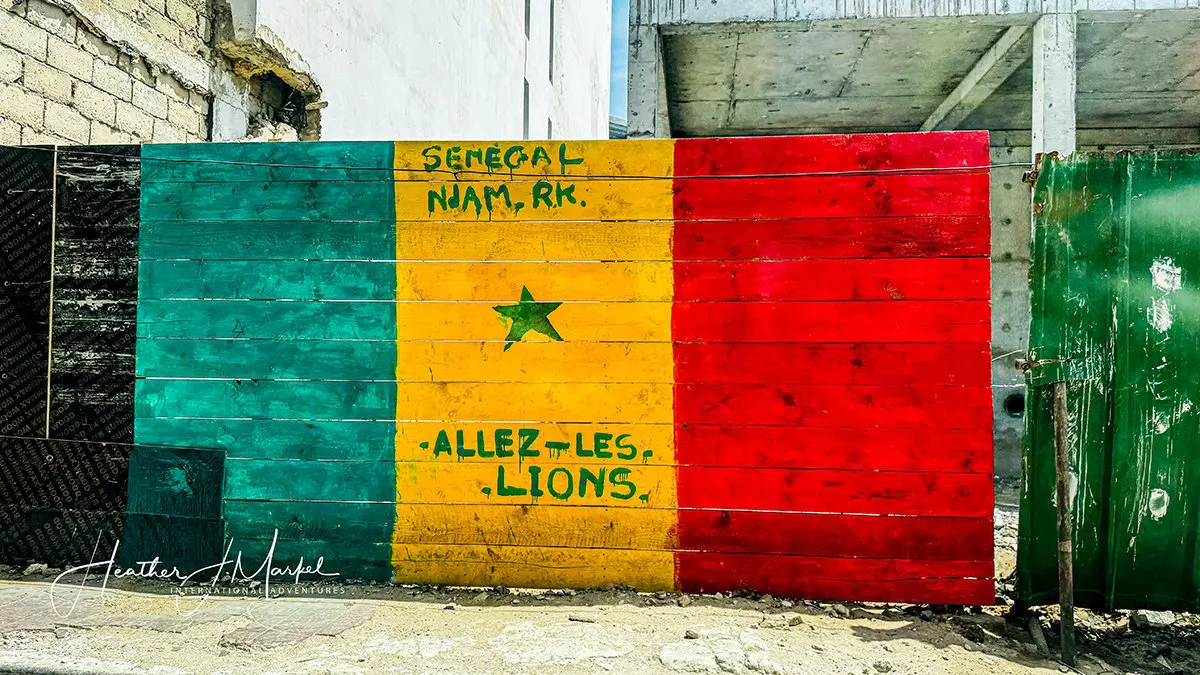
The other thing we find along our walk is street art. It’s gorgeous. There is some serious artistic talent in this city.
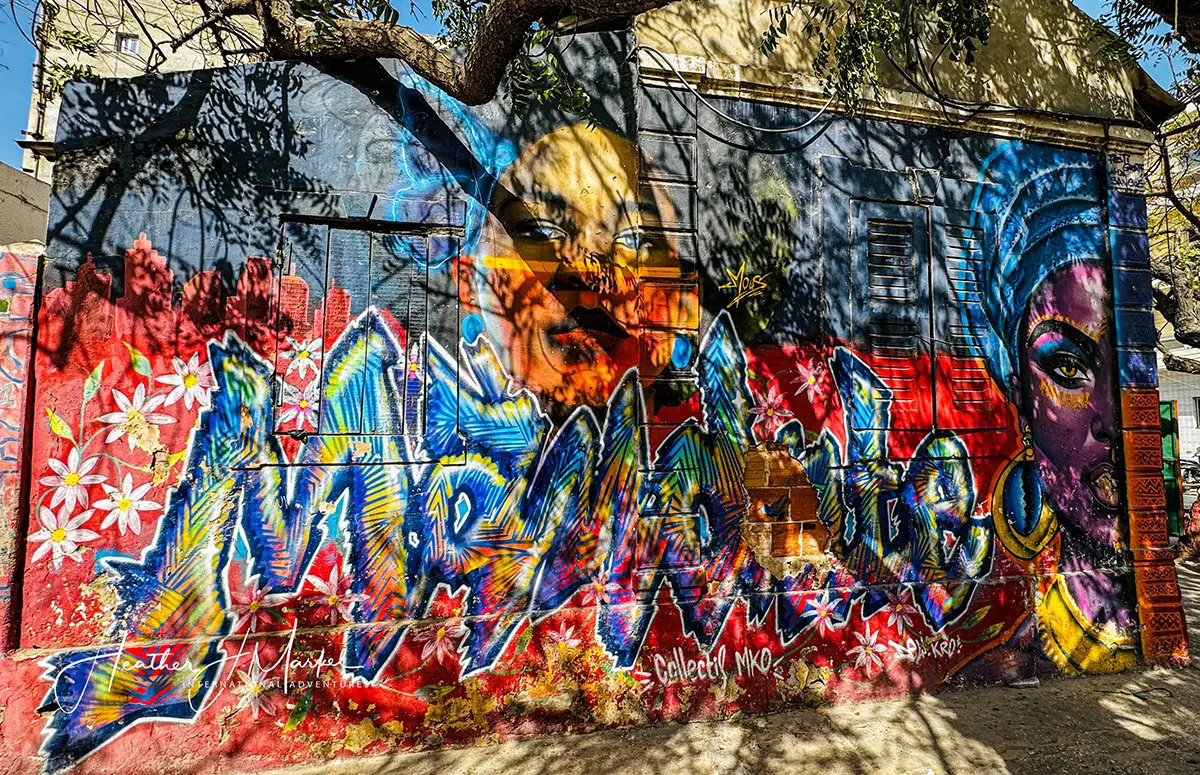
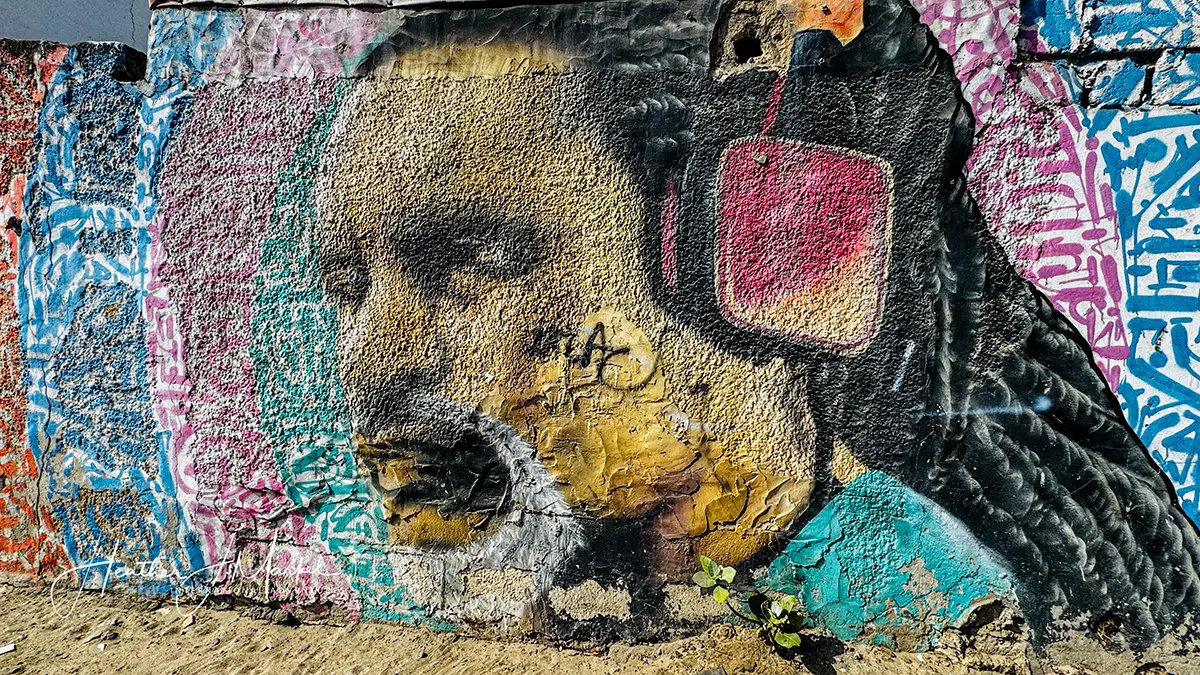
Julie and I grab a Yango back to the hotel. The sun is setting as we drive along the Corniche and its views of the Atlantic Ocean. I almost chuckle when the driver randomly asks us why people like us like to take photos of the sunset. The way he phrases the question, I’m not sure if he means tourists, or white people. I love his question because I take it totally for granted that I love sunset and golden hour photos, and he challenges me to think of the why behind my actions.
I head out for a walk in the Oukam area near our hotel and try to find someplace we can enjoy dinner. I enjoy the sun setting on the sandy streets, passing by a mosque, and we end up eating at a lovely Moroccan restaurant, Les Delices de Nazha. I forgot to mention it’s Ramadan. So, when we arrive at the restaurant, after seating us, the host asks if we could kindly be patient for about 20 minutes. During Ramadan everyone fasts all day, so they’ve just sat down to their meal for the day. We of course oblige, and the food is well worth the wait.
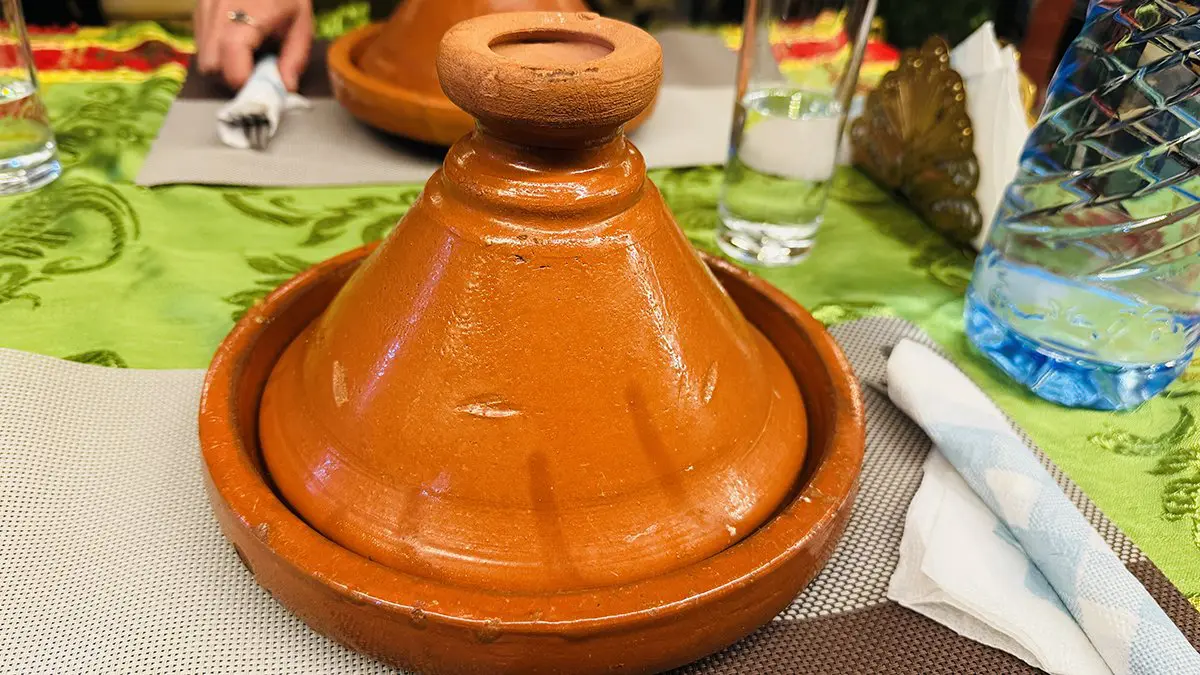
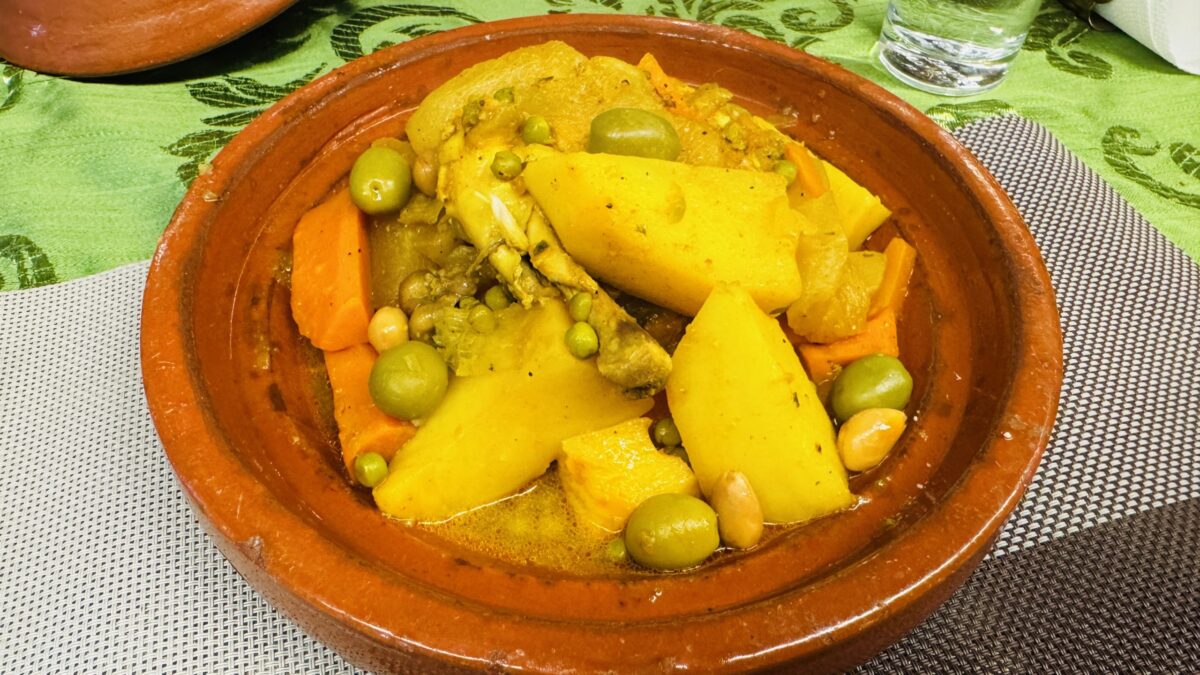
And that’s a wrap of my second day in wonderful Dakar.
Find out in 2 minutes
The post Things to Do in Dakar, Senegal: Marché Tilène, Street Art and Local Life appeared first on Expert Travel Lifestyle Coaching – How To Travel Full-Time.
Originally Published on https://heatherbegins.com/