

New benchmark data names MDASH and Claude Mythos Preview are the top AI agents finding zero-day vulnerabilities of 2026. They find software bugs better than any human can, in less time, with more proof than every before. Here is what that means for your organization, and what you can do about it today.
A few years ago, finding Security holes in a network took a skilled human weeks of focused work. Today, AI systems do that same job in minutes, without breaks, without billing by the hour. The 2026 CyberHoot Threat Intelligence Advisory confirms what security teams have been watching closely: autonomous AI can now discover, validate, and chain vulnerabilities at a speed no human team alone can match.
The good news is that the same AI doing this for attackers is also available to defenders. Organizations that put it to work on their own systems first come out ahead. Those that wait give attackers a head start they should not have.
CyberGym’s AI Security Benchmarks tested five leading AI platforms on their ability to support autonomous threat detection and defense. MDASH scored 90% and Claude Mythos Preview scored 85%, putting them well ahead of the next closest platform. These scores reflect how well each tool handles the full chain of modern threats: finding weaknesses, prioritizing them, and coordinating responses across multiple attack surfaces at once.
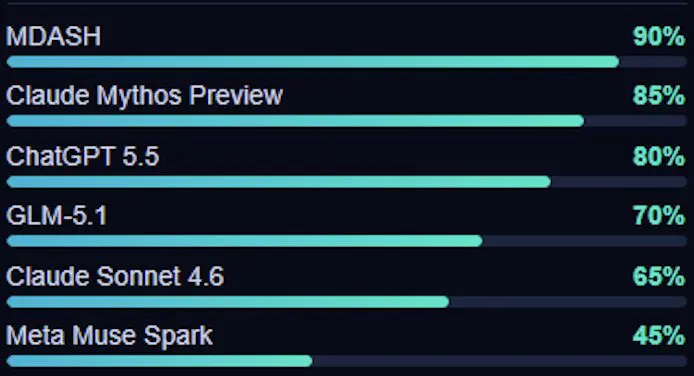
For organizations using a virtual CISO, or thinking about it, these benchmarks offer a practical starting point for tool selection. A 25-point gap between the top and bottom platforms is not noise. It reflects real differences in how well each tool supports your security team’s day-to-day work.
Palo Alto Unit 42 found that attackers begin scanning for newly disclosed vulnerabilities within 15 minutes of public release. A decade ago, your IT team had days to respond. Today, the window is shorter than a lunch break. AI-powered tools like MDASH and Mythos Preview, when released, (Mythos General Availability Announcement) will help you close that window by finding your own exposed systems before anyone else does.
The best time to find a hole in your fence is before the neighbor’s dog does. AI tools give your team the same scanning ability attackers already use, pointed in the right direction.
The advisory groups its recommendations by urgency. The four most critical actions are patching faster, eliminating unnecessary internet-facing services, isolating your most sensitive systems, and removing unused admin rights. These are not expensive steps. They are consistent habits that reduce your exposure whether or not you have an AI security tool in place.
The next tier adds value quickly too. Using AI to scan your own environment before attackers do, archiving data you no longer need, deploying detection tools that alert the moment an intruder moves, and reviewing your vendor security practices all fall into this group. Rounding things out, testing your backups routinely, practicing your incident response plan, training your team on phishing and MFA, and checking that your cyber insurance policy reflects your actual setup complete the list.
None of these require a large IT department. Most require a decision and a calendar reminder more than a budget line.
The organizations that strengthen their security posture today will face far less disruption tomorrow. You do not need to implement all 12 actions this week. Picking one critical action and completing it puts you meaningfully ahead of organizations doing nothing. Progress beats perfection every time.
We all have a small window of opportunity to prepare for the storm that is coming. The more we prepare for breaches, limiting internal network data, reducing attack surfaces, deploying Honeypots to discover breaches when they inevitably occur, will provide you a clear path through the storms with the least disruption possible.
The post AI Found Your Weaknesses. Let’s Fix Them First. appeared first on CyberHoot.