

After a year filled with headlines, arguments, and outrage, it’s easy to believe that dysfunction is inevitable — that chaos is just the cost of governing a large, divided country.
It isn’t.
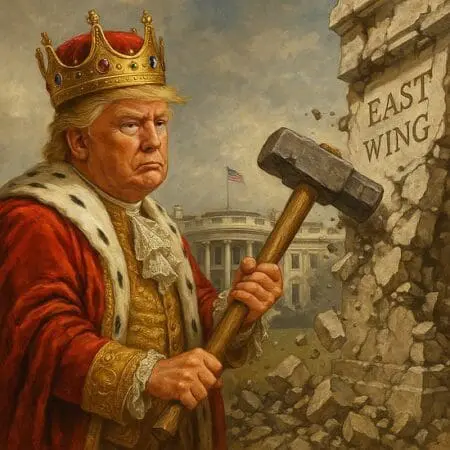
What Americans experienced in 2025 wasn’t the unavoidable result of hard choices in a difficult world. It was the predictable outcome of bad priorities, misdirected power, and a governing philosophy that confused toughness with effectiveness.
Alternatives have been visible all along.
Dysfunction is not unavoidable. We’ve confused (or permitted) cruelty for strength, chaos for authenticity, and personal gain for national interest. Competence has no ideology—it doesn’t belong to the left or the right. America needs policies that solve the problems they claim to address without creating bigger ones down the road. Application of that standard, alone, would have made 2025 far less divisive and chaotic.
Competent policy doesn’t brag about cuts while quietly shifting the burden to citizens who can least afford the cost.
When healthcare subsidies are weakened, costs don’t disappear — they reappear in emergency rooms, higher premiums, and unpaid hospital bills that everyone else absorbs.
When environmental safeguards are loosened, pollution doesn’t vanish — it shows up later as asthma, Heart Disease, Cancer, and disaster recovery costs that dwarf the original “savings.”
Public Health should be an infrastructure question, not a cultural one. Few policy failures in 2025 were as costly as the slow erosion of public health. Healthcare affordability was weakened. Vaccination policies were muddled. Environmental protections were rolled back. Individually, the government has made Americans less healthy, illness more common, and care more expensive.
A competent government treats public health the way it treats roads or power grids:
as infrastructure that must function for everyone, all the time.
A competent government asks this simple question before acting:
Who ultimately pays?
In 2025, the answer was too often: ordinary Americans.
Competent leadership enforces the law — but it does so strategically, not performatively.
Border enforcement that overwhelms courts, ignores due process, and treats chaos as deterrence doesn’t strengthen the rule of law. It weakens it.
Crime policy that favors militarized optics over evidence-based prevention doesn’t make communities safer. It makes them distrustful.
Competence means:
Trust is the currency of self-government. Once it’s gone, little works properly.
That’s why competent governance draws bright lines:
You don’t need proven corruption for damage to occur.
The appearance alone corrodes legitimacy — and invites cynicism, disengagement, and instability.
Military power, sanctions, and alliances are not props.
They require:
Escalation without accountability isn’t strength—it’s risk disguised as resolve.
Competence abroad looks like ethical negotiations for the public good, and restraint with purpose. It is not foreign Travel that blurs the line between self-interest and the public interest or military bravado without a coherent plan or congressional oversight.
The central lie of the last year is that Americans must choose between:
These are false choices.
A competent government delivers all.
Bad policy made 2025 a difficult year for the majority of Americans. Better policy doesn’t require reinvention, revolution, or blind faith. It requires competent leaders who choose outcomes over optics, people over posturing, and sensibility over chaos.
Bad policy isn’t destiny. It’s a choice. And the opposite of bad policy isn’t ideology.
It’s competence.
Good choices are still available. They always have been.
In 2026, educate yourself on the important issues of the day. Share your concerns loudly.
Exercise your vote wisely.

Mark M. Bello is an attorney and award-winning author of the Zachary Blake Legal Thriller Series, ripped-from-the-headlines, realistic fiction that speaks truth to power and champions the rights of citizens in our justice system. These novels are dedicated to the social justice movement. They educate, spark discussion, and inspire readers to action. One of these novels, Betrayal High, was written in response to school shootings. For more information, please visit www.markmbello.com.