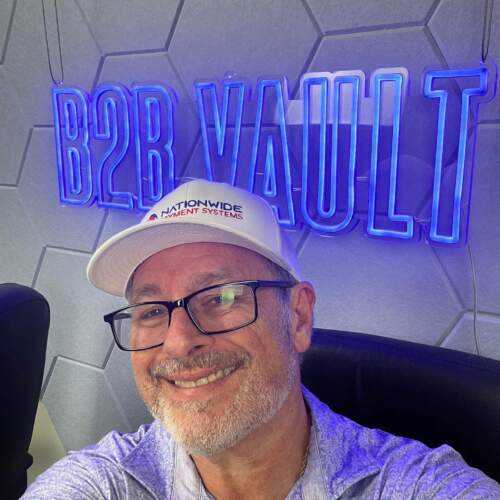

B2B Vault: The Biz-to-Biz Podcast — Hosted by Allen Kopelman
In the high-risk sector, the primary cause of approval delays is the manual nature of the underwriting review. For a merchant selling CBD or hemp, a human underwriter must manually verify hundreds of Certificates of Analysis (COAs), check website marketing claims against FDA and FTC standards, and ensure all mandatory checkout disclosures are present. In 2026, this “guesswork” approach often leads to two outcomes:
Extended Delays: Applications sit in queues for weeks as underwriters request missing or updated documentation.
Sudden Shutdowns: Merchants approved through automated “low-friction” systems are often terminated weeks later when a human review eventually catches a compliance gap.

The regulatory environment in 2026 is specifically impacted by the recent federal spending bill, which introduced a “total THC” standard. This law effectively restricts finished hemp-derived products to no more than 0.4 milligrams of total THC per container. This change has put nearly 95% of the existing intoxicating hemp market at risk. For these merchants, staying operational is no longer just about sales—it is about proving compliance with these precise federal and state limits in real-time.
Noah Fitzgerald and the Qredible team have introduced a shift in how compliance is handled. Rather than a static scan, their system provides a continuous “Q-Trust” ecosystem.
Automated COA Management (MyCOA): Instead of storing documents in scattered folders, Qredible digitizes and validates COAs directly from laboratory data. Using blockchain Technology, it ensures these “report cards” are immutable and tamper-proof.
Website Integrity Audits: The system identifies specific deficiencies—such as missing card brand logos, incorrect refund policies, or illegal Health claims—allowing merchants to fix issues before an underwriter sees them.
Continuous Monitoring: Because websites and regulations change weekly, Qredible provides ongoing oversight. If a new customer review introduces a “cure” claim or a state law shifts, the merchant is alerted immediately.
The “Q Certification” functions similarly to LegitScript but is specifically tailored for the broader regulated product market. It provides a portable, verified compliance package that merchants can share with banks, processors, and insurance providers. This certification signals to financial institutions that the merchant is a “known quantity,” significantly accelerating the onboarding process and reducing the risk of being placed on the MATCH list (Terminated Merchant File).
A major flashpoint in 2026 is the explosion of the THC-infused beverage market in grocery stores, bars, and event venues. While this category offers high revenue potential, it attracts intense enforcement attention. Success in this niche requires the ability to prove compliance at the product level—matching every batch number to a valid, compliant COA instantly.
_____________________________________________________________________________________________________________________________________
Smart Invoicing by Nationwide Payment Systems: ClickBillR – Syncs with QuickBooks Online
Book a call with Allen Kopelman: calendly.com/allen-nps
Guest: Noah Fitzgerald on LinkedIn
CLICK HERE TO FIND MORE ABOUT OUR PROGRAMS
Because underwriters often must manually review your website, product pages, marketing claims, and COAs (Certificates of Analysis). If anything is missing or unclear—COAs, policies, disclosures, shipping/returns, claims—approval slows down or stops.
A COA is a lab report showing what’s actually in a product (potency, ingredients, THC levels where relevant, contaminants, etc.). Processors and banks use COAs to reduce legal/regulatory exposure and ensure products meet program rules.
Typical deal-killers include missing COAs, expired COAs, aggressive health claims, missing terms/privacy/refund/shipping policies, missing contact info (phone/email/address), unclear checkout disclosures, and product pages that don’t match supporting documentation.
Approval is a moment in time. Staying approved means ongoing compliance—because websites change, products get added, reviews get posted, and regulations shift. Many shutdowns happen after approval when something new puts the business out of compliance.
Commonly: FTC (advertising/claims), FDA (manufacturing/product standards), DEA (controlled substances enforcement), plus state-level rules. Banks, card brands, and processors also set their own requirements.
Sometimes underwriters miss a product, a COA detail, or a claim during the first review—or the merchant adds a product or changes language after approval. When a later review finds an issue, the processor may suspend the account or hold funds until it’s fixed.
Q Certification (as discussed in the episode) is intended to be a verified, auditable compliance package covering products, COAs, marketing, and licensing—designed to speed underwriting because the compliance risk is already documented and continuously monitored.
Point-in-time tools may flag issues once, but websites and products change constantly. Qredible’s approach (as discussed) focuses on identifying specific deficiencies and supporting ongoing monitoring—more like “fire prevention” than “firefighting.”
Yes. Reviews that claim a product “cured” something or makes medical promises can create FTC-style advertising/claims issues—even if the merchant didn’t write the review. Monitoring and managing claim language across the site matters.
Get your house in order first: organize COAs, remove risky claims, ensure your website policies and contact info are complete, verify checkout disclosures, and confirm product legality (including state-by-state rules when applicable). The cleaner your compliance package, the faster you’ll onboard and the easier it is to scale.
document.querySelectorAll(‘.et_pb_toggle_title’).forEach(title => {
title.addEventListener(‘click’, () => {
const parent = title.parentElement;
const content = title.nextElementSibling;
if (parent.classList.contains(‘et_pb_toggle_open’)) {
parent.classList.replace(‘et_pb_toggle_open’, ‘et_pb_toggle_close’);
content.style.display = ‘none’;
} else {
parent.classList.replace(‘et_pb_toggle_close’, ‘et_pb_toggle_open’);
content.style.display = ‘block’;
}
});
});
document.querySelectorAll(‘.et_pb_toggle’).forEach(toggle => {
const content = toggle.querySelector(‘.et_pb_toggle_content’);
if (toggle.classList.contains(‘et_pb_toggle_close’)) {
content.style.display = ‘none’;
}
});
The post As Seen in b2b vault: High-Risk Merchant Compliance 2026: Avoiding Shutdowns with Qredible appeared first on Customized Payment Processing Solutions.