


What’s Inside?
Why decades of brain-computer research are starting to break through
The promise vs. peril of neurotech: clinical gains, consumer fears and ethics
Whether BCI can find its own ChatGPT moment
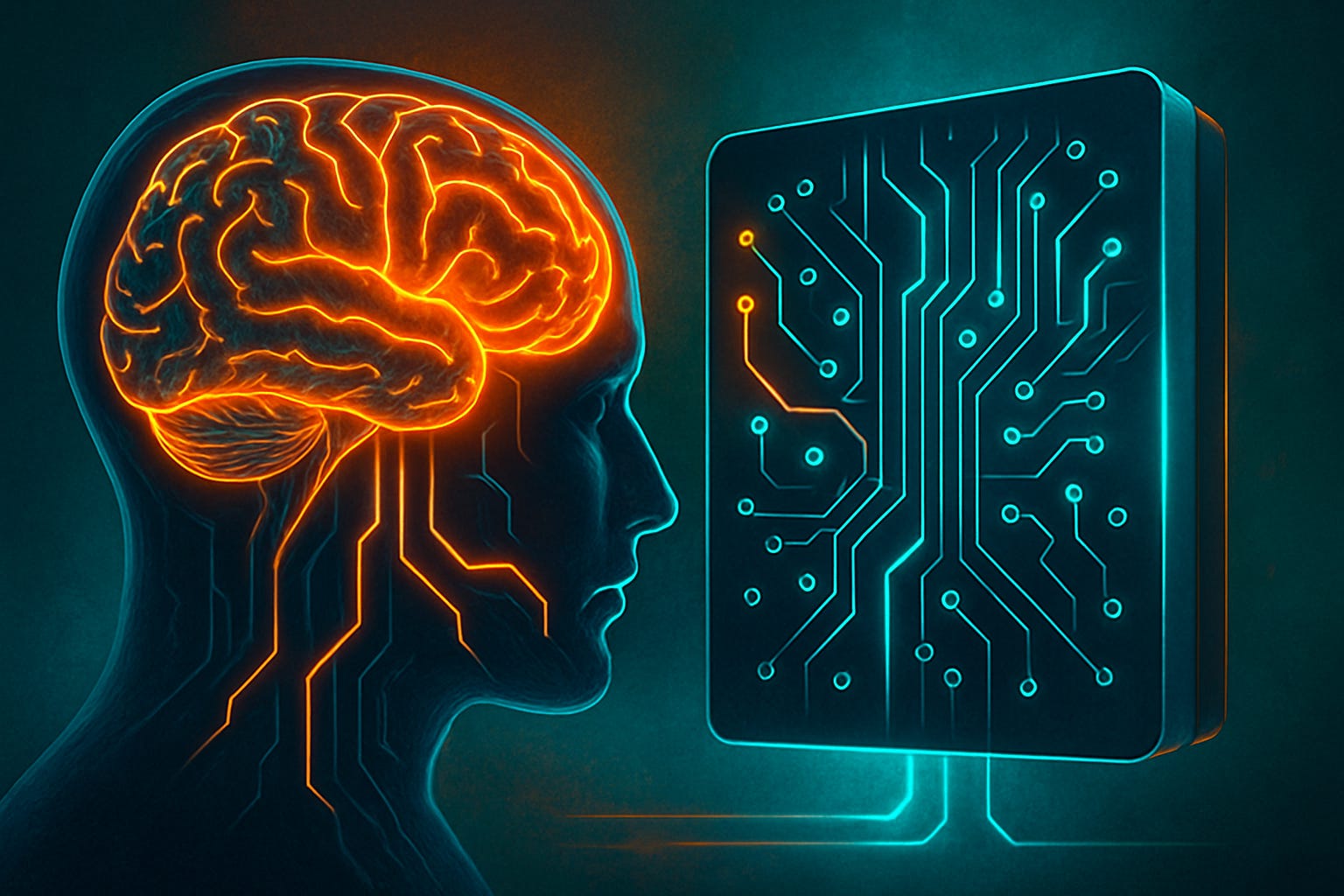
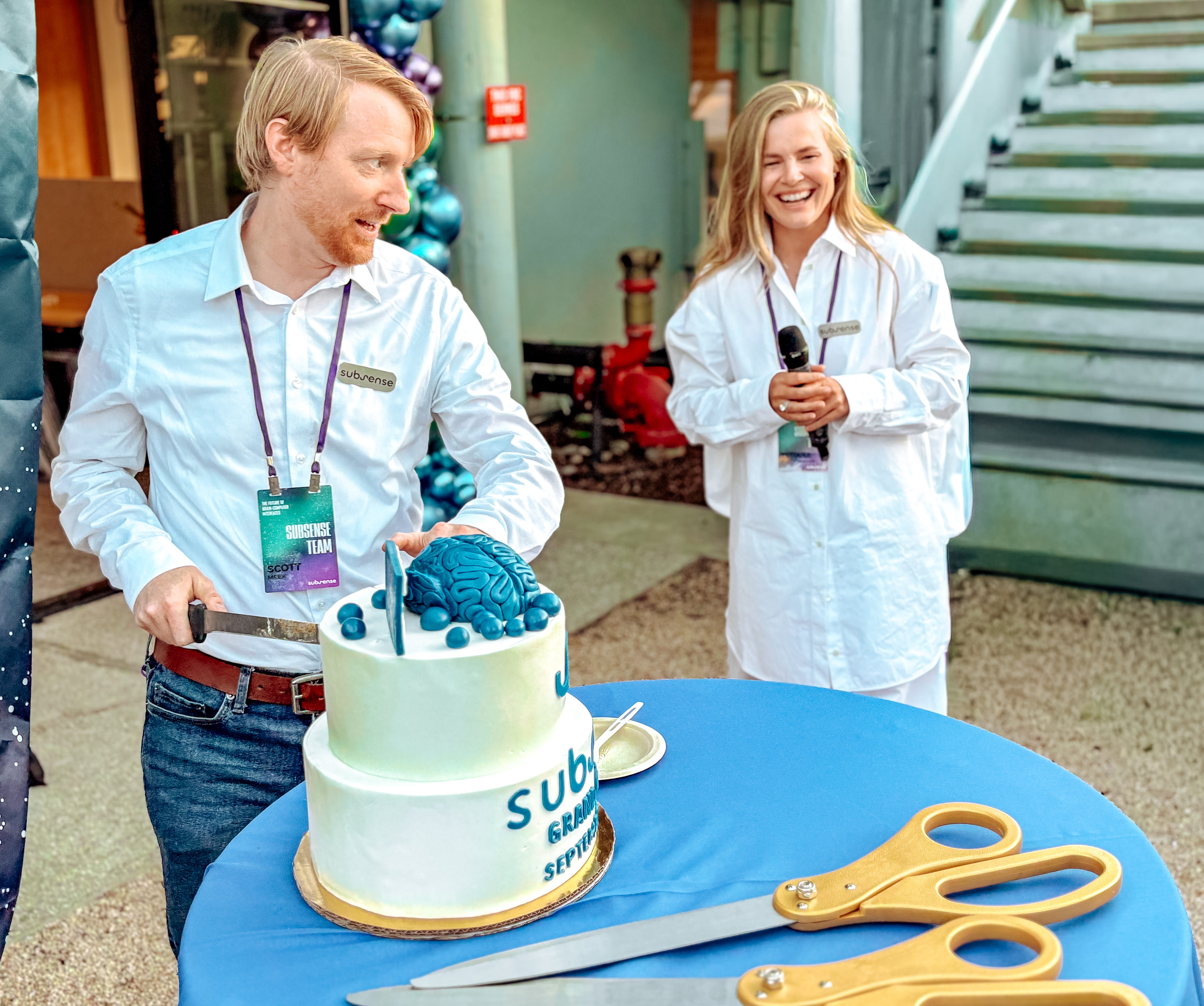
In Palo Alto this week, the neurotech startup Subsense opened its new lab with a panel on the future of brain-computer interfaces (BCI).
Between the scientists, founders and investors on stage, there was plenty of brain power on display.
The vibe at the event reflected excitement and caution: the neurotech field is moving “faster than science fiction,” as the organizers put it, but real breakthroughs may still be years away.
Subsense itself only emerged from stealth in February, raising $17 million in seed funding to develop a non-surgical, nanoparticle-based BCI. The company, co-founded by CEO Tetiana Aleksandrova and investor Artem Sokolov, is working with UC Santa Cruz and ETH Zurich to advance the approach. The new lab, located near the Baylands and the Palo Alto Airport, is meant to accelerate that work.
The panel of seven speakers was moderated by Naveen Rao, a neurotech writer and analyst (he publishes the Substack Neurotech Futures). And a theme that surfaced early was how many ideas are sitting on the shelf waiting to be commercialized.
“There’s a backlog of good work and good ideas on the empirical side of the science,” said Vikash Gilja of Paradromics. “As devices and pathways mature, that backlog is going to start to surface.”
Attendees I spoke with before the panel began made the same observation to me: years of Innovation and lab work are closer to the market.
But how quickly the field moves, and what direction it takes, is an open question. Uncertainty remains about how quickly, if at all, a cautious FDA will approve such Technology.
Max de Vere, an investor with UK-based re.Mind Capital, said consumer use cases will eventually emerge, but for now clinical applications are where progress will stick.
“You can restore movement for paralyzed patients, help people communicate again, those are the first areas that make sense,” he said.
He acknowledged the futuristic visions of intent-driven interfaces that could tap into mood or cognition, but said that’s “a long road” ahead.
That long road, of course, is what fuels the public’s imagination, as well as their fear.
If AI has been shadowed by dystopian comparisons to Terminator and Her, BCI already has its cultural touchstone: Severance, the Apple TV+ show about surgically splitting work and personal lives through a brain implant.
The panel didn’t bring it up, but the shadow of invasive brain implants lingered.
Amy Peck, a futurist and consultant, drew a comparison to AI and ChatGPT. Part of ChatGPT’s breakthrough was sheer ease of use, she noted: anyone could open a browser and try it.
“The question is whether BCI can get to that same level of accessibility,” she said.
As of now, she added, the technology still feels like a “great solution looking for a problem,” especially in consumer contexts like behavior and addiction.
Other speakers pressed on costs and timelines. Daniel Palanker of Stanford reminded the audience that some retinal implant technologies took 20 years and more than $200 million to commercialize. Sergey Stavisky of UC Davis countered that restoring speech with BCI has advanced much faster, building on decades of prior research and existing electrode arrays.
The uneven pace of development underscores how some areas may leap forward while others remain stuck.
And then there’s the Money question, and not just how much capital it takes to bring ideas to market, but whether companies will survive once they get their ideas approved for use.
Stavisky put it plainly during a lightning-round question: “Unless companies are making money, this won’t move forward.”
The promise of neurotech is hard to ignore.
Restoring vision, movement or speech for patients are all life-changing technological advancements that generative AI can’t lay claim to.
But the peril of BCI is equally clear. Ethical questions around data, consent and manipulation aren’t abstract. Peck warned that the industry can’t repeat the mistakes of past technologies, where data was mishandled and safeguards came too late.
“Now is the time to look at the ethical constructs,” she said.
The panelists disagreed on how urgent those ethical questions are, but all acknowledged that neurotech’s trajectory is not just purely technical. Market forces, regulatory hurdles and public perception all combine to shape its future just as much as the scientific breakthroughs.
Which brings us back to my opening question in the headline: Will BCI have its ChatGPT moment that vaults it into the public sphere? The backlog of ideas is breaking open, but the path to mass adoption is far from clear. The field is currently defined by a mix of high-stakes and remarkable clinical progress, as well as speculative consumer scenarios.
At Subsense’s opening, which included long lines for the lab tours, optimism ran high. The demos and the panel brought together a community eager to push boundaries.
But as one speaker reminded the crowd, the breakthroughs we’re seeing today rest on decades of incremental work.
For now, BCI feels less like a lightning strike and more like a steady climb, a path that could still make the extraordinary feel routine.
