
The Vietnam War wasn’t something I chose—it was something that chose me. My life’s trajectory shifted in a single moment when a simple letter arrived in the mail. That moment would plant seeds of change, not just for my youth, but for the rest of my life. While some people’s young adulthood is marked by college graduations, first jobs, and carefree adventures, mine was defined by olive drab uniforms, jungle humidity, and the sound of helicopters cutting through the thick air. Decades later, I still live with the effects. Some are visible, like the limp from an old injury, and others are invisible, like the way certain sounds can pull me right back to the battlefield. The Vietnam War didn’t just take years from my life—it reshaped my identity, my values, and my relationship with the world.
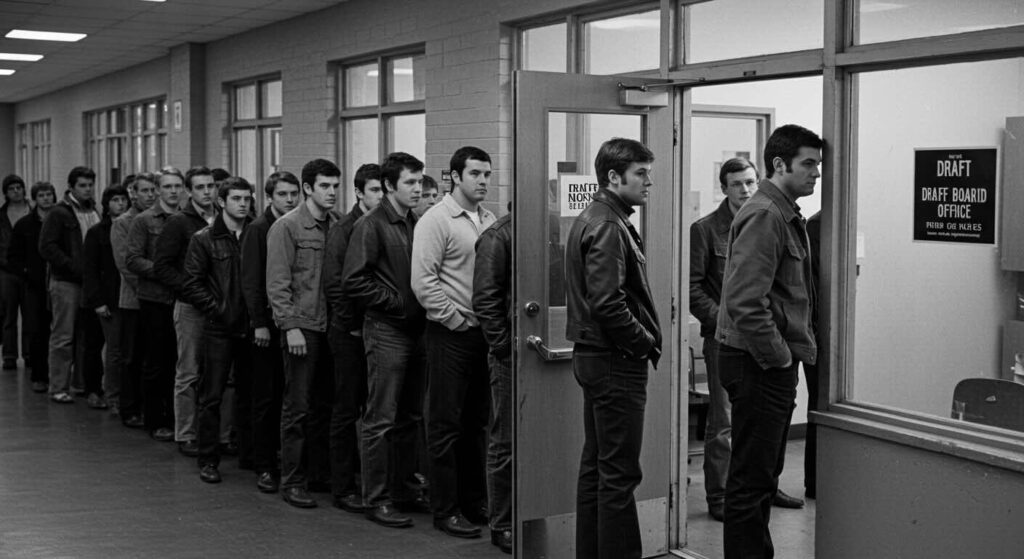
There’s a before and after in my life, and it’s separated by the day I opened my draft notice. Before that, I was just a young man trying to figure out my future. After that, my life belonged to the U.S. government. I can still remember the moment—sitting at the kitchen table, peeling open the envelope with my name printed in stark, formal letters. My mother was in the room, humming as she cooked dinner, and I had no idea that within seconds, the air between us would turn heavy.
The letter was short, almost businesslike: “You are hereby ordered for induction into the Armed Forces of the United States…” It felt surreal. Just like that, my plans for the future evaporated. College was postponed. Friendships would be put on hold. My youth, as I knew it, was over. It wasn’t just me—thousands of young men received similar letters every month. But when it’s your name on the paper, it feels personal, as if fate reached out and tapped you on the shoulder.
In the 1960s, every young American man knew about the Selective Service System. If you were a male between 18 and 26, you were required to register. The draft was essentially a lottery, but unlike winning the Powerball, this “win” came with a uniform, a rifle, and a one-way ticket to Southeast Asia.
The draft boards were local, often made up of community members who determined who was fit for service and who might qualify for deferment. College students could get temporary relief, but once their studies ended—or if they fell below full-time status—they were back in the pool. Some men found ways to avoid service entirely like my two cousins who joined the National Guard so they would not get drafted, while others worked hard in seeking medical exemptions, and others left the country for Canada to avoid the draft.
On December 1, 1969, the system shifted to a national lottery. It was the first such lottery since World War II and was broadcast live on national television. Birthdates were drawn randomly to determine the order of conscription for men born between January 1, 1944, and December 31, 1950, for this first lottery. I was involved in the third annual lottery which was held on July 1, 1971. In the 1971 lottery, the Selective Service called up men with lottery numbers 1 through 95. My number was 74. I remember sitting with friends, listening to the radio announcer read the dates. Each time a number was drawn, someone in the room would either sigh with relief or stare at the floor in silence. When my birthdate was called early in the sequence, my stomach dropped. There was no more wondering, no more hoping. My fate had been decided. The final draft lottery was in 1972, and the last person was officially drafted on June 30, 1973. After that, the Selective Service announced there would be no further draft calls.
Boot camp was where boys became soldiers—or at least, that’s what the drill sergeants promised. The first weeks were a blur of shouting, physical exhaustion, and strict discipline. Every ounce of individuality was stripped away, replaced by uniformity and obedience. We learned how to handle weapons, march in formation, and survive in hostile environments. But perhaps more importantly, we were taught not to question orders. That mental shift—from independent thinking to instant obedience—was one of the biggest adjustments.
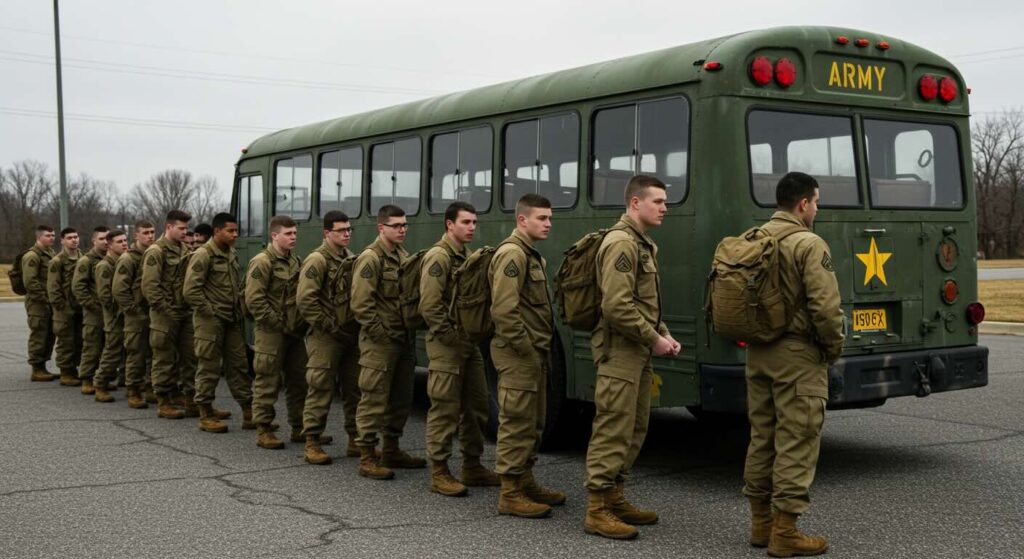
Saying goodbye was brutal. I hugged my Family, shook hands with friends, and boarded a bus full of young men who all looked just as scared as I felt. We tried to joke around to lighten the mood, but every mile brought us closer to a reality none of us could fully comprehend. It’s strange how quickly you learn to live without the comforts of home. Civilian clothes, favorite meals, and lazy Sunday afternoons became luxuries I wouldn’t see for a long time.
Landing in Vietnam was like stepping onto another planet. The heat and humidity hit like a wall, and the air smelled of wet earth, diesel fuel, and something metallic I would later recognize as the scent of war. The jungle was alive—buzzing insects, rustling leaves, and the distant sound of artillery fire. The first few days were overwhelming. I had trained for combat, but nothing could truly prepare me for the chaos. Patrols through dense foliage meant every rustle could be an enemy. Every path could hide a trap. The Viet Cong knew the terrain intimately, and their tactics were unpredictable.
We slept in short shifts, ate whatever we could carry, and learned to keep our gear dry at all costs. Letters from home became lifelines, little pieces of normal life that made the heat, exhaustion, and fear bearable. War in Vietnam wasn’t just about battles—it was about enduring an environment designed to break you down. Malaria, infections, and leeches were just as much enemies as armed combatants. But above all, it was the constant uncertainty that wore on you. You could be laughing with a buddy one moment and under attack the next.
In that environment, bonds between soldiers became unbreakable. We depended on each other for survival. The guy next to you wasn’t just a fellow soldier, he was the reason you might make it home alive. We shared everything: water, cigarettes, even quiet moments staring up at the night sky. We learned to read each other’s faces, to recognize the subtle signs of fear or fatigue. Those friendships went deeper than any I’ve had since. I lost friends out there—good men whose names I still remember. Their absence stays with me. And it’s because of them that I’ve always carried a certain sense of responsibility to live my life fully.
Being drafted taught me that life can change in an instant, and you have to adapt. That resilience became part of who I am. I take pride in having served, even if I didn’t choose to go. The military instilled discipline, perseverance, and the ability to work as part of a team—skills that helped me long after I hung up the uniform. At the same time, surviving when others didn’t leaves a complicated kind of guilt. There’s a question that never fully goes away: Why me? I’ve learned to channel that feeling into living in a way that honors those who didn’t come home. The war shaped my identity in ways I couldn’t have imagined. It gave me a certain toughness, but also a deeper appreciation for peace, quiet, and the small joys in life.
War has a way of making you appreciate things you once took for granted. After spending months in an environment where danger was constant and safety was rare, the simple act of sitting on a porch in the evening without worrying about incoming fire became precious. I learned to value peace—not just as the absence of war, but as a state of mind. It’s in the quiet moments with family, in the laughter of children, and in the comfort of knowing that no one is hunting you. That appreciation changes how you live. You stop wasting time on petty arguments or grudges. You start valuing Relationships over possessions. And you realize that freedom and safety are privileges, not guarantees.
Another lesson I’ve carried is the importance of talking about war honestly. For years, Vietnam was a subject many avoided—too controversial, too painful. But avoiding the conversation doesn’t help anyone, especially younger generations who need to understand both the cost and reality of war. I speak at schools, community events, and veteran gatherings not to glorify combat, but to share what it does to people. My hope is that these stories will help others think critically about the decisions that lead to war, and the human lives involved.
Closure doesn’t come all at once, it’s a process. For me, it’s been about finding ways to honor my friends who didn’t make it back, forgiving myself for surviving, and building a life that reflects the lessons I learned in those years. I’ve visited the Vietnam Veterans Memorial in Washington, D.C., several times. Tracing the names on that wall is always emotional, but it’s also grounding. It’s a reminder that they’re not forgotten and that I have a responsibility to live in a way that honors them.
Part of moving forward is sharing these stories with my children and grandchildren. I want them to know the realities of war, not just the romanticized version of movies. I want them to understand that courage is not the absence of fear but doing your duty despite it. If my story helps even one person appreciate peace more, or think twice before rushing into conflict, then I’ve done something worthwhile.
Being drafted into the Vietnam War shaped every chapter of my life. It took me from a small-town young man to a soldier in a foreign jungle, from a bewildered veteran to an advocate for others. The war left scars—both visible and invisible—but it also forged resilience, empathy, and a deep appreciation for the fragile nature of peace. I can’t change the fact that I was drafted, but I can choose how I live with the experience. And I choose to honor it, learn from it, and use it to help others. The war is part of me, but it doesn’t define me—it reminds me every day to value life, freedom, and the people I hold dear.