

Photo by Mohamed Nohassi on Unsplash+
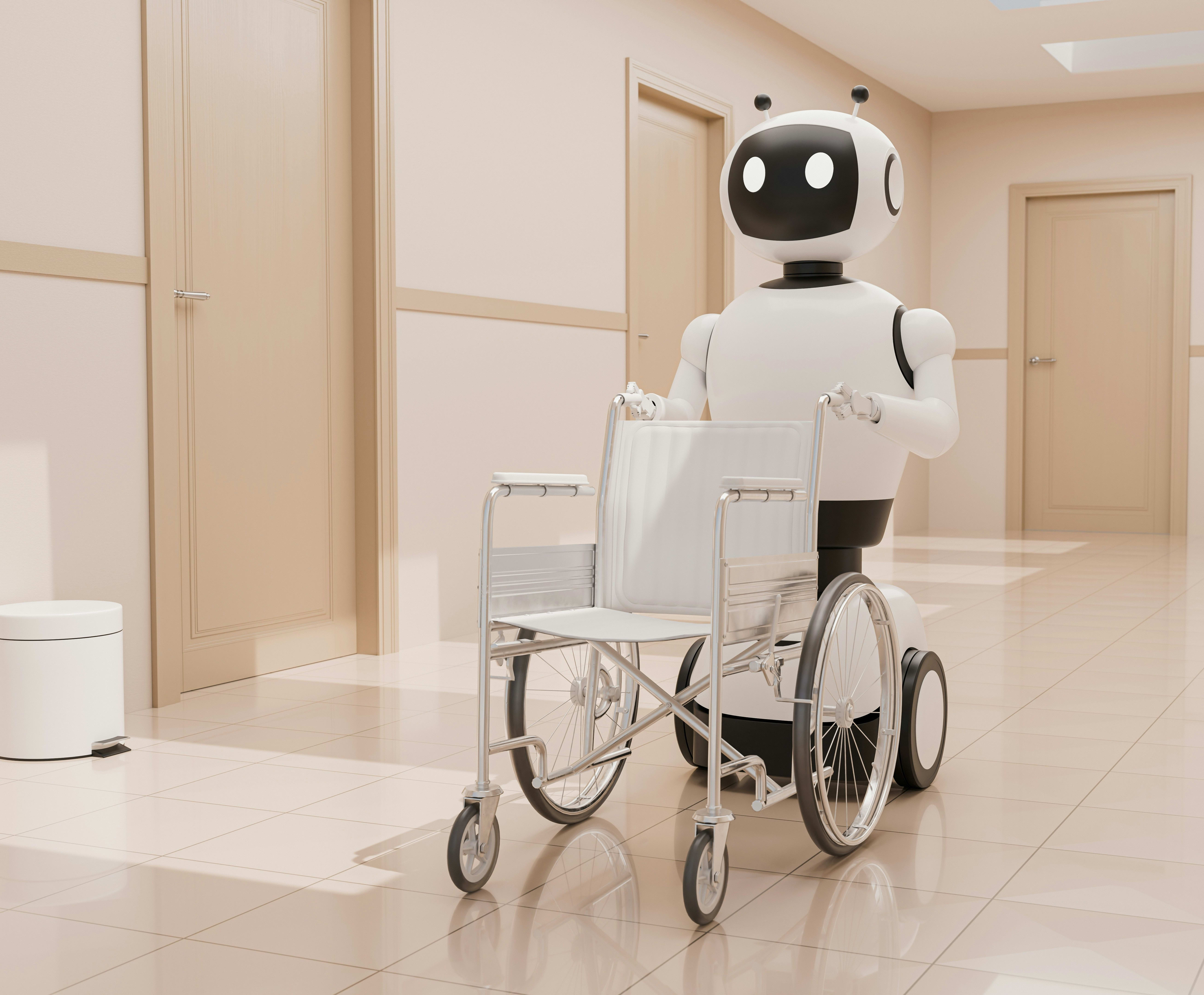
Surely no sector of the American Economy is more eager to deploy robots than the eldercare industry. Faced with rising costs and a chronic shortage of workers – made even worse by the Administration’s vigorous enforcement of immigration policies – robots seem to offer a way to get more done with fewer employees.
Investors have been enthusiastic about the prospects. The market for automated assistance in eldercare was $3.14 billion in 2025 and it continues to grow by more than 12% annually.
But before cheering the passing bandwagon, a few nagging questions have yet to be resolved:
Is there credible evidence of robots’ effectiveness?
Are they worth the cost?
How do Elderly patients and care workers feel about them?
The robots getting the most attention are companion robots, which interact with patients and respond to voice and touch. They are promoted as a way to relieve loneliness. The most popular to date is Paro, a Japanese product resembling a plush baby seal that has won FDA approval. Paro has sensors that detect light, sound, touch, temperature, and posture. It doesn’t talk but it responds to petting and displays Emotions. Essentially it works like pet Therapy, but without needing to be fed or taken for walks. Also it doesn’t bite, scratch, or trigger allergies.
ElliQ, a table-top robot of Israeli design, is a talker. It engages adults in conversation, gives reminders about medication, even poses riddles. It can be found in apartments across New York City in hope of abating loneliness.
A humanoid (i.e., resembling a human, as in Star Wars’ C3P0) robot called Ryan is being designed specifically for adults with early-stage dementia or Depression. Ryan has speech and facial recognition, engages in conversations, and can initiate cognitive games.
Another avenue of robotics is physical assistance. These bots lift or physically support adults or assist with household chores. Scientists at MIT, for example, are developing a robot that can help a patient get in or out of a bathtub, go from sitting to standing, bend down to reach objects, walk, or get up from the floor. One model has inflatable airbags to catch a person if they fall. At Stanford, researchers are designing “wearable robots,” such as a device strapped to the ankle to make walking or climbing stairs easier. Other teams are working on companion robots for adults with low vision that can warn about uneven pavement or curbs, offer physical support, and sound an alert if the patient’s gait looks unsteady.
Most popular articles about healthcare robots follow the gee-whiz style of science writing, long on future benefits and short on evidence. Clare Yu, a researcher on dementia prevention, and colleagues at University College London analyzed 66 studies of robots being used to support people with dementia. They concluded that there is no clear evidence that robots improved patients’ quality of life, cognition, or behavior. The studies often used small samples, didn’t randomize participants, and did not compare robots with other forms of care.
“I think they are something that can be used in the future, but not at this present moment,” Yu told an interviewer. “We need some time to do more research to be able to say they are definitely beneficial.”
There is also resistance from healthcare staff and patients. Some researchers report that workers are suspicious that robots might be secretly recording them. People living with mild Alzheimer’s disease told researchers they were concerned about privacy and loss of human connection, and a majority said they would prefer visits and calls from friends and families over robot-led activities. In another study, adults who are tech-savvy called companion robots “creepy,” “manipulative,” and “unethical,” offering merely the illusion of Intimacy.
Cost is another issue. While the simpler companion robots cost hundreds of dollars, more sophisticated (and more humanoid) models can cost $30,000 or more. Saving Money, in other words, is not likely to be an immediate benefit.
But given the serious, long-term shortage of healthcare workers, together with the rising tide of the older population, many voices in the eldercare industry believe robots are the industry’s best hope for meeting the needs of older patients.
So don’t be surprised to find yourself chatting soon with AI-powered devices, ready or not, in a setting near you.