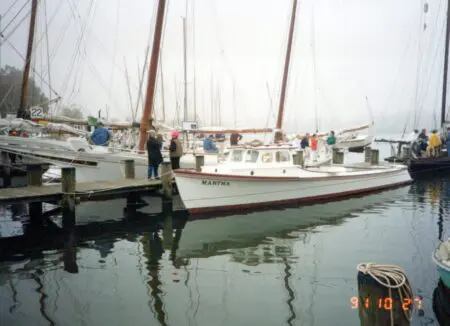

Exploring a new destination on foot offers an “up close and personal” look at an intriguing city or town. During our Maryland- to-Florida sailboat cruise, we trekked the streets of Beaufort, North Carolina (Bow-fort) and Beaufort, South Carolina (Bew-fort). We observed each waterfront city’s architecture, soaked up the area’s character, and checked out charming (and some funky) shops. Next time, we’ll schedule a longer visit.
And then there’s Savannah, Georgia. Established in 1733, this quintessentially Southern city is also known as “Georgia’s first city.” The Savannah River, which helped anchor the town, still attracts a regular flow of commercial vessels. Back in the 19th century, this meandering waterway transported the area’s cotton crops to market.
The Savannah Historic District’s charming 19th-century buildings provide a window into the region’s evolving architecture. If you enjoy Southern cuisine and culture, and you’d like to get your toes in the sand at nearby Tybee Island’s beaches, consider spending a few days in beautiful Savannah, Georgia. Santorini only stayed one night at Thunderbolt Marina, a few miles outside Savannah. We briefly borrowed the marina’s courtesy car to capture the flavor of this iconic city.
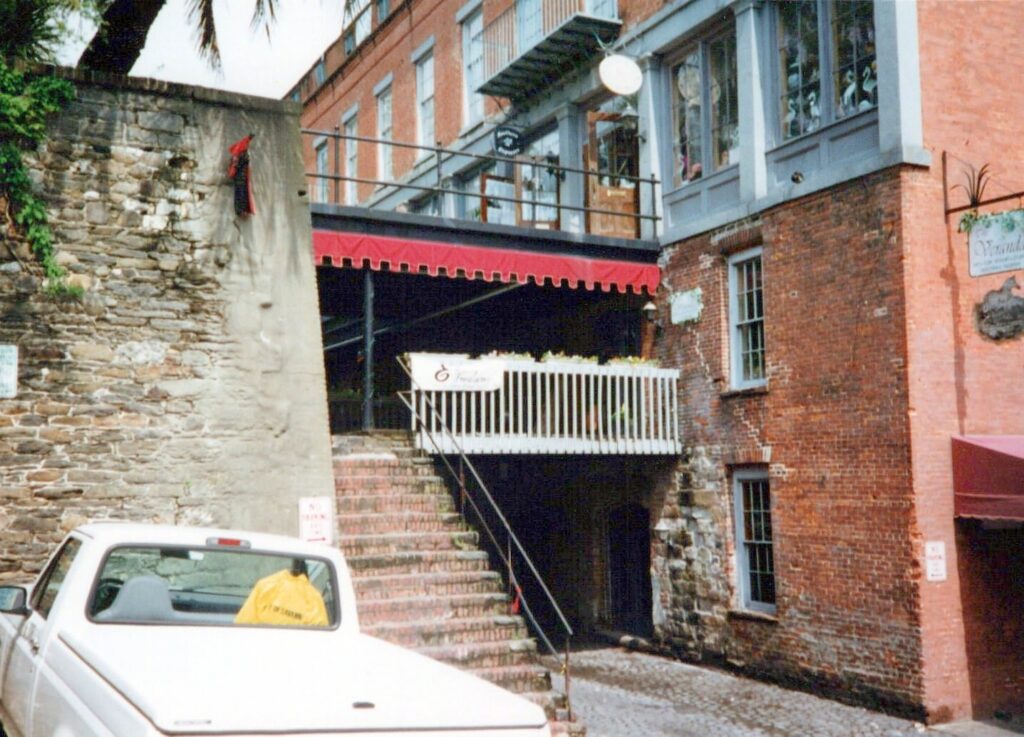
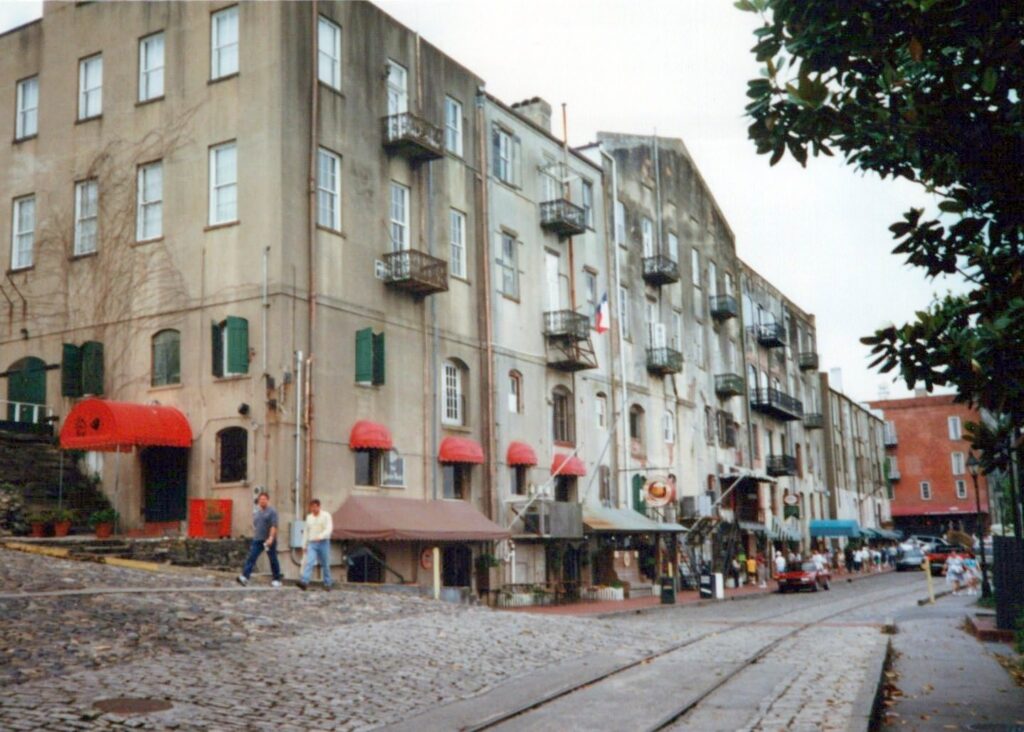
Savannah’s historic River Street is ─ hands down ─ a must-visit destination. Located along the Savannah River, River Street’s imposing multi-story buildings originally served as 19th-century cotton warehouses. Today, these century-old structures are home to upscale inns, stunning art galleries, antique shoppes, brew pubs, and fine-dining restaurants.
As you stroll along the half-mile riverwalk, you’ll step on ballast-stone cobblestones from the ships who visited this major commercial port. While soaking up the historical ambience, I imagined 19th-century cotton merchants wheeling and dealing in their warehouses. In Savannah’s hot, humid summers, they must have been sopping wet without air conditioning ─ but it didn’t deter them from doing business.
On the bluff above River Street, you’ll encounter 19th-century Factor’s Walk. This distinctive architectural feature has concrete and iron pedestrian walkways and bridges linking the area’s offices to the bluff. For reference, factors served as the global cotton industry’s “middlemen.” They managed plantation owners’ cotton crop sales and played a major role in the greater Savannah Economy. In fact, at one point Savannah was called “The Wall Street of the South.”
Lush green, tree-dotted city parks frequently offer an oasis of calm in an otherwise-bustling urban setting. Savannah takes this concept to the next level, with its 24 city squares that were integrated into the historic district’s 18th-century design. These popular gathering spaces are defined by live oak trees literally dripping with Spanish moss. During the gorgeous spring season, Savannah’s city squares showcase stunning wisteria, camellia, and azalea blooms.
Savannah’s city squares and shaded walkways offer a respite from the Southern heat and humidity. While you stroll through the 23 remaining city squares, take time to view the statues and monuments. And look around you: the squares are alive with musicians, picnics, and even weddings. We imagined office workers, families with children, and relaxed retirees each enjoying a city square in their own way.
Touring an historic city cemetery offers a glimpse into the people who lived there over the generations. Savannah’s long history means literally thousands of residents are buried in the city’s cemeteries. In fact, the Savannah City Cemeteries Division maintains six historic sites, each with a distinctive character.
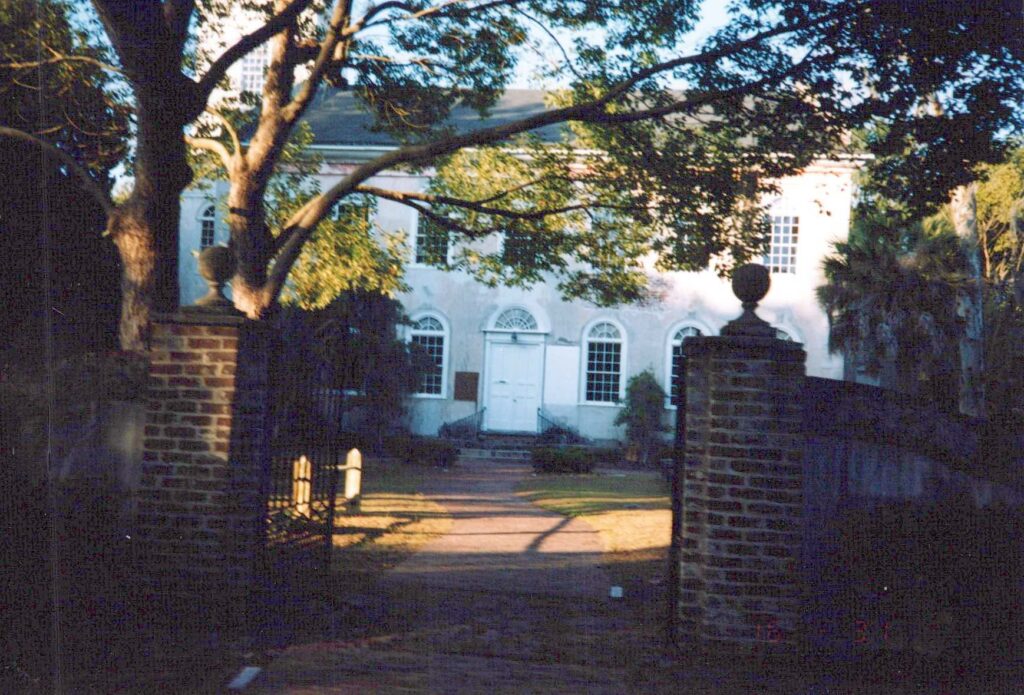
The Colonial Park, Bonaventure, and Laurel Grove Cemeteries draw the most visitors. Although the Bonaventure and Laurel Grove sites are just outside the Savannah Historic District, the pedestrian-friendly Colonial Park Cemetery is in the Historic District. Old cemeteries are fascinating places, and we couldn’t resist stopping for a brief visit.
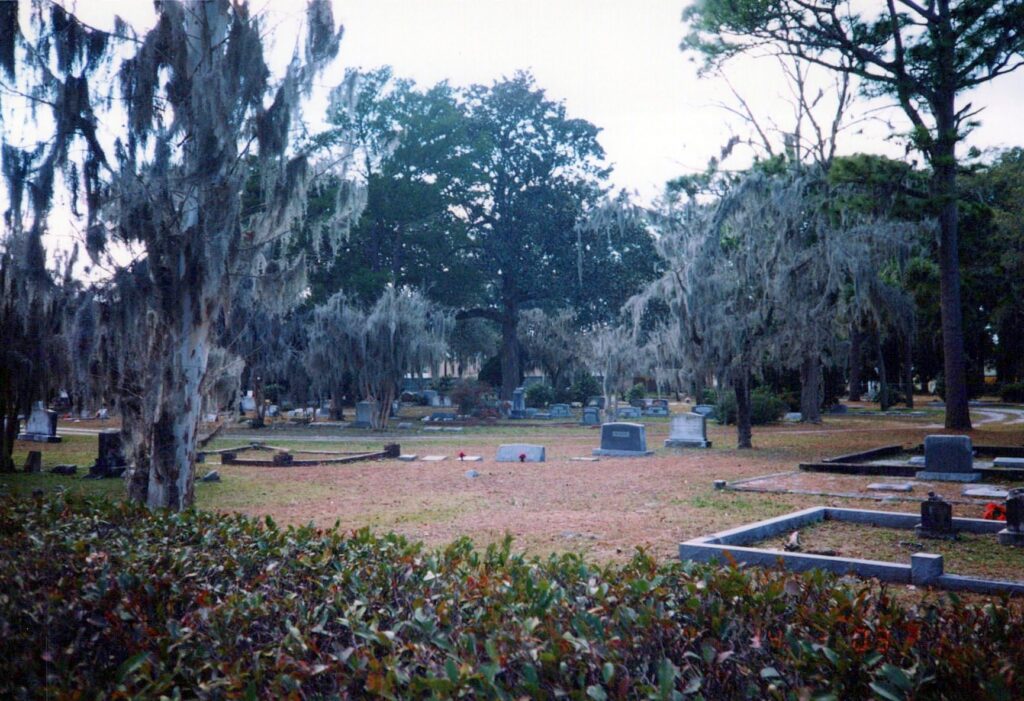
When we entered the Colonial Park Cemetery gates, we were transported back to 19th-century Savannah. As we slowly meandered through the cemetery grounds, the stately live oaks provided a sense of calm and peace. Because we visited during the winter, the green grass was mostly light brown dotted with patches of vibrant green.
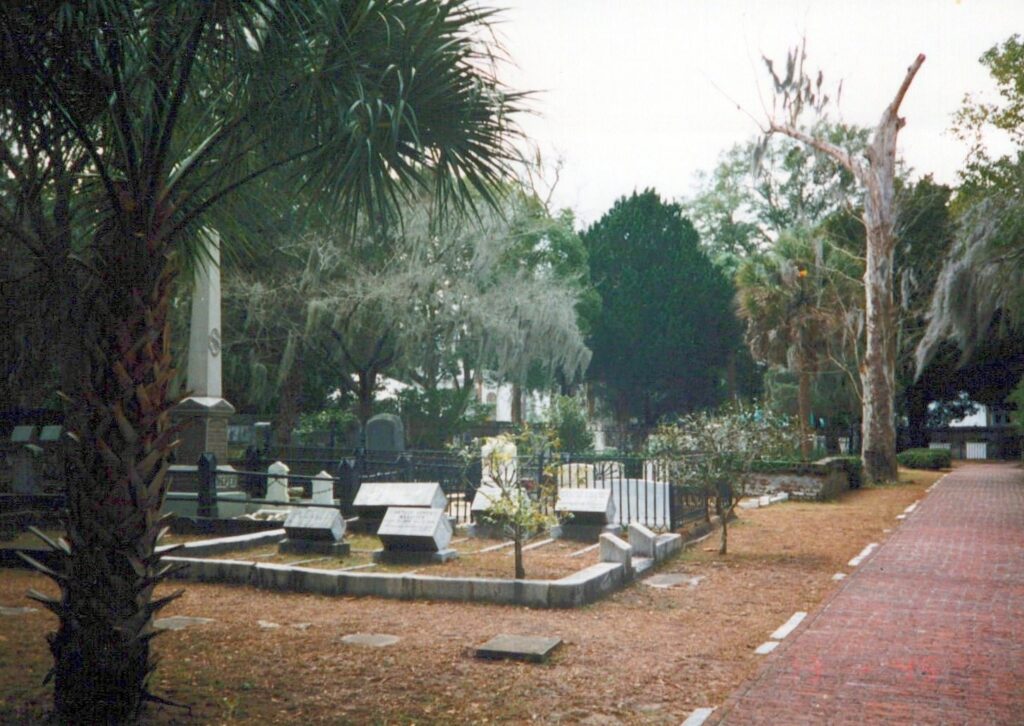
Although most gravesites had prominent markers, some sites only had a difficult-to-see plaque flush with the grass. We stepped very carefully, as we didn’t want to deface anyone’s gravesite by accident. In contrast, each well-marked Family plot was surrounded by a low stone wall with multiple headstones inside the enclosure. Some plots were enhanced by imposing vertical markers or statuary.
Out of respect, we didn’t step inside any of the family plots. That said, we could easily read most headstone inscriptions ─ a snapshot of that family’s lineage. I noticed that family members’ lifespans were typically shorter compared to today’s healthcare-enhanced lifespans. In addition, many children passed away at a very young age. Although our Colonial Park Cemetery visit was a sobering experience, we appreciated the glimpse into another facet of Savannah’s history.
Maybe you’ve read the book (or seen the movie) called “Midnight in the Garden of Good and Evil.” Savannah’s Monterey Square (in the Historic District) is home to the Mercer-Williams House, the actual setting for the real-life murder depicted in the story.
The house was originally built for General Hugh Mercer, lyricist Johnny Mercer’s great-grandfather. In 1969, internationally recognized Antiques dealer Jim Williams purchased and later restored the home. Now a museum, the Mercer-Williams house is full of antiques, fine art, and Chinese porcelain. But the house’s furnishings aren’t the reason for its fame.
In May 1981, Jim Williams reportedly committed a murder in his home. He was acquitted after four murder trials, but the legal process isn’t what grabbed the public’s attention. Readers and filmgoers were fascinated by the diverse cast of characters woven into the real-life story. Today, the Mercer-Wiliams House Museum is a Savannah tour staple. Although we weren’t aware of the house during our Savannah visit, the story has piqued my interest. I think I’ll put the book on this summer’s “must read” list.
To wrap up our Savannah excursion, we had lunch with a family member who lives in the city. While enjoying my food at a cool little outdoor café, I was glad we could spend some time in this welcoming (and delightfully quirky) Southern city.