
What’s Inside
Kai-Fu Lee believes AI agents will redefine work by 2026
How leadership is now the biggest gap in AI adoption
Skepticism still matters when everyone’s predicting the same future
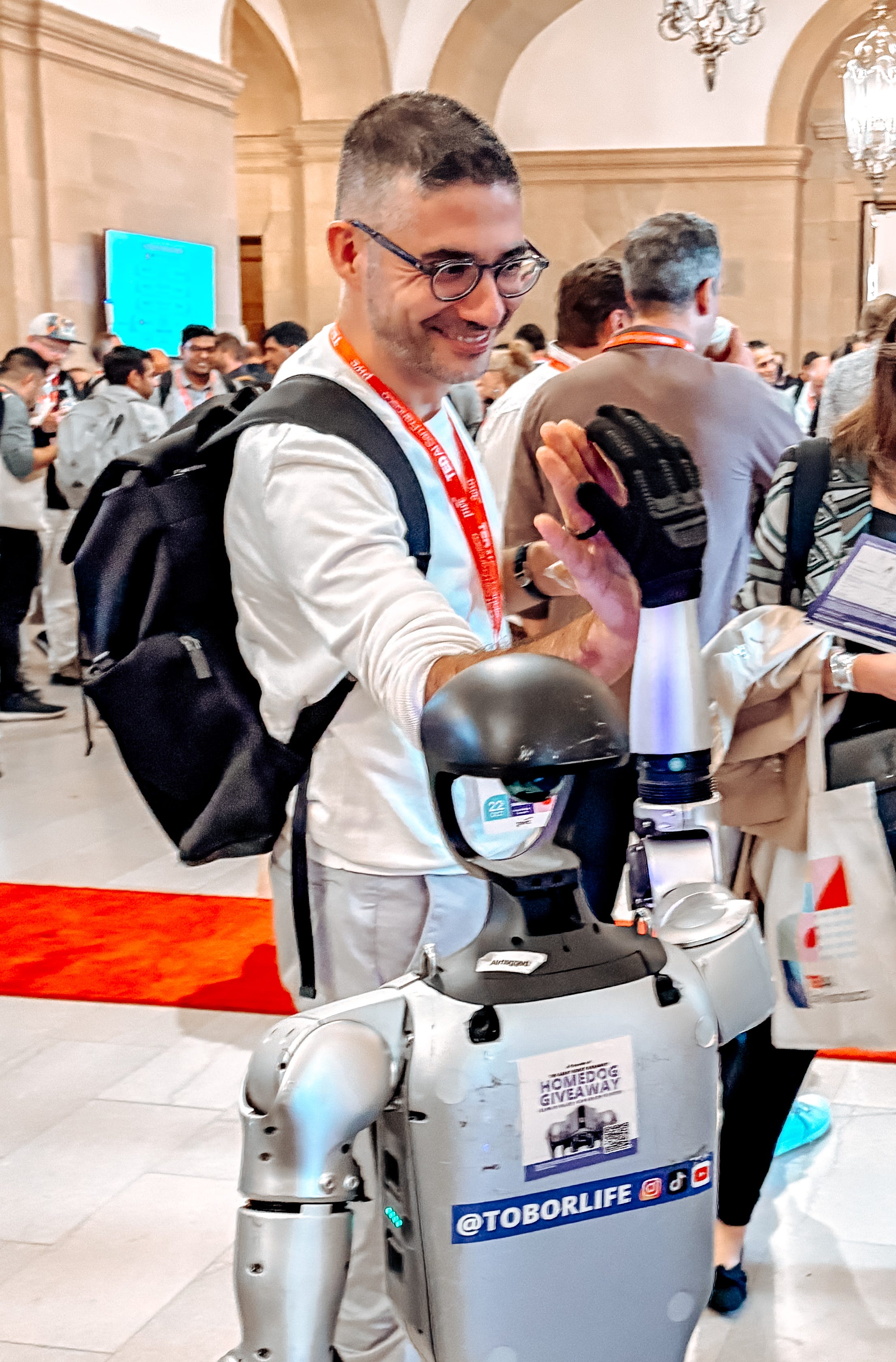
The Herbst Theatre behind San Francisco’s Civic Center Plaza was packed. Sunlight filtered through the lobby windows and spilled across a full house of founders, researchers, investors, attorneys, journalists and a few robots.
The crowd at TED AI San Francisco buzzed with the kind of optimism that only comes when people believe they’re focused on the next big societal leap.
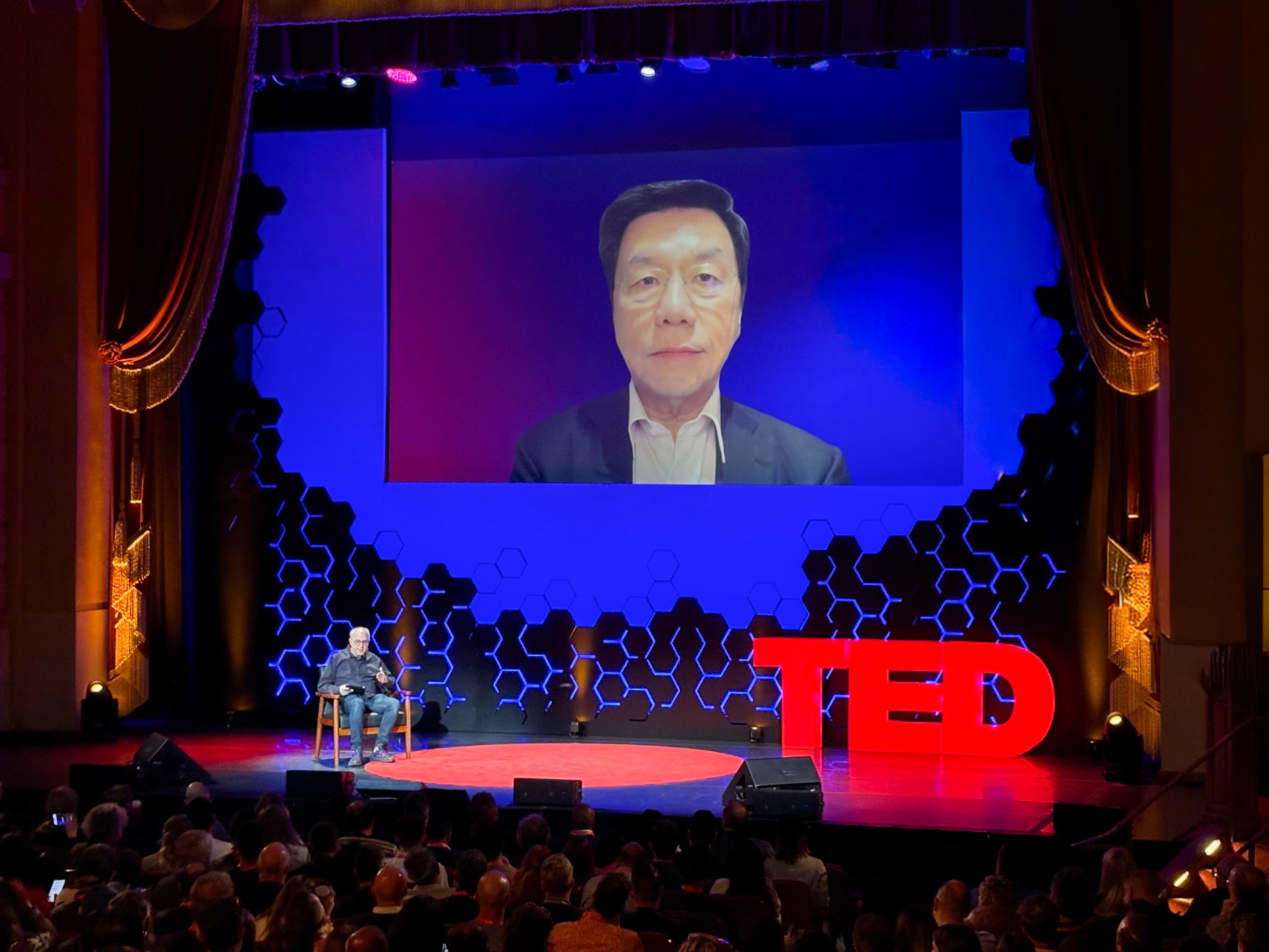
Between technical deep dives and bold forecasts, one session stood out for me: Kai-Fu Lee of Sinovation Ventures in a conversation with journalist Steven Levy. Lee, long regarded as an influential voice in global AI, appeared on video screen from China and predicted that 2026 will be the year AI agents become the fundamental unit of work.
Lee knows the cycles of AI better than most. The former head of Google China and founder of Microsoft Research Asia, he now runs Sinovation Ventures, a platform with $3 billion in AUM Investing in frontier AI and agentic tech. He’s also behind 01.AI, which is developing an open-source AI model for developers to use natural language processing capabilities in their applications.
As for his prediction about agentic tech, it wasn’t the first time I heard that. At the start of this year, other investors and entrepreneurs made the same prediction, except their target year was 2025.
Every wave of Technology comes with its prophets, and the current AI wave is no exception. But predictions about when “the big shift” will happen often blur together.
At the start of the conversation, Levy teased Lee about one of his earliest forecasts. Years ago, Lee predicted that speech transcription would reach human-level accuracy “within five years.” Five years later, he made the same prediction to Levy calling it five years out again. Eventually, he was right.
That small exchange proved the point: even the sharpest observers struggle to time the breakthroughs they are clearly aware and know are coming.
As the expression goes, even a broken clock is right twice a day. In AI, someone’s always right, eventually, just maybe not on schedule.
Still, Lee’s statements drew attention for a reason. He wasn’t just talking about advanced chatbots or better models. He was talking about agents, autonomous digital workers that can act on the behalf of humans, not just answer for them. He said these systems will soon handle routine labor while humans manage them much like today’s team leaders.
The vision sounded inevitable and slippery. Maybe it’s 2025. Maybe it’s 2026. Or later.
However, the more interesting question is whether the people running companies are ready for it.
Lee called out what he sees as the missing piece: leadership.
Too many companies, he said, still treat AI like another software rollout. They assign it to their IT or data teams instead of asking how it reshapes the entire organization.
“CEOs, not CIOs, need to lead the AI transformation,” he said, warning that companies without an executive-level push risk becoming obsolete.
The leadership gap, as Lee called it, is a point that hits close to what I’ve heard from others throughout this year, that the next competitive advantage relies on how fast organizations adapt. The winners will be the ones that turn AI from a demo into a workflow.
For all the talk of algorithms and disruption, TED AI still had its human core.
One speaker told a story about how she used generative AI to diagnose her 15-year-old son’s brain tumor. He was there with her sitting stage left, healthy and smiling, and the audience erupted in applause.
Her story offered up a human element to AI’s power after so many abstract, technical sessions that day.
But that contrast — between technical intensity and human emotion — is part of what makes TED events special. You can step outside into the sunlight, walk down Van Ness Avenue and immediately find yourself in a theater lobby, having a conversation with a founder, a researcher or an investor eager to talk and scan your LinkedIn QR code.
Yes, you can watch several thousand TED talk videos on YouTube (the one on how the first follower transforms the lone nut into a leader is my favorite). But I’ve always found that when attending TED in person, the event is more open, approachable and electric in a way few conferences manage.
In that context, Lee’s messages carry substantial weight for this particular audience.
Lee believes AI will replace some jobs but ultimately create new ones, that the short-term disruption will give way to longer-term abundance and that open-source AI is necessary for transparency and building.
He also said that AGI (applied general intelligence) is “AI doing 90% of tasks better than 90% of humans,” and he was more concerned about human misuse of AGI than any dystopian version of machines becoming self-aware.
He also believes that the U.S. and China will lead in different ways: America in enterprise adoption, China in consumer Innovation.
All in all, it seemed as though Lee — who I kept thinking was giving off Big Brother vibes from the huge monitor on stage — was trying to balance optimism and realism. He’s not promising an AI utopia, like Vinod Khosla. Lee was reminding the audience that the work ahead belongs to leaders willing to rethink the meaning of “team” and “workforce.”
Bottom Line Up Front: Kai-Fu Lee might be early with his prediction about AI agents, but he’s not wrong to focus on leadership. The timing matters less than readiness.
After all, every future arrives late, until suddenly it’s here.