

Have you ever paused in the middle of a hectic day, stared out a window, and asked yourself, “Where do I truly belong?” That question, “Where is my true home?” might seem simple on the surface, but it cuts deeper than geography or architecture. It’s a question wrapped in Emotions, culture, childhood memories, and personal identity. It’s the kind of question that echoes differently in each of us, depending on where we come from, what we’ve lost, and what we’re looking for.
Whether you’re someone who has moved a dozen times or someone who’s lived in one town your whole life, the search for a true home isn’t necessarily about finding a place, it’s about discovering a feeling. That feeling of being centered, rooted, and known. Some might find it in a bustling city apartment, others in a quiet village surrounded by nature, and some may find it in a person rather than a place.

When most people think of home, they picture a structured house, an apartment, maybe even a cozy cabin in the woods. Home is so much more than drywall and doorbells. Home is a place that hugs you after a bad day. It’s where your favorite mug sits in the cupboard. It’s where your soul exhales. A true home doesn’t have to be fancy. It could be a modest room where you feel free to dance like nobody’s watching or a shared dorm where the laughter drowns out the cramped quarters. What makes it “home” isn’t the layout or square footage—it’s the emotional resonance.
The truth is, you can live somewhere for years and never feel at home. Conversely, you can step into a place for the first time and feel an instant connection. That’s because home isn’t just about permanence, it’s about peace. Ask yourself: where do you feel the safest, most yourself, and completely at ease? That’s where your heart recognizes “home,” even if your mailing address says otherwise.
Think back to your earliest memory of comfort. Was it a warm bed tucked under a blanket your grandmother crocheted? Was it the aroma of your dad’s cooking filling a tiny kitchen? That place, those sounds and smells, that’s where the idea of home began for you. As children, we attach emotions to physical spaces. Our childhood homes become the default mental model for comfort and safety. Even if you moved around a lot, there’s one place etched in your memory that felt like the center of your world.
For some, it might have been their bedroom sanctuary filled with toys and imagination. For others, it was the backyard, the corner of a shared couch, or even a classroom where they felt understood. These early experiences plant the seeds for how we define home for the rest of our lives. And if your childhood home wasn’t nurturing or safe? That’s important too. It means your search for a true home might be more intentional, rooted in healing rather than nostalgia.
Ever walked into a bakery and suddenly felt like you were 7 years old again, watching your mom bake cookies? That’s nostalgia pulling at your heartstrings, trying to take you back home. Nostalgia is a powerful lens. It can color ordinary places with extraordinary meaning. It makes us yearn for the simplicity, familiarity, or connection of the past. And often, it tricks us into thinking our true home is behind us. But nostalgia, while warm and fuzzy, is selective. It smooths out the rough edges and amplifies the joy. So, while it helps shape our idea of home, it’s also a reminder: maybe we’re not looking for a house, we’re chasing a feeling. That’s okay. Just be mindful not to let nostalgia cloud your vision of the present. Your true home might echo the past, but it doesn’t have to live there.
Your surroundings do more than influence your Lifestyle, they shape your very identity. The city you grew up in, the language spoken around your dinner table, the music echoing through your neighborhood, and the values instilled by your community all fuse together to become part of you. In this way, “home” becomes an invisible architect of your identity. Even if you move away, those early environmental imprints stay with you. They shape how you interact with the world, what you value, and even how you decorate your living space. That’s why when people say, “This doesn’t feel like me,” they’re often reacting to a disconnect between their environment and their inner self.
Your true home, then, is often the place—or even the kind of place—where your internal rhythm matches the world around you. It supports your identity instead of stifling it. And in that harmony, you discover a powerful sense of belonging.
Adulthood often feels like a game of musical chairs—you’re constantly relocating, adjusting, evolving. Maybe you moved to a new city for a dream job or follow your partner to a different country. Or perhaps you just packed up and left because you needed a change. Whatever the reason, searching for home in adulthood is less about roots and more about choices.
Each move comes with its own set of challenges like learning new streets, building new routines, and forming new Relationships. At first, everything feels foreign. But slowly, the unfamiliar becomes familiar: the coffee shop barista knows your name, your neighbors nod hello, and that once-bare apartment starts looking like a reflection of you.
But finding your true home as an adult often clashes with comfort zones. We want the Growth and the adventure, but also the warmth and familiarity of our past. Balancing these conflicting desires is part of the journey. So, when do you know you’ve found your true home? It’s when you stop saying, “I live here,” and start saying, “This is where I belong.”
Home doesn’t always come pre-packaged. Sometimes, you must build it—piece by piece—with your own hands and heart. And it often starts with the little things. Think about your daily rituals, your morning coffee, the playlist you wake up to, the scent of your favorite candle. These habits are your anchors. They’re not just tasks; they’re the glue that holds your world together. By repeating them, no matter where you are, you begin to create a rhythm of home. Don’t underestimate the power of familiar items either. A worn-out blanket, a framed photo, or even your go-to cooking pan can make a space feel like yours. These objects carry your essence and history. They don’t just decorate a room, they claim it. The goal isn’t to replicate your old home but to plant seeds of comfort and familiarity wherever you are. With the right mindset and a few beloved pieces, build a portable sense of home that travels with you.
If home is where the heart is, then your people are the heartbeat. You can have a stunning house with designer furniture, but without connection, it’s just an empty shell. That’s why building a community is essential to feeling at home. Finding your tribe as an adult isn’t easy. But the magic lies in the moments. The spontaneous coffee invites, the shared grocery run, the unexpected conversations that bloom into friendships. These are the emotional bricks that build a home around your soul. Community doesn’t have to be huge. A few close connections can provide more comfort than a room full of acquaintances. The key is authenticity—showing up as yourself and allowing others to do the same. If you’re searching for your true home, don’t just look around. Look beside you. The people you surround yourself with might just be the home you didn’t know you needed.
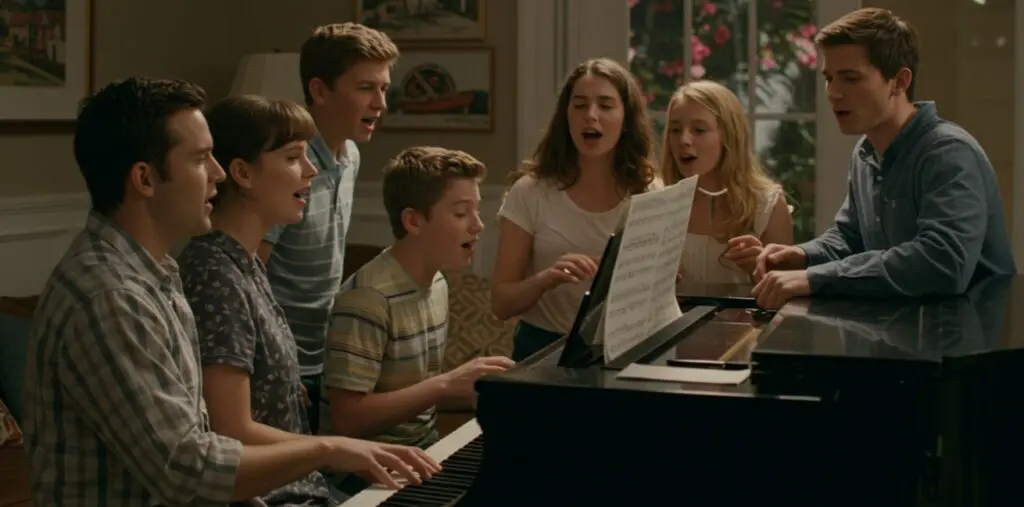
Maybe your true home is the city you grew up in. Maybe it’s a person who feels like your soul’s mirror. Maybe it’s a new apartment you just moved into, or maybe it’s not a place at all, it’s the calm you find in your own heart when the world gets loud. You could live in the most beautiful mansion, filled with Love and luxury, and still feel lost. That’s because the truest home isn’t built, it’s discovered within you. Finding home within yourself means becoming your own sanctuary. It means being at peace with who you are, wherever you are.
Home is not a destination. It’s a journey. It’s the soft place you return to after chaos. It’s the feeling of being seen, held, and known. Home is where you feel safe, loved and understood without judgement. Home is being with those you love deeply wherever you are. Home is where you feel emotionally connected and have a true sense of belonging. Sometimes it takes years to find. Other times, you realize it’s been with you all along. Whatever stage you’re in—searching, building, healing, or settling—trust that your true home is waiting for you, within you, or just around the bend. Because in the end, home isn’t just where you live, it’s where you belong.