In this compelling episode of Meet the Expert with Elliot Kallen, Elliot interviews Kevin Carter, founder of EMQQ Global, about why India is quickly becoming the world’s most dynamic emerging market. With over $1.2 trillion in infrastructure plans and a population more youthful and digitally connected than any other, India is positioned to lead the global Growth story. If you’re an investor looking for the next major opportunity, India should be on your radar.
Kevin Carter is the founder of EMQQ Global, a firm specializing in emerging market tech investments. He’s a frequent CNBC guest and a leading voice on where and how to invest beyond traditional markets. Through his focused India research and EMQQ India Internet & Ecommerce Index, Kevin helps investors gain smart exposure to high-growth sectors in the world’s largest democracy.
Elliot and Kevin delve into why India stands apart from other emerging markets—not just in size, but in momentum. From solar energy projects and electric scooters to telehealth and smartphone-based banking, India is rewriting its own playbook. While corruption and caste-based bureaucracy still linger, digitization is slashing inefficiencies and boosting transparency. For investors wary of direct exposure to China, India offers a democratic, English-speaking, tech-savvy alternative that aligns better with long-term Western values.
Curious how you can capitalize on India’s infrastructure and tech boom?
Reach out to Elliot Kallen at 925-314-8503 or email [email protected].
Visit prosperityfinancialgroup.com for insights and other expert podcast episodes.
Learn more about Kevin Carter and EMQQ’s India-focused strategies at emqqglobal.com.
Elliot Kallen: Well, good morning, good afternoon, everyone. I’m Elliot Kallen, CEO of Prosperity Finance Group. Welcome to another very exciting episode of Meet the Expert with Elliot Kallen, top 2% in the world now of financial podcasts. We’re going to be talking about Investing in India, doing business in India, what’s going on in India, the biggest burgeoning democracy and capitalistic country in the world. And we’re barely invested in, and nobody really knows about it. Nobody knows that. Mumbai was Bombay. Nobody understands that. All we think of, China, China, China, we’re going to talk about now, India today. So we’ve got a great expert on with us. Kevin Carter. Kevin, welcome to the business. Welcome to our show.
Kevin Carter: Thanks, Elliot. Good to be here.
Elliot Kallen: Great. Let me tell you about Kevin, and let me tell you about EMQQ Global. If you need to reach me, 925-314-8503, that’s the number, www.prosperityfinancialgroup.com. There are about 100 other episodes on the website. Take a look at them. Enjoy them. That’s what they’re there for. They’re all free to you. It’s Elliot, E-L-L-I-O-T at prosperityfinancialgroup.com. Kevin is one of the industry leaders here locally in Northern California. Of everything that goes on, really not just to India, but basically in the emerging markets, that’s what E stands for, Emerging Markets EM. You might say that India is a diaspora phase of Indians circulating around the globe and coming to this country, and they are the highest educated in the world. They are the highest income earners in the world per capita per coming to this country. They earn three times the national US average in income. They are a force to be reckoned with both now, but particularly in the future because the economic world is going to embrace India, and we’ll talk about the problems there too. This is not all just sugar and roses here. We know they have their issues. We know that they have their issues with decades long of corruption, and that’s why things have been emerging too slowly there, but the world is changing, and they are changing with it. Let’s talk about it. Kevin, I want to know, why should investors today care about India?
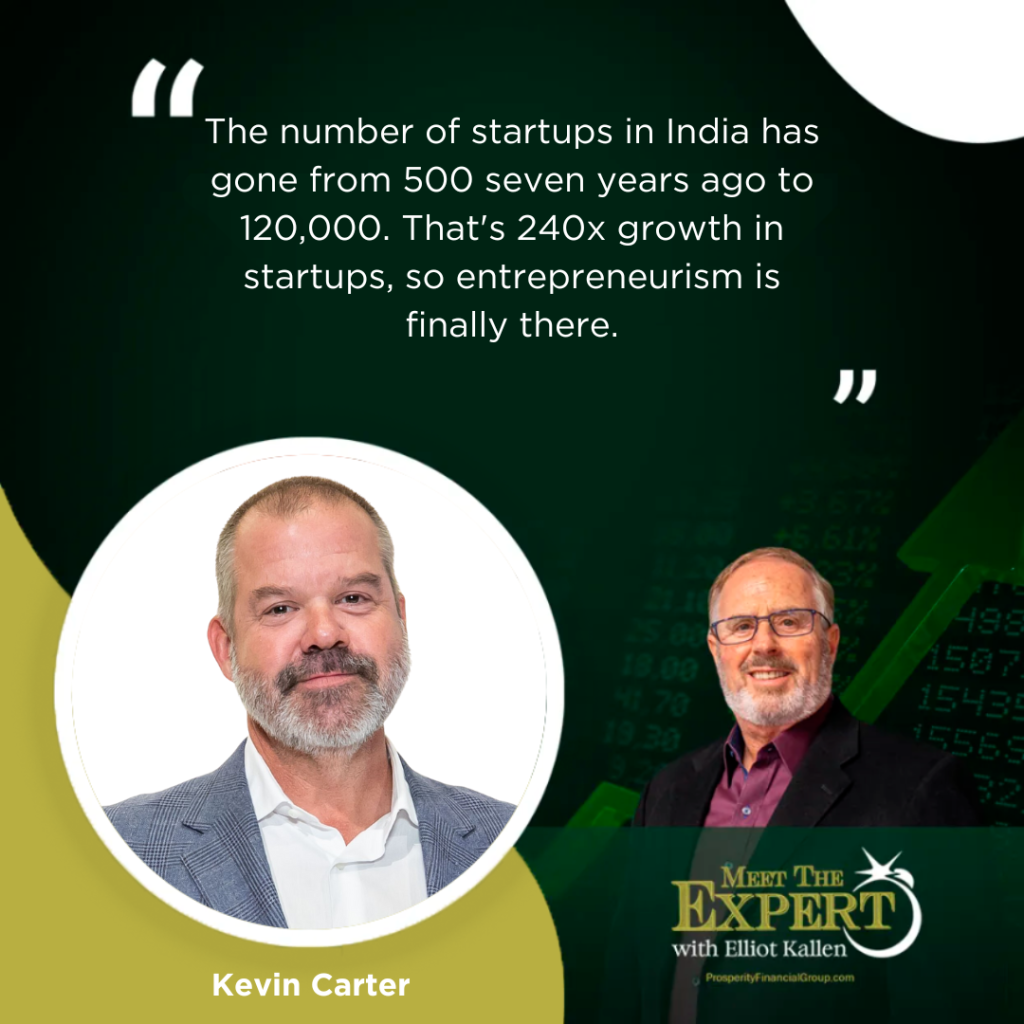
Kevin Carter: Well, there’s a whole number of reasons for that. I think first, emerging markets, which is the asset class that defines the developing world, so as you mentioned, China, India, Brazil, all of these places, and the reason people care about emerging markets broadly is pretty straightforward. 85% of the world’s people live in emerging markets, so it basically is the world. They have younger populations, so it’s about 90% of the people under the age of 30, so it’s even more of the future. Their economies have been and continue to grow faster than the developed world economies, and that’s driving a massive wave of consumption. There’s six and a half billion people, and they want all the stuff that we have, more food, better clothing, heaters, and air conditioners, and other appliances. They want to be entertained, go to a movie, take a vacation for the first time. They want an automobile, and they want their kids to go to Harvard. That’s ultimately, when you’re investing in emerging markets, that’s the case. In all of those categories, population size, India is number one. India passed China two years ago now to become the world’s largest population, and every day India sets a record as the largest population ever. Today it set a record, tomorrow it’ll set a record, because it’s still growing. China, meanwhile, has had some demographic challenges now, and it looks more like a European country demographically, so it’s the biggest India is, and getting bigger every day. It has the best demographics. It has an average age of about 28 and a half, so you’ve got twice as many people under the age of 30 in India as our whole population in the United States. It has the fastest growing GDP, six and a half, 7%, the last year and the projections going forward, and that is driving growth in consumption. On paper, India is the perfect emerging market. It can’t get any better than this, because if you leave out China, which a lot of people don’t want to invest in for any number of reasons, but if you leave out China, India is bigger than all the other emerging markets combined. The first answer to your question is because if you want to invest in emerging markets, if you want to invest in the future, India represents that more than any place else. But then India has three other things that set it above and beyond the rest of the emerging markets, and really the rest of the world. The first thing, as you alluded to, is this is the world’s largest democracy, and political stability and governance, both national governance, corporate governance, these things are one of the problems in emerging markets. You have in China a communist government, which Americans find distasteful and troubling. India is the world’s largest democracy. They had the largest democratic election ever last year, and it’s a well-functioning democracy. The leader of India, Modi, for the last 10 years, who’s back in office for another five years, he’s basically tried to, well, he’s not just tried, but he’s achieved in doing two things, cutting back bureaucracy, trying to cut the red tape and socialist elements of India, but he’s also doubled the physical infrastructure, the roads, the bridges, the railways, the airports, all of those things doubled in Modi’s first 10 years. That was pretty important. Then you layer in another thing you mentioned, which is India has got the best human capital, maybe on the planet, certainly the best in emerging markets. There’s 25 S&P 500 companies that have Indian CEOs, including Google and Microsoft. That talent pool that has always been so strong, it’s increasingly focused on going back to India or staying in India. A lot of India’s best and brightest came to the United States, but that’s changed quite a bit. The number of startups in India has gone from 500 seven years ago to 120,000. That’s 240x growth in startups, so entrepreneurism is finally there. The other thing India has, finally, that no other country has, frankly, is this incredible digital public infrastructure, which includes a digital identification system, instant payments, platform that’s essentially free, that has digitized their Economy. India is a very special place. It’s a very special place for emerging market investors.
Elliot Kallen: Great. We’re talking with Kevin Carter of EMQQ. Let me tell you why we’re talking with Kevin. We’re discussing India and a future for investing in India. We are portfolio builders. We have two companies here that combine and manage about a billion dollars. Northern California, San Ramon. We would not be talking if we didn’t think that India was an opportunity for at least our growth and moderate growth-oriented investors. It’s not for the faint of heart. Emerging markets are not for the faint of heart. They’re for people that understand that I could take a little bit of a risk, 5%, 7%, 3%, 10%, and I could put it in places that are not quite black and white or straight blue, but there could be slightly off color, but then the opportunities are greater there. We do that on a regular basis. Kevin and I hooked up a couple of years ago in understanding more of India and where the market’s going and how we’re doing this in our Schwab-based portfolios. So that’s why we’re talking to Kevin. If you want to reach me about that, it’s elliot, E-L-L-I-O-T at prosperityfinancialgroup.com, and the website is prosperityfinancialgroup.com. Kevin, I want to talk to you about a little bit about where we’re going in the future with India and why it could be such a hot topic here. And you mentioned a few of those already. So for Americans who want to invest in Indians, and by the way, in the Bay Area, there are 120,000 Indians just in the Bay Area. Think about that opportunity, more PhDs per capita and so forth and so on. But there are so many opportunities for you as an investor through Prosperity Financial Group to be part of the Indian magic that could happen in the future. Even though it’s not a straight line to success, and nothing usually ever is, it’s a great opportunity there. And that’s why we’re excited about India. So India, I want to talk about a few things here that represent dollars to American investors, and they represent profits to American investors. Because at the end of the day, we all are in a world of future profits. That’s what investors look for. Future profits, you talk about that on CNBC when you were on there, future profits of Indian companies and so forth. So the future burgeoning energy needs, both old-fashioned oil and gas from the United States, because they are buying significant quantities of fossil fuels from the Middle East right now, and we could get a piece of that. There are just a billion-plus people there that are in a massive need for future food, which could be American growers and so forth, processors. We’re talking about all the medical, future needs of medical help at pharmaceuticals and so forth. That’s huge. Driving around and going from the non-driving world, it seems odd to even say that, but the non-driving rickshaw world, to cars to American cars. What part of that’s going to be it? And who’s going to be supplying the steel and the concrete for all this new infrastructure that’s going to happen? So let’s take them one at a time, if we can do that. Can I talk about energy first? Because I got into a discussion the other day during the playoff, football playoffs here with it. We threw a football party there, Kevin, and there were some people there that are very, very green and very, very down on what’s going on with climate, particularly with the current regime, which has only been a business for a week now. But they think that no one on the right, no one right of center, no Republican cares about the future of the environment. All they care about is promoting oil, oil, oil, oil, drill, drill, drill. No one cares about a windmill. No one cares about green energy. No one really gives a damn as long as it helps their donors. And you know what? We both know that that’s probably not true at all because you have children, I have children. We all want a better future. We just do. We want the world to be here 100 years from now, even though we’re not going to be here for our great grandchildren, right? But energy is going to be a big thing, and I heard a study the other day, and I’m rambling a little bit here, that with all the green energy that’s coming into effect and all the growth in India and China, which is kind of not caring at all about green energy and future when it comes to deals, because they got waivers on all types of deals for 20 years, that we use 50 million barrels of oil a day today, and all the green energy that’s going to come into effect in 30 years from now, we’re still going to be using 50 million barrels a day because the need is going to go up so quickly. And we’re not going to be replacing plastics anytime soon with the next product. I wish we did, but we’re not. So what is that deal for India, a billion plus people, huge desire for energy, green can’t keep up, dirty keeps up. What’s going on over there that Americans could take advantage of too?
Kevin Carter: Sure. Well, first of all, one of India’s problems in developing over the last 20 years, and it’s largely overcome this, but, the infrastructure was really weak. And 20 years ago, China and India were basically the same size economies, but China with its one party system was able to build the world’s greatest infrastructure. And India with a lot of bureaucracy, couldn’t even get the power to work consistently. So now, you had brownouts in the summer times and so forth. So finally, the energy supply is pretty stable and they are still pretty heavily coal dependent. And, as I like to point out, they didn’t contribute a lot to the problem because they didn’t have, the economy and all of the fuel used, wasn’t that much relative to the rest of the world. But they’re aware of their need to get off of coal and other, fossil fuels. They are undertaking massive solar and other, green energy projects. But this is a challenge for the whole world to, to continue to energize. Maybe we got a little reprieve today with the low calorie AI announcements from China where we don’t have to build nuclear reactors maybe for our chatbots. But India is going to have to continue to deal with this. And they also, consume a lot of oil, a lot of it they get from Russia, actually, which has benefited them in the last several years. But that, energy issue is a challenge for the whole world. But one of the great things about India is that they’re really good at planning it now. And they have a massive, you know, over $1 trillion infrastructure plan that’s comprehensive. And so they, they’ve planned this out and they will, continue to burn coal and use oil. But they’re, very aggressively seeking to, increase the use of more sustainable energy sources. And that’s also really important, for the automobile and vehicle fleet, because the, you know, there’s a lot of pollution in India. And the two wheelers and the, vehicles, they need to convert that fleet to electric. It’s happening and most of the new scooters that get sold are electric, but, it takes time.
Elliot Kallen: But it tells me, again, we’re looking at a business world. It tells me from an opportunity standpoint, I’m trying to look at this as a glass half full, is that if you’re in the energy business, there is a market that’s just burgeoning and nonstop for whatever energy is, because there’s no way that green nuclear and fossil fuels alone could be it. They’re going to need everything over there. And we need to be aware that that’s an opportunity in a relatively English speaking language that’s a democracy. So that’s the first thing. The second thing is you’re feeding a billion dollars. You’re feeding, I mean, a billion people, excuse me, you’re feeding a billion plus people over there. And a lot of them get very little food. It’s funny because desserts are so important in India, there’s a lot of Diabetes for very poor people. How does that happen so much? But food is a big thing. So can American food industry thrive in this burgeoning market?
Kevin Carter: Well, first of all, India has a massive agricultural, you know, a large part of the country is devoted to agriculture, a large part of the population. In fact, what was one of the things they need to continue to reform is there’s too many people working on small farms and they need to modernize a lot of the farming. But there’s also a lot of government programs and support programs for the agricultural sector that need to be revised. But a lot of people think India, can actually become a very efficient, if they can become a more efficient agricultural country that they can in fact export a lot because they do have a lot of very fertile ground, especially in Uttar Pradesh, where I spent Diwali this past year. So in terms of U.S. exports, I don’t know. To be honest, I don’t know the export numbers on the food and I have I suspect they’re pretty low. And I think that also that, a large percentage of the population is vegetarian. So a lot of the food that we export is, meats and poultry and so forth. But either way, the future of eating is certainly important. In India, just to use the first two examples, you talked about the energy space. So, you know, we invest in, my business is focused on the Internet economy in all of these places. So one of our holdings is the Indian Energy Exchange, IEX, which is essentially a monopoly for the trade of power and very profitable. In the food area, we own Zomato, which is one of our top holdings, which is the DoorDash of India. And it’s also become the leading, one of the fastest parting growth of that company is actually restaurant supplies. So, you know, when I say it’s the DoorDash of India, one of the things about a lot of these Indian Internet companies that we invest in is, you know, I can say the DoorDash of India. That gets you a general idea, OK, they deliver, food. And that’s true. But the reality is that when, when DoorDash arrived in the United States, we had plenty of restaurants. And the fact is, though, in India, the restaurant industry is very young. And so not only are they the leading food delivery company now, their fastest growing business had been selling restaurant supplies. Like, in the United States, if you come out of Lafayette in the morning on the way to the office or whatever, you’ll see the light green Cisco truck, SYSCO, double parked and they’re unloading, tomato sauce at the Italian place or whatever. Zomato’s also in that. So I’m twisting the food question a little bit, but what we’re invested in is the new age tech, the consumption of all of these things done, on a smartphone, if you will, as opposed to, old school consumption.
Elliot Kallen: Well, in a new age tech world, let me bring it to my next question there, because you raise a really good point, Artificial Intelligence. And that’s going to play a role over there. We’ll forget what happened with China today, but artificial intelligence will play a role over there. And medical advances in the U.S., I mean, maybe the end of Cancer one day or Taylor made cancer and we’ll all live to 150. I don’t know what’s going to happen there. But with a billion plus people over there, burgeoning medical system, AI is a burgeoning market. You got more PhDs than anywhere else on earth in India. How do those come together to be the medical leaders of the emerging market and maybe the entire Pacific Rim? Much like we’ve done here. But how do they do it over there?
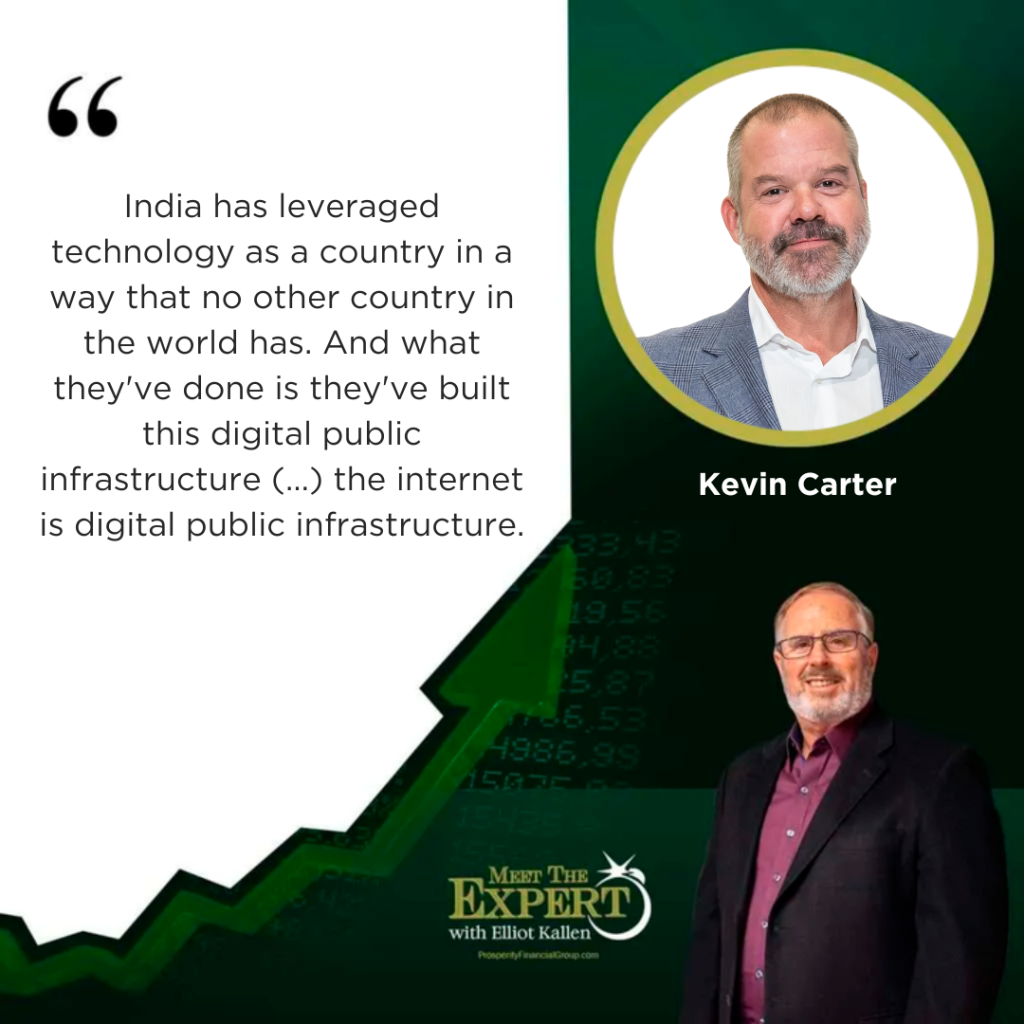
Kevin Carter: Sure. Well, first of all, India’s got a pretty robust pharmaceutical sector. That’s probably the biggest piece of, you know, the largest public companies they have in the Health care space are in that direction. There’s another private hospital company called Apollo, which has done very well. So look, the good news is that the population is young. But they’re going to have, as the population ages, the health care needs will increase. And there’s definitely a lot of Innovation going on, mainly in the sort of business models in terms of providing health care. In fact, I met with a startup in Bangalore that is working on a, a new drug, sort of a telehealth, online, online doctor visits. And I think that the other thing that India has that we haven’t talked about, which is pretty, it’s actually very important to the Hindu story, is India has leveraged Technology as a country in a way that no other country in the world has. And what they’ve done is they’ve built this digital public infrastructure, which sounds really boring, but digital public infrastructure, the internet is digital public infrastructure. GPS is digital public infrastructure. So we have digital public infrastructure and we see the value of it. You have companies like Uber that wouldn’t exist without GPS. You have companies like Google that wouldn’t invest without the internet. And we use these things every day, including right now, but we don’t think about them as, the infrastructure, like the highways and the bridges and so forth. But we have digital public infrastructure. And what India has done is it’s also, obviously it has the internet and GPS, but it’s built its own digital public infrastructure that’s called the India Stack. And they’re using technology to solve a lot of their problems. And that’s going to be the case with healthcare, I think, as well. And so the foundation of this whole, digital public infrastructure in India is a biometric, it’s a digital database, a digital identification system. So everyone got an actual physical ID card in the last, 10 or 11 years, but they also had their fingers scanned and their eyes scanned. And so now Indians can walk into a bank, because one of the problems India had was nobody had identification cards. Only about 20% had any kind of ID, 15 years ago. And it was, you know, the economy was very informal because of this. But now, not only does everyone have a card, they have a digital identification. And they can open bank accounts, they can open brokerage accounts, they can do all sorts of things in a matter of minutes, you know, in terms of opening accounts and so forth. And amongst the layers that are built on this stack, one of them and several of them, depending how you look at it, are, I think, going to help address some of the healthcare needs and the educational needs leveraging AI and the India stack. So that area has, I think, a lot of growth. We don’t have any healthcare-related holdings yet, but I’m confident that we will at some point in the coming years.
Elliot Kallen: We’re talking with Kevin Carter of EMQQ Global. The website is emqqglobal.com. I’m Elliot Cowan. And we’re talking to him because he’s representing India in the emerging markets. And that is a very exciting place for our clients and us to put our clients a percentage of exposure there for the Indian market and sometimes the Far East. And sometimes there are plays on China from the back door. We don’t invest directly in any Chinese companies. I stopped doing that about a decade ago, kind of ahead of the curve on that, because it was just too unpredictable and scary. And I do believe that China has its eyes set on global domination. And you’d have a hard time convincing me that’s not going to happen, as I fear for my grandchildren going to war with China, much like the 1920s of Japan, where they took all of our Money and all of our resources and built bombs and bombers. And that’s not going to happen in India, although you never know if something did happen with China. Does India back China? Does India back Russia? Does India back us? They can be pretty independent when they want to be, that’s for sure. So anyway, 925-314-8503, prosperityfinancialgroup.com, that’s the best way to talk to me. A couple more questions, if I could, Kevin. This has been great. And that is, how are they building their infrastructure without outside infrastructure companies doing it for them or with them?
Kevin Carter: Well, so they’re building a lot. I mean, as I think you know, I was in India for most of November and amongst the takeaways that I had was the scale of the infrastructure. Now, I was in India a year before, so and I’ve been visiting emerging markets in China going back 20 years. So I’ve seen a lot of emerging market infrastructure projects. But the scope and scale of what’s going on in Mumbai in particular, it’s just hard to fathom. And I’m a very visual person. It hurt my eyes to look and see the Marine Drive project, the high-speed train coming in from the north, all of the streets that have the metro lines going in underneath. It’s really a massive project. But they’re doing most of them with domestic. Domestic companies are building all of this. You know, China has and continues to do a lot of infrastructure projects in other emerging markets. But India has some very large companies, a lot of the sort of Family control, like the Adani Group, which has been under a lot of other scrutiny recently. But they’re building it themselves and they’re building a lot of it. Again, it’s called the PM Gadhi Chakti Plan, which is a $1.2 trillion multimodal plan. It’s very well designed, I think. I mean, if you picture the map of India, it’s sort of like a diamond. And so they have these corridors that go from inland to the water with roads and rail and manufacturing and putting in sort of free trade zones or cities that are designed for international companies to come in and set up manufacturing. Because that’s one of the things that India really does need is a lot more jobs. We talked about the young population, but you need jobs for those young people. And part of what’s going on in the world right now, is this China plus one, or let’s diversify our supply chain so we don’t make all of our products in China. Let’s Frenchore it or move it somewhere else. And India is going to benefit from that. And they need to benefit from it because they need jobs. And you already see this. I mean, Apple’s, I think by the end of this year, are going to make 25% of their iPhones in India. So up from about 0% five years ago. So these things are happening, but they need to keep happening. I think for India to really work the way they want it to.
Elliot Kallen: Well, I sure hope you’re right, because I’d like to see American manufacturing, if it can’t come back here with lots of the pharmaceutical and Band-Aids and Windex and antibiotics, then at least move them to India, to countries that are going to be way friendlier to us. And we can be way friendlier to them than our future enemy. Two questions really fast on the negative side of the coin here. And that is corruption. India has always fought a corruption and chaos system. Even though the chaos system is outlawed, it’s fought that there’s lack of upward mobility based on just where you were born or your family name or where you live or something that happened 500 years ago. And then corruption, it has a built in level of corruption here that has prevented entrepreneurism from thriving. How does that come to a… I mean, there’s no perfect world. The US is not perfect with 0% corruption. That’s not real. But how does it get to the point of being functionally much better than it is?
Kevin Carter: Well, again, a lot of it’s about digitization. I mean, this is one of the beauties of this digital public infrastructure is the whole financial system has been digitized. Seven years ago, 95% of India’s economy was paper-based cash. Seven years ago, 95.6%. And that included the government distributions, the welfare payments. And so the slippage, as they call it, they send out a billion dollars, but somehow 750 million is received. When everything was on paper, and that was the agricultural rations, that’s gone, right? They introduced the second layer of the stack on top of the identification layers, the payments layer. And the entire Indian economy has gone from 95.5% paper-based to 80% digitized in seven years, thanks to the 800 million people walking in and opening a bank account with their thumbprint. So digitization has cut a lot of the corruption out of the system. But it’s still there, and that will never go away in emerging markets. In fact, the Adani group that I mentioned, the giant conglomerate that also builds a lot of these major infrastructure projects, bringing this full circle, they were accused of bribing some government officials over a green energy, a massive green energy installment for the Northeast of the country. So it’s still there, but it’s gotten a lot better. And again, this is part of the problem in emerging markets. It’s also one of the reasons why, again, having spent 20 years on this emerging market puzzle, the internet companies are the best way to invest in them for a number of reasons. One, they’re the fastest growing, but they’re also the most entrepreneurial. And most of them are brand new, okay? So if you look at the 30 Indian internet companies that we own, the founder is the CEO still of every one of them, maybe one or two, but not, but almost every one. And that founder went to one of the Harvard of India, if you will, IAT Delhi or IAM Ahmedabad or wherever. But then they work for General Electric or Bain or wherever, they work for a big US company. But then when they start these internet companies, their investors are US institutions, venture capital firms from Palo Alto. Now that doesn’t guarantee better corporate governance than the Adani group, with six different companies and the cousins are on the board and that’s set up in the Cayman Islands. But it’s a pretty good headstart if Sequoia and SoftBank, and these are the people that are establishing these companies with the founders, you get a pretty good start on corporate governance. And again, the problem with most traditional emerging market indexes and ETFs is you have all this Legacy economy, you have these government-owned banks and oil companies. For example, Coal India, the Indian state-owned coal company had a $100 billion scandal called Colgate many years ago. You’ve got these issues in emerging markets and another way to avoid them is to just adjust to the internet sector. In addition to being the fastest growing, they’re also, I think, the best governed companies in all emerging markets.
Elliot Kallen: So I think there’s one last question for you, a little political question here, and then we’ll just wrap this up if that’s okay with you, Kevin. This is great. And that is Modi, the leader of India, who had a controversial re-election on there and he’s not the youngest guy on earth either. So is he, he’s obviously, you believe in him and he’s good for the future of India and the internet companies that you’re investing in, but he’s getting along on a tooth. Where’s act number two?
Kevin Carter: Well, so here’s what I would say about Modi. First of all, Modi’s actually 10 years younger than our president and our last president. So he’s, relatively speaking, he’s a decade younger. And I think you’d have to say he takes good care of himself and he is 100% devoted to his effort to bring India up. And he has a huge approval rating, but there’s people that don’t like him for sure. And, I probably shared this with you, but I gave a talk of, last spring in San Francisco for a professional investor association and at the end, a man that was from India came up to me and he said that he thought Modi was an evil, terrible person. So clearly not everyone loves him, but almost everybody, at least the people that I speak to are incredibly grateful to him and what he’s done. I mean, he’s pulled this country up and, you know, he is the embodiment of this story. And so I think, you know, he, and that dependency on him poses a risk. I mean, you have Modi risk or key man risk, probably more than any other entity on the planet right now. And now the election that was last June, he had, already done two five-year terms and his BJP party had a super majority in the previous administration. And there was a lot of hype in the election. And there was a bit of a cult of personality developing with Modi, I think also. And everyone thought he would win in, and his party would win in a landslide, but that didn’t happen. In fact, they didn’t even get a majority. And so they had to form a coalition government and I thought it was a great test of democracy. Part of the issue, India doesn’t really allow exit polls because the elections go over like a 30-day period. They kind of move around the country to do the polling. And so there’s no exit polls. You don’t really know how’s it look. The cover of, Time Magazine or Newsweek, you would have thought he was gonna get a, you know, 80% of a vote, but he didn’t. And so he formed a coalition. So I thought that was actually good for the country, but he is very important. And again, you never know what happens to this world, like a garbage truck could fall on him or who knows, but I think he’ll be there. And even if he’s not the prime minister, as long as he’s still active because he’s just really a very important part of this rise that India has seen in the last decade. So.
Elliot Kallen: Well, this has been great, Kevin. We’ve been talking with Kevin Carter all about investing in India. We do it with our portfolios. If you want to learn more about how we do investing in India with the EMQQ Global’s product there, give us a call, 925-314-8503 or elegant E-L-L-I-O-T at Prosperity Financial Group. And Prosperity Financial Group is the website with lots of these on there. Kevin, I want to thank you very much for being part of this. And your incredible depth and insight in India is a credit to your wonkiness as a researcher.
Kevin Carter: Oh, well, thank you.
Elliot Kallen: That’s a compliment. I Love that. And that’s great, folks. We look forward to seeing you again. Reach out to us. Have a great day, everybody. We’ll see you soon.
The post India’s $1.2 Trillion Infrastructure Revolution appeared first on Prosperity Financial Group | San Ramon, CA.